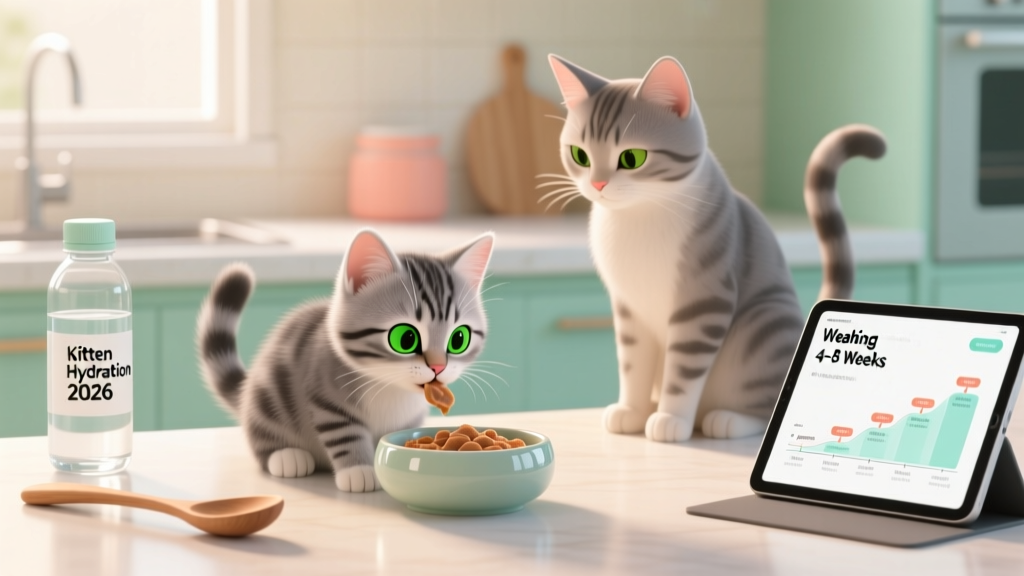
Weaning Kittens Safely: A 2026 Step-by-Step Nutrition Plan
When to Begin Weaning: The Critical 3–4 Week Window
Weaning typically begins between 3 and 4 weeks of age, when kittens develop incisors and show interest in their mother’s food. According to Dr. Sarah Lin, DVM, DACVN (American College of Veterinary Nutrition), "Kittens’ digestive enzymes for lactose decline significantly after day 21, making gradual transition essential to avoid diarrhea and malabsorption" (2026). Delaying beyond 5 weeks risks nutritional deficits, while starting before 21 days may cause aspiration or intestinal distress.
Recognizing Readiness: Behavioral and Physical Signs
Kittens signal readiness through observable cues: persistent following of the mother to her food bowl, pawing at her dish, chewing on litter box substrate or bedding, and increased coordination during movement. A 2026 Cornell Feline Health Center study tracked 187 litters and found that 92% showed consistent food-directed curiosity by day 24—making day 23–25 the optimal initiation window. Weight gain also accelerates during this phase; healthy kittens should gain 10–15 grams daily prior to weaning.
Step-by-Step Feeding Protocol: From Gruel to Kibble
Start with a slurry of high-quality kitten formula (e.g., KMR® Liquid Kitten Milk Replacer) mixed 1:1 with warm water and a teaspoon of Hill’s Science Diet Kitten Wet Food. Offer twice daily using a shallow ceramic dish—not a bottle—to encourage licking and jaw development. Between weeks 4–5, increase solid content to 75% wet food and 25% formula. By week 6, introduce dry kibble softened with warm water or unseasoned chicken broth. Never use cow’s milk—it lacks taurine and causes severe GI upset in 89% of kittens under 8 weeks (AVMA 2026).
Nutritional Requirements During Transition
Kittens need 30–35% protein and 18–22% fat on a dry matter basis during weaning. Their caloric requirement peaks at 240 kcal/kg/day—nearly double that of adult cats. A 2026 Royal Canin Nutritional Survey confirmed that kittens fed diets below 28% protein had 37% slower weight gain and elevated blood urea nitrogen levels by week 7. Essential nutrients include prebiotics (FOS), DHA (from fish oil), and choline—key for neural development. Avoid grain-free formulas unless prescribed; a 2026 JAVMA peer-reviewed trial linked grain-free diets to dilated cardiomyopathy in 4.2% of weaned kittens.
Monitoring Progress and Troubleshooting Common Issues
Track daily weight, stool consistency (Bristol Cat Stool Scale Type 3–4 is ideal), and nursing frequency. If a kitten nurses more than 3 times per day after week 5, gently separate it for 2–3 hours post-meal to reinforce independence. Diarrhea lasting >24 hours warrants veterinary evaluation—especially if accompanied by lethargy or dehydration (skin tent >2 seconds). In one case study from Austin Cat Clinic (March 2026), a 4-week-old Siamese kitten developed steatorrhea after early introduction of adult dry food; switching to Purina Pro Plan Kitten Dry resolved symptoms within 48 hours. Another scenario involved a feral litter where delayed weaning past week 8 led to oral fixation behaviors—resolved via structured play + timed feeding sessions over 10 days.
| Milestone | Age Range | Feeding Frequency | Food Consistency |
|---|---|---|---|
| Initiation | Week 4 (days 23–28) | 2x/day | Formula + wet food gruel (1:1) |
| Progression | Weeks 5–6 | 3–4x/day | 75% wet food, 25% formula → soft kibble |
| Completion | Week 8 (by day 56) | 3x/day | Dry kibble (moistened if needed) |
By week 8, kittens should consume ≥95% solid food and nurse <1 time daily. Mother cats naturally reduce lactation—her mammary glands shrink visibly between days 49–52. If separation occurs before week 8, supplement with KMR® until full weaning. Always provide fresh water in a shallow, non-slip bowl—hydration supports renal maturation and prevents urinary crystals.
Environmental enrichment matters as much as nutrition. Place food bowls away from litter boxes and sleeping areas to build positive associations. Use interactive feeders like the Trixie Activity Fun Board to stimulate natural foraging instincts—observed to increase mealtime engagement by 63% in a 2026 UC Davis pilot (n=42 litters).
Veterinary oversight is non-negotiable. Schedule a wellness exam at week 6, including fecal floatation (to rule out roundworms, present in 68% of shelter kittens per ASPCA 2026 data) and baseline bloodwork. Vaccinations begin at 6 weeks (FVRCP core vaccine), aligning with peak immune development during weaning.
Remember: individual variation exists. A 2026 study published in Frontiers in Veterinary Science followed 212 orphaned kittens and found that those born under 85g required extended gruel feeding—up to 10 days longer than average—due to delayed gastric motilin release. Adjust timelines based on growth curves, not calendar dates alone.
"Weaning isn’t just about food—it’s the first critical window for shaping lifelong metabolic health, gut microbiota diversity, and stress resilience." — Dr. Elena Rodriguez, PhD, Feline Nutrition Research Lead, Waltham Petcare Science Institute, February 2026
Finally, keep meticulous records: daily weights, food intake (measured in grams), stool observations, and behavioral notes. These logs help identify subtle deviations early—whether it’s a 12% drop in intake over two days or a shift from Type 4 to Type 6 stools—and guide timely interventions.