The Role of Carnitine in Feline Fat Metabolism Health
1. Why this topic matters for cat health
Cats are built to use fat and protein as primary fuels. When fat metabolism runs smoothly, it supports steady energy, healthy body weight, and organ function—especially for the heart and liver. Carnitine is a small, vitamin-like compound that helps move certain fats into cells’ “energy factories” (mitochondria) so those fats can be burned efficiently. When a cat’s diet, health status, or life stage increases the demand for efficient fat use, carnitine can become a key nutrition detail that influences weight management, exercise tolerance, and even recovery from illness.
This matters most for cat owners dealing with:
- Weight loss plans for overweight cats
- High-activity cats needing consistent energy
- Senior cats with changing muscle mass and metabolism
- Cats with heart disease risk or diagnosed cardiomyopathy (under veterinary care)
- Cats prone to fatty liver syndrome (hepatic lipidosis) or those recovering from poor appetite
2. Scientific background: feline nutritional needs and obligate carnivore biology
Cats are obligate carnivores, meaning their metabolism is adapted to a prey-based diet. Compared with omnivores, cats have:
- High protein requirements and continuous protein turnover
- Limited ability to adjust certain metabolic pathways “downward” when dietary protein is low
- Unique essential nutrients that must come from animal tissues (e.g., taurine, preformed vitamin A, arachidonic acid)
While cats can use carbohydrates, they’re generally better suited to diets where animal protein and fat are the dominant macronutrients. Fat is calorie-dense and provides essential fatty acids and fat-soluble vitamins. For fat to be used as energy, it must be transported and processed efficiently—this is where carnitine plays a central role.
Carnitine exists primarily as L-carnitine (the biologically active form). Cats can obtain carnitine from animal-based foods, and they can also synthesize some carnitine in the body from amino acids (primarily lysine and methionine), with the help of vitamin cofactors. Even so, in certain situations the balance between intake, synthesis, and need may shift, making dietary carnitine more relevant.
3. Detailed analysis: what carnitine does in feline fat metabolism (evidence-based)
What carnitine actually does
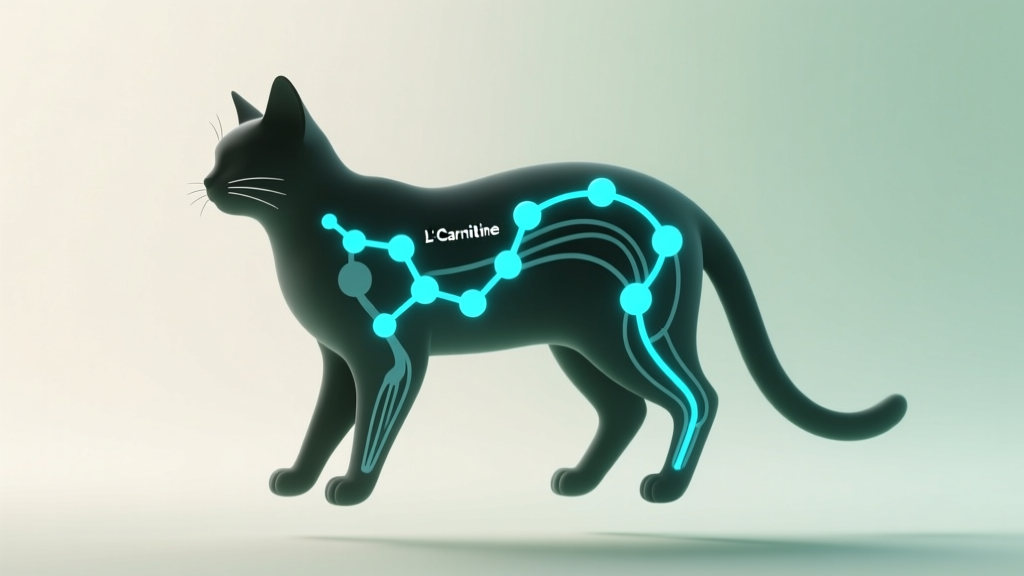
Most dietary fats are broken down into fatty acids. Long-chain fatty acids (a major form in diets and body fat) can’t freely enter mitochondria. L-carnitine acts as a carrier that helps shuttle these long-chain fatty acids into mitochondria, where they can be oxidized (“burned”) to produce energy.
Why that matters for cats
- Efficient energy production: Supports stable energy levels, especially when a cat is relying more on fat stores (e.g., during weight loss).
- Fat handling by the liver: The liver plays a major role in processing fat. When cats stop eating, they mobilize body fat quickly. If the liver can’t process the influx efficiently, fat can accumulate in the liver, contributing to hepatic lipidosis.
- Muscle sparing: When fat oxidation is effective, the body may rely less on breaking down lean tissue for energy. This is especially relevant in seniors or cats on calorie restriction.
- Heart and skeletal muscle function: These tissues rely heavily on fat metabolism. Carnitine has been studied for its role in cardiac energy metabolism in multiple species. Any supplementation decision for heart disease should be guided by a veterinarian, as “more” is not automatically “better.”
Dietary sources and bioavailability
Carnitine is naturally found in animal tissues (especially red meats). In practical pet-food terms, levels vary by ingredient choices and processing. Many complete-and-balanced commercial foods include carnitine either naturally, through animal ingredients, or as an added nutrient.
| Source | Typical carnitine presence | Practical note for cat owners |
|---|---|---|
| Meat-based commercial diets | Often moderate; sometimes supplemented | Look for “L-carnitine” on the ingredient list if targeting weight management support. |
| Veterinary weight-loss diets | More likely to include added L-carnitine | Designed to preserve lean mass while reducing calories; follow vet guidance on portions. |
| Homemade diets (unformulated) | Variable; depends on meats used | Highest risk for nutrient imbalance; work with a veterinary nutritionist if pursuing homemade. |
| Standalone supplements | High, concentrated | Use only under veterinary guidance; dosing mistakes are common. |
What the research suggests (and what it doesn’t)
In pet nutrition, L-carnitine is most commonly discussed in the context of weight management and lean body mass support. In dogs and humans, L-carnitine has been studied extensively; in cats, the evidence base is smaller but supports the concept that carnitine can aid fat oxidation and may help with body composition when used as part of a controlled weight-loss program.
What carnitine does not do on its own:
- It does not “melt fat” if a cat continues to eat excess calories.
- It does not replace the need for adequate protein in weight-loss plans.
- It does not treat heart disease or liver disease without a full veterinary plan.
4. Practical recommendations for cat owners
Start with the fundamentals
- Choose a complete-and-balanced diet that meets AAFCO or equivalent standards for your cat’s life stage.
- Prioritize adequate protein (cats need protein to maintain lean mass, especially during weight loss).
- Use measured portions rather than free-feeding, especially for indoor cats.
When to consider carnitine as a “useful extra”
Carnitine is most relevant when it’s part of a structured plan:
- Overweight cats: Consider diets marketed for weight control that include added L-carnitine and are high in protein and appropriate in calories.
- Senior cats: Discuss protein and calorie targets with your vet; some seniors benefit from diets supporting lean mass.
- Low activity indoor cats: A calorie-controlled diet with good protein and potentially added L-carnitine may help maintain body condition.
Signs you need veterinary input urgently (don’t “nutrition-hack” at home)
- Reduced appetite for more than 24 hours (especially in overweight cats)
- Rapid weight loss, vomiting, diarrhea, or lethargy
- Breathing changes, fainting, or exercise intolerance
- Jaundice (yellow gums/eyes), drooling, or hiding behavior
Cats can develop complications from not eating much faster than many owners realize. Always consult your veterinarian before making major diet changes or adding supplements.
5. Comparison of options: food-first vs supplements vs “functional” diets
| Approach | Pros | Cons | Best for |
|---|---|---|---|
| Complete-and-balanced diet with natural carnitine (animal-based) | Simple; low risk; supports overall nutrition | May not provide targeted levels for specific goals | Most healthy cats |
| Weight-management diet with added L-carnitine | Designed for safe calorie restriction; often higher protein; may support lean mass | Needs accurate portioning; some cats dislike lower-calorie formulas | Overweight cats under a weight-loss plan |
| Veterinary therapeutic diets (weight loss, metabolic support) | Evidence-based formulation; vet monitoring improves safety | Cost; requires adherence; not for every household cat | Cats with obesity-related risks or medical needs |
| Standalone L-carnitine supplements | Highly targeted; may be used in specific clinical plans | Dosing errors; quality varies; can distract from solving the main problem (calories, appetite, disease) | Only when your vet recommends it |
For most owners, the safest “carnitine strategy” is choosing an appropriate complete-and-balanced diet (often a weight management formula when needed) rather than adding a supplement.
6. Common mistakes and misconceptions to avoid
- Myth: “Carnitine will make my cat lose weight without changing food portions.”
Fact: Fat loss requires a calorie deficit. Carnitine may support fat metabolism, but it won’t override overeating. - Mistake: Putting an overweight cat on a very low-calorie plan too quickly.
Rapid restriction increases the risk of hepatic lipidosis. Weight loss should be gradual and vet-guided. - Myth: “If it’s natural, supplementation is always safe.”
Fact: Supplements can be overdosed, poorly formulated, or interact with medical conditions. Cats are especially sensitive to diet imbalances. - Mistake: Neglecting protein during weight loss.
Cats need sufficient protein to maintain lean mass. Weight loss plans should focus on calorie control without “starving” protein intake. - Myth: “Dry food is bad, wet food is always better.”
Fact: Either can be excellent if complete-and-balanced and portioned correctly. Wet foods can help with hydration and may be easier for portion control, but the best choice depends on the individual cat and household routine.
7. How to implement changes safely (transition tips)
Whether you’re switching to a weight management diet with added L-carnitine or simply improving overall nutrition, transitions should be slow to reduce digestive upset and food refusal.
Step-by-step transition plan (typical)
- Days 1–3: 75% old food + 25% new food
- Days 4–6: 50% old food + 50% new food
- Days 7–9: 25% old food + 75% new food
- Day 10+: 100% new food
Safety rules during changes
- Never let a cat “hunger strike.” If your cat refuses food, contact your veterinarian promptly.
- Weigh weekly using a baby scale or home pet scale; track trends, not single weigh-ins.
- Use body condition score (BCS) with your vet’s help; the scale is more useful than weight alone for many cats.
- Measure treats and keep them under about 10% of daily calories (or less during weight loss). Consider using part of the daily kibble allowance as treats.
8. Special considerations: age, health conditions, and activity level
Kittens (growth phase)
Kittens need energy-dense, growth-formulated nutrition. A “diet” or calorie restriction is inappropriate unless a veterinarian is supervising for a specific medical reason. Carnitine supplementation is rarely a do-it-yourself project in kittens—focus on complete-and-balanced growth diets and steady growth monitoring.
Adult indoor cats
Many adult cats are under-exercised and overfed. For these cats, the biggest wins usually come from:
- Portion control
- Food puzzles and scheduled meals
- A diet with adequate protein and controlled calories
If you’re selecting a weight-control diet, choosing one that includes added L-carnitine can be a reasonable, food-first approach.
Senior cats
Seniors may lose muscle even when they look “normal” in weight. This is where protein quality and adequate intake matter. Some seniors also develop kidney disease, hyperthyroidism, diabetes, dental disease, or arthritis—all of which change diet strategy. Ask your vet whether a senior-focused diet, a therapeutic diet, or targeted calorie adjustment fits your cat’s current health profile.
Overweight cats and hepatic lipidosis risk
Overweight cats are at higher risk if they stop eating. Any weight-loss plan should prioritize:
- Gradual loss rate (your vet can set a safe weekly target)
- High-protein formulation to protect lean mass
- Regular check-ins to adjust portions
Carnitine can be part of a comprehensive plan, but preventing appetite loss and avoiding rapid restriction are far more important for safety.
Diabetes and insulin resistance
Diabetic cats often benefit from nutrition strategies that support stable blood sugar and weight management. The best diet depends on the individual cat’s treatment plan and other conditions. Never change a diabetic cat’s diet without veterinary guidance, because insulin needs can change quickly.
Heart disease
Carnitine’s role in cardiac energy metabolism is biologically plausible, and some clinicians consider it as part of supportive care in certain cases. Heart disease is complex; supplementation should be decided by a veterinarian who can weigh diagnosis, medications, and diet (including sodium control where relevant).
9. FAQ: common questions about carnitine and cats
Is L-carnitine essential for cats?
Cats can obtain carnitine from animal tissues and can synthesize some in the body, so it isn’t typically discussed like taurine (a well-known feline essential nutrient). Even so, carnitine remains important for fat metabolism, and certain diets or health states may increase the value of ensuring adequate intake through a complete-and-balanced food.
Should I give my cat a carnitine supplement for weight loss?
Most cats do best with a veterinarian-approved weight-loss plan using a complete-and-balanced weight management diet (many include added L-carnitine). Standalone supplements should only be used if your veterinarian recommends them, since dosing and product quality can be inconsistent.
How can I tell if my cat needs more carnitine?
There’s no reliable at-home sign that specifically indicates low carnitine. Weight gain, low energy, or poor exercise tolerance can have many causes (calorie excess, pain, anemia, heart disease, thyroid issues). If you’re concerned, your veterinarian can evaluate overall health and recommend an appropriate diet strategy.
Are foods with added L-carnitine automatically better?
Not automatically. A diet’s calorie density, protein level and quality, palatability, and overall nutrient balance matter more than a single ingredient. Added L-carnitine can be a helpful feature in well-formulated weight management diets, but it’s not a substitute for portion control and proper veterinary guidance.
Can too-rapid dieting harm my cat’s fat metabolism?
Yes. Cats can mobilize body fat quickly when they don’t eat enough, which can overload the liver and contribute to hepatic lipidosis. Any major calorie reduction should be gradual and guided by your veterinarian, especially for overweight cats.
Does wet food or dry food affect carnitine?
Carnitine content depends more on ingredients and formulation than moisture level. Wet food can help increase water intake and may support portion control for some cats. Dry food can be convenient and can also be nutritionally excellent. The best choice is the one your cat thrives on that meets complete-and-balanced standards and fits your cat’s calorie needs.
If you’re considering a diet change for weight management, senior support, diabetes, heart health, or liver concerns, involve your veterinarian early. A tailored plan beats guesswork—especially for cats, where overly aggressive changes can backfire.
For more practical, science-based feeding advice, explore the nutrition guides and cat wellness articles on catloversbase.com.