Cat Food Extruder Die Size: Kibble Shape and Density
1) Why this topic matters for cat health
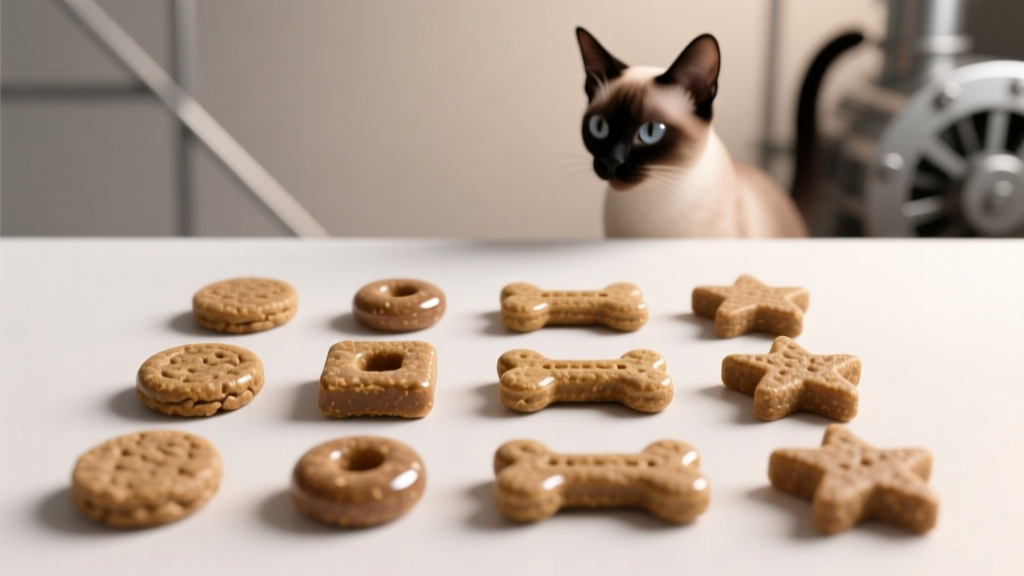
Most cat owners judge dry food by the ingredient list and guaranteed analysis. Those matter, but the way kibble is manufactured also influences how your cat eats, digests, and hydrates. A key manufacturing variable is extruder die size—the shape and diameter of the openings the cooked dough is pushed through before it’s cut into kibble pieces.
Die size affects:
- Kibble size and shape (how your cat bites, chews, and swallows)
- Density and porosity (how quickly kibble absorbs water and stomach acid)
- Energy density (calories per cup, which influences weight management)
- Palatability and feeding speed (gulping vs chewing)
- Suitability for kittens, seniors, and cats with dental disease
Understanding what die size can and cannot do helps you pick a kibble that matches your cat’s health needs rather than just marketing claims. For any diet change—especially in cats with medical conditions—work with your veterinarian or a board-certified veterinary nutritionist.
2) Scientific background: feline nutritional needs and carnivore biology
Cats are obligate carnivores. Their metabolism is adapted to animal-based nutrients and steady use of protein and fat for energy. Key points that guide diet choices (including dry food selection) include:
- High protein requirement: Cats have a higher baseline need for dietary protein than omnivores and rely on amino acids from animal tissues.
- Essential nutrients unique to carnivores: taurine, preformed vitamin A, and arachidonic acid must be supplied in the diet.
- Water economy: Many cats have a low thirst drive. Dry diets can be healthy for many cats, but hydration strategy matters (water bowls, fountains, wet food inclusion, urinary diets when indicated).
- Meal pattern and GI sensitivity: Cats tend to eat small meals. Feeding method and kibble characteristics can influence vomiting from fast eating and can affect stool quality in sensitive cats.
Extrusion technology doesn’t change the fact that nutrient completeness, digestibility, and caloric balance are the foundation. Die size is a practical “fit and function” variable: it influences how the food behaves in your cat’s mouth and gut, and how easy it is to portion accurately.
3) Extruder die size: how it shapes kibble density, texture, and performance
What an extruder die does
In extrusion, a mixture of ingredients is ground, hydrated, and cooked under heat and pressure. The cooked dough exits through a die. As it leaves the die, pressure drops and steam expands, creating the kibble’s internal structure. Then it’s cut, dried, and coated with fats/palatants.
Die size (diameter and shape) interacts with:
- Moisture and temperature during extrusion
- Ingredient composition (starch level and type, protein sources, fiber content)
- Knife speed (length of pieces)
- Drying time (final hardness and shelf stability)
So die size influences kibble characteristics, but it’s not the only factor. Two foods with similar kibble size can have very different density and calorie content depending on the formula and processing conditions.
Kibble size and shape: why it matters
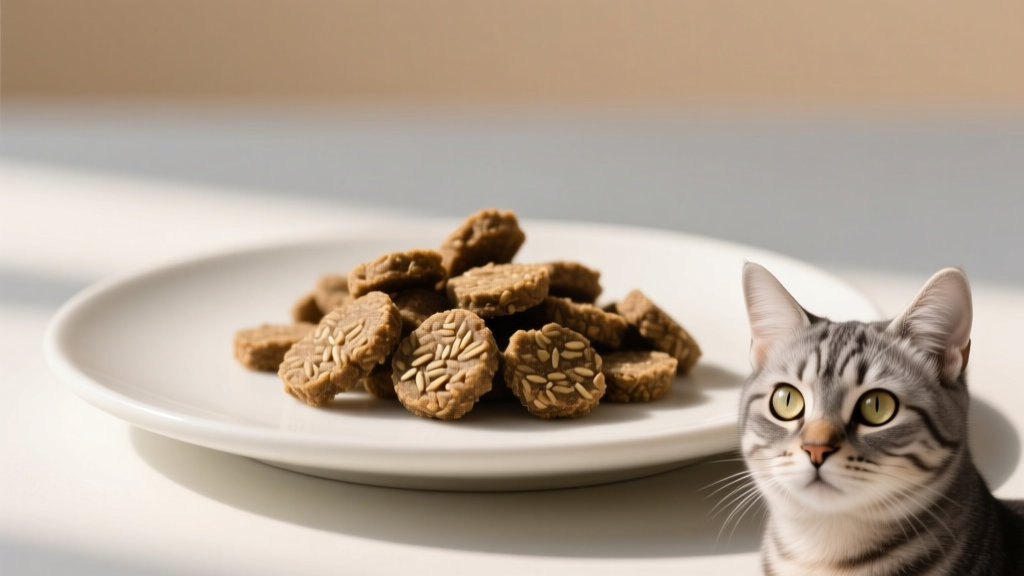
Cats don’t chew like humans. Many cats crack kibble minimally and swallow pieces quickly. Kibble diameter and shape can:
- Change chewing behavior: Larger pieces can encourage more biting in some cats; small pieces may be swallowed whole.
- Affect speed of eating: Larger kibble can slow down fast eaters, while tiny kibble may disappear quickly.
- Influence comfort: Seniors or cats with dental pain may prefer smaller, less resistant pieces.
For dental health, size alone is not a guarantee. “Dental” kibbles often combine larger die sizes with a special fiber matrix designed to resist crumbling and create a scraping action. Even then, dental diets are supportive tools, not replacements for brushing and professional cleanings.
Density and porosity: crunch, calories, and water uptake
Die size can contribute to the kibble’s bulk density (how heavy it is for a given volume). Density is also strongly affected by expansion (the “puffing” that happens after the die) and drying.
Why density matters for owners:
- Portion accuracy: Measuring by volume (cups) can be misleading. A dense kibble can pack more calories into the same cup than a lighter, more expanded kibble.
- Satiety: Some cats feel more satisfied with a larger volume of lower-calorie-density kibble, while others do better on smaller portions. Satiety also depends on protein, fiber, and meal timing.
- Rehydration behavior: More porous kibble may absorb water faster when soaked, which can help cats that prefer softened texture or need extra water intake (with veterinary guidance).
Digestibility and stomach comfort
Extrusion generally improves digestibility of starches and can reduce some anti-nutritional factors in plant ingredients. The kibble’s texture and density may influence how it breaks down in the stomach. For cats prone to scarf-and-barf, kibble shape and size—combined with feeding strategy—can be more impactful than owners expect.
Evidence-based reality check: what kibble geometry can’t do
- It can’t “clean teeth” like brushing. Some dental diets reduce plaque/tartar compared with standard kibble, but they don’t replace oral care.
- It can’t compensate for an unbalanced formula. A perfectly shaped kibble with poor nutrient balance is still the wrong diet.
- It doesn’t automatically mean “better quality”. Boutique shapes can be purely marketing; clinical diets may look plain but have rigorous testing.
5) Comparison of options: which kibble shapes/densities fit which cats?
| Die size / kibble style | Typical characteristics | Best for | Potential downsides |
|---|---|---|---|
| Small, thin pieces | Easier to pick up; often swallowed quickly; can be higher density depending on formula | Kittens transitioning to dry; seniors with missing teeth (if they tolerate dry); cats that “graze” slowly | May increase fast eating in some cats; less chewing; portioning by cup can overfeed if calorie-dense |
| Medium “standard” kibble | Balanced bite size; wide range of densities and textures | Most healthy adult cats | Not tailored for special dental/behavior needs |
| Large kibble / larger die | Bigger pieces may encourage biting; sometimes used in hairball or dental products | Fast eaters (with puzzle feeder); some cats needing slower intake | May be hard for cats with dental pain; some cats still swallow whole |
| Dental-specific kibble (often large with engineered matrix) | Designed to resist crumbling and scrape tooth surface; clinical claims may be validated | Cats with plaque/tartar concerns when approved by a vet | Not a cure for periodontal disease; may not suit cats needing soft diets; calories still matter |
| High-porosity/expanded kibble (lighter per cup) | More “puffed” texture; lower bulk density possible | Some weight management strategies; owners who weigh portions precisely | Can be crushed easily; coating may affect palatability; not always lower calorie per gram |
4) Practical recommendations for cat owners
- Choose a complete and balanced diet that meets AAFCO/FEDIAF standards for your cat’s life stage (kitten/growth, adult maintenance, senior as appropriate).
- Weigh food with a kitchen scale, especially if your cat needs weight loss or has gained weight. Calories per cup vary widely with density.
- Match kibble size to your cat’s mouth and behavior:
- Fast eater: consider larger kibble plus a slow feeder/puzzle feeder.
- Dental pain or missing teeth: discuss wet food or softened kibble with your vet; avoid forcing large/hard pieces.
- Cat that drops kibble: try a slightly larger piece for easier pickup.
- Support hydration: add wet meals, provide multiple water stations, and consider a fountain. For urinary concerns, consult your vet—therapeutic urinary diets may be more impactful than kibble shape.
- Use kibble intentionally: Treat kibble as measured meals or training rewards rather than free-feeding from a topped-up bowl.
6) Common mistakes and misconceptions to avoid
- Myth: “Bigger kibble always cleans teeth.”
Fact: Dental benefits depend on a specific texture and fiber structure, plus cat chewing behavior. Even dental diets are supportive, not a substitute for brushing and veterinary dental care. - Mistake: Measuring by cups and ignoring calories.
A denser kibble can deliver significantly more calories per cup. Use grams and calorie targets set with your vet. - Myth: “Crunchy kibble prevents dental disease.”
Periodontal disease is common even in kibble-fed cats. Regular oral exams, home dental care, and professional cleanings are the proven foundation. - Mistake: Switching foods based only on kibble shape.
Ingredient quality, digestibility, nutrient profile, and feeding trial evidence matter more than geometry. - Myth: “Dry food is bad because it’s dry.”
Many cats do well on dry diets, but hydration and urinary health must be managed thoughtfully. Some cats benefit from partial or full wet feeding—especially those with certain urinary issues—based on veterinary guidance.
7) How to implement changes safely (transition tips)
Cats can develop GI upset or food refusal with sudden changes. Transition gradually unless your veterinarian instructs otherwise.
| Day | Old Food | New Food |
|---|---|---|
| 1–2 | 75% | 25% |
| 3–4 | 50% | 50% |
| 5–6 | 25% | 75% |
| 7+ | 0% | 100% |
- If stools soften or vomiting increases, slow the transition (stay at the current ratio for several days).
- If your cat refuses the new kibble, try mixing with a small amount of wet food topper, warming the food slightly, or switching textures gradually (smaller shape changes first, then formula changes).
- Never let a cat go without food as a strategy to force acceptance. Cats are at risk for hepatic lipidosis if they stop eating. Contact your veterinarian if your cat won’t eat for 24 hours (or sooner for kittens or medically fragile cats).
8) Special considerations: age, health conditions, and lifestyle
Kittens
- Need higher calories, protein, and specific nutrient balance for growth.
- Often do better with smaller kibble they can handle easily.
- Frequent meals and careful monitoring of body condition are key.
Adult cats (indoor vs active)
- Indoor cats often need fewer calories. Density becomes a real-world issue: two “same-sized scoops” can be very different in calories.
- For enrichment and weight management, use puzzle feeders. Kibble size may affect how well a puzzle feeder works.
Seniors
- Dental disease is common; kibble hardness and size can affect comfort.
- Seniors may need diets tailored to kidney function, body condition, or GI health—guided by your vet.
- If chewing is painful, shifting toward wet food or softened kibble may improve intake and well-being.
Dental disease
- Large “dental” kibble may help reduce plaque/tartar in some cats, but it is not appropriate if chewing hurts.
- Persistent bad breath, drooling, or pawing at the mouth warrants a veterinary exam.
Urinary tract concerns (crystals, FLUTD)
- Hydration is a major lever; wet food and therapeutic urinary diets can be highly effective when prescribed.
- Kibble size/density is secondary to urine pH management, mineral balance, and water intake.
Weight management
- Focus on calories per day, not cups per day.
- Expanded kibble may allow a larger volume for fewer calories, but always check kcal/cup and kcal/kg, and confirm portion grams.
GI sensitivity and hairball-prone cats
- Some cats do better on specific fiber types and levels rather than any particular kibble size.
- If hairballs are frequent, discuss grooming, hydration, and diet options with your vet. Vomiting more than occasionally should be assessed.
9) FAQ
Does extruder die size change the nutrition of the food?
Die size mainly changes kibble geometry (shape/size) and can influence texture and density. The nutrition comes primarily from the formula and how it’s balanced to meet AAFCO/FEDIAF standards. Processing affects digestibility, but die size alone doesn’t make a food “more nutritious.”
Why does one kibble have more calories per cup than another?
Calorie differences come from both macronutrient composition (fat is calorie-dense) and bulk density. A denser kibble can pack more grams (and calories) into a cup. For precision, measure portions in grams using the bag’s kcal information and your vet’s calorie target.
Is bigger kibble safer to prevent choking?
Not always. Some cats swallow large pieces whole. True choking is uncommon but possible. If your cat gulps food, use a slow feeder or puzzle feeder, offer smaller meals, and ask your vet if reflux, nausea, or dental pain could be contributing.
Can I soak dry kibble to increase water intake?
Soaking can help some cats, especially if they prefer softer texture. Use clean water, discard leftovers promptly to prevent spoilage, and maintain dental hygiene. For cats with urinary disease or other medical issues, ask your veterinarian whether soaking or adding wet food is the best strategy.
Are “dental kibbles” worth it?
For some cats, veterinary dental diets can reduce plaque/tartar compared with standard kibble. Benefits depend on the product design and your cat’s chewing behavior. They’re most useful as part of a full dental plan that includes veterinary exams and, ideally, tooth brushing.
How can I tell if kibble size is wrong for my cat?
Clues include dropping food, avoiding the bowl, chewing on one side, sudden preference for soft foods, gulping with frequent vomiting, or weight gain despite “normal” portions. A veterinary exam can rule out dental disease, pain, or GI problems before you attribute it to kibble shape.
Bottom line: Extruder die size influences kibble shape and density, which can affect chewing, eating speed, and portion accuracy. It’s a useful factor when choosing a dry food, but it should sit behind the bigger priorities: complete and balanced nutrition, appropriate calories, hydration strategy, and your cat’s medical needs. Always consult your veterinarian before making major dietary changes or if your cat has urinary, kidney, dental, GI, or weight issues.
For more practical, science-based feeding guidance, explore the cat nutrition guides at catloversbase.com.