The Impact of Dietary Sodium on Cat Blood Pressure
1. Why this topic matters for cat health
Blood pressure problems in cats are more common than many owners realize, especially in older cats. High blood pressure (hypertension) can quietly damage the eyes, kidneys, brain, and heart before you notice obvious signs. Because “salt” is often linked to blood pressure concerns in people, many cat owners assume that dietary sodium must be a major driver of hypertension in cats, too.
The reality is more nuanced. Sodium is essential for life, and healthy cats are typically very good at regulating sodium and water balance. At the same time, certain cats—particularly those with kidney disease, heart disease, or hyperthyroidism—may need more careful sodium management and monitoring. Knowing what sodium does in the feline body, what the evidence actually shows, and how to choose foods wisely can help you support your cat’s cardiovascular and kidney health without creating unnecessary deficiencies or diet imbalances.
2. Scientific background: feline nutrition needs and obligate carnivore biology
Cats are obligate carnivores. Their metabolism is adapted to a prey-based diet that naturally provides:
- High protein (for energy and tissue maintenance)
- Moderate fat (energy and essential fatty acids)
- Low carbohydrate
- High moisture (whole prey is roughly 70–75% water)
Sodium is an essential mineral (an electrolyte) that works closely with chloride and potassium. In cats, sodium supports:
- Fluid balance (maintaining hydration and blood volume)
- Nerve function (electrical signaling)
- Muscle contraction, including the heart
- Acid-base balance
Healthy cats regulate sodium largely through the kidneys and hormonal systems (including the renin–angiotensin–aldosterone system). When sodium intake changes, the body adjusts sodium excretion and water handling to keep blood sodium and blood pressure within a functional range—up to a point. This is why blanket “low-sodium for all cats” advice can be misguided, and why the cat’s overall health status matters.
3. Detailed analysis: what science says about sodium and feline blood pressure
Hypertension in cats: the most common causes
Feline hypertension is often secondary to another condition rather than caused primarily by diet. Common contributors include:
- Chronic kidney disease (CKD)
- Hyperthyroidism
- Diabetes mellitus (less direct, but may contribute via kidney changes)
- Heart disease (variable relationship)
- Idiopathic hypertension (no clear underlying cause found)
Because these diseases are common in senior cats, blood pressure screening is a valuable part of preventive care for aging cats.
Does dietary sodium raise blood pressure in cats the way it can in people?
In humans, some individuals are “salt-sensitive,” meaning higher sodium intake can contribute to increased blood pressure. In cats, the relationship appears less direct for most healthy individuals. Controlled feeding studies in healthy cats generally suggest that moderately higher sodium diets do not consistently cause hypertension when cats have normal kidney function and are otherwise healthy.
What tends to matter more clinically is:
- Underlying disease (CKD, hyperthyroidism, etc.) driving blood pressure up
- Overall hydration (wet vs. dry feeding, water intake)
- Kidney function and the cat’s ability to excrete sodium appropriately
- Medication and disease management (e.g., amlodipine for hypertension; treating hyperthyroidism)
When sodium becomes a bigger concern
Dietary sodium deserves more attention in these situations:
- Chronic kidney disease: impaired ability to handle sodium and water fluctuations; hypertension is common
- Congestive heart failure (less common in cats than dogs, but still relevant): sodium restriction may be part of a broader plan
- Significant hypertension already diagnosed: diet is not the only tool, but sodium may be addressed depending on the case
- Cats eating high-sodium treats or human foods: “extras” can push sodium higher than expected
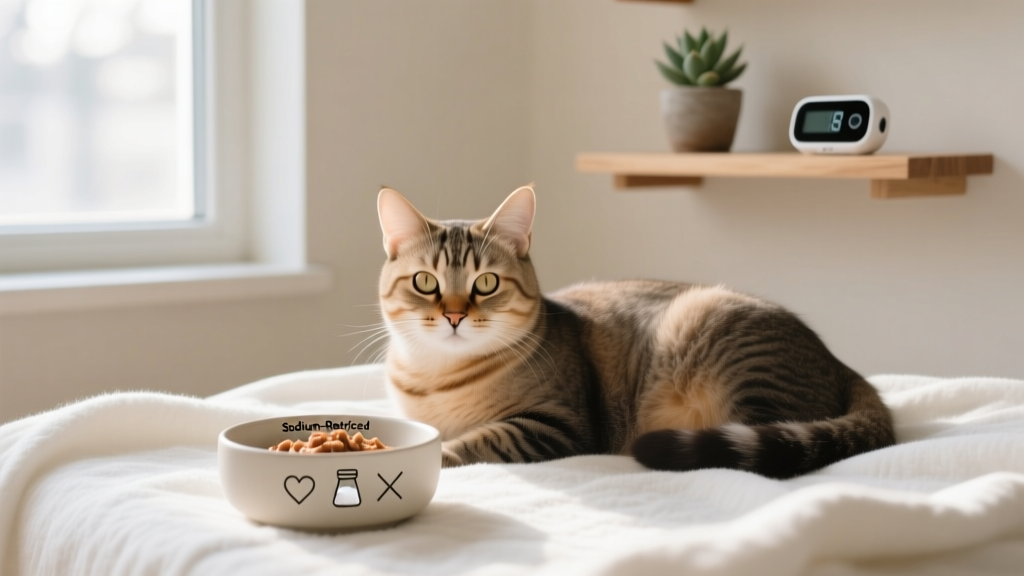
Even in these cats, the goal is usually moderate sodium control, not extreme restriction unless your veterinarian specifically recommends it. Over-restricting sodium can reduce palatability and calorie intake (a major risk in senior cats), and it can complicate fluid and electrolyte balance.
Sodium and wet vs. dry food: the hydration connection
One of the most practical diet-related influences on cardiovascular and kidney workload is water intake. Many cats on dry-only diets consume less total water than cats eating primarily canned food. That doesn’t automatically cause hypertension, but better hydration can support kidney perfusion and urine dilution, and it often aligns with better urinary tract health.
Some higher-sodium diets have historically been used to encourage water intake and urine volume for urinary health. If your cat has a history of urinary issues, don’t assume “lower sodium is always better” without discussing the full nutrition strategy with your vet.
How to interpret sodium on pet food labels
Pet food labels can be confusing because sodium may be listed:
- As a percentage on an as-fed basis
- Sometimes on a dry matter basis (less common on labels)
- Or not listed at all unless you obtain a full nutrient profile from the manufacturer
Because wet foods contain much more water than dry foods, comparing “as-fed” sodium percentages between canned and kibble can be misleading. A canned food can look “low” as-fed simply because it’s diluted by moisture, even if its dry matter sodium is similar.
4. Practical recommendations for cat owners
Use these steps to make sodium-smart decisions without overcorrecting:
- Prioritize complete and balanced diets (AAFCO/NRC-informed formulation) as the foundation.
- Ask your vet to measure blood pressure, especially for cats over 7–8 years, cats with CKD, hyperthyroidism, or eye changes.
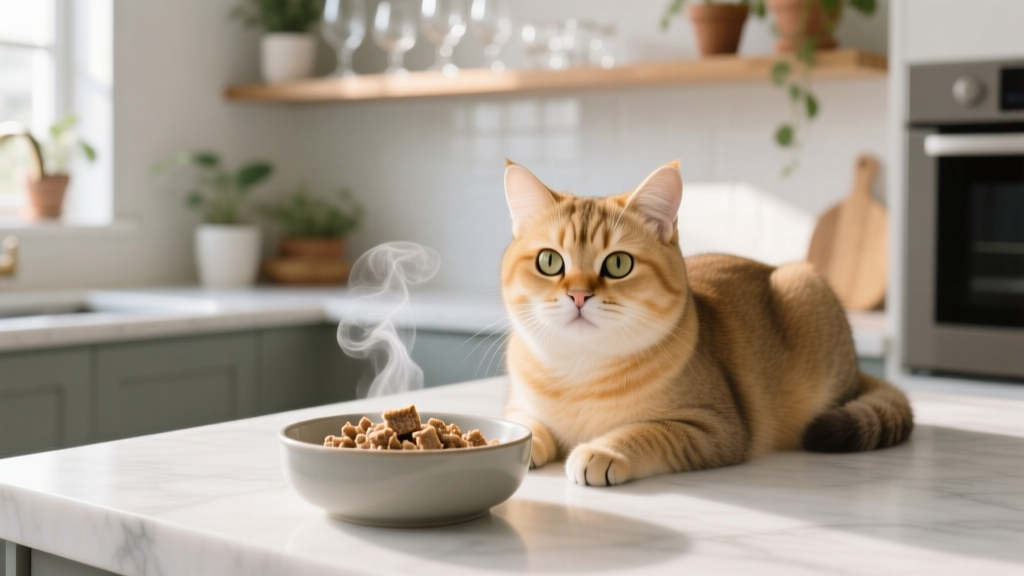
- Choose wet food more often if your cat tolerates it and your vet agrees—hydration support is frequently helpful.
- Limit salty extras: deli meats, cheese, chips, broth made for people, and many “human food” bites can add sodium fast.
- Use veterinary therapeutic diets when indicated (kidney/heart). These are formulated as a full package: controlled minerals, appropriate calories, and targeted nutrients.
- Track trends: appetite, weight, water intake, urination, and recheck blood pressure and labs as your vet recommends.
| Cat Situation | Primary Goal | How Sodium Fits In | Best Next Step |
|---|---|---|---|
| Healthy adult cat | Balanced nutrition + hydration | Usually not a major blood pressure driver | Feed complete diet; avoid salty treats |
| Senior cat (no diagnosis yet) | Early detection of CKD/thyroid/HTN | Don’t restrict blindly; screen first | Annual/biannual vet checks + BP measurement |
| CKD diagnosed | Support kidneys, manage phosphorus, maintain calories | Often moderately controlled as part of renal diet | Discuss renal diet + BP meds if needed |
| Hypertension diagnosed | Prevent organ damage (eyes/kidneys/brain/heart) | May be adjusted, but meds are commonly required | Vet-led plan (e.g., amlodipine) + tailored diet |
| Heart disease/CHF | Reduce fluid overload, preserve muscle mass | Sodium may be limited depending on severity | Cardiology/vet guidance; avoid high-salt treats |
5. Comparing options: foods, treats, and approaches
| Option | Pros | Cons | Best For |
|---|---|---|---|
| Standard commercial wet food (complete & balanced) | Higher moisture; often palatable; supports hydration | Sodium varies by formula; can be calorie-dense | Most cats, especially those needing better water intake |
| Standard commercial dry food (complete & balanced) | Convenient; cost-effective; dental texture benefit is limited but some cats prefer it | Lower moisture; easy to overfeed; sodium comparison can be confusing | Healthy cats when portioned carefully and water intake is good |
| Veterinary renal diets | Designed for CKD: controlled phosphorus, adjusted protein quality, targeted electrolytes | Some cats resist the taste; must be transitioned slowly | Cats with CKD (vet diagnosis) |
| Veterinary cardiac-support diets | May help manage sodium/fluid balance in CHF; balanced formulation | Not necessary for every heart murmur; requires vet direction | Cats with diagnosed heart disease/CHF under veterinary care |
| Home-cooked diets | Ingredient control; useful for select medical cases | High risk of imbalance without a veterinary nutritionist; sodium can be accidentally too low or too high | Only with a board-certified veterinary nutritionist formulation |
| “Low-sodium” over-the-counter foods | May reduce sodium exposure from the base diet | Not automatically better; may sacrifice other priorities (protein quality, calories); may not address underlying disease | Selective use when vet recommends and overall nutrient profile fits |
6. Common mistakes and misconceptions to avoid (myths debunked)
- Myth: “Salt causes high blood pressure in all cats.”
Reality: Many hypertensive cats have an underlying illness (CKD or hyperthyroidism). Diet can support management, but it’s rarely the sole cause. - Myth: “If my cat has kidney disease, I should drastically cut sodium immediately.”
Reality: CKD nutrition is a balancing act (phosphorus control, adequate calories, appropriate protein quality, omega-3s, potassium as needed). Sodium strategy should be individualized by your veterinarian. - Myth: “Wet food is always low sodium.”
Reality: Wet foods often look lower on an as-fed label because of water content. Actual sodium intake depends on the formulation and how much is fed. - Myth: “Homemade is automatically healthier and lower salt.”
Reality: Homemade diets frequently end up nutritionally incomplete (taurine, calcium, trace minerals) unless formulated professionally. Sodium can also be unintentionally mismanaged. - Myth: “Sea salt/Himalayan salt is safer.”
Reality: Sodium is sodium. “Natural” salts can still raise sodium intake and may contain variable trace contaminants.
7. How to implement changes safely (transition tips)
Any diet change should protect appetite and calorie intake—especially in senior cats. Cats can develop serious complications if they stop eating for even a few days. If your cat has diagnosed hypertension, kidney disease, heart disease, or is on medication, consult your veterinarian before changing foods.
- Transition gradually over 7–10 days (longer for sensitive cats):
Day 1–3: 75% old / 25% new
Day 4–6: 50% old / 50% new
Day 7–9: 25% old / 75% new
Day 10: 100% new - Warm wet food slightly and add a small amount of water to increase aroma and hydration.
- Keep feeding routines consistent to reduce stress (same bowls, same area, predictable schedule).
- Monitor stool quality and appetite daily during the transition.
- Do not add salt to “improve taste.” Use vet-approved palatability boosters instead (e.g., a small amount of the cat’s regular wet food, or a prescription-compatible topper if recommended).
8. Special considerations (age, health conditions, activity level)
Kittens and growing cats
- Need higher energy and precise mineral balance for growth.
- Avoid “adult low-sodium” targeting unless directed by a vet for a specific medical reason.
Senior cats
- More likely to have CKD, hyperthyroidism, and hypertension.
- Focus on screening: routine bloodwork, urinalysis, and blood pressure checks.
- Don’t sacrifice intake for a theoretical sodium benefit—maintaining weight and muscle is critical.
Cats with chronic kidney disease (CKD)
- Blood pressure management often includes medication plus a renal-supportive diet strategy.
- Renal diets typically address multiple targets: phosphorus restriction is often a higher priority than aggressive sodium restriction.
- Your vet may also monitor potassium, hydration status, and protein-energy intake.
Cats with heart disease
- Not every murmur equals heart failure; diet needs vary widely by diagnosis and severity.
- In congestive heart failure, sodium control may help reduce fluid retention, but overly restrictive diets can reduce appetite.
- Work with your vet (and ideally a cardiologist) for diet and medication planning.
Overweight or sedentary cats
- Weight management can indirectly support cardiovascular health.
- Choose portion-controlled, high-protein weight management strategies with veterinary guidance; don’t rely on sodium restriction as a weight tool.
9. FAQ
1) How do I know if my cat has high blood pressure?
You usually can’t tell at home until complications occur. Signs may include sudden blindness, dilated pupils, disorientation, seizures, or behavior changes. The reliable method is a veterinary blood pressure measurement with appropriate technique and repeat readings.
2) Should I put my cat on a low-sodium diet to prevent hypertension?
Not automatically. For healthy cats, there’s limited evidence that sodium restriction prevents hypertension. A better prevention plan is routine vet checks (especially in senior cats), excellent hydration support, maintaining a healthy body condition, and avoiding salty treats and human foods.
3) My cat has CKD. Is sodium or phosphorus more important?
In many CKD cats, phosphorus control is a top dietary priority, along with adequate calories and appropriate protein quality. Sodium may be moderated depending on blood pressure, protein loss in urine, hydration status, and stage of CKD. Your veterinarian can interpret labs and blood pressure to guide the best diet choice.
4) Are “urinary health” diets too high in sodium for cats with blood pressure concerns?
Some urinary diets may use sodium strategically to promote water intake and urine dilution, but formulations vary. If your cat has both urinary issues and hypertension/CKD, ask your vet to help choose a diet that balances both problems. Don’t switch diets based on sodium alone.
5) Can I just feed homemade low-salt chicken and rice to control blood pressure?
No. That approach is nutritionally incomplete for cats (taurine, calcium, essential fatty acids, vitamins, trace minerals) and can create serious deficiencies. If a home-cooked plan is needed, it should be formulated by a board-certified veterinary nutritionist and monitored by your veterinarian.
6) What treats are safer for cats with hypertension or CKD?
Ask your vet first, especially for CKD/heart disease. In general, keep treats to a small portion of daily calories and avoid salty human foods. Many cats do well with small portions of their regular wet food as “treats,” or veterinarian-approved limited-ingredient treats compatible with their medical diet.
Bottom line: Sodium is essential, and for many healthy cats it isn’t the main driver of hypertension. The cats who benefit most from sodium-conscious feeding are those with diagnosed kidney disease, heart disease, or confirmed high blood pressure—and even then, sodium is only one part of a larger medical and nutritional plan. Always consult your veterinarian before making major diet changes, especially for senior cats or cats on medication.
Want more practical, science-based feeding guidance? Explore additional cat nutrition guides and health-focused articles on catloversbase.com.