Cat Food Manufacturing: Extrusion vs Canning Process
1) Why this topic matters for cat health
“Dry vs wet” is one of the most common debates in cat nutrition, but the bigger story is how the food is made. Manufacturing methods influence moisture content, texture, palatability, nutrient retention, digestibility, and even how owners portion meals. For many cats, especially those prone to urinary issues, constipation, obesity, or dental disease, the differences between extrusion (most kibble) and canning (most wet foods) can meaningfully affect health outcomes.
Understanding the basics of extrusion and canning helps you choose foods that match your cat’s biology and medical risks, and it makes label reading more practical. The best choice isn’t universal; it’s the one that meets nutritional requirements, fits your cat’s needs, and is realistic for your home—ideally with your veterinarian’s guidance.
2) Scientific background: feline nutritional needs and obligate carnivore biology
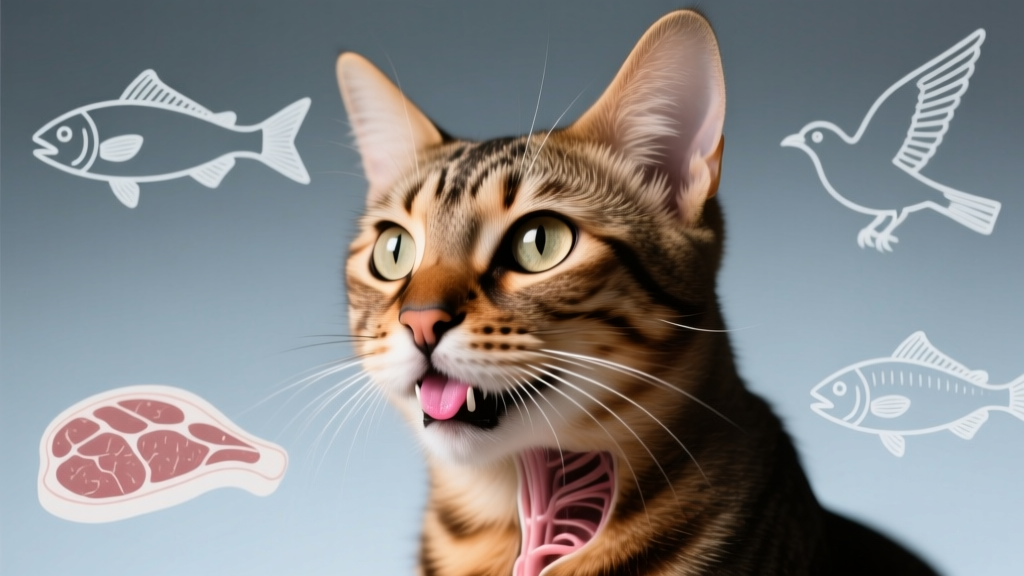
Cats are obligate carnivores. Their metabolism is adapted for a diet primarily derived from animal tissues, and they have unique nutrient requirements compared with dogs and humans.
- High protein requirement: Cats have a relatively high baseline protein need and use amino acids continuously for metabolism.
- Essential amino acids: Taurine is critical for heart, vision, and reproduction; cats cannot make enough taurine from other amino acids. Arginine is essential for ammonia detoxification; a single deficient meal can be dangerous.
- Fat and essential fatty acids: Cats need dietary fat for energy and to absorb fat-soluble vitamins. They require arachidonic acid, typically found in animal fats.
- Limited carbohydrate necessity: Cats can digest and use carbohydrates, but they do not require dietary carbs and often thrive on diets with lower carbohydrate levels, especially when calorie control is needed.
- Water intake physiology: Cats evolved from desert-adapted ancestors and often have a lower thirst drive. Many cats do not fully “make up” for low-moisture diets by drinking more, which can contribute to chronically concentrated urine in some individuals.
From a veterinary nutrition perspective, the most important baseline is that any complete diet should meet recognized standards (such as AAFCO or FEDIAF profiles) for the cat’s life stage. Manufacturing method affects the final product, but “complete and balanced” remains the non-negotiable foundation.
3) Extrusion vs canning: a detailed, evidence-based look
How extrusion (kibble) is made
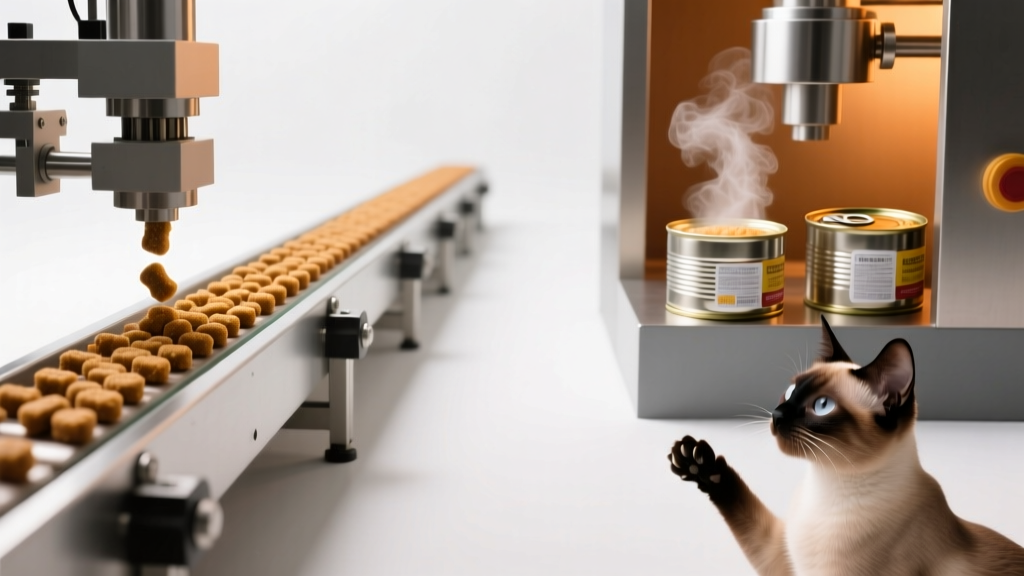
Extrusion is a high-temperature, short-time cooking process commonly used for dry pet foods. While exact steps vary by manufacturer, the general workflow looks like this:
- Mixing/grinding: Proteins (meat meals, fresh meats), starches (grains/legumes/tubers), fiber, fats, vitamins, and minerals are ground and blended.
- Preconditioning: Water and steam are added to hydrate ingredients and begin cooking.
- Extrusion cooking: The dough passes through an extruder under heat, pressure, and shear. This gelatinizes starches and denatures proteins.
- Shaping and drying: The kibble is cut, then dried to a low moisture content.
- Coating: Fats, flavor enhancers (palatants), and sometimes probiotics are applied after drying.
How canning (wet food) is made
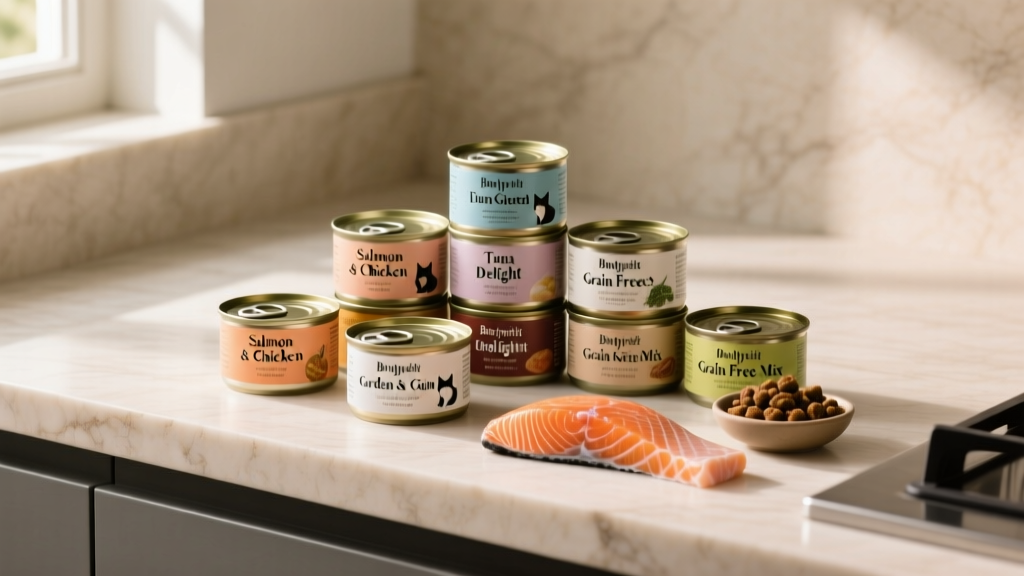
Canned foods are typically cooked in the container (or in a batch and then filled), using heat to achieve commercial sterility and shelf stability.
- Formulation and mixing: Meat, organs, broth, gelling agents (if used), and vitamin/mineral premixes are blended.
- Filling: The mixture is filled into cans or pouches.
- Seaming/sealing: Containers are sealed to prevent contamination.
- Retort processing: The sealed container is heated to kill pathogens and spoilage organisms.
- Cooling and labeling: Product is cooled, inspected, and packaged for sale.
What manufacturing changes in the final nutrition
| Feature | Extruded (Dry/Kibble) | Canned/Wet | Why it matters for cats |
|---|---|---|---|
| Moisture | Usually ~6–12% | Usually ~70–85% | Higher moisture supports hydration and dilute urine for many cats. |
| Carbohydrate level | Often higher due to starch needed for structure | Often lower (not always) | Lower carbs may help with weight control and glycemic management in some cats. |
| Energy density | Higher calories per gram | Lower calories per gram (because of water) | Wet foods can help portion control and satiety. |
| Protein source flexibility | Commonly uses meals + starch matrix | Often more meat-forward textures and broths | Both can meet requirements; ingredient quality and formulation matter more than format alone. |
| Nutrient stability | Heat + drying; fats can oxidize over time after opening | Heat in sealed container; stable until opened | Both can be complete, but storage and freshness affect fat quality and palatability. |
| Palatability | Often enhanced with surface fats/palatants | Naturally aromatic; textures vary | Strong smell and moisture can help picky eaters and older cats. |
| Dental effects | Common myth: “cleans teeth” | Doesn’t “clean” teeth | Most kibble does not provide meaningful dental cleaning unless it’s a validated dental diet; brushing and dental care are still needed. |
Safety and quality control: both can be excellent
Both extrusion and retort canning are designed to reduce microbial risk when executed correctly. Safety depends on:
- Formulation accuracy (meeting nutrient profiles for the intended life stage)
- Quality assurance testing (nutrient analysis, microbial checks, process verification)
- Supply chain controls (ingredient sourcing, storage, handling)
From a practical standpoint, reputable manufacturers publish quality control practices and have nutrition expertise behind formulations. If a cat has a medical condition (kidney disease, urinary stones, diabetes, food allergy), therapeutic diets are often supported by feeding trials and clinical data—regardless of whether they’re canned or dry.
Hydration and urinary health: where the format difference shows up most
One of the clearest real-world differences is water intake. Many cats on dry-only diets produce more concentrated urine than cats eating wet foods, simply because wet food delivers water with every bite. More dilute urine is often desirable for cats prone to:
- Feline lower urinary tract disease (FLUTD)
- Idiopathic cystitis episodes triggered by stress and other factors
- Some types of urinary crystals or stones (diet specifics depend on stone type)
- Constipation, especially in low-drinking cats
This does not mean every cat must eat canned food, or that dry food “causes” urinary disease. It means that moisture is a tool, and canned diets make moisture easier to deliver consistently.
Digestibility, protein quality, and processing
Both extrusion and canning use heat, which changes proteins and can improve digestibility by denaturing them. Over-processing can reduce some heat-sensitive nutrients, which is why reputable manufacturers add vitamin/mineral premixes and account for processing losses. Taurine is especially important in cat foods and is supplemented as needed.
Rather than focusing on “processed vs unprocessed,” focus on measurable outcomes:
- Your cat maintains a healthy body condition score (not just weight).
- Stool quality is normal and consistent.
- Coat condition and energy level are good.
- Urinary habits are normal (no straining, blood, frequent trips).
- Routine veterinary exams and lab work support good health.
4) Practical recommendations for cat owners
- Prioritize complete and balanced diets: Choose foods labeled as complete and balanced for your cat’s life stage (kitten, adult, senior). If feeding a “supplemental” food, keep it to treats/rotation, not the core diet.
- Use moisture strategically: If your cat has a history of urinary issues, constipation, or is a low drinker, discuss a wet-forward plan with your veterinarian.
- Choose based on the cat in front of you: Some cats do best on wet, some thrive on dry, many do well on a combination.
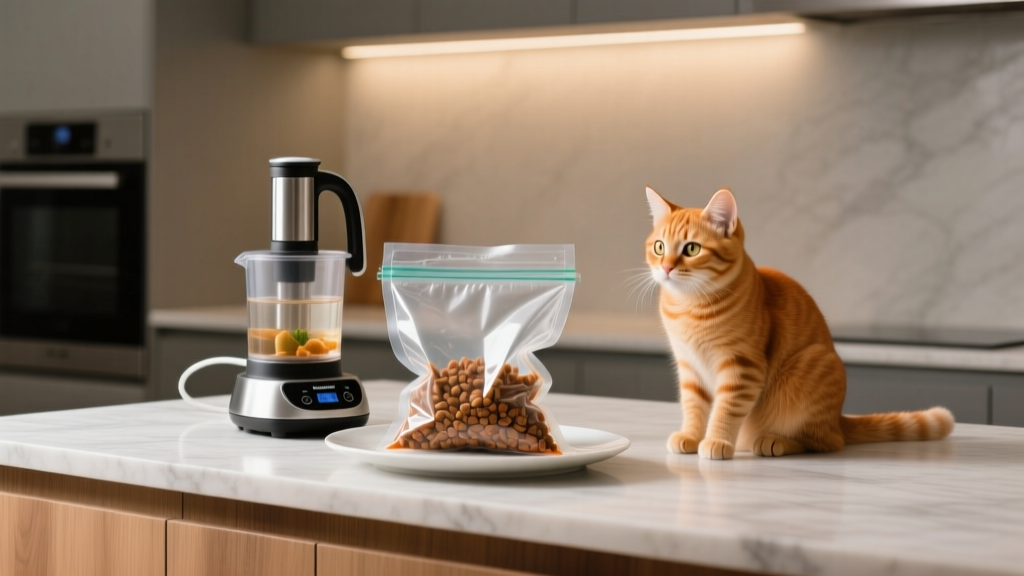
- Measure portions: Dry food is calorie-dense and easy to overfeed. Use a gram scale or a standardized measuring cup and track body condition.
- Think routine and sustainability: The “best” diet is one you can feed consistently, store safely, and afford long-term without constant brand-hopping.
5) Comparing approaches: dry-only, wet-only, and mixed feeding
| Approach | Pros | Cons | Best fit for |
|---|---|---|---|
| Dry-only (extruded kibble) |
|
|
Cats with good hydration habits and stable weight; owners needing convenience (with portion control) |
| Wet-only (canned/pouch) |
|
|
Cats with urinary/constipation risks; weight management plans; picky eaters (as guided by a vet) |
| Mixed feeding (both) |
|
|
Most healthy adult cats; owners wanting practical hydration support without going fully wet |
6) Common mistakes and misconceptions to avoid
- Myth: “Dry food cleans teeth.”
Reality: Most kibble shatters quickly and doesn’t scrape teeth effectively. If dental health is a concern, ask your vet about VOHC-accepted dental diets/treats, tooth brushing, dental exams, and professional cleanings. - Myth: “Canned food causes dental disease.”
Reality: Dental disease is primarily driven by plaque, tartar, and genetics, not wet food alone. Wet diets can leave residue, but so can dry. Dental hygiene matters more than format. - Mistake: Judging nutrition by ingredient list alone.
Ingredient lists don’t show nutrient balance, digestibility, or quality control. Look for complete-and-balanced statements, life-stage appropriateness, and reputable formulation practices. - Mistake: Switching foods frequently to chase trends.
Many cats develop gastrointestinal upset with rapid changes. Constant switching can also make it harder to identify what works if problems arise. - Myth: “Cats don’t need water if they eat dry.”
Reality: Cats always need water. Dry-fed cats may drink more, but some don’t drink enough to offset low dietary moisture.
7) How to implement changes safely (transition tips)
Any diet change should be discussed with your veterinarian, especially if your cat has a medical condition or is on a prescription diet.
- Go slow (7–14 days): Start with 75% old food + 25% new for several days, then 50/50, then 25/75, then 100% new.
- Track appetite and litter box habits: Watch for vomiting, diarrhea, constipation, straining to urinate, or appetite loss. If these occur, pause and contact your vet.
- For wet-food beginners: Offer small “tastes” alongside the usual diet. Warming the food slightly and adding a teaspoon of warm water can increase aroma and acceptance.
- Practice good food hygiene: Refrigerate opened canned food promptly; discard leftovers that sit out too long (follow label guidance; commonly 1–2 hours at room temperature depending on conditions).
- Measure calories, not just volume: When adding wet food, reduce dry accordingly to avoid accidental overfeeding.
8) Special considerations: age, health conditions, and lifestyle
- Kittens (growth): Choose diets formulated for growth/all life stages. Kittens need higher energy and specific nutrient levels. Wet, dry, or mixed can work—consistent intake and proper growth rate matter most.
- Adult indoor cats: Weight gain is common. Wet or mixed feeding can help with satiety due to higher moisture and lower calorie density, but portion control is still essential.
- Seniors: Older cats may have reduced sense of smell, dental issues, or lower thirst drive. Wet foods can be easier to chew and may support hydration. Seniors also benefit from regular veterinary monitoring for kidney disease, hyperthyroidism, and muscle loss.
- Urinary tract concerns: Many urinary management plans emphasize increased water intake and specific mineral targets and urine pH goals. Your vet may recommend a prescription urinary diet (often available in canned and dry). Don’t mix non-prescription foods without veterinary approval if stones are a concern.
- Kidney disease: Therapeutic renal diets focus on controlled phosphorus, adjusted protein quality/amount, and other factors. Many cats with kidney disease benefit from higher moisture intake, but the diet choice should be guided by your veterinarian and lab values.
- Diabetes and obesity: Many diabetic cats do well on carbohydrate-controlled diets and structured meal feeding. Wet foods are often used due to typical macronutrient profiles and portioning, but the best plan depends on the individual cat and insulin regimen.
- Dental disease: Texture alone won’t solve it. Consider vet-approved dental strategies. Some cats with painful mouths may eat better on soft foods.
FAQ: Extrusion vs canning process
1) Is canned food always healthier than kibble?
No. Either format can be complete and balanced. Canned foods usually provide more moisture and often lower carbohydrate levels, which can be helpful for many cats, but a well-formulated dry food can also support excellent health. The “healthiest” choice depends on your cat’s medical risks, body condition, and what they reliably eat. Consult your veterinarian for individualized guidance.
2) Does extrusion destroy nutrients?
Extrusion uses heat and pressure, which can reduce some heat-sensitive nutrients. Quality manufacturers compensate by formulating for processing losses and adding vitamin/mineral premixes. What matters is the final nutrient profile and quality control, not the cooking method alone.
3) Can I feed a mix of canned and dry food?
Many cats do very well on mixed feeding. The key is calorie control and making sure the total diet remains complete and balanced. If your cat is on a prescription diet for urinary stones, kidney disease, or other conditions, ask your veterinarian before mixing foods.
4) How can I increase my cat’s water intake if they eat kibble?
Options include adding measured amounts of wet food, offering a pet fountain, placing multiple water bowls around the home, flavoring water with a small amount of tuna water (no salt added) occasionally, and feeding scheduled meals rather than free-feeding. If your cat has urinary issues, discuss a targeted plan with your vet.
5) Are “grain-free” extruded foods better for cats?
Not automatically. Grain-free does not mean low carbohydrate, and it doesn’t guarantee better digestibility or nutrition. Some grain-free diets use legumes or potatoes as starch sources. Focus on proven nutritional adequacy, appropriate calories, your cat’s tolerance, and your veterinarian’s recommendations.
6) What’s the biggest label clue that a food is nutritionally complete?
Look for a statement that the food is “complete and balanced” for a specific life stage according to AAFCO (or formulated to meet FEDIAF guidelines, depending on region). For cats with health conditions, prioritize diets recommended by your veterinarian.
Choosing between extruded and canned cat food becomes much easier when you match the format to your cat’s hydration needs, calorie control, and any medical conditions—while keeping nutritional completeness as the priority. For tailored advice, work with your veterinarian, especially when managing urinary disease, kidney disease, diabetes, or weight loss plans.
If you want more practical, cat-health-focused feeding guidance, explore our nutrition articles and feeding tips on catloversbase.com.