Cat Food Gentle Cooking: Sous-Vide Pet Food Method
1) Why gentle cooking matters for cat health
Cats thrive when their diet matches their biology: high in animal protein, moderate in fat, very low in carbohydrates, and complete in essential micronutrients. Many cat owners who cook at home are trying to achieve three goals at once: better ingredient control, improved digestibility, and high food safety. Gentle cooking methods—especially sous-vide—are gaining attention because they can preserve moisture and palatability while reducing the risk of harmful bacteria compared with feeding raw.
Used correctly, sous-vide can be a practical middle ground between raw and conventional high-heat cooking. Used incorrectly, it can create nutrient imbalances (the most common risk in homemade diets) or fail to reduce pathogens. This guide explains what sous-vide can and can’t do for feline nutrition, how to make it safer, and how to use it within a veterinarian-informed, nutritionally complete plan.
2) Scientific background: feline nutritional needs (obligate carnivore biology)
Cats are obligate carnivores with metabolic adaptations that make animal-based nutrients non-negotiable. Their bodies are geared to use amino acids and fats for energy and to obtain key vitamins and minerals primarily from animal tissues. Compared with omnivores, cats have limited ability to adapt to low-protein diets and require specific nutrients preformed in animal foods.
Core nutritional facts that shape any cooking method
- High protein requirement: Cats require more dietary protein than dogs and many other mammals. Protein quality (amino acid profile and digestibility) matters as much as quantity.
- Essential amino acids: Taurine and arginine are critical. Taurine deficiency can lead to heart disease (dilated cardiomyopathy), vision problems, and reproductive issues. Arginine deficiency can cause rapid, dangerous hyperammonemia.
- Fat and fatty acids: Cats need animal fat for energy and palatability. They also require essential fatty acids (including arachidonic acid, which cats cannot make efficiently from plant oils).
- Vitamins in specific forms: Cats require preformed vitamin A (retinol) rather than relying on conversion from beta-carotene. They also have unique requirements for niacin and vitamin D.
- Mineral balance: Calcium-to-phosphorus balance is crucial, especially for kittens. Muscle meat alone is high in phosphorus and low in calcium; this imbalance is a common cause of nutritional secondary hyperparathyroidism in homemade diets.
- Water intake: Many cats have a low thirst drive. Moist foods (including properly formulated home-cooked diets) can support hydration and urinary tract health.
What “complete and balanced” really means
A safe long-term diet must meet established nutrient profiles (such as AAFCO or FEDIAF) for the cat’s life stage. Cooking method is secondary to formulation. Sous-vide can help with texture and some nutrient retention, but it does not automatically make a diet complete.
3) Detailed analysis: sous-vide for cat food (evidence-based pros and limits)
What sous-vide is
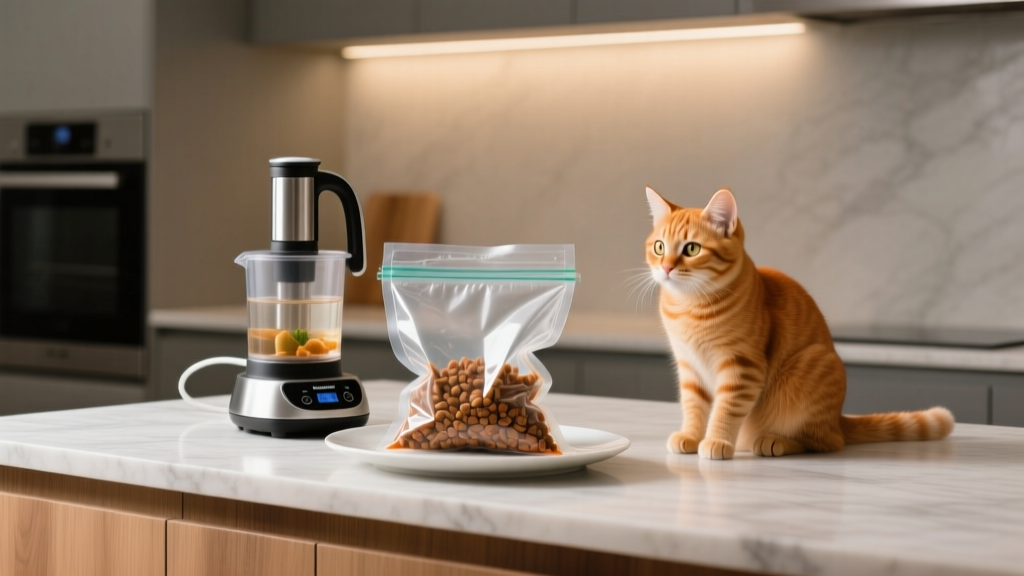
Sous-vide cooks food in a sealed bag held at a controlled water-bath temperature for a specific time. The goal is precise, gentle heating that reduces overcooking, retains moisture, and produces consistent results.
Potential benefits for cats
- Palatability and texture: Many cats prefer soft, moist proteins. Sous-vide helps retain juices and can produce a tender, uniform texture.
- Moisture retention: Because food is sealed, less water is lost. This can help owners deliver a higher-moisture diet compared with baked or pan-cooked food.
- Reduced nutrient loss from high heat: Some heat-sensitive nutrients (certain B vitamins) are better preserved with gentler cooking compared with intense boiling or frying. That said, storage time and reheating also affect nutrients.
- Consistency: Precise temperature control helps avoid undercooking (food safety risk) and overcooking (dryness, lower acceptance).
Realistic limitations and safety concerns
- Pathogens are not automatically eliminated: Sous-vide is safe only when time and temperature are adequate. Lower temperatures held briefly may not reduce bacteria sufficiently.
- Sealed-bag environment has unique risks: Anaerobic conditions can allow certain bacteria to persist or grow if temperature control, chilling, and storage aren’t correct.
- Nutritional completeness is the #1 challenge: Homemade diets most often fail due to missing minerals (especially calcium), incorrect vitamin dosing, or inadequate taurine—regardless of cooking style.
- Bone is not sous-vide friendly: Cooking bones does not make them safe to feed. Cooked bones can splinter or cause obstruction. If you need calcium, use a veterinary-approved calcium source or a complete premix designed for cooked diets.
Sous-vide vs raw vs traditional cooking: a practical comparison
| Approach | Main advantages | Main drawbacks | Best fit for |
|---|---|---|---|
| Raw (commercial or homemade) | High palatability; minimal heat damage; can be high moisture | Higher pathogen risk; strict hygiene needed; nutritional balance still required | Owners willing to accept added safety steps and use vetted formulations |
| Sous-vide (home-prepared) | Gentle cooking; moisture retention; controlled doneness; often more acceptable than fully cooked | Requires correct time/temperature; still needs complete formulation; storage must be careful | Owners wanting a middle ground between raw and cooked with strong process control |
| Traditional cooked (baked/boiled/pan-cooked) | Familiar method; can achieve high food safety with thorough cooking | More moisture and nutrient loss; may be less palatable; easy to overcook proteins | Owners prioritizing straightforward cooking and food safety |
| Commercial complete wet food | Complete and balanced; convenient; typically high moisture; quality control | Less ingredient control; cost can be higher for premium lines | Most cats and households; excellent baseline diet |
| Commercial complete dry food | Convenient; lower cost per calorie; dental claims are limited but some cats do well | Lower moisture; often higher carbohydrate; overeating risk | Some cats with good hydration habits; mixed feeding plans |
Evidence-based perspective: what veterinary nutrition emphasizes
Veterinary nutrition science consistently prioritizes:
- Nutrient completeness and correct life-stage formulation (kittens vs adults vs seniors).
- Food safety and storage practices to reduce bacterial contamination.
- Monitoring body condition, stool quality, skin/coat, and urinary health to judge diet success.
Sous-vide can support these goals, but it doesn’t replace a balanced recipe or veterinary guidance.
4) Practical recommendations for cat owners (how to use sous-vide responsibly)
Start with a complete formulation, not a “meat-only” plan
If you want to sous-vide your cat’s food, the safest path is to use:
- A veterinary nutritionist-formulated recipe designed for cooking, or
- A reputable premix labeled for cats and specifically for cooked meat (follow directions exactly).
Do not rely on internet “ratio diets,” “prey model” estimates, or muscle meat plus supplements guessed by eye. Small errors in minerals and vitamins can cause big health consequences over time.
Ingredient selection for sous-vide cat meals
- Proteins: poultry (thigh/heart/liver in controlled amounts), rabbit, pork, beef, fish (as a limited rotation, not a daily staple).
- Organs: only as directed by a formulated recipe. Liver is nutrient-dense; too much can cause vitamin A excess.
- Carbs/vegetables: optional and usually minimal for cats; include only if your vet-guided recipe uses them for fiber or calorie control.
- Calcium source: use only the form and dose specified by your recipe or premix (commonly calcium carbonate or calcium citrate; bone meal quality varies and may introduce contaminants if not tested).
Process control: sous-vide safety essentials
- Use a reliable circulator and thermometer: water-bath temperature accuracy matters.
- Prevent cross-contamination: separate raw meat prep area, sanitize surfaces, wash hands, keep cats away from prep zones.
- Chill rapidly after cooking: portion into shallow containers and refrigerate promptly. For batch cooking, consider an ice bath to cool sealed bags quickly before refrigerating.
- Reheat gently and safely: warm portions in a water bath or microwave briefly; stir and check for hot spots. Serve warm—not hot.
- Storage discipline: refrigerate promptly; freeze portions you won’t use soon. When in doubt, throw it out.
How to portion meals for best results
- Weigh your cat regularly: use grams/ounces, not “looks about right.”
- Track body condition score (BCS): aim for a visible waist and easily felt ribs with light fat cover.
- Keep treats under control: treats should generally stay under 10% of daily calories unless your vet advises otherwise.
5) Comparison of approaches: DIY sous-vide vs premix vs commercial foods
| Option | Nutrition reliability | Convenience | Cost | Best use case |
|---|---|---|---|---|
| DIY sous-vide with vet-formulated recipe | High (if followed precisely) | Moderate (prep and batch cooking) | Variable | Owners who want full control and can follow a precise formula |
| Sous-vide using a reputable cat-specific premix | Moderate to high (depends on premix quality and compliance) | Moderate to high | Moderate | Owners who want simplicity but still cook at home |
| Commercial complete wet food (canned/pouches) | High (for reputable brands meeting AAFCO/FEDIAF) | High | Moderate to high | Best all-around baseline for most cats |
| Commercial fresh cooked (gently cooked subscriptions) | Variable (must be complete and balanced for cats) | High | High | Owners who want cooked freshness without DIY steps |
6) Common mistakes and misconceptions to avoid (myths debunked)
Myth: “Sous-vide makes homemade food automatically safe.”
Reality: Safety depends on time, temperature, handling, and storage. Gentle cooking can reduce pathogens, but only if you consistently reach validated conditions and avoid contamination after cooking.
Myth: “Cats can eat muscle meat alone if it’s high-quality.”
Reality: Muscle meat alone is not complete. It’s typically deficient in calcium and may be inadequate in certain vitamins and trace minerals. Long-term feeding can cause bone demineralization and other serious deficiencies.
Myth: “If I add a little liver, it covers vitamins.”
Reality: Liver is not a balanced multivitamin. Too little won’t fix deficiencies; too much can cause excess vitamin A and copper. Use liver only within a properly designed recipe.
Myth: “Cooked bones are fine if they’re soft.”
Reality: Cooked bones can splinter or obstruct, even if they seem soft. For calcium, use a measured supplement or premix.
Myth: “Grain-free or carb-free is always better.”
Reality: Cats don’t need grains nutritionally, but the health impact depends on the whole diet. Some cats benefit from specific fibers for stool quality or weight management. Focus on protein quality, calorie control, and complete nutrition.
7) How to implement changes safely (transition tips)
Any diet change can trigger gastrointestinal upset (vomiting, diarrhea, refusal), especially in cats that are picky or prone to stress. Transition slowly, and consult your veterinarian before major changes—particularly if your cat has health conditions.
Suggested transition schedule (adjust to your cat)
| Days | Old food | New sous-vide food |
|---|---|---|
| 1–3 | 75% | 25% |
| 4–6 | 50% | 50% |
| 7–10 | 25% | 75% |
| 11+ | 0–25% (as needed) | 75–100% |
Red flags to stop and call your vet
- Not eating for 24 hours (or eating dramatically less)
- Repeated vomiting, lethargy, dehydration
- Diarrhea lasting more than 24–48 hours
- Straining to urinate, frequent trips to the litter box, blood in urine
- Rapid weight loss
8) Special considerations (age, health conditions, activity level)
Kittens (growth phase)
- Non-negotiable: kittens need a growth-formulated diet with precise calcium, phosphorus, and energy density.
- Risk: homemade “adult-style” recipes can stunt growth or harm bone development.
- Best approach: use commercial kitten food or a veterinary nutritionist recipe specifically for kittens.
Adult cats
- Adult maintenance is the most flexible life stage, but balance still matters.
- Weight management is often the main challenge—portion control and calorie tracking help more than “clean ingredients” alone.
Seniors
- Seniors often benefit from higher moisture and highly palatable protein.
- Screening matters: kidney disease, hyperthyroidism, dental disease, and arthritis can change dietary needs.
- Work with your veterinarian to tailor phosphorus, sodium, and calorie density if chronic disease is present.
Chronic kidney disease (CKD)
- CKD diets often need controlled phosphorus and adjusted protein quality.
- Homemade CKD cooking is possible but should be guided by a veterinarian or board-certified veterinary nutritionist to prevent worsening mineral imbalance.
Urinary tract issues (FLUTD, crystals, cystitis)
- Moisture intake is a major lever—sous-vide diets can help by staying wet and palatable.
- Urinary diets may require controlled minerals and targeted urine pH; do not guess. Ask your vet whether a prescription urinary diet is indicated.
Food allergies or inflammatory bowel disease (IBD)
- Sous-vide can be useful for novel-protein trials (e.g., rabbit) because you control ingredients.
- Elimination diets must be strict and time-limited under veterinary supervision to be meaningful.
Very active cats vs indoor cats
- Active cats may need more calories and fat; indoor cats often need calorie control and feeding enrichment to prevent boredom eating.
- Adjust portions based on body condition trends, not just the feeding guide.
FAQ
1) Is sous-vide better than raw for cats?
It can be a safer-feeling compromise for many households because it cooks the food while preserving moisture and tenderness. Raw can be nutritionally complete if properly formulated, but it carries higher pathogen risk and requires rigorous handling. Your veterinarian can help you choose based on your cat’s health and your household risk factors.
2) Can I sous-vide plain chicken and feed it as a main diet?
No. Plain chicken (or any single meat) is not complete and balanced for cats. It can be used as a short-term topper or treat, but a long-term diet needs the right calcium, taurine, vitamins, and trace minerals. Use a veterinary recipe or a cat-specific premix designed for cooked meat.
3) Do I still need to add taurine if I cook meat gently?
Often, yes. Taurine content varies by protein type and cut, and processing/storage can reduce it. Many properly formulated homemade cooked diets include taurine supplementation to reliably meet needs. Follow your veterinarian or recipe guidance rather than guessing.
4) Is fish a good protein to sous-vide for cats?
Fish can be part of a rotation, but it’s usually not ideal as a daily main protein for many cats. Some fish-heavy diets can create nutrient imbalances or contribute to pickiness. If your cat loves fish, use it strategically and ensure the overall diet remains complete and balanced.
5) How do I know if a “fresh gently cooked” commercial food is complete for cats?
Look for a statement that it is “complete and balanced” for your cat’s life stage (AAFCO/FEDIAF) and check whether the company employs qualified nutrition professionals and provides nutrient analysis. When unsure, ask your veterinarian to review the product details.
6) My cat refuses the sous-vide food—what can I do?
Warm it slightly to enhance aroma, transition more slowly, and avoid pressuring your cat to eat. You can also try a different protein texture (shredded vs minced) or mix a small amount of the new food into a familiar wet food. If refusal persists or your cat goes 24 hours without eating, contact your veterinarian promptly.
Practical takeaways
- Sous-vide can produce moist, highly palatable cat food with controlled cooking, but it is not automatically nutritionally complete or fully risk-free.
- The foundation is a balanced formula (vet-formulated recipe or reputable cat-specific premix) plus safe handling and storage.
- Consult your veterinarian before switching diets—especially for kittens, seniors, or cats with kidney, urinary, GI, or allergy issues.
If you’re optimizing your cat’s diet one step at a time, keep exploring more nutrition guides on catloversbase.com to compare feeding approaches, learn label-reading skills, and build a plan that supports lifelong feline health.