Why Cats Change Behavior Side Effects
When Your Cat’s Personality Shifts Overnight — It’s Rarely ‘Just Acting Weird’
If you’ve recently asked yourself why cats change behavior side effects, you’re not alone — and you’re likely already worried. A once-affectionate cat hiding for days, a calm senior suddenly yowling at night, or a playful kitten withdrawing and grooming obsessively aren’t just ‘phases.’ These are often the first, subtle language of an underlying medical issue — and many stem directly from side effects of common treatments, undiagnosed illness, or age-related neurological changes. Ignoring them risks delayed diagnosis, preventable suffering, and even irreversible decline. This isn’t about ‘bad behavior’ — it’s about listening to your cat’s body speaking in code.
1. Medication Side Effects: The Silent Behavior Disruptor
Many cat owners never connect a new prescription with their pet’s sudden anxiety, lethargy, or aggression — but veterinarians see this link daily. According to Dr. Sarah Lin, DACVIM (Internal Medicine), “Over 40% of behavioral shifts reported within 7–14 days of starting a new medication are directly attributable to side effects — especially with corticosteroids, gabapentin, thyroid meds, and certain antibiotics.” Unlike humans, cats can’t verbalize nausea, dizziness, or brain fog — so they express it through withdrawal, restlessness, or inappropriate elimination.
Common culprits include:
- Prednisolone: Can cause increased thirst/appetite, pacing, vocalization, and even temporary cognitive dullness — mimicking early dementia in seniors.
- Gabapentin: Widely used for stress reduction before vet visits, but at higher doses or in sensitive individuals, it may trigger ataxia (wobbliness), disorientation, or paradoxical agitation.
- Methimazole (for hyperthyroidism): While life-saving, it carries a 5–10% risk of gastrointestinal upset, lethargy, and — less commonly — idiosyncratic reactions affecting mood and sleep-wake cycles.
- Clomipramine & Fluoxetine (SSRIs): Prescribed for anxiety or OCD-like overgrooming, yet initial weeks may worsen symptoms before improvement — including irritability, decreased interaction, or heightened startle response.
Key action step: Always request a full side effect handout from your vet — and document baseline behavior *before* starting any new drug. Use a simple journal: note duration/frequency of vocalizations, litter box use, sleep patterns, and social engagement for 3 days pre- and post-initiation.
2. Pain as a Behavior Mask: Why ‘Grumpy’ Often Means ‘Hurting’
Behavioral shifts are cats’ primary pain vocabulary. A 2022 study published in Journal of Feline Medicine and Surgery found that 68% of cats diagnosed with osteoarthritis showed no obvious limping — but 92% displayed at least one significant behavior change: reduced jumping, avoidance of stairs, increased irritability when handled, or sudden litter box aversion due to pelvic discomfort.
Pain doesn’t always look like crying or guarding. In cats, it looks like:
- Suddenly refusing to be held or petted on the lower back or abdomen
- Staring blankly into corners or appearing ‘spaced out’ (a sign of chronic neuropathic pain)
- Overgrooming one area — especially the flank or base of tail — which may indicate referred pain from bladder or spinal issues
- Aggression toward other pets or family members — especially if previously sociable — often triggered by movement near painful joints
Veterinary behaviorist Dr. Emily Tran emphasizes: “We used to call it ‘senior crankiness.’ Now we know it’s often untreated degenerative joint disease or dental resorptive lesions — both intensely painful and highly treatable.” A full orthopedic + oral exam — including digital radiographs and dental probing under sedation — is non-negotiable for any cat over age 10 showing personality shifts.
3. Neurological & Cognitive Changes: When the Brain Is the Source
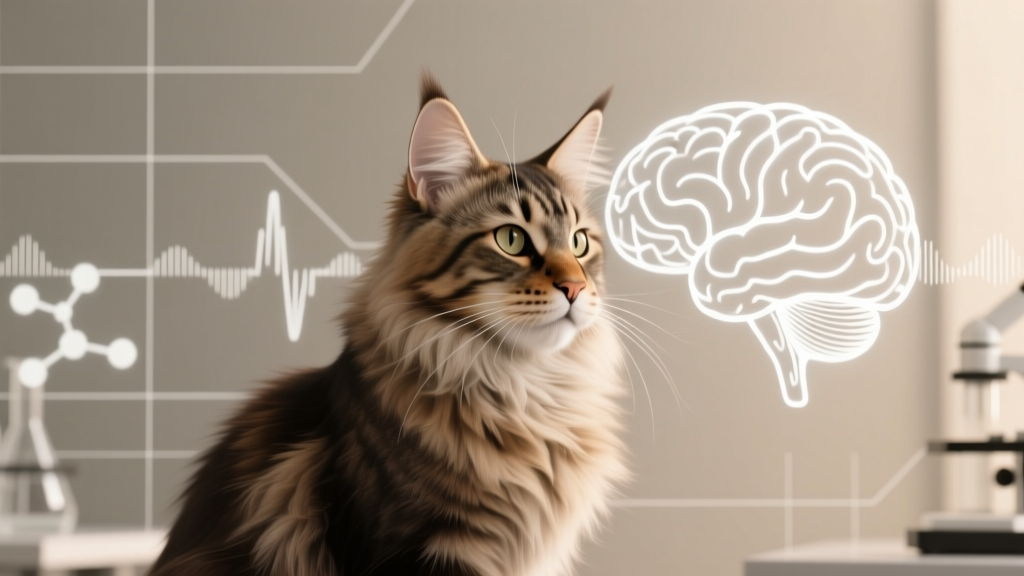
Feline cognitive dysfunction syndrome (CDS) affects an estimated 28% of cats aged 11–14 and over 50% of those 15+. But unlike dogs, cats rarely show classic ‘confusion’ — instead, they exhibit subtle, insidious shifts: nighttime vocalization (often linked to disrupted circadian rhythm), staring at walls, forgetting litter box location despite perfect prior habits, or sudden fear of familiar people or rooms.
Crucially, CDS is frequently misdiagnosed — because its symptoms overlap heavily with metabolic disease, hypertension, or even brain tumors. A 2023 multicenter review revealed that 31% of cats initially labeled ‘demented’ were later found to have undiagnosed hypertension causing retinal hemorrhage and visual disturbances — leading to apparent disorientation.
Diagnostic must-dos:
- Blood pressure measurement (using feline-specific cuff and Doppler)
- Complete blood count + chemistry panel (focusing on BUN, creatinine, T4, glucose, electrolytes)
- Ophthalmic exam to assess for retinal detachment or hemorrhage
- Consider MRI only if focal neurologic signs exist (e.g., head tilt, circling, seizures)
Early intervention matters: Systolic blood pressure >160 mmHg warrants immediate treatment; ACE inhibitors or calcium channel blockers can dramatically reverse behavior changes within 2–3 weeks when hypertension is the driver.
4. Hormonal & Endocrine Imbalances: The Invisible Drivers
Hyperthyroidism, diabetes mellitus, and Cushing’s-like syndromes (though rare in cats) profoundly alter neurochemistry and energy metabolism — directly impacting behavior. Consider this real case: Luna, a 13-year-old Siamese, began yowling incessantly at dawn and pacing rooms for hours. Her owner assumed ‘senility’ — until bloodwork revealed T4 = 8.2 µg/dL (normal: 0.8–4.0). Within 10 days of methimazole, her vocalizations ceased and she resumed napping in sunbeams.
Endocrine red flags that warrant urgent testing:
- Increased thirst/urination + weight loss despite normal or increased appetite → Rule out diabetes or hyperthyroidism
- Excessive panting, thin skin, recurrent urinary tract infections → Consider iatrogenic Cushing’s (from long-term steroid use) or adrenal tumor
- Extreme clinginess or separation anxiety onset in senior cats → May reflect cortisol dysregulation or hypothyroidism (rare but documented)
Important nuance: Blood tests alone aren’t enough. Free T4 by equilibrium dialysis is more accurate than total T4 for older cats. Fructosamine levels help distinguish stress-induced hyperglycemia from true diabetes. Always interpret labs alongside clinical signs — not in isolation.
| Cause of Behavioral Shift | Onset Timeline | Top 3 Telltale Signs | Urgency Level | First Diagnostic Step |
|---|---|---|---|---|
| Medication Side Effect | Within 24–72 hrs (acute) or 5–14 days (delayed) | Disorientation, excessive drooling, sudden lethargy or agitation | High — discontinue drug & contact vet same day | Review medication log + physical exam |
| Osteoarthritis Pain | Gradual (weeks–months), but may appear sudden if injury occurs | Avoidance of high places, stiff gait, reduced play, licking joints | Moderate-High — impacts quality of life significantly | Orthopedic exam + weight-bearing radiographs |
| Hypertension | Acute or subacute; often masked until crisis (e.g., blindness) | Night vocalization, bumping into objects, dilated pupils, seizures | Critical — risk of stroke, blindness, kidney damage | Direct blood pressure measurement + fundic exam |
| Feline Cognitive Dysfunction | Insidious progression over months; may accelerate with concurrent illness | Sundowning (evening agitation), spatial disorientation, decreased self-grooming | Moderate — requires environmental + medical support | Ruling out metabolic causes first; then CDS checklist scoring |
| Hyperthyroidism | Gradual but noticeable over 2–6 months | Weight loss + ravenous appetite, palpable thyroid nodule, tachycardia | High — untreated leads to heart failure | Total T4 + Free T4 + cardiac auscultation |
Frequently Asked Questions
Can stress alone cause lasting behavior changes — or is there always a medical cause?
Stress absolutely triggers acute behavior shifts — like hiding during storms or urine marking after a new pet arrives. But persistent changes (lasting >2 weeks), especially in cats over age 7, require medical workup first. Chronic stress can *exacerbate* underlying disease (e.g., worsening cystitis or IBD), but it rarely explains profound, unrelenting shifts like complete social withdrawal or disorientation. As Dr. Lin states: “Rule out pain and pathology before assuming it’s ‘just stress.’”
My cat changed behavior after dental surgery — is that normal?
Yes — but only temporarily. Post-op pain, lingering anesthesia effects, or oral discomfort can cause 3–5 days of quietness, reduced appetite, or mild irritability. However, if behavior hasn’t returned to baseline by Day 6 — or if new signs emerge (e.g., aggression when touched near the mouth, pawing at face, refusal to drink water), schedule a recheck. Undiagnosed tooth root abscesses or nerve irritation can mimic ‘personality change’ for weeks.
Will my cat’s behavior return to normal after treating the medical cause?
In most cases — yes, especially when caught early. Studies show ~85% of cats with hypertension or hyperthyroidism regain baseline sociability and activity within 2–4 weeks of effective treatment. Pain-related changes often improve within days of appropriate analgesia. Cognitive changes may stabilize or slow with antioxidants (SAMe, omega-3s) and environmental enrichment — but full reversal is uncommon. Early intervention remains the strongest predictor of recovery.
Should I film my cat’s odd behavior to show the vet?
Yes — and do it now. Capture 30–60 seconds of the most concerning behavior: pacing, vocalizing, staring, or unusual posture. Include audio. Vets consistently report that video evidence reveals nuances missed in history-taking — like micro-tremors, abnormal eye movements, or timing patterns (e.g., vocalizing only between 2–4 a.m.). Upload to your phone’s cloud and share the link at check-in.
Common Myths About Behavior Changes in Cats
Myth #1: “Older cats just get grumpy — it’s normal aging.”
False. While some slowing occurs, significant personality shifts — withdrawal, aggression, confusion — are not inevitable. They’re clinical signs requiring investigation. Age is a risk factor, not a diagnosis.
Myth #2: “If my cat is eating and using the litter box, they can’t be sick.”
Dangerously misleading. Cats mask illness masterfully. A cat with advanced kidney disease, brain tumor, or severe arthritis may maintain appetite and elimination — while suffering silently. Behavior is often the *first* and *most sensitive* indicator.
Related Topics (Internal Link Suggestions)
- Feline Hyperthyroidism Symptoms — suggested anchor text: "early signs of hyperthyroidism in cats"
- Cat Pain Recognition Guide — suggested anchor text: "how to tell if your cat is in pain"
- Senior Cat Health Checklist — suggested anchor text: "veterinary wellness exam for older cats"
- Gabapentin for Cats: Dosage & Side Effects — suggested anchor text: "gabapentin side effects in cats"
- Feline Cognitive Dysfunction Treatment — suggested anchor text: "helping cats with dementia"
Conclusion & Next Step
Your cat’s behavior is their native language — and sudden dialect shifts deserve translation, not dismissal. Whether it’s why cats change behavior side effects from medication, pain, neurological change, or endocrine imbalance, the path forward starts with partnership: observe without judgment, document without delay, and advocate without hesitation. Don’t wait for ‘more obvious’ signs. Schedule a vet visit within 72 hours of noticing persistent change — and bring your behavior log and any videos. Early detection isn’t just about extending life; it’s about restoring joy, connection, and comfort — for both of you. Your next step? Open your notes app right now and record today’s observations — date, time, what happened, and how long it lasted. That tiny act could be the first line of your cat’s recovery story.