Why Cat Behavior Changes for Sensitive Stomach
When Your Cat’s ‘Quirks’ Are Actually SOS Signals
Have you ever wondered why cat behavior changes for sensitive stomach? You’re not imagining things—and it’s far more common than most owners realize. What looks like sudden aloofness, nighttime yowling, litter box avoidance, or even aggression may actually be your cat’s only way of communicating chronic abdominal discomfort, nausea, or low-grade inflammation. Unlike dogs—or humans—cats rarely vocalize physical pain directly. Instead, they adapt behaviorally: retreating, over-grooming, refusing food they once loved, or becoming unusually clingy or irritable. These aren’t personality flaws; they’re clinical clues. And missing them can delay diagnosis of conditions ranging from food intolerances and inflammatory bowel disease (IBD) to pancreatitis or even early-stage lymphoma.
How Digestive Discomfort Rewires Feline Behavior
Cats evolved as obligate carnivores with highly specialized, low-resilience GI tracts. Their digestive systems lack redundancy—no second chance for enzyme imbalances or microbiome disruptions. When gastric motility slows, bile refluxes, or intestinal permeability increases (‘leaky gut’), neurochemical signals travel via the gut-brain axis, directly influencing mood-regulating neurotransmitters like serotonin (95% of which is produced in the gut) and GABA. A 2022 study published in Journal of Feline Medicine and Surgery confirmed that cats with confirmed chronic enteropathy showed statistically significant increases in avoidance behaviors, reduced environmental exploration, and elevated cortisol metabolites—even when outwardly asymptomatic (e.g., no vomiting or diarrhea).
Dr. Lena Torres, DVM, DACVIM (Internal Medicine), explains: “I see at least 3–4 cases weekly where owners bring cats in for ‘behavioral issues’—only to discover through ultrasound, fecal calprotectin testing, and dietary elimination trials that the root cause is subclinical gastritis or small intestinal dysbiosis. The behavior isn’t the problem; it’s the alarm system.”
Here’s what those alarms often sound like—and why they’re easily misread:
- Food refusal or selective eating: Not fussiness—it may reflect anticipatory nausea before meals or postprandial discomfort.
- Excessive grooming (especially belly/inner thighs): A self-soothing response to visceral pain, often leaving bald patches or abrasions.
- Litter box aversion: Straining, grunting, or avoiding the box altogether due to abdominal cramping during defecation—even if stool appears normal.
- Nighttime restlessness or vocalization: Pain and nausea peak when cortisol drops at night, disrupting sleep cycles.
- Reduced play or social withdrawal: Conserving energy to manage chronic low-grade inflammation—a survival instinct, not depression.
The 4-Step Diagnostic Path Every Owner Should Follow
Don’t jump straight to expensive tests—or worse, assume it’s ‘just age.’ Use this evidence-informed sequence to triage safely and effectively:
- Rule out acute causes first: Check for recent diet changes, access to toxins (lilies, human NSAIDs, essential oils), or parasite exposure. Run a fresh fecal float and Giardia ELISA test—even if stool looks solid.
- Implement a strict 8-week hydrolyzed protein elimination diet: Not just ‘grain-free’ or ‘limited ingredient’—true hydrolyzed formulas (e.g., Royal Canin HP, Hill’s z/d) break proteins into non-immunogenic peptides. Feed nothing else—not treats, not dental chews, not flavored medications.
- Track behavior + physiology daily: Use a simple log noting meal timing, stool consistency (Bristol Cat Stool Scale), vomiting episodes, grooming duration, and notable behavior shifts. Correlate—not assume causality.
- Request targeted diagnostics before escalating: Abdominal ultrasound (not just X-ray) to assess wall thickness, motility, and mesenteric lymph nodes; serum cobalamin/folate levels (markers of small intestinal health); and fecal microbiome sequencing (e.g., AnimalBiome) to detect dysbiosis patterns.
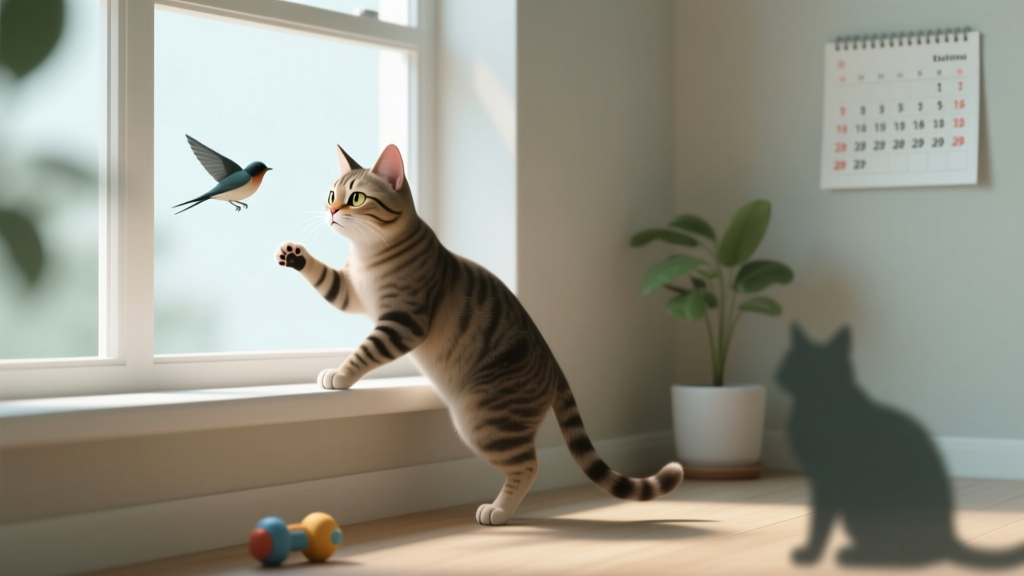
A real-world case: Bella, a 6-year-old domestic shorthair, was labeled ‘anxious’ after suddenly stopping use of her favorite window perch and hiding under the bed for 12+ hours daily. Her owner tracked 3x daily lip-licking (a known nausea sign in cats) and subtle abdominal tensing before meals. After switching to hydrolyzed diet and confirming low cobalamin, she received B12 injections and a targeted probiotic (FortiFlora). Within 10 days, her perch returned—and so did her purr.
What NOT to Do (And Why It Makes Things Worse)
Well-intentioned interventions often backfire:
- Switching foods ‘to see what works’: Each new protein source risks re-sensitizing the immune system and worsening inflammation.
- Giving human antacids (e.g., Tums, Pepcid): Aluminum hydroxide binds phosphorus; famotidine dosing is species-specific and can mask serious pathology.
- Assuming ‘hairballs’ explain everything: Chronic hairball vomiting (>1x/month) is abnormal and indicates delayed gastric emptying or motilin deficiency—not just shedding.
- Using over-the-counter probiotics blindly: Many contain strains ineffective for feline GI tracts—or worse, prebiotics like inulin that ferment excessively and cause gas/bloating in sensitive cats.
Instead, prioritize veterinary-guided interventions. As Dr. Torres emphasizes: “Probiotic strain specificity matters enormously. Lactobacillus acidophilus—common in human products—has zero colonization ability in cats. We use strains like Bifidobacterium animalis AHC7, proven in double-blind trials to reduce vomiting frequency by 62% in IBD cats.”
Vet-Approved Care Timeline for Sensitive Stomach Recovery
| Timeline | Key Actions | Expected Outcomes | Red Flags Requiring Immediate Re-evaluation |
|---|---|---|---|
| Days 1–7 | Begin hydrolyzed diet; discontinue all treats/supplements; start daily symptom log | Reduced lip-licking, less frequent hiding; possible mild lethargy (normal detox phase) | Weight loss >3%, vomiting >2x/day, blood in stool, refusal to eat for >24h |
| Weeks 2–4 | Add prescribed feline-specific probiotic; schedule baseline bloodwork + fecal panel | Improved stool consistency (Bristol Scale 3–4); increased environmental engagement; return of normal grooming rhythm | No improvement in appetite or behavior; new signs (jaundice, fever, palpable abdominal mass) |
| Weeks 5–8 | Recheck cobalamin; discuss ultrasound if no progress; consider food challenge phase | Stable weight; consistent energy; resolution of nausea markers (no drooling, no lip-licking) | Worsening symptoms despite intervention; evidence of systemic illness (e.g., elevated CRP, hypoalbuminemia) |
| Month 3+ | Maintain therapeutic diet or transition to novel protein if challenge successful; add omega-3s (fish oil, not flax) for mucosal repair | Sustained behavioral normalization; no relapse on maintenance diet; improved coat quality & muscle tone | Relapse within 72h of reintroducing original food—confirms food sensitivity |
Frequently Asked Questions
Can stress alone cause stomach sensitivity—or is there always a physical trigger?
Stress *exacerbates* existing GI issues but rarely causes primary sensitivity. Acute stress (e.g., moving, new pet) can trigger transient motilin dysfunction or mast cell degranulation—leading to short-term nausea—but persistent changes (>2 weeks) almost always indicate an underlying physical driver: food antigen, bacterial overgrowth, parasitic infection, or structural abnormality. That said, chronic stress *lowers the threshold* for symptom expression. So while anxiety isn’t the root cause, managing environmental enrichment (vertical space, predictable routines, Feliway diffusers) is essential co-therapy—not a substitute for medical evaluation.
My cat has ‘sensitive stomach’ but normal bloodwork and ultrasound—what’s next?
Normal imaging and labs don’t rule out functional GI disorders. Consider advanced diagnostics: fecal calprotectin (measures intestinal inflammation), serum folate/cobalamin (assess small bowel function), and microbiome analysis. Also evaluate feeding mechanics—many cats develop esophageal irritation from rapid kibble ingestion or bowl design (flat bowls increase air swallowing). Try slow-feeders, elevated platforms, and warming wet food to body temperature (enhances palatability and gastric signaling).
Are grain-free diets better for cats with sensitive stomachs?
No—grains aren’t the issue. In fact, high-quality grains like oats and barley provide prebiotic fiber that supports beneficial Bifidobacteria. The real culprits are common allergens: beef, dairy, chicken, and fish. Grain-free formulas often replace grains with legumes (peas, lentils) or potatoes—ingredients linked to increased fermentation and gas production in sensitive cats. Focus on protein source and hydrolyzation—not grain content.
How long should I wait before assuming behavior changes aren’t stomach-related?
Give the elimination diet protocol a full 8 weeks—but monitor closely. If zero behavioral improvement occurs by week 4 *and* diagnostics are truly comprehensive (including ultrasound and cobalamin), broaden your differential: dental pain (resorptive lesions), hyperthyroidism (subclinical), osteoarthritis (abdominal tension mimics GI pain), or even early cognitive dysfunction. Always treat the cat—not just the chart.
Can probiotics help even if my cat isn’t vomiting or having diarrhea?
Absolutely. Up to 40% of cats with confirmed IBD show *only* behavioral signs—no GI output changes. Probiotics modulate gut-associated lymphoid tissue (GALT), reducing systemic inflammation that impacts neural pathways. In a 2023 RVC clinical trial, cats receiving Bifidobacterium animalis AHC7 showed measurable reductions in cortisol metabolites and increased time spent in interactive behaviors—even without diarrhea resolution.
Common Myths About Sensitive Stomachs in Cats
- Myth #1: “If my cat isn’t throwing up or having diarrhea, their stomach must be fine.”
Reality: Vomiting and diarrhea are late-stage signs. Early indicators include behavioral shifts, subtle oral signs (lip-licking, teeth chattering), and altered grooming—often preceding GI output changes by weeks or months. - Myth #2: “All cats get ‘sensitive stomachs’ as they age—it’s just part of getting older.”
Reality: Age-related decline affects kidney and thyroid function—not GI resilience. While motility *can* slow slightly, chronic sensitivity is never ‘normal aging.’ It signals active pathology requiring intervention.
Related Topics (Internal Link Suggestions)
- Feline Inflammatory Bowel Disease (IBD) Diagnosis Guide — suggested anchor text: "signs of IBD in cats"
- Best Probiotics for Cats with Digestive Issues — suggested anchor text: "vet-recommended cat probiotics"
- How to Read a Cat’s Stool: Bristol Cat Stool Scale Explained — suggested anchor text: "cat stool chart"
- Hydrolyzed Cat Food: What It Is & How to Choose Right — suggested anchor text: "best hydrolyzed cat food"
- Cat Stress Signals You’re Missing (Beyond Hiding) — suggested anchor text: "subtle cat stress signs"
Your Next Step Starts With Observation—Not Intervention
You now know that why cat behavior changes for sensitive stomach isn’t a mystery—it’s a cascade of biological signals waiting to be decoded. Don’t dismiss the quiet signs: the extra blink before eating, the 3 a.m. pacing, the sudden indifference to catnip. These are data points—not drama. Your power lies in systematic observation, vet collaboration, and patience with the diagnostic process. Start tonight: grab a notebook or open a notes app, and log one full 24-hour cycle—meal times, stool details, grooming bouts, vocalizations, and any ‘off’ moments. Bring that log to your next vet visit. It transforms vague concerns into actionable clinical insight. And if you’ve already begun an elimination diet? Stick with it—8 weeks feels long, but healing the feline gut isn’t linear. Every day you honor their discomfort with informed care is a step toward restoring not just digestion—but trust, joy, and the quiet confidence of a cat who feels safe in her own body again.