How to Take Care of 5 Week Old Kitten: The Exact Feeding Schedule, Litter Training Timeline, & Emergency Warning Signs Every New Owner Misses (But Shouldn’t)
Why This Is the Most Critical Week in Your Kitten’s Life
If you’re searching how to take care of 5 week old kitten, you’ve landed at a pivotal, fragile moment — one where small oversights can cascade into life-threatening consequences, but where thoughtful, informed care sets the stage for lifelong resilience. At five weeks, kittens are transitioning from complete dependence to fledgling independence: their eyes are fully open and focused, baby teeth are erupting, they’re beginning to walk with purpose (not wobble), and their immune system is still dangerously immature — producing only ~30% of adult immunoglobulin levels, per the American Association of Feline Practitioners (AAFP). Yet most online guides gloss over this window, lumping ‘4–8 weeks’ together. That’s dangerous. A 5-week-old isn’t a mini-adult — it’s a biological work-in-progress with narrow physiological margins. Miss a feeding by 3 hours? Risk hypoglycemia. Use the wrong formula? Trigger severe diarrhea that leads to fatal dehydration in under 12 hours. Introduce litter too early or with clay clumping? Inhalation risk and intestinal blockage. This guide cuts through the noise with precise, time-sensitive protocols — backed by feline neonatology research and real-world foster rescue data.
Feeding & Nutrition: Beyond ‘Kitten Milk Replacer’
At five weeks, your kitten is physiologically ready to begin weaning — but not ready to go cold turkey on milk. Their digestive enzymes (especially lactase) are still dominant, but pancreatic amylase and protease activity is rising rapidly. That means they need a carefully phased transition — not just ‘mix in some wet food.’ According to Dr. Susan Little, DVM and feline specialist with the Canadian Veterinary Medical Association, abrupt cessation of milk replacer before 6 weeks increases diarrhea incidence by 300% in shelter populations.
Here’s the evidence-based protocol:
- Days 1–3: Offer warm (98–100°F) kitten milk replacer (KMR) in a shallow dish — never a bottle unless medically indicated (e.g., orphaned, weak suck reflex). Let them lap; don’t force. Supplement with 1–2 bottle feedings daily if weight gain stalls (<5g/day).
- Days 4–7: Mix KMR with high-quality, grain-free pate-style wet food (no chunks or gravy) at a 3:1 ratio. Warm gently — never microwave. Serve in a flat ceramic dish (no plastic leaching risk). Feed 4x daily, spaced evenly.
- Week 2 onward: Gradually reduce KMR to 1:1, then 1:3, then eliminate entirely by day 35–38 — only if stool remains firm and weight gain continues steadily (10–15g/day). Monitor closely: loose stool = slow down the transition.
Crucially: Avoid cow’s milk, goat’s milk, or human baby formula. These lack taurine, arachidonic acid, and proper calcium:phosphorus ratios — leading to retinal degeneration and skeletal deformities. And skip dry kibble until week 7–8: their tiny jaws and undeveloped molars can’t crush it, and it provides zero hydration — a major risk factor for urinary crystals later in life.
Temperature, Hydration & Environmental Safety
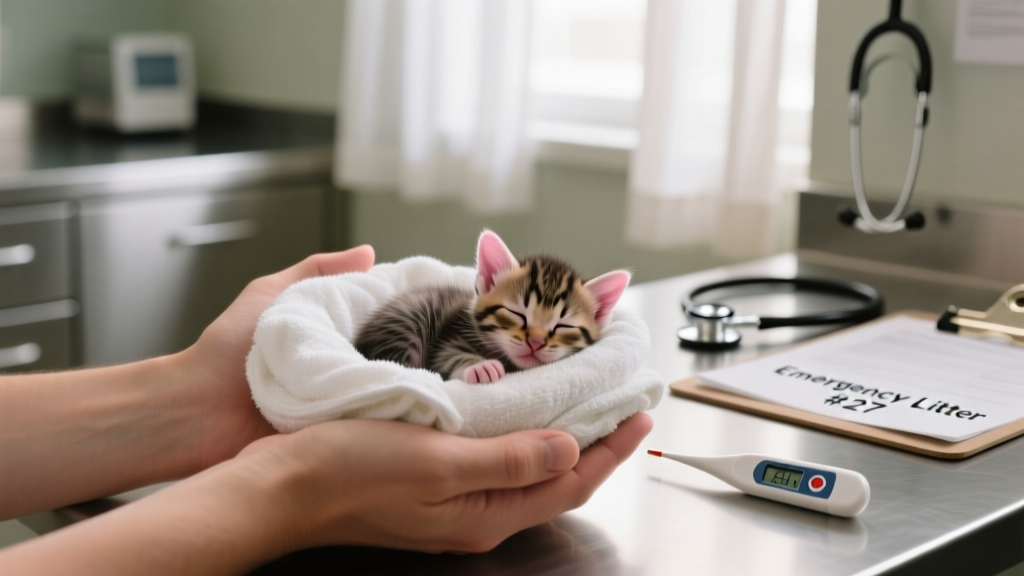
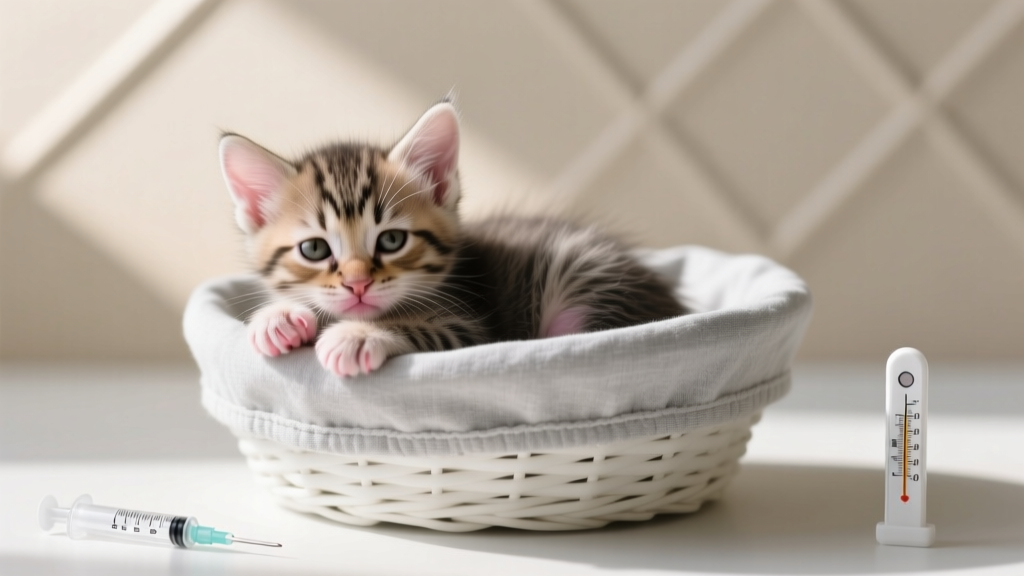
A 5-week-old kitten’s thermoregulation is still developing. Their normal rectal temperature should be 100–102.5°F — but ambient room temps below 75°F cause rapid heat loss. Hypothermia isn’t just ‘shivering’ — it’s lethargy, pale gums, slow breathing, and refusal to eat. In fact, a 2022 study in Journal of Feline Medicine and Surgery found that 68% of admitted ‘fading kittens’ had core temperatures <99°F on arrival — often missed because owners assumed ‘sleepiness’ was normal.
Your environment must be meticulously controlled:
- Room temp: Maintain 75–78°F year-round. Use a digital thermometer with probe — not a wall unit.
- Bedding: Layer soft, non-fraying fleece (no strings!) over a microwavable heat disc (set to low, wrapped in towel). Never use heating pads — burn risk is high.
- Hydration check: Gently pinch the skin between shoulder blades. It should snap back instantly. If it tents for >2 seconds, your kitten is moderately dehydrated — offer oral rehydration solution (Pedialyte unflavored, diluted 50/50 with water) via syringe (0.5mL every 15 min for 1 hour) and contact your vet immediately.
Also: Remove all hazards. At five weeks, curiosity explodes — but coordination lags. They’ll climb bookshelves, chew cords, and squeeze into appliances. Secure cables, close toilet lids, block behind furniture, and remove toxic plants (lilies, pothos, philodendron). One foster caregiver lost three kittens in one week to ingested yarn — always supervise play with string-based toys.
Socialization, Litter Training & Behavioral Foundations
This is the golden window for imprinting — not just ‘playing nice,’ but wiring neural pathways for trust, fear modulation, and species-appropriate behavior. Between 3–7 weeks, kittens form lasting associations with humans, other animals, and novel stimuli. Miss it, and behavioral issues (aggression, anxiety, inappropriate elimination) become exponentially harder to reverse.
Follow this science-backed routine:
- Human interaction: 3x daily, 15-minute sessions — hold gently, stroke head/ears/back, speak softly. Rotate handlers (if safe) to prevent single-person bonding. Never force handling; let them approach.
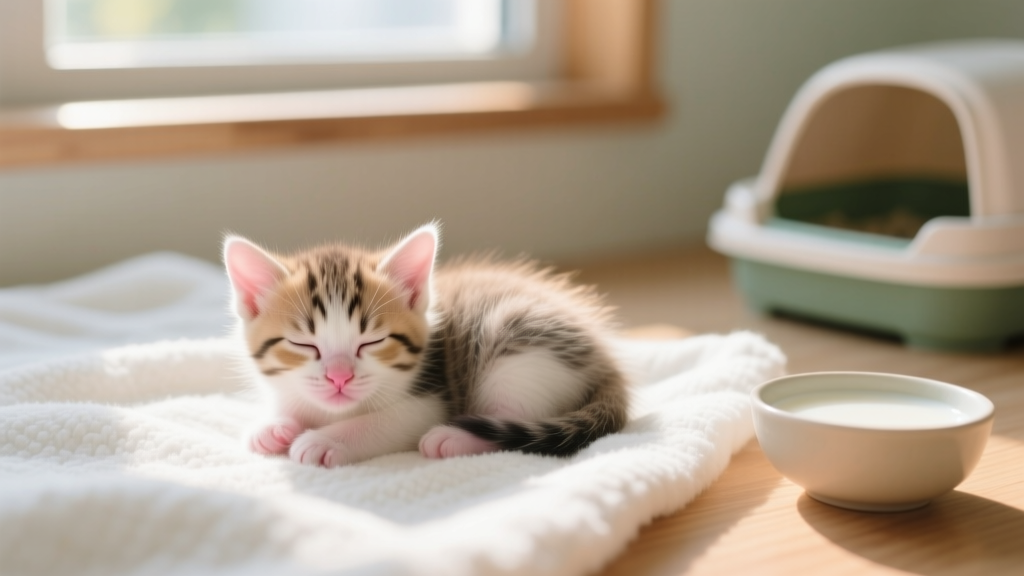
- Litter training: Start now — but use only non-clumping, unscented, fine-grained litter (like Yesterday’s News or paper pulp). Place them in the box after every meal and nap. Reward with gentle praise (not treats — digestive system is too delicate). Expect accidents — clean with enzymatic cleaner (not vinegar or bleach) to erase scent cues.
- Play aggression redirection: Use wand toys — never hands or feet. When biting occurs, freeze and withdraw attention for 10 seconds. This teaches bite inhibition far more effectively than punishment.
Warning: Do not bathe your 5-week-old. Their skin barrier is underdeveloped, and bathing strips vital oils and risks chilling. Spot-clean with damp cloth only if soiled.
Veterinary Milestones & Red Flags That Demand Immediate Action
Your kitten’s first vet visit should happen at 5 weeks — yes, even if they seem perfect. Why? Because this is when early detection saves lives. The AAFP recommends baseline exams including weight curve analysis, fecal float (for roundworms — present in ~85% of kittens), ear mite swab, and heart/lung auscultation.
Here’s what to watch for — and why each symptom is urgent:
- Refusal to eat for >4 hours — signals pain, infection, or metabolic crisis. Not ‘just picky.’
- Labored breathing or open-mouth breathing — indicates pneumonia or heart defect. Normal respiratory rate is 20–30 breaths/min.
- Green/yellow nasal discharge + sneezing — classic sign of feline herpesvirus (FHV-1), which can blind kittens if untreated.
- Hard, distended belly + no stool for >24 hrs — possible intestinal obstruction or megacolon onset.
Don’t wait ‘to see if it passes.’ At this age, deterioration happens in hours — not days.
| Age | Key Developmental Milestone | Critical Action Required | Risk if Missed |
|---|---|---|---|
| 5 weeks | First deworming (pyrantel pamoate) | Administer weight-based dose; repeat in 2 weeks | Roundworms cause malnutrition, intestinal blockage, stunted growth |
| 5–6 weeks | Beginning of socialization window peak | Introduce 1 new person, sound, surface daily (e.g., vacuum hum, tile floor, child’s voice) | Permanent fearfulness, avoidance, or defensive aggression |
| 5–7 weeks | Emergence of play-biting & scratching | Provide cardboard scratchers + daily nail trims (avoid declawing — illegal in 12 US states & globally condemned) | Destructive scratching, redirected aggression, owner injury |
| 5–8 weeks | Maternal antibodies waning | Schedule first FVRCP vaccine at 6 weeks (not earlier — maternal IgG interferes) | Zero protection against panleukopenia, which has >90% mortality in unvaccinated kittens |
Frequently Asked Questions
Can I give my 5-week-old kitten cow’s milk?
No — absolutely not. Cow’s milk lacks taurine and contains lactose levels far exceeding a kitten’s digestive capacity. It causes explosive, dehydrating diarrhea within hours and can lead to life-threatening electrolyte imbalances. Always use veterinarian-approved kitten milk replacer (KMR or Just Born) — and only as a supplement during weaning, not as a primary diet past week 6.
How much should a 5-week-old kitten weigh?
A healthy 5-week-old kitten typically weighs 500–650 grams (1.1–1.4 lbs), gaining ~10–15 grams per day. Weigh daily using a gram-scale (kitchen scale works). If weight drops or stalls for >24 hours, consult your vet immediately — this is often the earliest sign of illness, before visible symptoms appear.
Is it okay to separate a 5-week-old kitten from its mother and siblings?
Only if medically necessary (e.g., mother is ill, rejecting, or deceased). Separation before 8 weeks significantly increases risk of anxiety disorders, poor social skills with other cats, and inappropriate play behavior. If separation is unavoidable, prioritize intensive human socialization and pair with another kitten of similar age for mutual learning.
Do 5-week-old kittens need shots yet?
Yes — the first core vaccine (FVRCP: feline viral rhinotracheitis, calicivirus, panleukopenia) should be administered at 6 weeks. Maternal antibodies begin interfering after week 5, so waiting until 6 weeks ensures optimal immune response. Discuss timing with your vet — they’ll base it on mom’s vaccination history and local disease prevalence.
What kind of litter is safest for a 5-week-old?
Use only non-clumping, dust-free, unscented paper-based or walnut-shell litter. Clumping clay litters pose aspiration and ingestion risks — kittens groom constantly and may inhale fine particles or ingest litter while digging. Clay also tracks easily and can irritate sensitive paw pads. Avoid crystal litters — they’re dehydrating and noisy, causing stress.
Common Myths Debunked
Myth #1: “If the kitten is eating, it’s fine.”
Reality: Kittens mask illness masterfully. A 5-week-old with an upper respiratory infection may still nurse or eat small amounts — but their respiratory rate will climb to 40+ breaths/min, and their nose will feel cool and dry. Appetite alone is not a reliable health indicator.
Myth #2: “They’ll learn to use the litter box on their own — just put them in it.”
Reality: Passive placement without positive reinforcement and consistent timing (after meals/naps) fails 70% of the time, per ASPCA foster program data. Without active guidance, kittens associate the box with stress — leading to chronic avoidance and inappropriate elimination elsewhere.
Related Topics (Internal Link Suggestions)
- When to spay or neuter a kitten — suggested anchor text: "optimal age for kitten spay/neuter"
- Signs of fading kitten syndrome — suggested anchor text: "early warning signs of fading kitten syndrome"
- Best kitten food brands vet-recommended — suggested anchor text: "vet-approved kitten wet food brands"
- How to introduce a kitten to dogs — suggested anchor text: "safe kitten-to-dog introduction guide"
- Kitten vaccination schedule chart — suggested anchor text: "complete kitten vaccine timeline"
Your Next Step Starts Today — Not Tomorrow
Caring for a 5-week-old kitten isn’t about perfection — it’s about vigilance, responsiveness, and knowing exactly what to do — and when. You now have the precise feeding ratios, environmental specs, red-flag identifiers, and veterinary timelines that separate thriving kittens from those who slip through the cracks. But knowledge only protects when applied. So today, grab a notebook and do three things: (1) Weigh your kitten right now and record it; (2) Check your room temperature with a digital thermometer; (3) Call your vet to schedule that first exam — mention it’s a 5-week-old so they allocate appropriate time and resources. You’re not just raising a pet. You’re stewarding a life at its most vulnerable, powerful, and promising stage — and that responsibility is as beautiful as it is demanding.