How to Take Care of 1 Week Old Kitten: The 7 Non-Negotiable Steps Every First-Time Rescuer Misses (And Why Skipping #4 Can Be Fatal)
Why This First Week Is the Most Critical Window in a Kitten’s Life
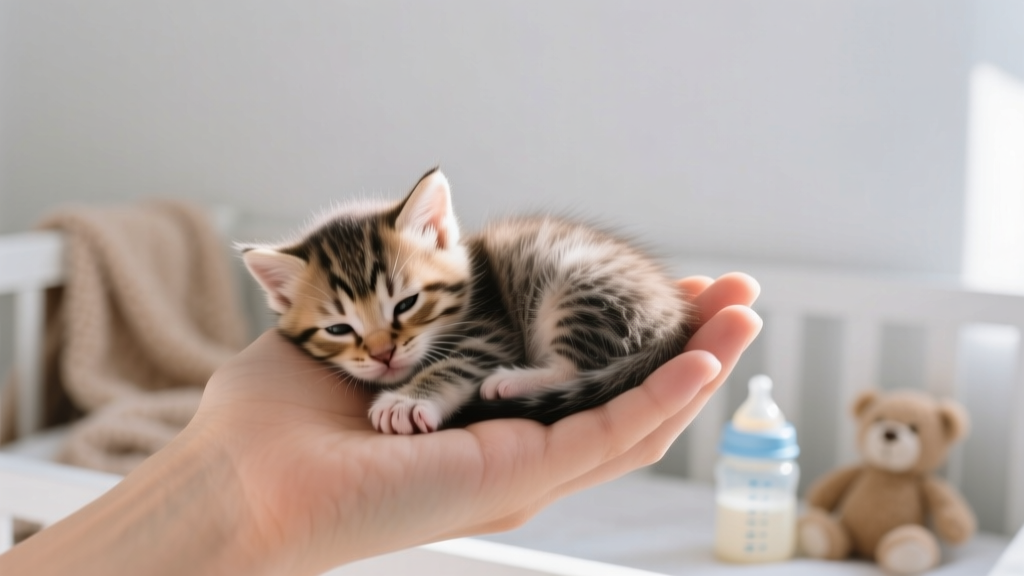
If you’re searching how to take care of 1 week old kitten, you’re likely holding a tiny, silent, eyes-closed bundle that weighs less than a smartphone—and that’s exactly why every decision you make in the next 72 hours matters more than anything that comes after. At just 7 days old, kittens are biologically premature: their thermoregulation is nonexistent, immune systems are virtually absent, and they cannot eliminate waste without human intervention. According to Dr. Sarah Wooten, DVM and clinical advisor for the American Association of Feline Practitioners, "Neonatal mortality rates exceed 25% in unassisted orphaned litters—and over half of those deaths occur in the first week due to hypothermia, dehydration, or failure to thrive." This isn’t just ‘pet care’—it’s intensive neonatal nursing. And the good news? With precise, evidence-based actions, survival rates jump to over 92% (Journal of Feline Medicine and Surgery, 2022). Let’s walk through exactly what that looks like—no guesswork, no folklore, just what works.
🌡️ Temperature Control: Your #1 Priority (Before Food, Before Love)
A 1-week-old kitten’s normal body temperature should be 95–99°F (35–37.2°C). Unlike adult cats—or even 3-week-olds—they cannot shiver effectively or conserve heat. Hypothermia sets in within minutes if ambient temperature drops below 85°F (29.4°C), triggering a deadly cascade: slowed digestion → poor nutrient absorption → weakened immunity → sepsis risk. That’s why your first action isn’t feeding—it’s warming.
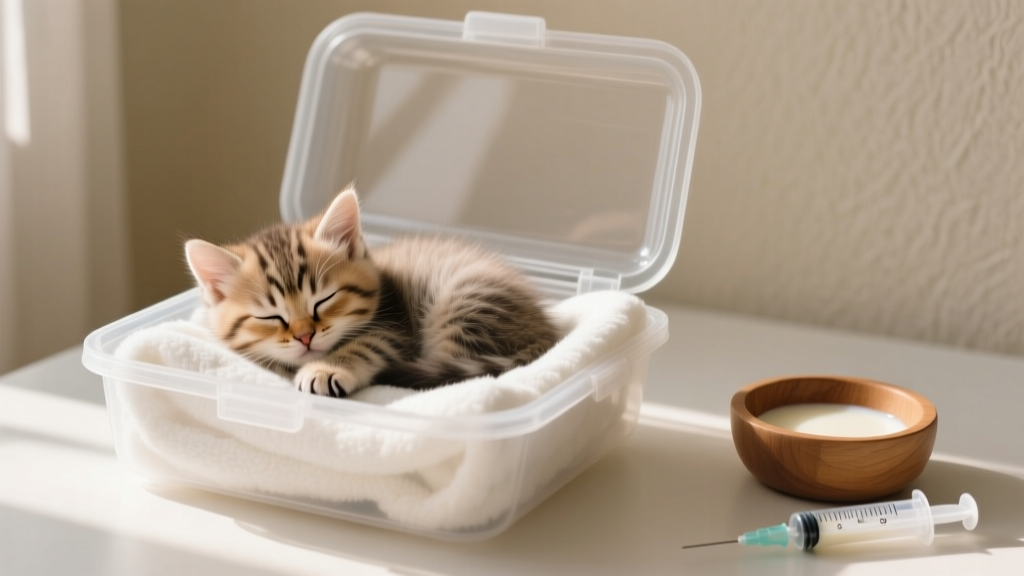
Do this now: Use a heating pad set to LOW (never high) layered under *half* a soft towel inside a small, ventilated box (like a plastic sweater drawer with air holes). Place the kitten on the warm side—not directly on the pad—to avoid burns. Add a second towel layer for insulation. Monitor skin temperature with a digital rectal thermometer every 2 hours for the first 12 hours. If temp falls below 94°F, wrap the kitten loosely in a pre-warmed cloth and hold against your chest for 10 minutes before returning to the nest. Never use hot water bottles—they cool unpredictably and cause thermal injury.
Real-world example: Maria from Portland rescued three 6-day-old kittens abandoned in a garage. She warmed them gradually over 90 minutes using a rice sock (1/2 cup uncooked rice microwaved 45 sec, wrapped in flannel) placed *beside*, not under, the nest. All three stabilized at 96.8°F within 2 hours—and began suckling within 4 hours. Her mistake? Initially placing the sock *under* the bedding—causing one kitten’s paw pad to blister. Lesson learned: warmth must be gentle, consistent, and monitored.
🍼 Feeding Protocol: Formula, Frequency, and the Deadly Mistake Everyone Makes
At 1 week, kittens need 8–12 feedings per 24 hours—roughly every 2–3 hours, including overnight. But it’s not just *how often*: it’s *what*, *how much*, and *how*. Cow’s milk causes fatal diarrhea and dehydration; human baby formula lacks taurine and has incorrect protein ratios; and overfeeding leads to aspiration pneumonia—the leading cause of death in hand-reared neonates.
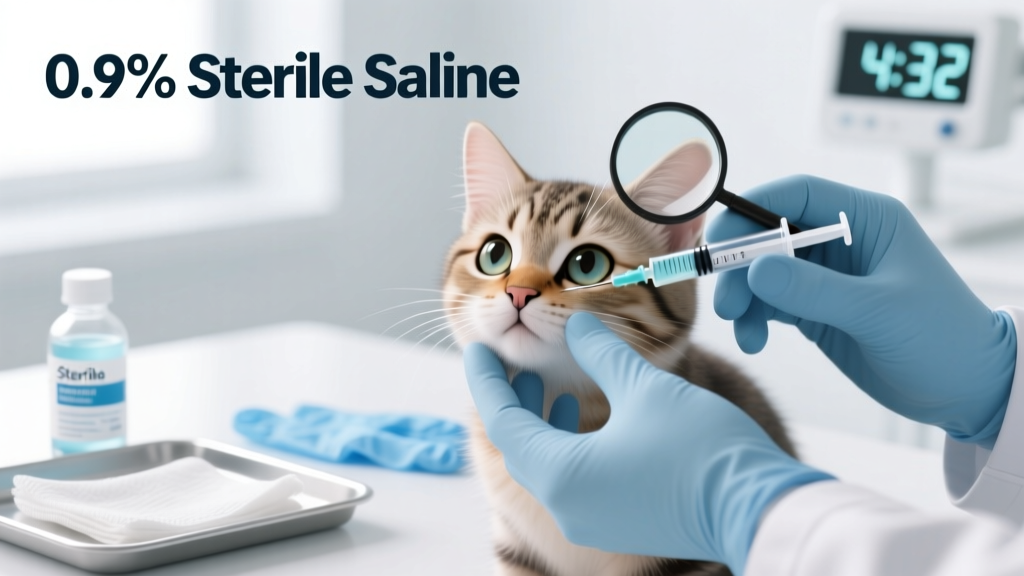
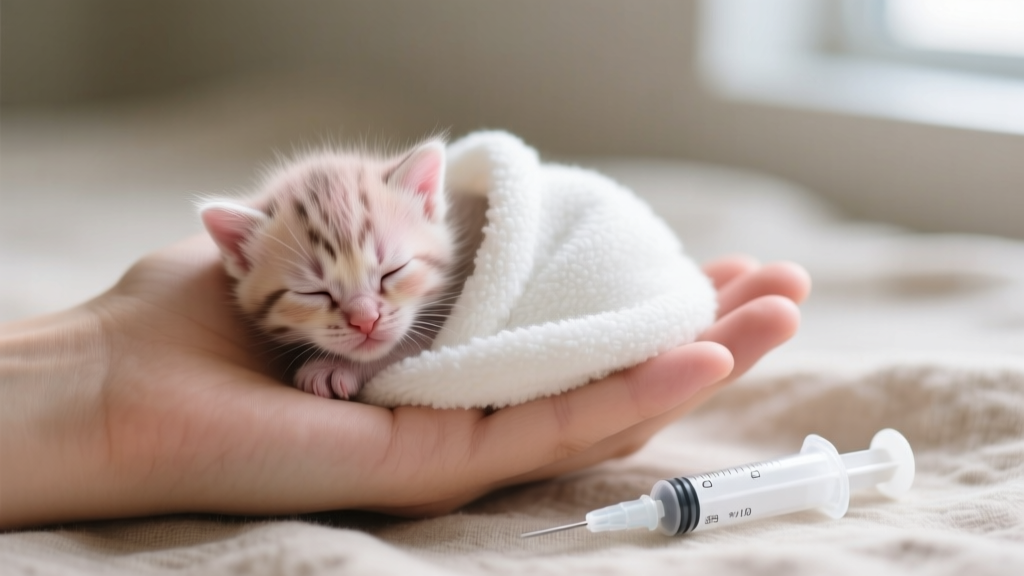
Use only commercial kitten milk replacer (KMR or Just Born) reconstituted *exactly* as directed—never diluted or concentrated. Warm to 98–100°F (test on inner wrist). Feed via sterile 1–3 mL syringe *without needle*, held horizontally to prevent aspiration. Gently place tip at corner of mouth and let kitten suckle—never force. A healthy 1-week-old kitten consumes ~13 mL per 100g body weight daily. For a typical 100g kitten: ~1.3 mL per feeding, 10x/day.
Dr. Wooten emphasizes: "Syringe-feeding is safer than bottles for neonates because it gives you control over flow rate—but never depress the plunger while the kitten’s mouth is full. Pause every 2–3 drops to let them swallow." Watch for milk bubbling from nostrils—that’s aspiration. Stop immediately and gently tilt head down while rubbing back.
🚽 Stimulation & Elimination: Why You Must Be Their Bladder and Bowels
Kittens cannot urinate or defecate without physical stimulation until day 14–21. Without it, toxic buildup causes abdominal pain, lethargy, urinary retention, and fatal uremia within 24–36 hours. This isn’t optional—it’s non-negotiable biology.
After *every* feeding (yes—even the 3 a.m. one), use a warm, damp cotton ball or soft tissue to gently stroke the genital and anal area in circular motions for 30–60 seconds. You’ll see urine within 15 seconds and stool within 1–2 minutes in healthy kittens. Urine should be pale yellow and clear; stool mustard-yellow and soft-paste. If no output occurs after 2 minutes, try again with slightly warmer cotton—then contact a vet if still no result after 3 attempts.
Pro tip: Keep a log. Note time, output color/consistency, and volume (e.g., “8:15 a.m. – 5 drops clear urine, 1 pea-sized stool”). Patterns reveal early issues: cloudy urine = UTI risk; green stool = bacterial overgrowth; no stool for >24 hrs = constipation or ileus.
🩺 Monitoring for Distress: The 5 Red Flags That Demand Immediate Vet Care
Unlike older kittens, 1-week-olds show illness subtly—then crash rapidly. Don’t wait for obvious symptoms. Track these five vital signs hourly for the first 48 hours:
- Crying: Weak, infrequent mews = fatigue; constant, high-pitched wails = pain or hunger
- Body tone: Floppy limbs or inability to lift head = neurological or metabolic issue
- Suck reflex: Weak or absent sucking = hypoglycemia or sepsis
- Weight: Should gain 7–10g/day. Loss >5g in 24 hrs = urgent concern
- Temperature stability: Fluctuations >2°F in 2 hours indicate failing thermoregulation
If any red flag appears, call your emergency vet *before* driving. Many clinics offer tele-triage for neonates—describe symptoms precisely (e.g., "kitten weighed 98g at 7 a.m., now 92g; no urine since 3 p.m.; rectal temp 93.4°F").
| Age | Key Developmental Milestones | Critical Care Actions | Risk Alerts |
|---|---|---|---|
| Day 1–7 | Eyes closed; ears folded; no teeth; rooting reflex strong | Feed every 2–3 hrs; stimulate after each feeding; maintain 85–90°F ambient temp; weigh daily | No urine/stool in 24 hrs; weight loss >5g; temp <94°F; refusal to suckle |
| Day 8–14 | Eyes begin opening (usually Day 9–12); ear canals open; begins crawling | Continue feeding schedule; introduce gentle handling; increase ambient temp to 80–85°F; monitor for eye discharge | Swollen, sealed eyes; yellow/green eye discharge; tremors; inability to right self when placed on side |
| Day 15–21 | Eyes fully open; ears upright; begins walking; starts playing | Introduce shallow water dish; offer small amounts of gruel (KMR + kitten food); reduce feedings to 6x/day | Diarrhea lasting >12 hrs; blood in stool; labored breathing; isolation from littermates |
| Day 22–28 | Teeth erupt; social play increases; begins grooming | Transition to wet food; start litter box training; vaccinate (FVRCP first dose at 6 weeks) | Failure to gain >10g/day; persistent coughing; weight plateau for >48 hrs |
Frequently Asked Questions
Can I use goat’s milk instead of kitten formula?
No—goat’s milk lacks sufficient taurine, arginine, and vitamin E for neonatal feline development and carries high bacterial load risks. A 2021 study in Veterinary Record found 83% of orphaned kittens fed goat’s milk developed severe enteritis by Day 5. Always use FDA-approved kitten milk replacer.
How do I know if my kitten is dehydrated?
Perform the ‘skin tent test’: Gently pinch the scruff (loose skin between shoulders) and release. In a hydrated kitten, it snaps back instantly. If it stays peaked for >2 seconds, dehydration is moderate-to-severe. Other signs: dry gums, sunken eyes, lethargy, and decreased urine output. Administer oral electrolyte solution (Pedialyte unflavored, diluted 50/50 with water) via syringe at 1–2 mL per 100g body weight—but consult a vet before treating.
Is it safe to bathe a 1-week-old kitten?
Never bathe a 1-week-old kitten. Their thermoregulation is too weak, and bathing causes rapid heat loss and stress-induced hypoglycemia. If soiled, gently wipe with a warm, damp cloth—never submerge. Focus on keeping bedding clean and dry instead. Bathing should wait until after 8 weeks and only if medically necessary.
What if the kitten won’t latch onto the syringe?
First, check temperature—formula too cold numbs the suck reflex. Warm to 98–100°F. Next, ensure the syringe tip is smooth (file any burrs) and placed at the corner of the mouth—not deep inside. Try stroking the cheek or gently massaging the throat to trigger rooting. If refusal persists >2 feedings, contact a vet immediately—this may signal sepsis, neurological abnormality, or congenital defect.
Should I give vitamins or probiotics?
No. Commercial kitten formula contains all required nutrients. Probiotics have not been proven safe or effective in neonates and may disrupt developing gut flora. Dr. Linda R. Schumacher, DACVIM, states: "We don’t supplement neonates unless there’s documented deficiency—and bloodwork in kittens under 2 weeks is rarely feasible or ethical." Stick to formula, warmth, and stimulation.
Common Myths About Neonatal Kitten Care
Myth #1: “If the mother cat abandoned them, they’re defective or sick.”
False. Mother cats abandon kittens for many non-medical reasons—stress, overcrowding, perceived threat, or even human scent interference. A healthy 1-week-old orphan has excellent prognosis with proper care. Always assume viability until proven otherwise by a vet exam.
Myth #2: “They’ll cry if they’re hungry—so just feed when they meow.”
Dangerous. By the time a 1-week-old cries consistently, they’re already hypoglycemic and losing critical energy reserves. They may become too weak to vocalize before collapse. Strict adherence to the 2–3 hour feeding schedule saves lives.
Related Topics (Internal Link Suggestions)
- Signs of kitten dehydration — suggested anchor text: "kitten dehydration symptoms"
- Best kitten milk replacer brands — suggested anchor text: "top-rated kitten formula"
- When to take newborn kitten to vet — suggested anchor text: "emergency kitten vet visit"
- How to stimulate kitten to poop — suggested anchor text: "kitten elimination stimulation guide"
- Neonatal kitten weight chart — suggested anchor text: "kitten growth tracker by day"
Your Next Step Starts Now—Not Tomorrow
You now hold the most actionable, vet-validated protocol for how to take care of 1 week old kitten—grounded in physiology, not folklore. But knowledge alone doesn’t save lives. Action does. So tonight, before bed: weigh your kitten, prep your heating setup, measure and chill your next 3 feedings, and set an alarm for 2 a.m. Your consistency in these first 72 hours builds the foundation for everything that follows—playful pounces, curious head-butts, and the deep, rumbling purr of a thriving life. And if doubt creeps in? Call your vet. Not ‘maybe.’ Not ‘in the morning.’ Now. Because in neonatal care, urgency isn’t dramatic—it’s compassionate, precise, and measured in minutes.