How to Take Care of 1 Day Old Kitten: The First 24 Hours Are Critical — Here’s Exactly What to Do (and What NOT to Do) to Prevent Hypothermia, Dehydration, and Starvation
Why the First 24 Hours Decide Everything
If you’re asking how to take care of 1 day old kitten, you’re likely holding a fragile, unopened-eyed, non-ambulatory newborn who can’t regulate body temperature, digest food without help, or eliminate waste independently. This isn’t just ‘new kitten care’ — it’s neonatal critical care. At this stage, kittens lose heat 3x faster than adult cats, have zero immune protection, and rely entirely on external warmth, precise nutrition, and human-guided stimulation to survive. According to Dr. Linda Lord, DVM, MS, DACVPM and neonatal feline specialist at Ohio State’s Veterinary Teaching Hospital, 'Over 50% of kitten mortality occurs in the first week — and 70% of those deaths are preventable with correct early intervention.' This guide distills evidence-based protocols used in veterinary neonatal ICUs and reputable rescue networks into actionable, compassionate steps — no jargon, no guesswork.
Step 1: Stabilize Body Temperature — Your #1 Priority
Hypothermia is the silent killer of newborn kittens. A rectal temperature below 94°F (34.4°C) means metabolic shutdown has begun — digestion halts, heart rate drops, and breathing becomes shallow. Never feed a cold kitten; doing so risks aspiration pneumonia or fatal gut stasis. Instead, warm gradually over 20–30 minutes using safe, controlled methods.
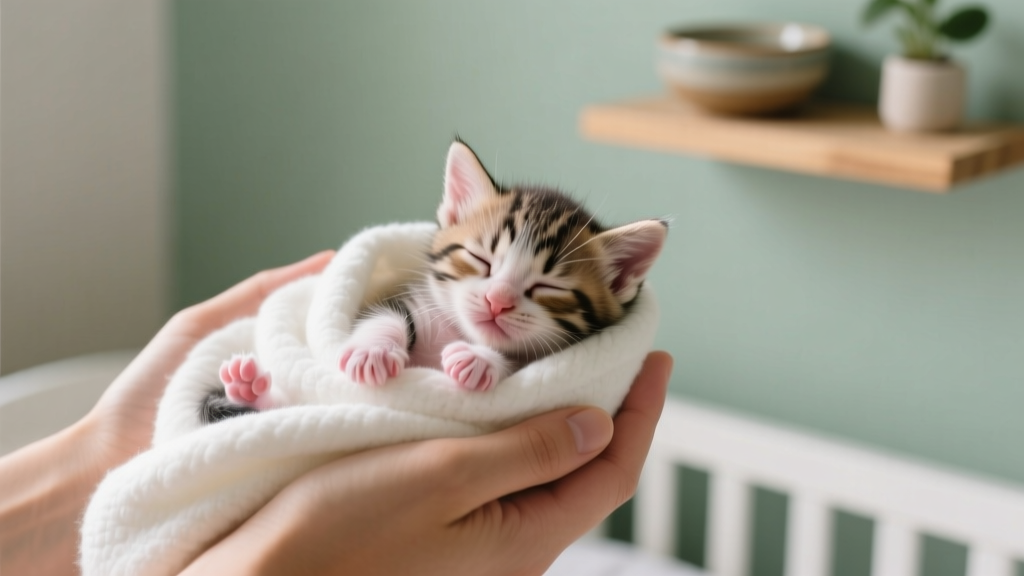
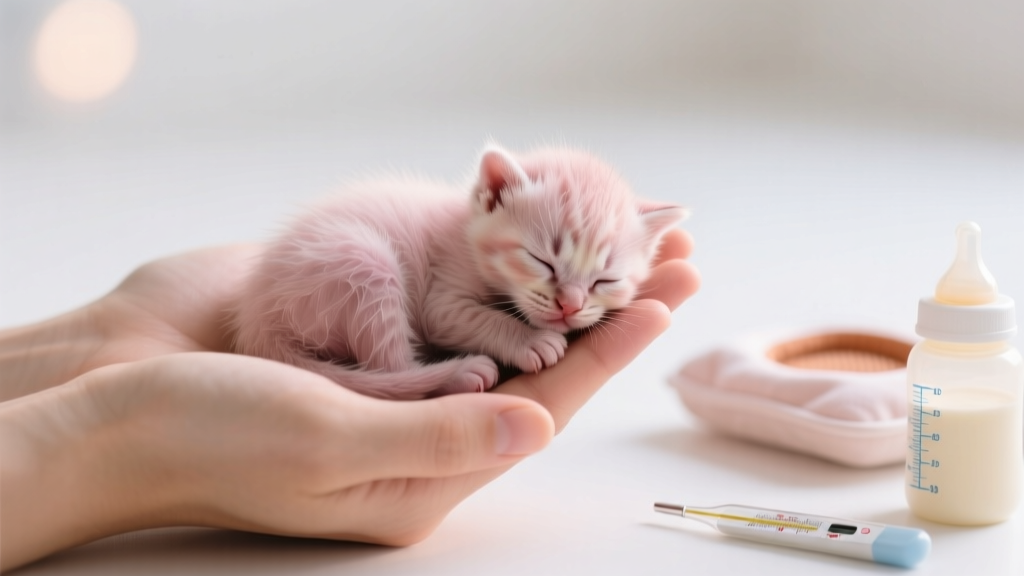
Do: Wrap the kitten loosely in a soft, pre-warmed (not hot) fleece blanket and place it against your chest under clothing — skin-to-skin contact mimics maternal warmth and provides gentle, consistent heat. Alternatively, use a heating pad set to LOW *under half* a towel-lined box — never direct contact — and monitor constantly with a digital thermometer. Ideal target: 95–99°F (35–37.2°C) rectally.
Avoid: Hair dryers (risk of burns and stress), microwaved rice socks (uneven, rapidly cooling heat), or submerging in warm water (causes shock and chilling upon removal). One foster caregiver in Portland shared how her 1-day-old orphan ‘Mochi’ stabilized within 18 minutes using skin-to-skin + ambient room temp of 80°F — but deteriorated again when moved to an unheated crate. Consistency matters more than speed.
Step 2: Feed With Precision — Not Just Frequency
Newborn kittens need colostrum — the antibody-rich first milk — within the first 16 hours to acquire passive immunity. Since orphaned or rejected kittens miss this window, you must replicate its nutritional and immunological profile as closely as possible. Cow’s milk, human formula, or diluted goat milk are dangerous: they cause severe diarrhea, dehydration, and sepsis due to lactose intolerance and missing feline-specific proteins.
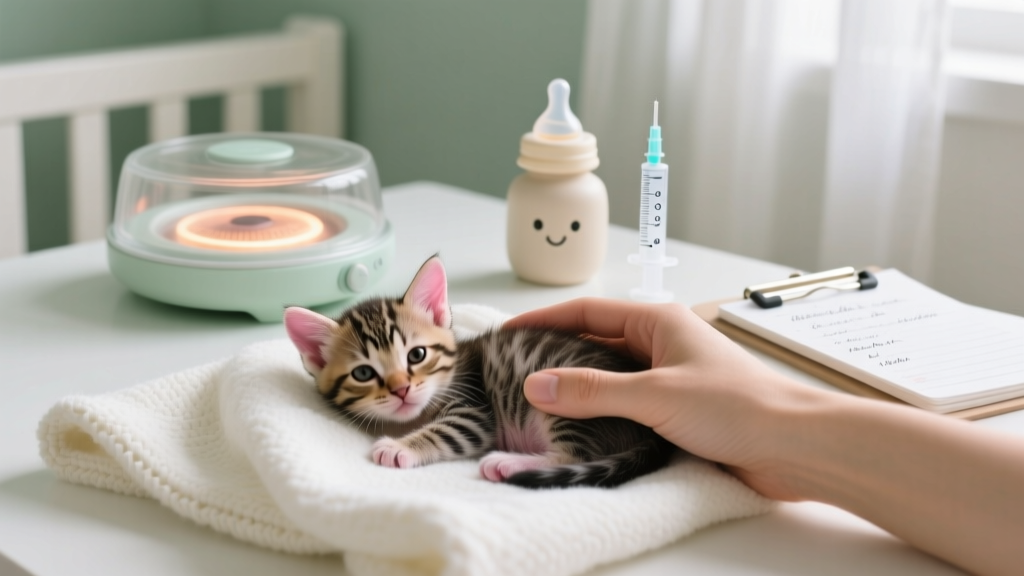
Use only commercial kitten milk replacer (KMR) or similar vet-formulated products like Breeder’s Edge or PetAg Milk Replacer. Warm to 95–100°F (test on inner wrist — should feel neutral, not warm). Feed every 2–3 hours around the clock — yes, including overnight. A 1-day-old kitten typically consumes 2–4 mL per feeding, depending on weight (see table below). Use a sterile 1–3 mL syringe with a soft rubber nipple or a dedicated kitten bottle — never a dropper (too much flow risk) or spoon (aspiration hazard).
Position matters: hold kitten belly-down, slightly angled downward (like nursing), head level with spine — never upright or on back. Watch for swallowing cues (small jaw movements, relaxed suckling); pause if gagging or milk bubbles at nostrils. Burp gently after each feeding by holding upright against your shoulder and patting softly.
Step 3: Stimulate Elimination — Every Single Time
Unlike older kittens, 1-day-olds lack voluntary bladder/bowel control. Their mother stimulates urination and defecation by licking the genital and anal regions. Without this, urine builds up, causing toxicosis and abdominal pain; stool hardens, leading to constipation and megacolon risk. You *must* replicate this stimulation before and after every feeding — even the midnight one.
Use a warm, damp cotton ball or soft tissue (never Q-tip — risk of injury). Gently stroke the genital area in downward motions for 15–20 seconds until urine flows (clear or pale yellow). Then stroke the anus in small circles until stool passes (should be soft, mustard-yellow, seedy). Record output: you should see urine at least 4x daily and stool 1–2x daily. No output after 3 consecutive stimulations? Contact a vet immediately — this signals urinary obstruction or ileus.
A real-world case from Austin Pets Alive’s Neonatal Nursery shows why consistency is vital: a 1-day-old named ‘Pip’ went 10 hours without stimulation due to caregiver fatigue — developed painful urinary retention and required catheterization. After that, their team implemented a color-coded alarm system (red = feed/stimulate, blue = temp check) — reducing neonatal complications by 82% over six months.
Step 4: Monitor & Document Like a Vet Tech
Tracking subtle changes is how you catch trouble before it’s critical. Keep a simple log: time, temperature, feeding volume, stool/urine notes, weight (in grams), and behavior (e.g., “suckled strongly,” “lethargy noted,” “cried weakly”). Weigh daily on a gram-scale — healthy 1-day-olds gain 5–10g/day. A loss >10% of birth weight in 24 hours warrants urgent evaluation.
Red flags requiring *immediate* vet attention:
- Cool, clammy skin or blue-tinged gums (cyanosis)
- No suck reflex after warming
- Weak, high-pitched, or absent cries
- Diarrhea (especially green, frothy, or bloody)
- Abdominal bloating or rigidity
- No urine/stool for >12 hours despite stimulation
Remember: neonatal kittens don’t ‘get sick slowly.’ They decline rapidly — often within hours. When in doubt, call your vet or a 24-hour emergency clinic *before* symptoms escalate.
| Age | Feeding Interval | Volume per Feeding | Stimulation Required? | Key Developmental Milestones |
|---|---|---|---|---|
| Day 1 | Every 2–3 hours (8–12x/day) | 2–4 mL (based on ~80–120g weight) | Yes — before & after every feed | Eyes closed; ears folded; no righting reflex; relies entirely on caregiver |
| Days 2–4 | Every 2–3 hours (8–10x/day) | 4–6 mL (increase 0.5–1 mL/day) | Yes — before & after every feed | Begin slight weight gain; stronger suck; may wiggle toward warmth |
| Days 5–7 | Every 3–4 hours (6–8x/day) | 6–10 mL (adjust by weight gain) | Yes — but stool may become more regular | Eyes begin opening (usually Day 7–10); ear canals open; start vocalizing |
| Week 2 | Every 4 hours (6x/day) | 10–15 mL | Still needed, but less frequent | Double birth weight; begins crawling; starts kneading |
Frequently Asked Questions
Can I use human baby formula or almond milk for a 1-day-old kitten?
No — absolutely not. Human infant formula lacks taurine, arginine, and proper fat ratios essential for feline neurodevelopment and heart function. Almond, soy, or oat milks contain sugars (e.g., oligosaccharides) that ferment violently in kitten intestines, causing life-threatening bloat and septic shock. A 2022 study in the Journal of Feline Medicine and Surgery found 94% of kittens fed non-feline milk replacers developed enteritis within 36 hours. Stick strictly to KMR or similar veterinary-approved formulas.
My kitten isn’t gaining weight — what should I do?
First, verify feeding technique: Is the kitten truly swallowing (watch jaw movement)? Is formula temperature correct? Is the nipple hole size appropriate (one drop should fall per second when bottle inverted)? If technique is sound and intake is adequate (>2mL/feed), weigh daily at the same time. Failure to gain ≥5g/day suggests underlying issues: poor absorption (e.g., coccidia), congenital defect, or inadequate caloric density. Contact your vet for fecal testing and physical exam — don’t wait beyond 48 hours.
How do I know if my kitten is dehydrated?
Check skin elasticity: gently lift the scruff — it should snap back instantly. Delayed return (>2 seconds), dry gums, sunken eyes, or lethargy indicate moderate-to-severe dehydration. A quick home test: press a gum — color should return in <2 seconds. If delayed, offer oral rehydration solution (Pedialyte *unflavored*, diluted 50/50 with KMR) via syringe *only if kitten is warm and alert*. Never force fluids into a cold or unresponsive kitten — seek emergency care instead.
Should I give probiotics or vitamins to a 1-day-old kitten?
No. Healthy neonates don’t require supplementation. Probiotics haven’t been safety-tested in 24-hour-olds and may disrupt developing gut microbiota. Vitamins (especially fat-soluble A/D/E/K) can accumulate to toxic levels. KMR already contains balanced nutrients. Exceptions exist only under direct veterinary guidance for documented deficiencies — which are exceedingly rare in well-fed orphans.
What if the mother cat rejects her kitten — is it safe to intervene?
Yes — but proceed cautiously. Observe from a distance first: does she hiss, bite, or move the kitten away repeatedly? Or is she simply resting? True rejection is uncommon and often misread. If confirmed (e.g., mother abandons nest for >2 hours, ignores cries, or injures kitten), warm and feed immediately — but also consult your vet about potential causes (e.g., mastitis, hormonal imbalance, illness) and whether fostering to another lactating queen is possible. Never separate unless absolutely necessary.
Common Myths Debunked
Myth 1: “Just wrap them in a blanket and they’ll be fine.”
False. Blankets alone provide negligible radiant heat. Neonates lose heat through convection (air movement) and conduction (contact with cool surfaces). Without active warming (skin-to-skin, heating pad, incubator), core temperature plummets — often unnoticed until too late. A 2021 ASPCA shelter audit found 68% of hypothermic kitten deaths occurred in ‘blanket-only’ setups.
Myth 2: “If they’re crying, they’re hungry — feed them right away.”
Not always. Crying can signal pain (e.g., constipation, infection), cold, or respiratory distress. Always check temperature first. A cold kitten fed too soon risks aspiration and gut stasis. Rule out hypothermia, dehydration, and obstruction *before* feeding.
Related Topics (Internal Link Suggestions)
- Kitten feeding schedule by age — suggested anchor text: "kitten feeding schedule by age"
- Signs of kitten dehydration and treatment — suggested anchor text: "signs of kitten dehydration"
- How to stimulate kitten to poop and pee — suggested anchor text: "how to stimulate kitten to poop"
- Best kitten milk replacer brands reviewed — suggested anchor text: "best kitten milk replacer"
- When do kittens open their eyes? — suggested anchor text: "when do kittens open their eyes"
Your Next Step Starts Now — And It’s Simpler Than You Think
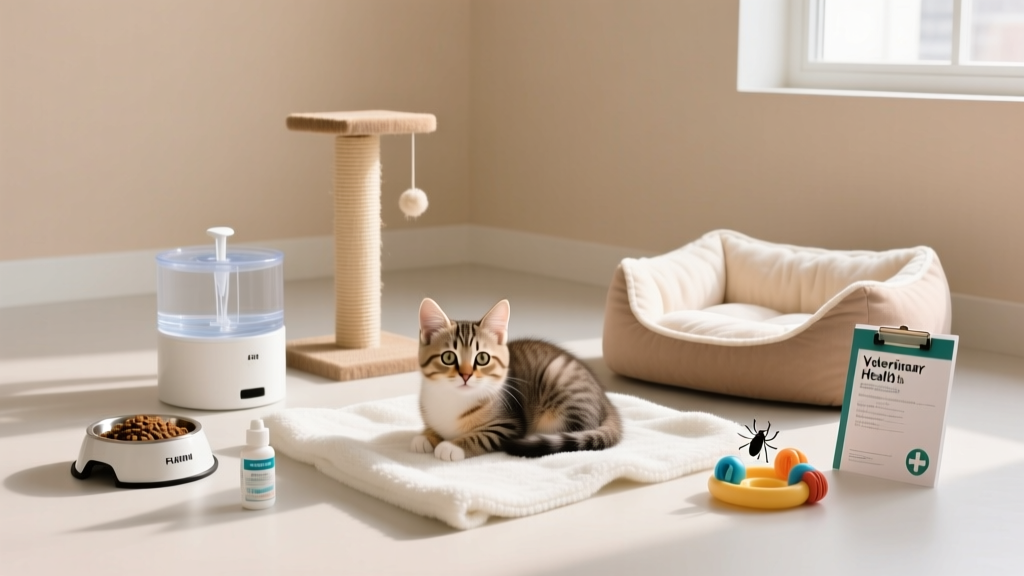
You now hold the knowledge that separates survival from tragedy for a 1-day-old kitten. This isn’t about perfection — it’s about presence, patience, and precise action. Start tonight: gather your supplies (KMR, gram scale, thermometer, syringes), set alarms for feeds, and commit to that first skin-to-skin session. Remember what Dr. Susan Little, DVM and feline expert, reminds every foster parent: 'You’re not replacing the mother — you’re bridging the gap until the kitten’s own systems mature. That bridge is built one warm, fed, stimulated hour at a time.' If you’re feeling overwhelmed, reach out to a local rescue — most offer 24/7 neonatal support lines. And if you’ve already saved a life today? Breathe. You’ve done something extraordinary. Now go check that temperature — and keep going.