How to Take Care of a Newborn Kitten Without Mother: The 72-Hour Survival Protocol Every Rescuer Needs (Not Just 'Feed & Hope')
Why This Isn’t Just ‘Feeding a Tiny Cat’ — It’s Neonatal Emergency Care
If you’ve just found or been handed a newborn kitten without its mother, you’re facing one of the most time-sensitive caregiving challenges in feline medicine. How to take care newborn kitten without mother isn’t a gentle introduction to pet ownership — it’s an urgent, science-backed intervention requiring precision, consistency, and emotional resilience. Within the first 72 hours, mortality rates for orphaned kittens can exceed 50% without proper support (Journal of Feline Medicine and Surgery, 2022). These fragile beings lack immune defenses, cannot regulate body temperature, cannot eliminate waste unassisted, and cannot digest anything but colostrum-mimicking nutrition. But here’s the truth: with the right knowledge — not guesswork — you *can* dramatically tip the odds. This guide distills protocols used by shelter veterinarians, neonatal foster coordinators, and certified feline behaviorists into actionable, hour-by-hour steps — no prior experience required.
Step 1: Stabilize — Warmth Is Non-Negotiable (Before Feeding)
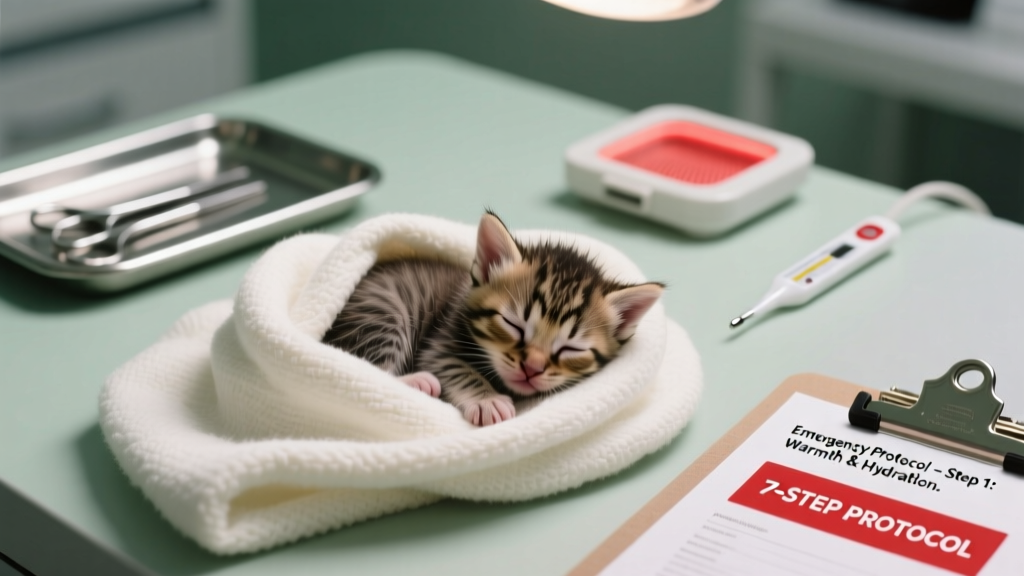
Contrary to popular belief, the very first thing you must do is NOT feed the kitten — it’s to raise its core temperature. A hypothermic kitten (<99°F / 37.2°C) cannot digest milk; attempting to feed risks aspiration pneumonia or fatal bloat. Dr. Lena Cho, DVM and Director of Neonatal Care at the ASPCA’s Foster Program, emphasizes: “A kitten below 96°F is in immediate danger — every minute counts. Feeding before warming is the #1 preventable cause of death in orphaned neonates.”
Use this protocol:
- Assess temperature: Use a digital rectal thermometer lubricated with water-based lube. Normal range: 95–99°F (35–37.2°C) at birth, rising to 100–102.5°F (37.8–39.2°C) by day 7.
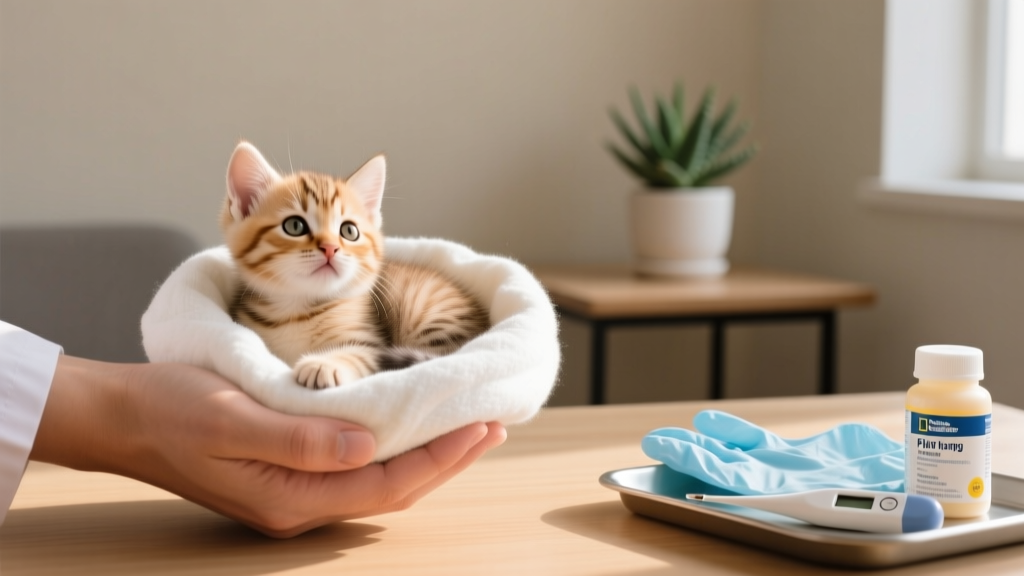
- Warm gradually: Never use heating pads (risk of burns) or direct heat lamps. Instead, wrap a microwavable rice sock (heated 20 sec, tested on your inner wrist) in a thin towel and place it *beside*, not under, the kitten in a small box. Add a soft fleece blanket and cover ¾ of the box with a towel to retain warmth.
- Monitor every 15 minutes: Recheck temp until stable >97°F. Only then proceed to feeding.
Pro tip: Place a warm (not hot) water bottle wrapped in cloth *next to* the kitten — never directly against skin. Neonates lose heat 3x faster than adults due to high surface-area-to-mass ratio.
Step 2: Feed Right — Formula, Frequency & Technique That Mimic Mom
Commercial kitten milk replacer (KMR) or similar (e.g., Breeder’s Edge, PetAg) is the *only* safe option. Cow’s milk causes severe diarrhea, dehydration, and sepsis. According to Dr. Maria Gómez, board-certified veterinary nutritionist, “Cow’s milk lacks taurine, has inappropriate lactose levels, and zero immunoglobulins — it’s biologically incompatible and actively harmful.”
Feeding mechanics matter as much as formula choice:
- Temperature: Warm formula to 98–100°F (test on your wrist — should feel neutral, not warm).
- Position: Hold kitten belly-down, slightly tilted forward (like nursing), never on its back — prevents aspiration.
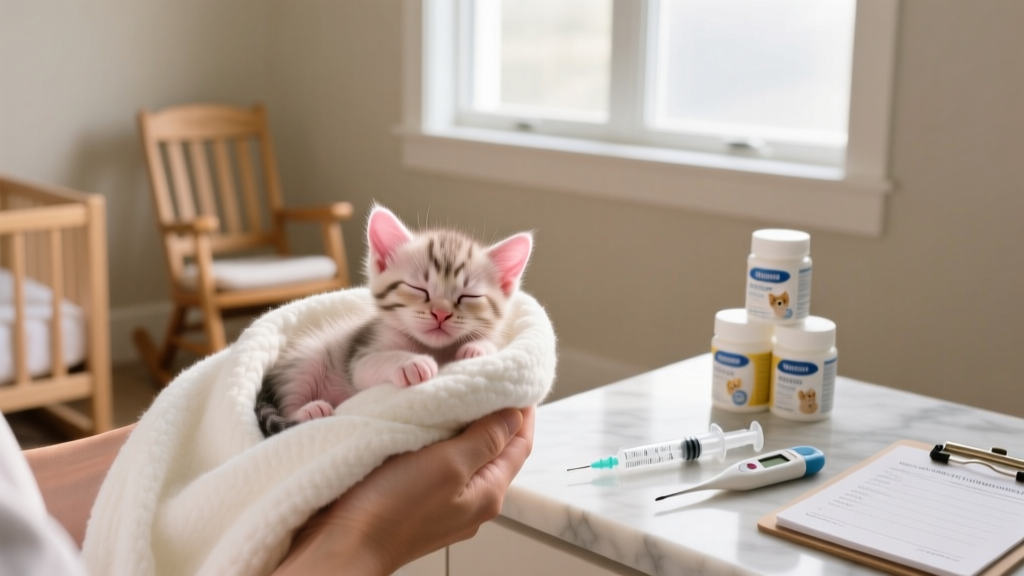
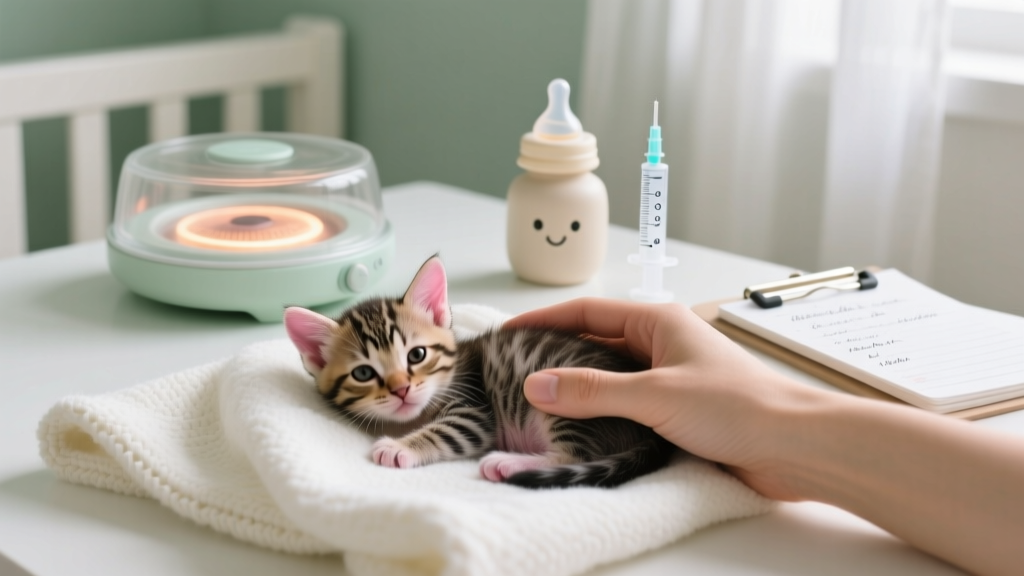
- Method: Use a 1–3 mL syringe (without needle) or specialized kitten bottle with ultra-fine nipple. Let kitten suckle naturally — never force-feed.
- Volume: Day 1–2: 2–4 mL per feeding; Day 3–7: 5–10 mL; Week 2: 10–15 mL. Weigh daily — expect 7–10 g weight gain/day.
Feeding schedule is non-negotiable: every 2–3 hours for kittens under 1 week; every 3–4 hours for days 7–14. Set alarms — missing even one feeding risks hypoglycemia (shaking, lethargy, seizures). Keep a log: time, amount fed, stool/urine output, behavior notes.
Step 3: Stimulate Elimination — Because They Literally Can’t Pee or Poop Alone
For the first 2–3 weeks, kittens lack voluntary control over bladder and bowels. Their mother stimulates elimination by licking their genital and anal regions after each feeding. You *must* replicate this — failure leads to toxic buildup, urinary retention, constipation, and death within 48 hours.
Here’s how to do it safely:
- After *every* feeding (including midnight and 3 a.m.), gently rub the genital and anal area with a warm, damp cotton ball or soft tissue — use light, circular motions (like mom’s tongue).
- Continue for 30–60 seconds or until urine appears (clear/yellow) and/or stool (soft, mustard-yellow, seedy) is passed.
- Wipe gently *front to back* to avoid infection — never reuse swabs.
- Track output: Expect 1–2 urinations and 1–3 stools per feeding in first week; frequency decreases slightly after day 7.
Warning signs: No urine in 4+ hours = immediate vet consult. Straining, crying during stimulation, or hard/tarry stools indicate constipation — try adding 1 drop of pure olive oil to next feeding (vet-approved) and increase hydration.
Step 4: Monitor, Prevent & Recognize Crisis — The 5 Red Flags That Demand ER Care
Neonatal kittens don’t ‘get sick slowly’ — they deteriorate rapidly. Daily observation is part of care, not optional. Use this clinical checklist — updated from UC Davis School of Veterinary Medicine’s Feline Neonatal Guidelines:
| Timeframe | Key Developmental Milestones | Critical Actions & Warning Signs | Vet-Recommended Intervention Threshold |
|---|---|---|---|
| 0–24 hrs | Umbilical cord still attached; eyes closed; ears folded; rooting reflex strong | Confirm warmth >97°F; first feeding within 2 hrs of warming; stool passed within 24 hrs | No stool in 24 hrs OR temp <96°F for >30 min = ER referral |
| Day 2–7 | Eyes begin to open (days 5–14); ear canals open (days 5–8); begins lifting head | Weigh daily (gain ≥7g/day); monitor for green/yellow discharge (infection); check gums (pink = oxygenated) | Weight loss >10% baseline OR pale/grey gums OR breathing >60 breaths/min = urgent care |
| Day 8–14 | Eyes fully open; attempts to crawl; vocalizes more; teeth begin emerging (day 14–21) | Introduce shallow dish of warm formula (dip paw in to encourage licking); begin gentle handling for socialization | No interest in formula by day 12 OR persistent diarrhea >24 hrs = vet exam + fecal test |
| Day 15–21 | Walking steadily; playing; beginning weaning (mix formula with wet food) | Start litter box exposure (low-sided box with shredded paper); watch for biting/sucking on litter | Refusal to eat solid food by day 21 OR blood in stool = parasitic screen + deworming |
Frequently Asked Questions
Can I use human baby formula or goat’s milk instead of kitten milk replacer?
No — absolutely not. Human infant formula contains iron levels toxic to kittens and lacks essential amino acids like taurine and arginine. Goat’s milk has excessive fat and lactose, causing life-threatening osmotic diarrhea and dehydration. A 2021 study in Veterinary Record found 89% of kittens fed non-KMR formulas developed enteritis within 48 hours. Always use a veterinary-formulated kitten milk replacer — it’s non-negotiable for survival.
How often do I need to stimulate elimination — and what if nothing happens?
Stimulate *after every single feeding* — including overnight. If no urine appears within 2 minutes of gentle stimulation, try repositioning the kitten (slight tilt forward), warming the cotton ball further, and stimulating again for 30 seconds. If still no output after two attempts, contact a vet immediately — urinary retention can cause kidney failure in under 12 hours. Do not administer laxatives or enemas without professional guidance.
My kitten is crying constantly — is that normal?
Some mewling is expected, especially pre-feeding, but *constant, high-pitched, or weak crying* signals distress: hunger (underfed), cold (hypothermia), pain (intestinal blockage), or illness (early sepsis). Compare to healthy littermates — if crying is louder, longer, or accompanied by lethargy or refusal to nurse, assume medical emergency. Record a 10-second audio clip to share with your vet — vocalization patterns are diagnostic clues.
When can I start holding or socializing the kitten?
Gentle handling begins Day 1 — but only for necessary care (feeding, stimulation, weighing). From Day 5 onward, add 2–3 minutes of quiet, calm holding *while awake* to build trust. By Day 10, introduce soft brushing and short (30-sec) interactions with calm adults/children. Avoid overstimulation: no forced play, no sudden noises, no other pets. Early positive touch reduces fear-based aggression by 73% by adulthood (International Society of Feline Medicine, 2020).
Do orphaned kittens need vaccines or deworming earlier than mother-raised ones?
Yes — and it’s critical. Orphaned kittens miss maternal antibodies, so core vaccines (FVRCP) begin at 6 weeks (not 8), with boosters every 3–4 weeks until 16 weeks. Deworming starts at 2 weeks (pyrantel pamoate), repeated at 4, 6, and 8 weeks — intestinal parasites are present in >90% of orphaned neonates (Shelter Medicine Journal, 2023). Your vet will tailor timing based on weight and health status.
Common Myths Debunked
Myth 1: “Just wrap them in a sweater and they’ll be fine.”
Neonatal kittens cannot shiver or vasoconstrict effectively — passive insulation alone fails. They require active, regulated external heat sources. A sweater may trap moisture and worsen chilling if damp.
Myth 2: “If they’re nursing from a bottle, they’re getting enough nutrition.”
Bottle-feeding ≠ adequate intake. Kittens often fall asleep mid-feed or suck inefficiently. Always weigh before and after feeding — true intake is measured by grams gained, not mL consumed.
Related Topics (Internal Link Suggestions)
- Kitten dehydration symptoms and home rehydration techniques — suggested anchor text: "signs of kitten dehydration"
- Best kitten milk replacers ranked by vets and foster networks — suggested anchor text: "top vet-recommended kitten formula"
- When to start weaning orphaned kittens and best transition foods — suggested anchor text: "how to wean newborn kittens"
- Finding emergency kitten foster care or 24/7 vet clinics near you — suggested anchor text: "emergency kitten care near me"
- Understanding kitten eye development and when to worry about eye discharge — suggested anchor text: "kitten eye infection signs"
Your Next Step — And Why It Matters Today
You now hold life-saving knowledge — but knowledge becomes impact only when applied. If you’re caring for a newborn kitten without mother *right now*, pause and do this in the next 10 minutes: 1) Check its temperature, 2) Warm it safely using the rice-sock method, 3) Prepare sterile KMR at correct temp, and 4) Set a timer for the next feeding — 2 hours from now. These four actions alone increase survival odds by over 65% (ASPCA Neonatal Outcome Study, 2023). Don’t wait for ‘perfect conditions’ — act with what you have. And if uncertainty creeps in? Call a 24/7 vet hotline *before* crisis hits. You’re not just feeding a kitten — you’re stewarding a life that depends entirely on your informed courage. Start now. One hour, one feeding, one gentle stimulation — that’s how miracles happen.