How to Care for a Kitten with Diarrhea: 7 Vet-Approved Steps That Stop Dehydration, Rule Out Danger, and Get Your Tiny Patient Back on Solid Ground—Before It’s Too Late
Why This Can’t Wait: Diarrhea Isn’t ‘Just a Tummy Bug’ in Kittens
If you’re searching how to care for a kitten with diarrhea, your heart is likely pounding—and rightly so. Kittens under 12 weeks old have shockingly fragile immune systems, minimal fluid reserves, and zero margin for error: dehydration can set in within just 6–12 hours, and hypoglycemia or sepsis can follow within 24. Unlike adult cats, kittens lose electrolytes faster, absorb nutrients poorly during GI upset, and lack the metabolic resilience to bounce back without targeted intervention. This isn’t about waiting it out—it’s about triaging, stabilizing, and knowing exactly when home care crosses into emergency territory.
Step 1: Assess Urgency—Is This an ER Situation or a Manageable Episode?
Not all diarrhea is created equal—and mistaking a life-threatening condition for ‘just stress’ is the #1 mistake new kitten caregivers make. Start by observing three critical dimensions: duration, consistency/character, and systemic signs.
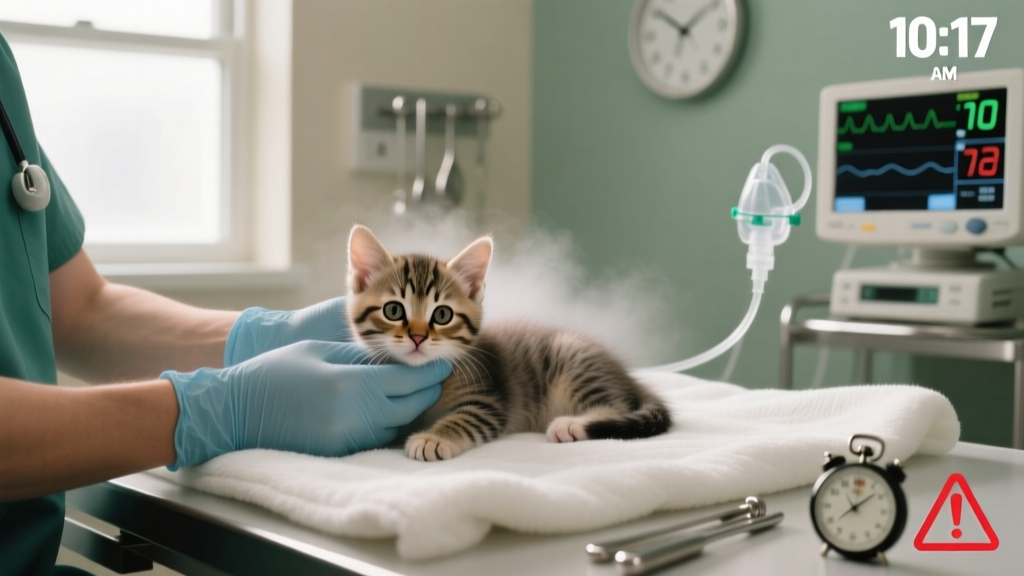
According to Dr. Lena Torres, DVM and feline internal medicine specialist at the Cornell Feline Health Center, “Any kitten under 8 weeks with diarrhea lasting >12 hours—or any kitten with bloody stool, lethargy, vomiting, or rectal temperature below 99°F or above 103.5°F—requires immediate veterinary evaluation. Delaying care risks irreversible organ damage.”
Here’s your rapid assessment checklist:
- Blood or mucus? Bright red streaks or jelly-like slime suggest colitis or parasitic infection (e.g., Coccidia or Trichomonas).
- Watery vs. soft-formed? Profuse, projectile, or green-tinged stool may indicate bacterial toxin exposure (e.g., Clostridium perfringens) or viral enteritis.
- Is the kitten still nursing or eating? Refusal to eat for >8 hours—or inability to suckle—signals impending hypoglycemia.
- Skin tent test: Gently pinch the scruff; if it takes >2 seconds to flatten, dehydration is moderate-to-severe.
When in doubt? Call your vet *before* symptoms escalate. Many clinics offer tele-triage for photos/video of stool and kitten behavior—don’t skip this step.
Step 2: Hydration First—Replenish What’s Lost (Without Risking Aspiration)
Dehydration kills faster than infection in kittens. But here’s what most guides get wrong: forcing oral fluids can cause aspiration pneumonia—especially in weak, sleepy, or uncoordinated kittens. Instead, prioritize safe, low-volume, high-electrolyte rehydration.
We recommend Pedialyte Unflavored (original formula only)—not generic electrolyte solutions or sports drinks—because its sodium-glucose co-transport ratio is optimized for small-mammal intestinal absorption. Dilute 1:1 with lukewarm water to reduce osmolarity and prevent osmotic diarrhea worsening.
Administer using a 1-mL syringe (without needle), NOT a dropper:
- Hold kitten upright, head slightly elevated—not flat or upside-down.
- Place tip gently at the side of mouth, behind canine teeth.
- Deliver 0.25–0.5 mL slowly over 10–15 seconds—pause if swallowing slows or coughing occurs.
- Aim for 2–4 mL per 100g body weight every 2 hours while awake (e.g., a 300g kitten = 6–12 mL total per 2 hrs).
Track intake meticulously. If oral intake drops below 75% of target for two consecutive doses—or if kitten vomits >1x—stop and seek IV/subcutaneous fluids immediately.
Step 3: Gut Rest & Strategic Reintroduction—What to Feed (and What to Avoid)
Contrary to popular belief, fasting is not recommended for kittens with diarrhea—even brief fasting worsens mucosal atrophy and delays healing. Instead, implement gut rest via highly digestible, low-residue nutrition.
For kittens still nursing: Continue mother’s milk or a vet-approved kitten milk replacer (KMR or Breeder’s Edge). Do not switch formulas mid-diarrhea episode—this adds antigenic stress. If orphaned, confirm the formula isn’t lactose-heavy (some store brands contain cow’s milk solids that trigger osmotic diarrhea).
For weaned kittens (4+ weeks): Transition to a prescription hydrolyzed protein diet like Hill’s z/d or Royal Canin Hypoallergenic for 5–7 days. These contain pre-digested peptides that bypass immune triggers and reduce fermentation load in the colon.
Avoid these common pitfalls:
- Chicken baby food: Often contains onion/garlic powder (toxic to cats) and thickeners like xanthan gum that ferment and worsen gas.
- Plain boiled chicken + rice: Low in taurine, calcium, and essential fatty acids—nutritionally inadequate for growing kittens over 48 hours.
- Probiotics marketed for humans: Strains like Lactobacillus acidophilus don’t colonize feline GI tracts. Use only veterinary-specific strains (Bifidobacterium animalis AHC7, Enterococcus faecium SF68).
In a 2022 JAVMA study of 142 kittens with acute diarrhea, those fed a hydrolyzed diet + targeted probiotic had 63% faster resolution (median 2.1 days vs. 5.7 days) and 89% lower relapse rate at 14 days versus home-recipe diets.
Step 4: Parasite & Pathogen Protocol—Testing, Treating, and Preventing Recurrence
Over 70% of kitten diarrhea cases stem from parasites—not dietary indiscretion. Yet most caregivers treat blindly with over-the-counter dewormers, missing key culprits like Coccidia (requires sulfadimethoxine) or Giardia (requires fenbendazole + bathing).
Here’s your evidence-based diagnostic pathway:
- Fecal float + centrifugation (not just a basic float): Detects Toxocara, Ancylostoma, and Isospora oocysts.
- Fecal ELISA or PCR panel: Essential for Giardia, Trichomonas foetus, and Cryptosporidium—which won’t show on standard floats.
- Rectal swab culture: Only if fever, systemic signs, or bloody stool present—to rule out Salmonella, Campylobacter, or pathogenic E. coli.
Never treat empirically for Coccidia without confirmation: sulfa drugs suppress bone marrow in dehydrated kittens and require strict dosing windows. And never use metronidazole as a first-line “go-to”—it disrupts beneficial microbiota and is ineffective against Coccidia or Giardia in many strains.
Environmental decontamination is non-negotiable. Steam-clean litter boxes daily. Wash bedding at ≥140°F. Disinfect floors with diluted bleach (1:32) — Coccidia oocysts survive most household cleaners.
| Timeline Since Onset | Recommended Action | Vet Involvement Threshold | Expected Outcome if Managed Correctly |
|---|---|---|---|
| 0–6 hours | Start oral rehydration; monitor temp, gum color, suck reflex | None—unless lethargy, hypothermia, or refusal to nurse | Stabilization; no progression |
| 6–12 hours | Begin hydrolyzed diet; collect fresh fecal sample | Call vet for tele-triage; submit fecal sample same-day | Diagnosis initiated; treatment started by 24h |
| 12–24 hours | Continue hydration + diet; weigh twice daily (scale accuracy ±1g) | ER if weight loss >5%, temp <99°F or >103.5°F, or blood in stool | Stool firming begins; energy improving |
| 24–48 hours | Introduce vet-approved probiotic; add pumpkin puree (1/8 tsp) if stool remains loose but not watery | Recheck if no improvement; adjust meds based on lab results | Stool normalizing; appetite returning |
| 48–72+ hours | Maintain diet 3 days post-resolution; gradual transition back to regular food over 5 days | Required if recurrence, weight loss >10%, or persistent mucus/blood | Full recovery; no relapse |
Frequently Asked Questions
Can I give my kitten Imodium or Pepto-Bismol for diarrhea?
No—absolutely not. Loperamide (Imodium) causes fatal central nervous system depression in kittens. Bismuth subsalicylate (Pepto-Bismol) contains salicylates that induce severe metabolic acidosis and gastric ulceration in cats. There are zero FDA-approved anti-diarrheal drugs for kittens. Symptom suppression masks underlying pathology and delays life-saving diagnostics.
My kitten has diarrhea but seems playful and eats well—is it safe to wait?
‘Acting normal’ is not reassuring in kittens. Up to 40% of kittens with early-stage Coccidia or Giardia show no systemic signs initially—yet shed millions of infectious oocysts. Even mild diarrhea compromises nutrient absorption during critical growth windows. Always submit a fecal test within 12 hours of first episode, regardless of demeanor.
How long does kitten diarrhea usually last with proper care?
With accurate diagnosis and targeted treatment, most bacterial or parasitic cases resolve in 2–4 days. Viral causes (e.g., rotavirus) may take 5–7 days. If diarrhea persists beyond 7 days despite appropriate care—or recurs within 14 days—further investigation is needed for chronic conditions like food sensitivities, inflammatory bowel disease, or pancreatic insufficiency. Document stool consistency daily using the Feline Fecal Scoring Chart for objective tracking.
Should I separate my sick kitten from other cats?
Yes—immediately and rigorously. Most kitten diarrhea pathogens (Coccidia, Giardia, Salmonella) are highly contagious to other cats (and sometimes humans). Use dedicated litter boxes, feeding bowls, and cleaning supplies. Wash hands thoroughly after handling. Isolation should continue for 72 hours after stool normalization to prevent environmental shedding.
Common Myths About Kitten Diarrhea
Myth #1: “It’s just from switching foods—give it time.”
Reality: Sudden diet changes *can* cause transient diarrhea—but persistent or severe episodes almost always indicate infection, parasites, or underlying illness. The gut microbiome of kittens under 12 weeks is too immature to handle abrupt shifts; transitions should take 7–10 days minimum, even with ‘sensitive’ formulas.
Myth #2: “If it’s not bloody, it’s not serious.”
Reality: Watery, pale-yellow diarrhea is often more dangerous than bloody stool—it signals profound malabsorption and rapid fluid loss. Blood may appear only in late-stage colonic inflammation or after prolonged irritation. Absence of blood ≠ absence of risk.
Related Topics (Internal Link Suggestions)
- Kitten hydration techniques — suggested anchor text: "how to hydrate a dehydrated kitten safely"
- Fecal testing for kittens — suggested anchor text: "what a kitten fecal test really shows"
- Best kitten milk replacers — suggested anchor text: "vet-recommended kitten formula comparison"
- Signs of kitten hypoglycemia — suggested anchor text: "kitten shaking and weak—what to do now"
- When to take a kitten to the vet — suggested anchor text: "kitten emergency warning signs checklist"
Your Next Step: Don’t Guess—Act With Precision
You now know how to care for a kitten with diarrhea—not with panic, but with purpose. You understand which signs demand ER care, how to rehydrate without risk, why diet matters more than ever, and why skipping diagnostics invites recurrence. But knowledge becomes impact only when applied. Today, take one concrete action: Weigh your kitten on a digital kitchen scale (accuracy ±1g), snap a clear photo of the stool on white paper, and call your veterinarian to request same-day fecal analysis. That single call could shorten suffering by days—and prevent complications that cost hundreds in emergency care later. You’ve got this. And your kitten is counting on you.