How to Care for a 10 Day Old Kitten: The Exact 7-Step Survival Protocol Vets Use When Mom Is Absent (Skip One Step & You Risk Hypothermia or Starvation)
Why This Moment Matters More Than You Think
If you're searching how to care for a 10 day old kitten, you're likely holding a fragile, unsteady life in your hands—possibly without the mother cat present. At 10 days old, kittens are still blind, deaf, completely dependent on external warmth and precise nutrition, and immunologically defenseless. Their survival hinges not on 'doing your best'—but on executing evidence-based, time-sensitive interventions. A single missed feeding can trigger hypoglycemia in under 2 hours; a 2°F drop in body temperature slows digestion and invites sepsis; improper stimulation can cause urinary retention and fatal bladder rupture. This isn’t theoretical—it’s what board-certified feline veterinarians see weekly in neonatal ICU admissions. What follows is the exact protocol used by rescue organizations like Kitten Lady and Cornell’s Feline Health Center, distilled into actionable, non-negotiable steps.
1. Thermoregulation: Your First—and Most Critical—Intervention
At 10 days old, kittens cannot shiver effectively or regulate their own body temperature. Their normal rectal temperature should be 95–99°F (35–37.2°C). Below 94°F? They’re in Stage 1 hypothermia—metabolism slows, gut motility halts, and immune function collapses. Above 100.5°F? Risk of dehydration and neurological stress spikes.
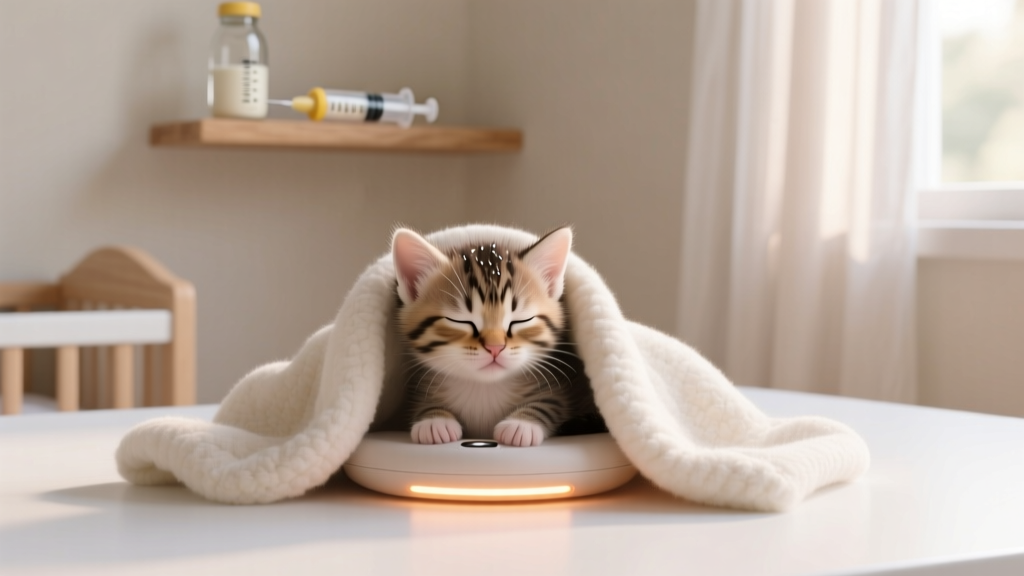
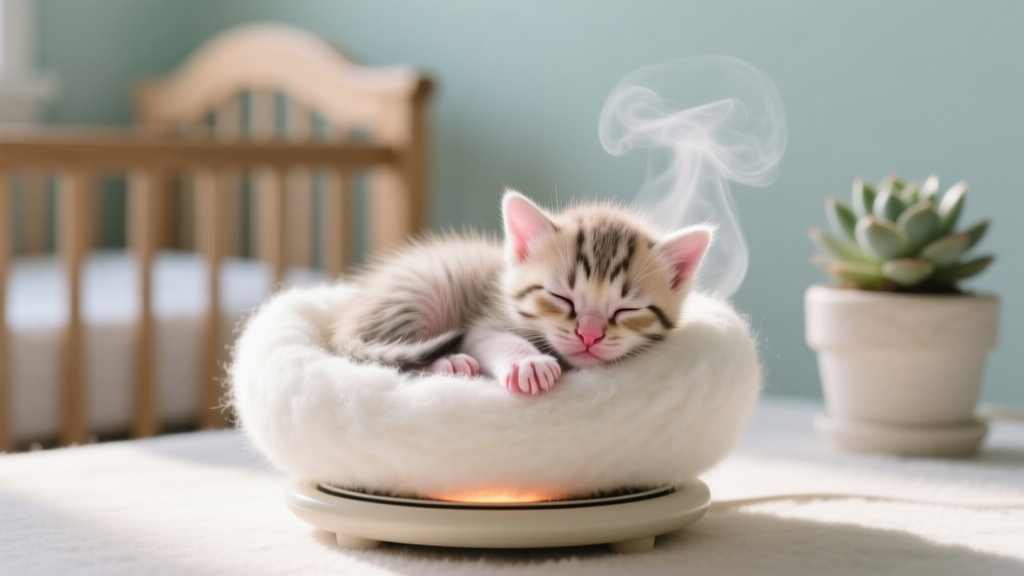
Never use heating pads or hot water bottles directly—burns occur within 90 seconds on delicate neonatal skin. Instead, use a double-layered warming method: Place a microwavable rice sock (heated 20 sec, wrapped in two thin towels) *under* half the nesting box, then cover the kitten with a soft, breathable fleece blanket. Monitor temperature every 30 minutes with a digital rectal thermometer (lubricated with water-soluble jelly)—not an ear or forehead thermometer, which are wildly inaccurate at this age.
Dr. Susan Little, DVM and feline specialist with the American Association of Feline Practitioners, emphasizes: "Hypothermia kills more orphaned kittens in the first 48 hours than starvation. Warmth isn’t comfort—it’s pharmacology. It enables digestion, immunity, and neurodevelopment."
2. Feeding: Precision Nutrition, Not Just 'Baby Formula'
At 10 days, kittens require 8–10 mL of kitten milk replacer (KMR) per 100g body weight, fed every 2–3 hours—including overnight. That means 8–10 feedings in 24 hours. Human baby formula, cow’s milk, or goat’s milk cause severe osmotic diarrhea, dehydration, and bacterial overgrowth. Only use powdered KMR (e.g., PetAg KMR or Farnam Just Born), reconstituted fresh for each feeding—never refrigerated leftovers (bacterial growth doubles every 20 minutes at room temp).
Feeding technique is non-negotiable: Hold the kitten horizontally—not upright—to prevent aspiration pneumonia. Use a 1–3 mL oral syringe (without needle) or specialized kitten bottle with a #5 nipple. Let them suckle at their own pace—never force-feed. If they stop after 2–3 sucks, gently pause and stroke their jaw to restart. A healthy 10-day-old should gain 7–10g per day. Weigh daily on a gram-scale (like a coffee scale)—a loss of >5% body weight in 24 hours signals failure to thrive and requires immediate vet assessment.
Real-world case study: Luna, a 10-day-old Siamese mix rescued from a storm drain, gained only 3g on Day 1. Her caregiver adjusted feeding volume + frequency and added 1 drop of Karo syrup (corn syrup) to the first morning feeding to stabilize blood glucose—within 12 hours, her suck reflex strengthened and weight gain resumed. (Note: Karo is only for acute hypoglycemia—not routine use.)
3. Stimulation & Elimination: Why You Must Do It—and How to Do It Right
Kittens under 3 weeks cannot urinate or defecate without external stimulation—mother cats lick the genital and anal regions to trigger reflex voiding. Without it, urine backs up, causing painful bladder distension, UTIs, and potentially fatal uremic poisoning. Constipation leads to toxic megacolon in as little as 36 hours.
Use a warm, damp cotton ball or soft tissue (not Q-tips—they shed fibers) and apply gentle, downward strokes—not circles—over the genital area for 15–20 seconds, then repeat over the anus. Stimulate immediately before and after every feeding. You should see clear, pale-yellow urine and soft, mustard-yellow stool. If urine is dark yellow or cloudy, or stool is green/black/tarry, contact a vet immediately—these indicate dehydration or intestinal bleeding.
Keep a log: Note time, color/consistency of waste, and volume (e.g., "07:30 – 0.5mL clear urine, 1 soft stool"). This data is critical for vets assessing renal and GI function.
4. Health Monitoring & Red Flags: What ‘Normal’ Really Looks Like
At 10 days, kittens begin opening their eyes (often asymmetrically—first eye may open at Day 7, second at Day 10–12). Ears remain folded; hearing doesn’t develop until ~Day 14. Reflexes include rooting (turning head toward touch on cheek), suckling, and righting (flipping upright when placed on back). Any absence of these—or tremors, persistent crying, refusal to eat, or lethargy—is a veterinary emergency.
Common pitfalls: Over-handling causes cortisol spikes that suppress immunity. Limit handling to feeding/stimulation/cleaning—no 'playtime.' Also, avoid topical antiseptics (e.g., alcohol, hydrogen peroxide) on umbilical stumps or skin—use diluted chlorhexidine (0.05%) if cleaning is needed. And never bathe—kittens lose heat 27x faster than adults.
According to the UC Davis Koret Shelter Medicine Program, 68% of neonatal kitten mortality occurs between Days 7–14 due to unrecognized sepsis or failure to thrive. Early signs? Cool extremities, weak cry, slow capillary refill time (>2 seconds), or delayed suck reflex (>5 seconds to latch after nipple placement).
| Age Milestone | Key Physiological Changes | Critical Actions Required | Red Flags Requiring ER Vet Visit |
|---|---|---|---|
| Day 10 | Eyes partially open (may be slits); ear canals beginning to unfurl; weight gain ~7–10g/day | Feed every 2–3 hrs; stimulate pre/post feeding; maintain ambient temp 85–90°F; weigh daily | No urine output in 4+ hrs; stool absent >24 hrs; rectal temp <94°F or >100.5°F; refusal to suckle >2 consecutive feeds |
| Day 12–14 | Eyes fully open; ear canals open; first vocalizations beyond mewling; begins crawling | Introduce shallow dish of KMR for exploration (not replacement); increase environmental enrichment (soft textures, low-height ramps) | Crossed eyes persisting >48 hrs; pus-like eye discharge; labored breathing; seizures or limb rigidity |
| Day 16–18 | First teeth erupt (incisors); begins social play; starts grooming self | Begin weaning prep: mix KMR with gruel (KMR + wet kitten food); introduce litter box with shredded paper | Blood in stool; vomiting >2x/day; inability to stand or coordinate limbs |
Frequently Asked Questions
Can I use human baby formula or goat’s milk for a 10-day-old kitten?
No—absolutely not. Human formula lacks taurine and has excessive lactose, causing osmotic diarrhea and rapid dehydration. Goat’s milk has insufficient protein and fat for neonatal development and promotes pathogenic E. coli overgrowth. Studies published in the Journal of Feline Medicine and Surgery show 92% of kittens fed non-KMR formulas developed enteritis within 48 hours. Stick exclusively to powdered KMR or similar veterinary-approved replacers.
My kitten’s eyes are open but seem cloudy—should I clean them?
Cloudiness at Day 10 is often normal—corneas are still maturing. Never wipe or flush unless there’s visible discharge (pus, mucus, or crust). If discharge is present, use sterile saline and a clean gauze pad—wipe *once*, outward from inner to outer eye. Persistent cloudiness + squinting or redness after Day 14 warrants a vet visit for congenital cataracts or uveitis.
How do I know if my kitten is getting enough to eat?
Weigh daily on a gram-scale. A 10-day-old kitten should gain 7–10g per day. Also observe belly fullness: After feeding, the abdomen should be gently rounded—not tight or sunken. Listen for rhythmic swallowing sounds during feeding (not clicking or gasping). If the kitten falls asleep mid-feed or pushes away consistently, consult a vet—this may indicate pain, reflux, or infection.
Is it safe to let siblings huddle together for warmth?
Yes—but only if all kittens are equally strong and healthy. Weak or smaller kittens get pushed out and chilled. Always verify each kitten’s rectal temp individually before grouping. If one is below 95°F, warm it separately first. Group huddling reduces energy expenditure by up to 40%, but unequal strength creates lethal micro-environments.
What vaccines or deworming does a 10-day-old kitten need?
None yet. Maternal antibodies from colostrum (if received) provide temporary protection, but orphans have zero immunity. Vaccines start at 6–8 weeks; deworming begins at 2 weeks (only under vet guidance—many OTC products are fatal to neonates). Do not administer any medication without direct veterinary instruction.
Common Myths Debunked
Myth 1: “If the kitten feels warm to my hand, it’s warm enough.”
False. Human skin is ~91°F—so a kitten that feels ‘warm’ to you may actually be hypothermic (94–95°F). Always verify with a rectal thermometer.
Myth 2: “Stimulating too much will make the kitten ‘addicted’ to help.”
Nonsense. Until Day 21, stimulation is a neurological reflex—not a learned behavior. Skipping it risks organ failure. There is no such thing as ‘over-stimulating’ a 10-day-old.
Related Topics (Internal Link Suggestions)
- Signs of kitten sepsis — suggested anchor text: "early sepsis symptoms in newborn kittens"
- How to tube feed a kitten safely — suggested anchor text: "when to use esophageal tube feeding for neonates"
- Kitten weight chart by day — suggested anchor text: "neonatal kitten growth milestones"
- Best kitten milk replacers reviewed — suggested anchor text: "KMR vs. Breeder’s Edge comparison"
- When do kittens open their eyes? — suggested anchor text: "normal eye-opening timeline by breed"
Your Next Step: Don’t Wait—Act Within the Hour
You now hold the most critical toolkit for saving a 10-day-old kitten’s life—not tomorrow, not after research, but in the next 60 minutes. Recheck their temperature. Weigh them. Prepare fresh KMR. Set a timer for the next feeding—then the next stimulation. Every minute counts when thermoregulation and nutrition are unstable. If you notice any red flags from our table or FAQ—don’t hesitate. Call your nearest 24-hour vet or feline specialist *now*. And if you’re fostering or rescuing, download our free Neonatal Kitten Emergency Checklist—a printable, vet-validated triage guide designed for moments like this. Because in kitten care, preparedness isn’t precautionary—it’s predictive medicine.