Feline Proptosis: Eyeball Displacement Emergency
1. Why this topic matters to cat owners
Seeing your cat’s eye suddenly bulging or displaced is one of the most frightening pet emergencies. Feline proptosis happens when the eyeball is pushed forward out of its normal position in the socket. It can look dramatic, but your calm, quick response can make a real difference in comfort and outcome.
This condition is uncommon in cats compared to dogs, yet when it occurs it’s usually tied to significant trauma or a serious underlying problem. Understanding what proptosis looks like, what to do in the moment, and what your veterinarian may recommend helps you protect your cat’s vision and overall health.
2. Overview: What is feline proptosis?
Proptosis means the eyeball has moved forward so far that the eyelids can no longer sit normally over it. In many cases, the eyelids get trapped behind the eye. This is an emergency because:
- The exposed surface of the eye dries out quickly, damaging the cornea.
- Swelling and pressure can compromise blood flow to the eye and optic nerve.
- The muscles and tissues that control the eye can tear or stretch.
- The eye may be painful, and the injury that caused it may involve the head, jaw, or chest.
Cats have a deeper bony orbit (eye socket) than many dog breeds, which offers some protection. That’s why proptosis in cats is often associated with higher-impact events (like car trauma) or severe facial injury, and your veterinarian will also be thinking about other injuries that could be present.
3. Symptoms and warning signs to watch for
Proptosis is usually obvious, but other signs may show up alongside it. Watch for:
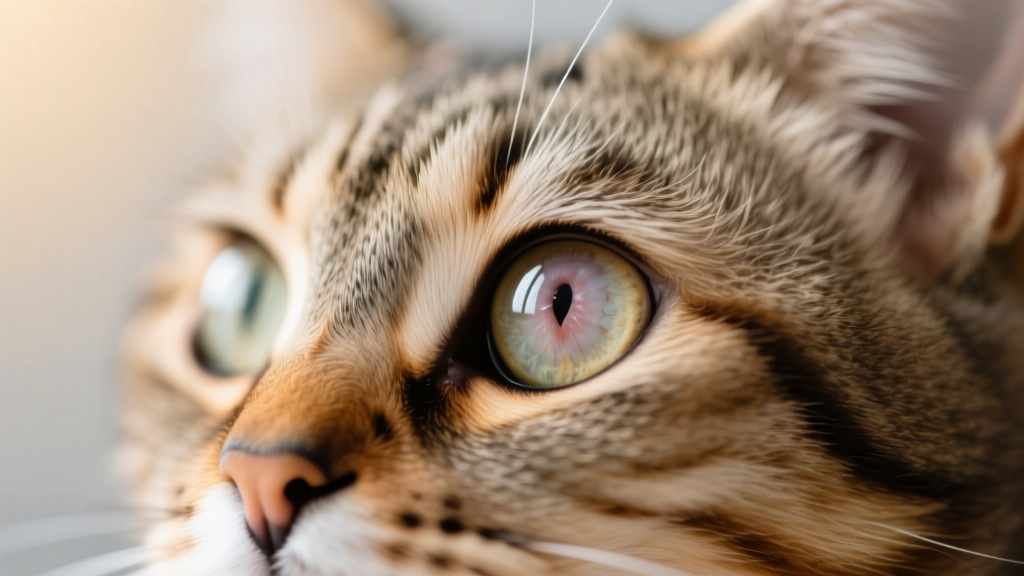
- Eyeball visibly protruding or “popped forward” from the socket
- Eyelids stuck behind the eyeball (the eye looks like it’s sitting outside the lids)
- Swelling around the eye and face
- Redness, bleeding, or discharge from the eye
- Cloudy cornea (the clear front surface looks blue/white or dull)
- Inability to blink or the eye staying wide open
- Uneven pupil size or a pupil that doesn’t respond normally to light
- Behavior changes: hiding, vocalizing, irritability, reluctance to move
- Signs of trauma: limping, mouth pain, difficulty breathing, bleeding from nose or mouth
If you suspect proptosis—even if you’re not 100% sure—treat it as an emergency and contact a veterinarian right away.
4. Causes and risk factors
In cats, proptosis is most often the result of force pushing the eye forward. Common causes include:
- Blunt trauma (car accidents, falls, being stepped on, collisions)
- Animal fights (bites and punctures near the eye can cause swelling/pressure and damage)
- Crush injuries (doors, furniture accidents)
- Severe facial fractures or head trauma
Less commonly, proptosis-like appearance can be related to conditions that push the eye forward (called exophthalmos) rather than the eye actually popping out. These can include:
- Abscess behind the eye (often from bite wounds or tooth-root infections)
- Tumors behind the eye
- Severe inflammation in the tissues around the eye
Risk factors that increase the chance of traumatic eye injuries include:
- Outdoor access (vehicles, predators, territorial fights)
- Unneutered cats (more roaming and fighting)
- Multi-cat conflict (especially with resource guarding or poor introductions)
5. Diagnosis: what to expect at the vet
Your veterinary team will focus on two priorities: stabilizing your cat and evaluating the eye and surrounding injuries. Because proptosis in cats often comes with trauma, the vet may recommend tests to check for additional damage.
Common steps and diagnostics include:
- Initial triage: pain control, oxygen if needed, assessment of breathing and circulation
- Eye exam: checking corneal health, pupil response, eyelid position, and visible tissue damage
- Fluorescein stain to look for corneal ulcers or scratches
- Tear production tests in some cases
- Bloodwork to evaluate overall health before anesthesia/surgery
- Imaging (skull/facial X-rays or CT, and sometimes chest X-rays) if trauma is suspected
- Neurologic assessment if head injury is possible
Because time matters for eye tissue health, your veterinarian may move quickly to treatment once your cat is stable enough, even while additional evaluations are underway.
6. Treatment options (medical, surgical, home care)
Treatment depends on the extent of injury, whether vision is likely to be preserved, and your cat’s overall stability. Your veterinarian will talk you through options, expected outcomes, and comfort considerations.
Medical stabilization (often immediate)
- Pain relief (very important for comfort and to reduce stress)
- Lubrication of the exposed eye to prevent drying and corneal damage
- Antibiotics if infection risk is present (common with bite wounds or open injuries)
- Anti-inflammatory medication when appropriate
- Protective measures such as an e-collar to prevent rubbing
Surgical options
1) Globe replacement and temporary tacking (tarsorrhaphy)
If the eye is considered potentially salvageable, the veterinarian may gently reposition it back into the socket and place temporary sutures to help the eyelids protect the eye while swelling decreases.
This approach is more likely to be considered when:
- The optic nerve and eye muscles appear less severely damaged
- The eye still has reasonable blood supply
- Corneal damage is limited
- Your cat can safely undergo anesthesia
2) Enucleation (surgical removal of the eye)
If the eye is too severely damaged to be comfortable or functional, or if the risk of chronic pain/infection is high, removing the eye may be the most humane choice. While this sounds scary, many cats do extremely well with one eye (or no eyes, if needed) and can enjoy a normal, happy life indoors.
Enucleation may be recommended when:
- The eye has lost blood supply or has extensive tissue rupture
- The optic nerve is severely damaged (vision unlikely to return)
- There is significant contamination, infection, or necrotic tissue
- The eye cannot be safely repositioned
Home care after treatment
Your vet will provide specific instructions. Typical home care may include:
- Give all medications exactly as prescribed (eye drops, oral pain meds, antibiotics)
- Keep the e-collar on unless your vet says otherwise
- Limit activity to prevent bumps and falls (a quiet room can help)
- Keep your cat indoors during recovery
- Watch for complications: increased swelling, discharge, bad odor, lethargy, appetite loss
- Attend recheck appointments to monitor healing and suture removal timing
Do not attempt to push the eye back in at home. This can worsen damage and introduces infection risk. Also avoid applying human eye drops unless explicitly directed by a veterinarian.
7. Prevention strategies and early detection tips
Not all cases are preventable, but many traumatic eye injuries can be reduced with practical steps:
- Keep cats indoors or provide a secure catio; this greatly lowers fight and vehicle risks
- Neuter/spay to reduce roaming and fighting behavior
- Use safe carriers and secure them in the car to prevent trauma during travel
- Reduce household hazards (slamming doors, heavy objects that could fall, unsafe window screens)
- Manage multi-cat households with slow introductions, multiple resources, and stress reduction
Early detection tip: If your cat’s eye looks suddenly more “bulgy” but not fully out of the socket, or if the third eyelid is showing and the cat seems painful when opening the mouth, it could be an abscess or swelling behind the eye. That still needs prompt veterinary assessment—don’t wait for it to “go down.”
8. Prognosis and quality of life considerations
The outlook depends on the severity of the trauma, how quickly treatment begins, and whether there are other injuries. Cats can do very well after eye injury treatment, even if vision cannot be saved.
Factors that influence prognosis include:
- Time to treatment: faster care usually improves comfort and protects remaining tissue
- Optic nerve and muscle damage: significant damage lowers the chance of functional vision
- Corneal health: severe drying and ulceration can lead to chronic pain
- Presence of infection (especially bite wounds)
- Other trauma: jaw fractures, chest injuries, and head trauma can affect recovery
Quality of life: Most cats adapt quickly to vision loss in one eye. They rely heavily on hearing, smell, whisker input, and routine. If an eye is removed, many owners are surprised by how rapidly their cat returns to normal behaviors once pain is controlled.
9. When to seek emergency veterinary care
Seek emergency care immediately if you see any of the following:
- The eyeball is displaced forward or the eyelids are stuck behind it
- Your cat has eye trauma with bleeding, severe swelling, or inability to close the eye
- There is sudden cloudiness, a visibly damaged cornea, or intense squinting/pain
- Your cat was hit by a car, fell from height, or was in a fight and now seems unwell
- Your cat has trouble breathing, collapses, seems disoriented, or has uncontrolled bleeding
What you can do right now while heading to the vet:
- Keep your cat calm and contained in a carrier if possible.
- Prevent rubbing: an e-collar is ideal if you have one and can place it safely.
- Protect the eye from drying: if you have sterile saline or veterinary-approved eye lubricant, you can gently keep the surface moist. Do not press on the eye.
- Do not attempt to reposition the eye and do not apply ointments with unknown ingredients.
- Call ahead to the emergency clinic so they can be ready on arrival.
10. FAQ: Common questions about feline proptosis
Can a proptosed eye be saved?
Sometimes. If the tissues, blood supply, and optic nerve are not too badly damaged and treatment happens quickly, repositioning may be possible. In many feline cases, trauma is significant and the safest, most comfortable option may be surgical removal. Your veterinarian will recommend what best protects your cat’s comfort and long-term health.
Is proptosis always caused by trauma?
Trauma is the most common cause in cats. Conditions like abscesses, tumors, or severe inflammation behind the eye can push the eye forward, which can resemble proptosis. A veterinary exam (and often imaging) helps determine the true cause.
Will my cat be in pain?
Eye displacement is typically painful, and cats can hide pain well. Pain control is a key part of emergency treatment. With appropriate medications and, if needed, surgery, most cats become noticeably more comfortable within a short time.
If my cat loses an eye, can they still live normally?
Yes. Many one-eyed cats play, climb, and interact normally once they adjust. Keeping them indoors, providing predictable furniture layout, using night lights in dark hallways, and avoiding sudden changes at home can make the transition smoother.
Should I cover the eye with a bandage at home?
Usually no. Bandaging can add pressure and may worsen injury. It’s safer to prevent rubbing, keep the cat contained, and head to a veterinarian. If you can lightly moisten the surface with sterile saline or veterinarian-approved lubricant without touching or pressing, that may help during transport.
How fast do I need to get to the vet?
As soon as possible. The longer the eye is exposed and displaced, the higher the risk of drying, infection, and irreversible damage. Even if the eye cannot be saved, fast care improves comfort and helps identify other serious injuries.
If you’re ever unsure about an eye injury, trust your instincts and contact a veterinarian or emergency clinic. For more cat health guides, first-aid tips, and owner-friendly explanations, visit catloversbase.com.