Feline Cutaneous Lymphoma: Skin Cancer Type Overview
1. Introduction: Why this topic matters for cat owners
Most cat parents are used to dealing with minor skin issues—an occasional scab, a small bald patch, or seasonal itching. The tricky part is that some serious conditions can start out looking just as mild. Feline cutaneous lymphoma is one of those: a type of cancer involving lymphocytes (a kind of white blood cell) that shows up in the skin. It’s not common, but it’s worth understanding because early veterinary attention can make a meaningful difference in comfort, treatment options, and quality of life.
If you’ve noticed persistent skin sores, lumps, thickened patches, or recurring “rashes” that don’t respond to typical treatments, you’re doing the right thing by seeking clear information—and by planning a veterinary visit.
2. Overview: What is feline cutaneous lymphoma?
Cutaneous lymphoma is a cancer made up of abnormal lymphocytes that collect in the skin. Lymphocytes normally help fight infection and are part of the immune system. In lymphoma, these cells grow and behave abnormally. While many people think of lymphoma as something that affects lymph nodes or internal organs, it can also appear primarily in the skin.
In cats, cutaneous lymphoma generally falls into two broad categories:
- Epitheliotropic cutaneous lymphoma: Abnormal lymphocytes have a tendency to migrate into the outer layers of the skin (the epidermis). This form may cause redness, scaling, crusting, itching, or thickened plaques.
- Non-epitheliotropic cutaneous lymphoma: Abnormal lymphocytes tend to remain deeper in the skin, often forming firm nodules or lumps.
Cutaneous lymphoma can be primary (starting in the skin) or secondary (spreading to the skin from lymphoma elsewhere in the body). Your veterinarian’s diagnostic work-up helps determine which is more likely, because that influences treatment planning and outlook.
3. Symptoms and warning signs to watch for
Skin lymphoma can mimic allergies, infections, or chronic dermatitis, so persistent or unusual skin changes deserve a closer look. Common signs include:
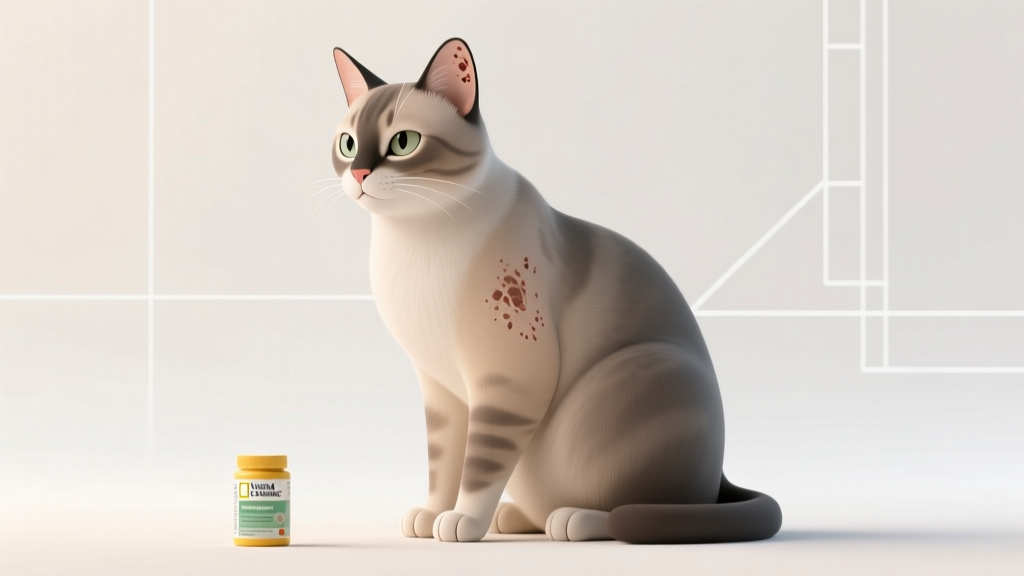
- Raised lumps or nodules (single or multiple), sometimes firm
- Thickened patches or plaques that feel different from surrounding skin
- Redness, scaling, or flaky skin that doesn’t resolve
- Crusting or oozing sores
- Hair loss in localized or scattered areas
- Itching or over-grooming (may be mild or severe depending on the case)
- Ulcers (open, non-healing wounds)
- Changes in pigmentation or skin texture
Some cats also show more general signs, especially if disease is not limited to the skin:
- Decreased appetite or weight loss
- Low energy
- Enlarged lymph nodes (a vet may find these on exam)
- Occasional fever
Practical tip you can do today: Take clear photos of any suspicious skin areas once a week (same lighting and distance if possible). Track size, color, and whether new spots appear. This “timeline” is extremely helpful for your veterinarian.
4. Causes and risk factors
In many cats, there isn’t a single identifiable “cause” of cutaneous lymphoma. Cancer is often the result of multiple factors—genetics, immune system changes, and environmental influences.
Risk factors and associations that may be discussed by your veterinarian include:
- Age: Many cases occur in middle-aged to older cats, though it can occur at various ages.
- Immune system status: Cats with immune compromise may be at higher risk for certain cancers.
- Retroviral infections:
- FeLV (Feline Leukemia Virus) is associated with several lymphoma types. Not every cat with lymphoma is FeLV-positive, and not every FeLV-positive cat will develop lymphoma, but testing is important.
- FIV (Feline Immunodeficiency Virus) may also increase cancer risk through immune suppression.
- Chronic inflammation: Long-standing skin inflammation from allergies or other dermatitis can complicate the picture. It doesn’t “prove” lymphoma, but persistent inflammation can make diagnosis more challenging and may influence skin health.
If you suspect a skin issue has been going on too long, don’t wait for it to “declare itself.” Chronic skin disease deserves veterinary evaluation even if your cat seems otherwise normal.
5. Diagnosis: Methods and what to expect at the vet
Because cutaneous lymphoma can look like many common skin problems, diagnosis typically requires several steps. Here’s what many cat owners can expect:
- History and full physical exam: Your vet will ask when lesions started, whether they change, itch, bleed, or respond to treatments. They’ll also feel lymph nodes and check the mouth, ears, and belly skin.
- Skin tests to rule out common causes:
- Skin scrape or tape prep to look for mites, yeast, or bacteria
- Fungal culture or PCR if ringworm is a concern
- Cytology (looking at cells under a microscope) from an impression smear or needle sample
- Biopsy (often the key step): A biopsy removes a small piece of skin for a pathologist to examine. This is frequently the most reliable way to confirm lymphoma and identify the subtype.
- Some biopsies can be done with local anesthetic and sedation; others require general anesthesia, especially if multiple sites are sampled.
- Your vet may recommend sampling more than one lesion, since different spots can show different patterns.
- Lab work: Bloodwork and urinalysis help assess overall health, organ function, and readiness for treatment.
- FeLV/FIV testing: Often recommended for cats with lymphoma or suspected lymphoma.
- Staging tests (checking for spread): Depending on findings, your vet may suggest chest X-rays, abdominal ultrasound, or sampling enlarged lymph nodes.
Practical tip: Before your visit, write down all medications and supplements your cat receives (including flea preventives), plus any previous skin treatments. Bring your photo timeline if you have one.
6. Treatment options (medical, surgical, home care)
Treatment is tailored to the type of cutaneous lymphoma, whether it is localized or widespread, and your cat’s overall health. Your veterinarian may work with a veterinary oncologist or dermatologist for the best plan.
Medical treatments
- Chemotherapy: Often the main treatment for lymphoma. Protocols vary and may use oral medications, injectable drugs, or a combination. Many cats tolerate chemotherapy better than humans expect; side effects are possible, but quality of life is a central priority in veterinary oncology.
- Corticosteroids (e.g., prednisolone): Sometimes used to reduce inflammation and temporarily shrink lymphoma lesions. Steroids can make a cat feel better quickly, but they can also interfere with certain diagnostic tests and chemotherapy response. Always follow your veterinarian’s guidance on timing.
- Antibiotics/antifungals: These do not treat lymphoma, but may be prescribed if there is a secondary infection from broken skin.
- Other therapies: Depending on the case, additional immune-modulating or targeted therapies may be considered by specialists.
Surgical options
- Surgical removal: If there is a single mass or a very localized area, surgery may be recommended, sometimes followed by additional therapy.
- Biopsy/excision for comfort: Even if cure is unlikely, removing an ulcerated or bothersome lesion can improve comfort and reduce infection risk.
Radiation therapy
Radiation can be useful for localized disease or lesions that are not easily removed surgically. Availability depends on region and referral centers.
Home care and comfort support
- Prevent licking and scratching: Use an e-collar or recovery collar if needed to protect fragile skin.
- Gentle skin management: Only use medicated shampoos, wipes, or topical products recommended by your veterinarian. Many human products are unsafe for cats.
- Pain and itch control: Never give over-the-counter human pain relievers (many are toxic to cats). Ask your vet about safe options.
- Nutrition and hydration: Keep food appealing; consider warming wet food or using veterinary-approved appetite support if recommended.
- Low-stress environment: Provide soft bedding, easy access to litter boxes, and quiet resting spaces. Stress can worsen grooming and skin trauma.
Immediate action step: If your cat has an open sore, keep it clean and dry and prevent licking until you can see your veterinarian. Avoid applying creams unless your vet directs you—cats ingest what’s on their fur.
7. Prevention strategies and early detection tips
There is no guaranteed way to prevent cutaneous lymphoma, but you can reduce risk and catch problems earlier:
- Keep FeLV/FIV status up to date:
- Test new cats before introducing them to your household.
- Discuss FeLV vaccination with your veterinarian, especially for cats with any outdoor exposure.
- Use effective parasite prevention: Fleas can trigger significant skin inflammation and self-trauma, which can mask or complicate underlying issues.
- Do a monthly “hands-on” skin check:
- Feel for bumps along the neck, back, belly, and legs.
- Check common hidden areas: under the chin, armpits, groin, and between toes.
- Look for scabs, thickened patches, or hair loss.
- Schedule regular wellness visits: Subtle changes are easier to catch early with routine exams.
- Don’t self-treat recurring lesions long-term: If something improves and then returns (or never fully resolves), it’s time for diagnostics rather than repeating the same topical or antibiotic.
8. Prognosis and quality of life considerations
Prognosis varies widely. Factors that influence outlook include:
- Whether disease is localized or widespread
- The lymphoma subtype and pathology findings
- How your cat responds to treatment
- Overall health, including kidney/liver function and FeLV/FIV status
Many treatment plans are designed with comfort as the priority. Cats don’t measure success by test results—they measure it by how they feel day to day. Your veterinary team may discuss:
- Response milestones: shrinkage of lesions, less itching, improved grooming behavior, better appetite
- Monitoring schedule: rechecks, bloodwork during chemotherapy, tracking skin lesion changes
- Palliative care options: focusing on comfort if aggressive treatment isn’t the right fit
At-home quality of life check: Keep a simple weekly log of appetite, activity, grooming, litter box habits, and whether skin lesions seem painful or itchy. Bring this to recheck visits.
9. When to seek emergency veterinary care
Cutaneous lymphoma itself is usually not a sudden emergency, but complications can become urgent. Seek same-day veterinary care (urgent or emergency) if you notice:
- Rapid swelling of a lesion, face, or limb
- Uncontrolled bleeding from a skin mass or sore
- Severe pain, sudden hiding, crying, or aggression when touched
- Not eating for 24 hours (or significantly reduced intake, especially in overweight cats)
- Labored breathing, open-mouth breathing, or extreme lethargy
- Signs of infection: pus, foul odor, spreading redness, fever, or the area feels hot
- Reaction after medication: vomiting repeatedly, facial swelling, hives, collapse, or weakness
If you’re unsure whether a change is urgent, call your veterinarian or an emergency clinic. A quick phone triage can help you decide the safest next step.
10. FAQ: Common questions from cat owners
Is cutaneous lymphoma contagious to other cats or people?
No—lymphoma itself is not contagious. If your cat also has a contagious condition (like ringworm or mites) that can resemble lymphoma, your veterinarian will address that. FeLV and FIV can be transmitted between cats (not to people), so testing and prevention are still important.
Can cutaneous lymphoma look like allergies or a “hot spot”?
Yes. Red, scabby, itchy, or thickened skin can come from allergies, parasites, infection, autoimmune disease, or cancer. The key clue is persistence: lesions that don’t resolve as expected, keep returning, or spread deserve a biopsy or deeper diagnostics.
Will my cat suffer during chemotherapy?
Most cats tolerate chemotherapy better than many owners fear. Side effects can happen (such as reduced appetite, vomiting/diarrhea, or low white blood cell counts), but veterinarians use dosing strategies aimed at maintaining a good quality of life. If side effects occur, protocols can often be adjusted.
Should I try changing food or adding supplements first?
Diet can support overall skin health, but supplements and diet changes won’t diagnose or treat lymphoma. If you want to discuss skin-supportive diets (such as veterinary omega-3 options), do so with your veterinarian—especially if your cat is on other medications.
What does a skin biopsy involve, and is it painful?
A biopsy is a small surgical sample of skin taken under local anesthetic with sedation or under general anesthesia, depending on location and number of samples. Cats typically go home the same day with pain relief. Mild soreness is expected, but significant pain is not—call your vet if your cat seems very uncomfortable.
If the lesions improve with steroids, does that mean it’s not cancer?
Not necessarily. Steroids can reduce inflammation and can temporarily improve certain cancers, including lymphoma. That’s why veterinarians often recommend getting diagnostic samples before starting steroids (when possible).
If you suspect your cat has persistent or unusual skin changes, schedule a veterinary exam promptly. Early evaluation is the most practical step you can take to protect your cat’s comfort and health. For more cat wellness guides, symptom check tips, and veterinarian-reviewed topics, visit catloversbase.com.