Cat Horner's Syndrome: Nerve Damage Eye Symptoms
1. Why this topic matters to cat owners
Noticing that one of your cat’s eyes suddenly looks “different” can be unsettling—especially when the change appears overnight. A droopy eyelid, a smaller pupil, or a sunken-looking eye may point to a condition called Horner’s syndrome. While Horner’s syndrome itself is not usually painful, it can signal nerve disruption somewhere between the brain and the eye. That means it can be a clue to issues ranging from mild and temporary to more serious problems that need prompt veterinary attention.
Understanding what Horner’s syndrome looks like, what causes it, and what your veterinarian may recommend helps you act quickly and calmly. Early evaluation is the best way to protect your cat’s vision, comfort, and overall health.
2. Overview: What is Horner’s syndrome in cats?
Horner’s syndrome is a collection of eye and facial changes caused by damage or interruption to the sympathetic nerves that supply the eye. The sympathetic nervous system helps control:
- Pupil size (helps the pupil dilate)
- Eyelid tone (helps keep the upper eyelid lifted)
- Position of the eyeball (helps prevent a sunken appearance)
- Third eyelid position (helps keep it retracted)
These nerves take a long route: from the brain, down the spinal cord, through the chest, up the neck, and then to the eye and face. Because the pathway is so long, a problem anywhere along it can cause Horner’s syndrome signs on the affected side.
Horner’s syndrome is usually one-sided (affects one eye). It is not contagious and is not caused by a virus or bacteria by itself—though infections (like ear infections) can be an underlying trigger.
3. Symptoms and warning signs to watch for
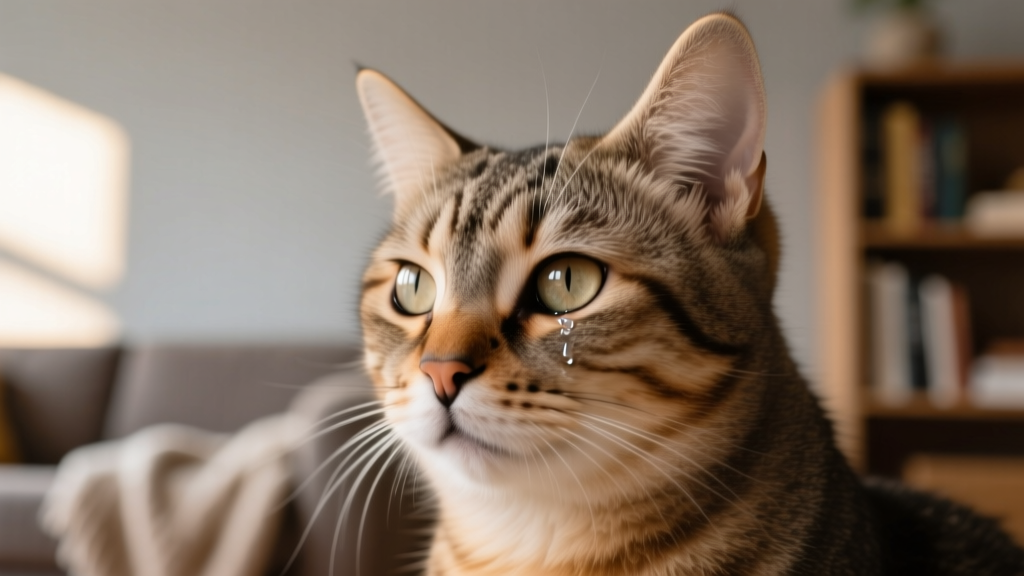
Horner’s syndrome is recognized by a classic set of signs. You may notice one or several of the following, typically affecting one eye:
- Small pupil (miosis): the affected pupil looks smaller than the other, especially in dim light
- Droopy upper eyelid (ptosis): the eyelid appears lower than normal
- Sunken eye (enophthalmos): the eye looks set back in the socket
- Raised third eyelid: the pale inner membrane partially covers the eye
Additional signs that may occur depending on the cause:
- Head tilt or loss of balance (may suggest inner/middle ear involvement)
- Ear scratching, ear odor, or discharge
- Facial sensitivity or pain when touched around the neck or ear
- Changes in voice or swallowing (rare, but can suggest deeper nerve issues)
- Behavior changes: hiding, reduced appetite, irritability
Practical at-home check: Take a clear photo of your cat’s face from the front in good light and another in dim light (if safely possible). If one pupil stays small in dim light compared to the other, share those photos with your veterinarian. This helps document progression and can be useful if signs come and go.
4. Causes and risk factors
Horner’s syndrome is a sign, not a diagnosis by itself. The goal is to find (or rule out) the underlying cause of the nerve disruption. Common causes include:
- Middle or inner ear disease: infections, inflammation, polyps, or debris affecting the nerves near the ear canal and middle ear
- Trauma: bite wounds, falls, car accidents, rough handling, or neck injuries can damage nerve pathways
- Neck or chest masses: tumors or enlarged lymph nodes can press on nerves along the pathway
- Inflammation or nerve injury after procedures: occasionally after ear cleaning under sedation, surgery, or placement of a jugular catheter
- Idiopathic Horner’s syndrome: no underlying cause is found despite appropriate testing; this can happen in cats and may resolve on its own
Risk factors that may make Horner’s syndrome more likely or raise suspicion of an underlying trigger:
- History of ear infections or chronic ear debris
- Outdoor access (higher risk of trauma, bite wounds, and foreign bodies)
- Known nasal, ear, or throat issues (possible polyps in younger cats)
- Senior cats with unexplained weight loss or coughing (increased concern for masses in chest/neck)
5. Diagnosis: what to expect at the vet
Your veterinarian will focus on two big questions: (1) Is this truly Horner’s syndrome? and (2) Where along the nerve pathway might the problem be?
Typical steps at the appointment include:
- History: when signs started, indoor/outdoor status, recent trauma, recent anesthesia or ear cleaning, appetite and behavior changes
- Physical and neurologic exam: checking pupil response, eyelid position, third eyelid, facial symmetry, gait, and reflexes
- Eye exam: fluorescein stain if corneal injury is suspected, tear testing if dryness is a concern, and assessment of eye pressure if glaucoma/uveitis are differentials
- Ear exam: otoscopic evaluation; sometimes ear cytology (microscope exam of debris) to look for infection
Special testing your vet may recommend:
- Pharmacologic eye drops tests: certain drops can help support the diagnosis and sometimes suggest whether the nerve issue is closer to the eye or farther back along the pathway (these tests must be guided by a veterinarian)
- Imaging: skull/chest X-rays, CT, or MRI may be advised if a deeper ear problem, polyp, or mass is suspected
- Advanced ear evaluation: video otoscopy, ear flush under anesthesia, or sampling of the middle ear in select cases
- Bloodwork: to assess overall health, inflammation, and anesthesia readiness if procedures are needed
Because causes vary, your cat may not need every test. Your veterinarian will tailor the workup to your cat’s age, exam findings, and risk factors.
6. Treatment options (medical, surgical, home care)
Treatment focuses on addressing the underlying cause and supporting comfort while nerves recover. Horner’s syndrome itself often improves as the nerve pathway heals, but the timeline can vary.
Medical treatments
- Treating ear infections/inflammation: prescribed ear medications, oral antibiotics or anti-inflammatories when appropriate, and careful follow-up rechecks
- Pain control: if trauma or ear disease is painful, your vet may prescribe cat-safe analgesics
- Eye lubrication: if the eye seems irritated or doesn’t blink normally, lubricating drops/gel may be recommended to protect the cornea
- Targeted therapies: depending on findings (for example, treatment for inflammatory conditions)
Surgical or procedural treatments
- Polyp removal: nasopharyngeal polyps (more common in younger cats) may require traction removal and/or surgery; ear involvement sometimes needs a more advanced approach
- Middle ear procedures: flushing, drainage, or surgery may be needed for severe or chronic middle ear disease
- Mass evaluation and treatment: biopsy, removal, oncology referral, or other targeted plans depending on location and type
Home care tips you can act on right away
- Prevent self-trauma: if your cat is scratching at an ear or eye, use an e-collar if advised by your veterinarian
- Give medications exactly as directed: especially ear meds—stopping early can lead to relapse
- Keep your cat indoors during recovery: reduces risk of injury and makes monitoring easier
- Track changes daily: note pupil size differences, third eyelid visibility, appetite, and balance; take photos every few days
- Avoid at-home ear cleaning unless instructed: cleaning the wrong way can worsen inflammation or risk eardrum injury
If your cat’s veterinarian suspects idiopathic Horner’s syndrome and your cat is otherwise healthy, they may recommend monitoring with scheduled rechecks rather than aggressive testing right away. Always follow your vet’s guidance—this decision is based on a careful exam and risk assessment.
7. Prevention strategies and early detection tips
You can’t prevent every cause of Horner’s syndrome, but you can reduce risk and catch problems early.
- Stay ahead of ear health: if your cat has recurring ear debris, head shaking, or odor, schedule an exam early—middle ear disease can progress quietly
- Keep cats safely indoors or supervised: reduces trauma from fights, falls, and vehicles
- Use gentle handling: avoid pressure on the neck area and don’t restrain by the scruff in ways that twist the neck
- Follow through with rechecks: ear infections often need reassessment to confirm full resolution
- Know your cat’s “normal” face: subtle differences are easier to catch when you’re familiar with their baseline
Early detection tip: Watch pupil size in different lighting. A pupil that doesn’t widen normally in dim light (compared to the other eye) is a helpful clue to share with your veterinarian.
8. Prognosis and quality of life
For many cats, the prognosis is good, especially when the underlying cause is identified and treated. Nerves heal slowly, so improvement may take weeks to months.
Quality of life is usually excellent if:
- The cause is treatable (such as an ear infection or polyp)
- Your cat’s vision is not compromised by corneal damage or another eye condition
- Balance issues (if present) are managed and improve over time
Some cats may have persistent mild signs (like a slightly droopy eyelid) even after recovery, but they typically adapt well. The bigger concern is not the cosmetic change—it’s whether the Horner’s syndrome is a sign of a deeper problem (chest/neck mass, significant trauma, or severe middle ear disease). That’s why veterinary evaluation is always recommended.
9. When to seek emergency veterinary care
Horner’s syndrome signs alone are often not an immediate emergency, but certain combinations of symptoms warrant urgent or emergency evaluation.
Seek emergency care right away if you notice:
- Sudden blindness, bumping into objects, or extreme pupil changes
- Severe eye pain (squinting, pawing at the eye, crying out, unwilling to open the eye)
- Eye injury (blood in the eye, bulging eye, obvious trauma)
- Significant head tilt, falling over, or inability to walk normally
- Seizures, extreme lethargy, collapse, or disorientation
- Difficulty breathing or open-mouth breathing (always urgent in cats)
- Known trauma (hit by car, fall from height, bite wound) even if the cat “seems okay”
If your cat is stable but has new one-sided eye changes consistent with Horner’s syndrome, schedule a veterinary visit as soon as possible (ideally within 24–48 hours). Prompt assessment helps rule out conditions that need immediate treatment.
10. FAQ: Common questions cat owners ask
Can Horner’s syndrome in cats go away on its own?
Sometimes, yes. If the cause is idiopathic (no cause found) or the nerve irritation is mild, signs may resolve over several weeks. Even if it improves, a veterinary exam is still recommended to make sure a treatable problem (like middle ear disease) isn’t being missed.
Is Horner’s syndrome painful for my cat?
Horner’s syndrome itself is typically not painful. Pain depends on the underlying cause. Ear infections, trauma, or corneal issues can be uncomfortable and need treatment.
Will my cat lose vision from Horner’s syndrome?
Horner’s syndrome does not usually cause blindness. Vision concerns arise if there is another eye problem present (corneal ulcer, severe inflammation, glaucoma) or if the underlying issue affects the brain or optic pathways. Your vet will check for these during the exam.
What’s the most common cause of Horner’s syndrome in cats?
Middle ear disease (infection, inflammation, polyps) and trauma are common culprits. In some cats, no cause is found even after evaluation.
Should I clean my cat’s ear at home if I suspect an ear infection?
Not until your veterinarian examines the ear. If the eardrum is damaged or the problem is deeper (middle ear), cleaning can worsen irritation or push debris inward. Your vet can show you a safe technique if home ear care is appropriate.
How soon should my cat see a veterinarian?
If you notice the classic one-sided eye changes, schedule an appointment as soon as you can—ideally within 24–48 hours. Go sooner if your cat seems ill, unsteady, in pain, or if there was recent trauma.
If your cat’s eye suddenly looks different, trust your instincts and reach out to your veterinarian for guidance. With timely evaluation and the right plan, most cats do very well.
For more trustworthy, cat-owner-friendly health guides and wellness tips, visit catloversbase.com and explore our growing library of cat health resources.