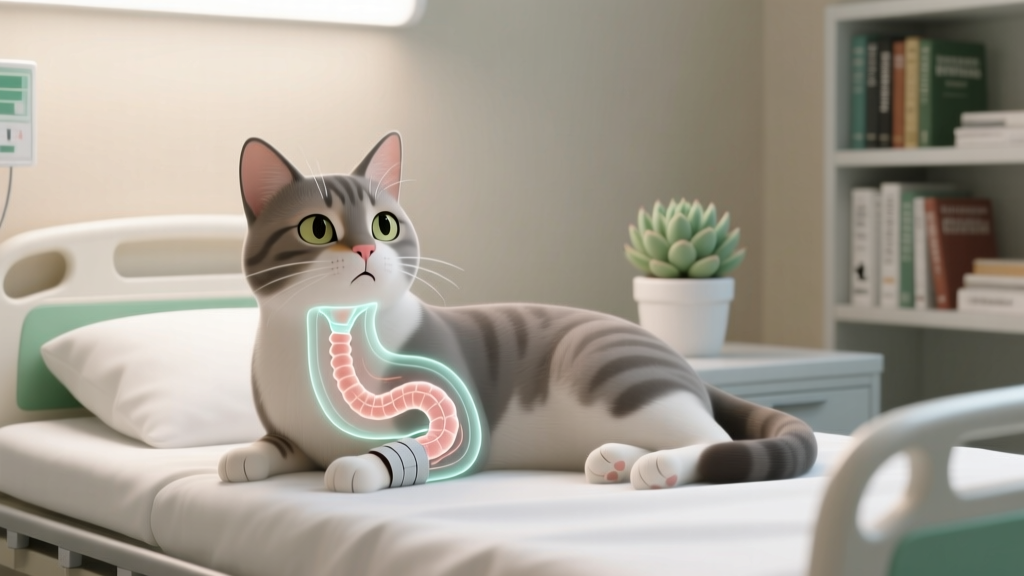
Cat Esophageal Stricture: Swallowing Difficulty After Injury
1) Why this topic matters for cat owners
Watching a cat struggle to swallow can be scary and confusing. Many cats with throat or swallowing problems still want to eat, walk up to the bowl, and act hungry—then gag, cough, or bring food back up. One possible cause is an esophageal stricture, a narrowing of the tube that carries food from the mouth to the stomach (the esophagus). This condition often develops after an injury or irritation to the esophageal lining, and it can quickly affect nutrition, hydration, comfort, and overall quality of life.
The reassuring part: esophageal strictures are treatable, especially when addressed early. Knowing the warning signs helps you seek care before your cat loses too much weight or develops complications like aspiration pneumonia.
2) Overview: what is an esophageal stricture?
The esophagus is a muscular tube that moves food and water down into the stomach using coordinated contractions. A stricture means an abnormal narrowing of that tube. In cats, strictures most often form when the esophageal lining is damaged (from inflammation, chemical irritation, or physical injury). As it heals, scar tissue can form and contract, creating a tight “ring” or narrowed segment.
Think of it like this: if the esophagus becomes narrowed, food can’t pass smoothly. Solid food tends to get stuck first. Your cat may swallow repeatedly, gag, or bring food back up. Over time, the esophagus above the narrowing can stretch and become irritated, making the problem worse.
Strictures can be:
- Short or long segments of narrowing
- Mild to severe (some allow liquids; severe ones block most food)
- Single or multiple narrowed areas (less common)
3) Symptoms and warning signs to watch for
Many owners first notice changes around mealtime. Signs can range from subtle to obvious, depending on how narrow the esophagus has become.
Common signs
- Regurgitation (food or liquid comes back up passively, often soon after eating; usually not the heaving seen with vomiting)
- Difficulty swallowing or repeated swallowing attempts
- Gagging, retching, or coughing during or after eating
- Drooling or increased saliva
- Eating more slowly, walking away from food, or acting hungry but unable to finish
- Weight loss or poor body condition
- Dehydration (dry gums, decreased skin elasticity, reduced urine output)
Signs that can point to complications
- Lethargy or weakness
- Fever
- Fast or labored breathing
- Wheezing or persistent cough (possible aspiration pneumonia)
Quick at-home observations you can do today
- Notice whether trouble happens with dry food, wet food, treats, or water. Strictures often show up first with solid foods.
- Record when regurgitation occurs (immediately after eating vs. hours later).
- Take a short video of a mealtime episode to show your veterinarian.
- Track weekly weight if your cat will tolerate being weighed.
If your cat is regurgitating, losing weight, or struggling to swallow, schedule a veterinary visit promptly. Home remedies are not a safe substitute because the underlying narrowing usually needs targeted treatment.
4) Causes and risk factors
Most feline esophageal strictures are linked to injury or inflammation that leads to scarring. Causes can include:
Medication-related esophagitis (a common trigger)
- Some pills or capsules can lodge in the esophagus and cause chemical irritation.
- In cats, certain medications are especially known for this risk when given without water or food.
Owner takeaway: Always ask your veterinarian how to give tablets/capsules safely and whether a liquid form is available.
Gastroesophageal reflux (stomach acid irritation)
- Acid reflux can inflame the esophagus and contribute to ulceration and scarring.
- Reflux may occur with anesthesia, chronic vomiting, or some GI conditions.
Foreign body or trauma
- Swallowing sharp objects (bones, needles, string with a needle) can damage the lining.
- Repeated irritation from a lodged object can lead to severe inflammation and scarring.
Caustic substances
- Household cleaners, essential oils, and other chemicals can cause burns if ingested.
- Even small exposures can be dangerous.
Other risk factors
- History of difficult medication administration (dry pilling)
- Prior anesthesia (reflux risk around anesthesia is one reason pre-op fasting and careful monitoring matter)
- Chronic vomiting or suspected GI disease
- Prior esophageal inflammation from any cause
5) Diagnosis: what to expect at the vet
Your veterinarian will focus on confirming whether the problem is regurgitation versus vomiting, and then determining where and why food isn’t moving normally.
History and physical exam
- Questions about timing (after meals), diet type, recent medications, anesthesia, toxin exposure, and weight changes
- Assessment of hydration, body condition, lung sounds, and overall stability
Imaging and procedures commonly used
- Chest and neck X-rays: May show air/fluid in the esophagus, dilation above a narrowing, or signs of aspiration pneumonia.
- Contrast esophagram (barium swallow): Your cat swallows a contrast material that outlines the esophagus on X-rays. This can help locate a narrowing and show how severe it is.
- Endoscopy (esophagoscopy): A small camera is used under anesthesia to view the esophagus directly. This is often the best way to confirm a stricture, evaluate inflammation, and sometimes treat it during the same procedure.
- Bloodwork: Helps evaluate dehydration, infection/inflammation, and overall health before anesthesia.
If your cat is struggling to breathe, is very weak, or can’t keep water down, your veterinarian may stabilize first with fluids and oxygen before completing all diagnostic steps.
6) Treatment options (medical, procedural, and home care)
Most strictures require a combination of opening the narrowed area and treating the underlying inflammation while supporting nutrition.
Endoscopic balloon dilation (most common treatment)
- A deflated balloon is positioned within the narrowed area and gently inflated to widen the stricture.
- Many cats need multiple sessions spaced over days to weeks for the best outcome.
- The goal is to restore swallowing while minimizing re-injury.
Bougienage (dilation with progressively larger dilators)
- Another technique to widen the esophagus.
- Your veterinary team will choose the method based on stricture location, severity, and available equipment.
Medications
- Acid reducers (to decrease reflux-related irritation)
- Mucosal protectants (to coat and protect the esophagus)
- Pain control as needed
- Antibiotics if aspiration pneumonia or infection is suspected
Nutritional support
- Diet modification: Many cats do better with smooth canned food, blenderized diets, or prescription recovery diets during healing.
- Feeding tube (temporary): In moderate to severe cases, your veterinarian may recommend a feeding tube to maintain calories and hydration while the esophagus heals. This can be a major relief for cats who are hungry but can’t swallow comfortably.
Surgery
Surgery is less common for typical strictures and may be considered in select cases (for example, severe strictures that don’t respond to repeated dilation or if there are complicating structural issues). Your veterinarian may refer you to a veterinary internist or surgeon for advanced care.
Home care you can act on immediately (after veterinary guidance)
- Feed exactly as directed: texture matters. Don’t switch back to kibble until your veterinarian says it’s safe.
- Smaller, more frequent meals can reduce regurgitation episodes.
- Keep your cat calm after meals; avoid intense play right after eating.
- Give medications safely: Ask about liquid forms. If you must give pills, follow your vet’s instructions carefully (often with water or a small food chaser), and never “dry pill” unless specifically instructed.
- Monitor breathing daily—coughing, rapid breathing, or low energy after regurgitation needs a vet call.
7) Prevention strategies and early detection tips
Not every stricture can be prevented, but many can be reduced with careful medication practices and quick response to early symptoms.
Medication safety
- Ask your vet whether a medication is available as a liquid or flavored compound.
- If giving tablets/capsules, ask how to follow with water or food to help it reach the stomach.
- Never force a pill if your cat is struggling—call your vet for alternatives.
Reduce exposure to irritants and foreign bodies
- Store cleaners, chemicals, and essential oils securely.
- Keep needles, thread, string toys, and sharp objects out of reach.
- Supervise play with string-like toys and put them away afterward.
Early detection
- Take regurgitation seriously, especially if it happens more than once.
- Seek veterinary advice early if your cat is eating but not keeping food down or losing weight.
- If your cat recently had anesthesia or started a new medication and then develops swallowing trouble, contact your veterinarian promptly.
8) Prognosis and quality of life considerations
The prognosis varies depending on the cause, the length/severity of the stricture, and how quickly treatment begins. Many cats do very well with appropriate dilation and supportive care, returning to comfortable eating and a normal routine.
Some cats need:
- More than one dilation session
- Ongoing reflux management if acid irritation is a continuing issue
- Long-term diet adjustments (some do better on wet food long-term)
Quality of life is usually good when cats can maintain weight, hydrate normally, and eat without distress. Your veterinary team will focus on minimizing regurgitation episodes and protecting the lungs from aspiration.
9) When to seek emergency veterinary care
Contact an emergency veterinarian right away if you see any of the following:
- Trouble breathing, open-mouth breathing, or very rapid breathing
- Blue, gray, or very pale gums
- Profound lethargy, collapse, or inability to stand
- Repeated regurgitation with inability to keep down water
- Suspected foreign body ingestion (string, needle/thread, bones, toys)
- Fever or worsening cough after regurgitation (possible aspiration pneumonia)
- Known toxin/chemical ingestion
If your cat is stable but regurgitating frequently or losing weight, schedule a veterinary appointment as soon as possible. Waiting often makes treatment more difficult.
10) FAQ: Common questions from cat owners
Is regurgitation the same as vomiting?
No. Regurgitation is usually passive—food comes up without abdominal heaving and often soon after eating. Vomiting typically involves nausea signs and active abdominal contractions. Both need veterinary attention, but regurgitation raises concern for esophageal problems like strictures.
Can a cat still be hungry with an esophageal stricture?
Yes. Many cats have a normal appetite but can’t comfortably swallow or keep food down. This is one reason strictures can be missed at first—your cat may run to the bowl but struggle once eating begins.
How many dilation treatments will my cat need?
It varies. Some cats improve after one procedure, but many require several dilations to reach and maintain an adequate opening. Your veterinarian will base the plan on response, recurrence of symptoms, and what the esophagus looks like during rechecks.
Will my cat need a special diet forever?
Not always. Some cats return to a normal diet after healing, while others do best long-term on wet food or softer textures. Your veterinarian will guide diet changes gradually to avoid setbacks.
Can strictures come back?
They can. Scar tissue can contract again, especially if the underlying irritation (like reflux) isn’t controlled. Prompt follow-up visits and giving medications exactly as directed helps reduce recurrence risk.
What should I do if my cat has trouble swallowing after giving a pill?
Call your veterinarian the same day. Do not give another dose until you’ve spoken with them. Your vet may switch medications, prescribe esophageal-protective treatment, or recommend an exam to make sure a pill isn’t stuck and causing injury.
If your cat shows signs of swallowing difficulty, regurgitation, or weight loss, a veterinary exam is the safest next step. For more practical, vet-informed cat health guides and caregiving tips, visit catloversbase.com.