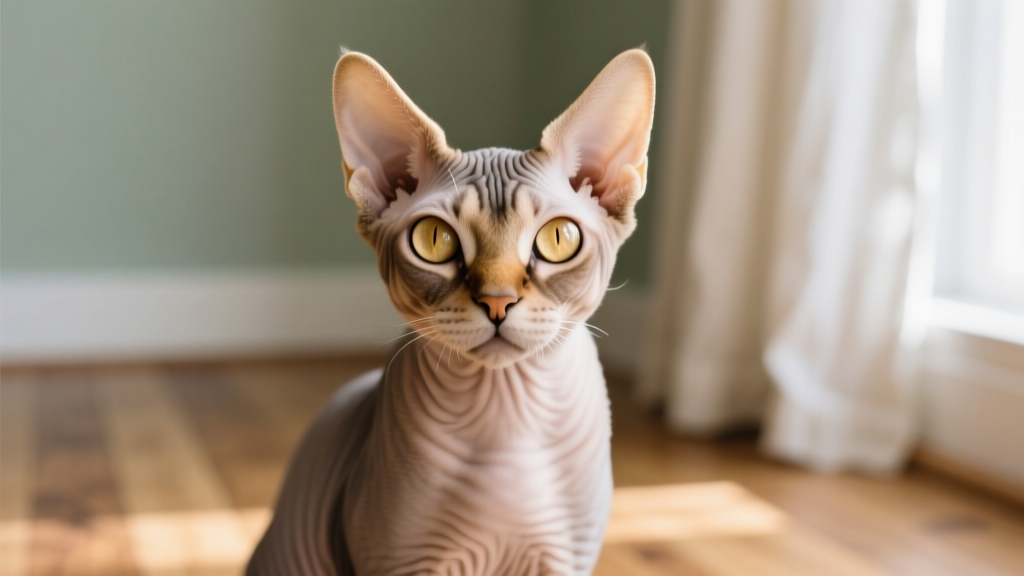
Devon Rex Cat Characteristics: Temperament, Care & History
Breed Origins and Recognition
The Devon Rex originated in Buckfastleigh, Devon, England, in 1960, when a curly-coated kitten named Kirlee was born to a domestic shorthair queen. Unlike the Cornish Rex (recognized by the GCCF in 1957), Kirlee’s mutation proved genetically distinct—confirmed by Dr. D. F. Roberts in 1967 through breeding studies (Roberts, 1967, Journal of Heredity). The breed gained CFA recognition in 1979 and TICA full championship status in 1983.
Distinctive Physical Traits
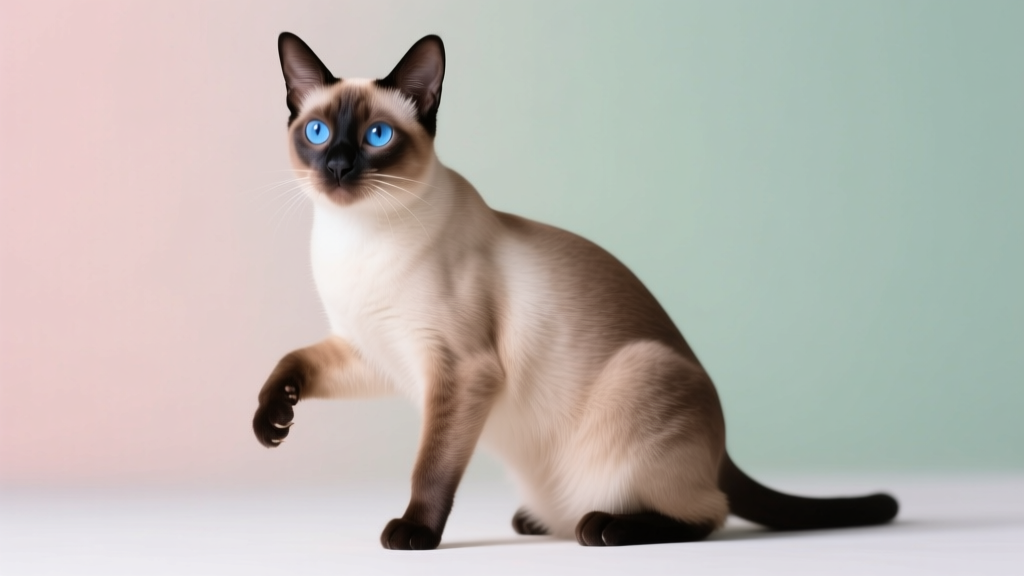
Devon Rex cats are instantly recognizable by their large, low-set ears, wide-set eyes, and elfin faces. Their coat is ultra-soft, wavy, and sparse due to a recessive autosomal gene (re). Adult weight ranges from 5–10 lbs (2.3–4.5 kg), with males typically larger. They have a muscular yet lithe build and unusually short, fine whiskers. Their skin often feels warm to the touch—body temperature averages 102.5°F (39.2°C), slightly higher than typical felines.
Temperament and Social Behavior
Known for clownish energy and deep attachment, Devon Rex cats form intense bonds with owners—often following them room-to-room and sleeping under blankets or in hoods. They thrive on interaction and can become anxious if left alone for more than 8 hours daily. A 2021 University of Helsinki study found Devon Rex scored highest among 12 breeds for human-directed playfulness (Svartberg et al., 2021, Applied Animal Behaviour Science).
Grooming and Health Considerations
Despite minimal shedding, Devon Rex require weekly gentle wiping with a damp microfiber cloth (e.g., Norwex Enviro Cloth) to remove sebum buildup—especially around ears and paws. Their lack of guard hairs increases susceptibility to sunburn; UV-blocking window film (like 3M ScotchTint) is recommended for homes with south-facing windows. Common health concerns include hypertrophic cardiomyopathy (HCM), with ~12% prevalence in tested breeding lines per 2020 UC Davis Veterinary Genetics Lab data.
Choosing a Devon Rex: Real-World Guidance
Consider your lifestyle carefully before adopting. For example, Maya, a remote software engineer in Portland, adopted a Devon Rex named Pip after confirming her home had consistent daytime companionship—and installed heated cat beds (K&H Thermo-Kitty) to support his temperature regulation needs. In contrast, James, a traveling sales executive, postponed adoption until he secured a pet sitter trained in Devon-specific care, as his cat would vocalize persistently and overgroom when stressed. Reputable breeders like Devonshire Rex Cattery (est. 1992, Ohio) require signed contracts mandating indoor-only living and annual vet exams.
| Characteristic | Devon Rex | Cornish Rex | Domestic Shorthair |
|---|---|---|---|
| Coat Gene | re (recessive) | re (different allele) | Wild-type |
| Average Lifespan | 12–15 years | 11–15 years | 12–18 years |
| Energy Level (1–5) | 5 | 4 | 2–3 |
Because of their high sociability, Devon Rex do best in homes with at least one other pet—or committed human interaction for 2+ hours daily. They adapt well to apartments but need vertical space: a Trixie Baza three-tier cat tree satisfies their climbing instincts. Avoid cedar-based litter (e.g., Yesterday’s News Natural Cedar) as it may irritate their sensitive skin—opt instead for unscented, clumping clay or paper-based options like Ökocat Natural Paper Litter.
Vaccination schedules should follow AAHA 2022 guidelines: core vaccines (FVRCP, rabies) administered at 8, 12, and 16 weeks, then boostered every 3 years. Annual dental cleanings are strongly advised—Devon Rex show early onset gingivitis in ~18% of adults over age 5 (2023 Cornell Feline Health Center report). Always source kittens from breeders who provide OFA-certified HCM screening results and genetic testing for PK-Def (pyruvate kinase deficiency), present in ~3.2% of untested Devon bloodlines.