How To Match Shorthair With Clinical Care: A Practical Guide
Understand the Shorthair Profile Before Choosing Clinical Care
Matching a shorthair cat with clinical care means pairing a low-maintenance coat with proactive health monitoring, gentle handling, and evidence-based grooming. American Shorthairs and British Shorthairs are sturdy, often independent, and can hide discomfort until symptoms are advanced, so owners need a calm routine, accurate weight tracking, dental checks, and stress-aware vet visits. This guide explains how to choose diet, litter, grooming tools, skin products, and clinic preparation so a shorthair remains healthy, comfortable, and cooperative without overgrooming or anxiety-driven stress.
With 15 years of hands-on care work, I have seen many owners assume that a short coat equals minimal care. That assumption misses the point. A shorthair may not need daily de-matting, but it can still accumulate plaque, shed seasonally, develop oily skin, gain weight quietly, and react strongly to unfamiliar clinical handling. Matching the cat to clinical care means selecting tools, products, and visit routines that fit the breed's build, temperament, and likely health risks. It is less about doing more and more about doing the right checks at the right intervals.
Common Breed Benchmarks
Start with realistic size and condition targets. Adult American Shorthair males commonly weigh 11 to 15 pounds, while females often weigh 6 to 12 pounds. British Shorthairs can be broader, with many adults ranging from 9 to 18 pounds depending on frame. A healthy cat should have a visible waist from above and palpable ribs without thick fat. Body condition score on a 1 to 9 scale should sit near 5 for most adults. If the score drifts to 6 or 7, the cat is entering a clinical risk zone for arthritis, diabetes, and urinary strain.
Temperament matters too. Many shorthairs are observant and reserved rather than needy. They may tolerate grooming for two minutes, then walk away. That means clinical care should be broken into short, positive sessions rather than forced full-body handling. A good match uses predictable timing, soft pressure, treats, and stops before the cat becomes tense. The goal is cooperation, not completion in one sitting.
- Check weight every two weeks on the same digital scale, such as a Salter kitchen scale or OXO Good Grips scale, for consistency.
- Track appetite, water intake, litter box frequency, and coat shine during each weigh-in.
- Inspect ears, eyes, teeth, paws, and skin folds once per week with a soft light.
- Record resting respiratory rate; a healthy adult cat usually breathes 20 to 30 times per minute.
- Watch for hiding, reduced jumping, or reluctance to use a litter box, because those signs can appear before obvious pain.
Design a Home Clinical Routine With Measurable Checkpoints
The most reliable way to match a shorthair with clinical care is to turn vague concern into small, repeatable measurements. Instead of asking whether the cat looks healthy, track a few values that change early. Weight is the anchor. A 0.5 pound drop over three weeks in an adult indoor cat deserves attention, especially if food intake has not changed. A gain of 0.5 to 1 pound per month in a neutered adult can signal overfeeding or reduced activity. Pair the scale with a simple notebook or a phone note so trends become visible.
Weekly Monitoring Checklist
- Week one: weigh the cat after the morning meal and record the number to one decimal place.
- Week two: inspect teeth and gums for tartar, redness, or bleeding. Adult cats commonly show dental disease signs after age three, and many breeds have plaque buildup by age two or three.
- Week three: count litter box visits. A typical adult cat urinates one to three times daily. Two or more wet clumps in a 12-inch square litter area is a reasonable baseline for many cats.
- Week four: brush with a rubber curry such as Kong Zoom Groom or a soft silicone glove for 3 to 5 minutes, then note how much loose fur appears.
- Month end: review appetite, energy, stool quality, water drinking, and any scratching or licking patterns.
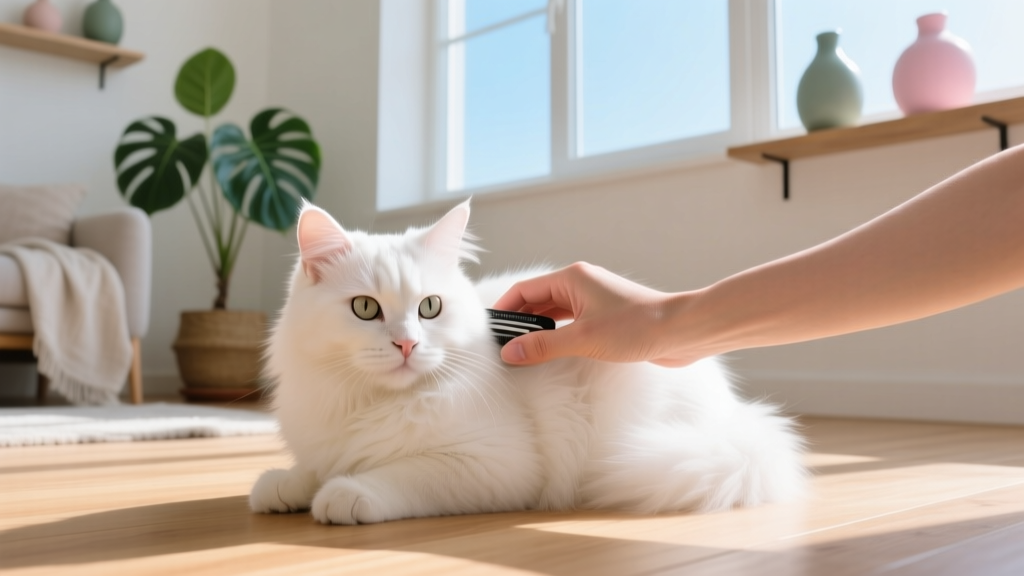
Home monitoring should be paired with a calm touch protocol. Place the cat on a non-slip mat, such as a PetFusion non-slip grooming mat or a folded yoga towel. Use a fingertip to lift the lip and check teeth. Use a thumb to press along the rib cage while counting to three. Use a warm damp cloth to wipe the eyes and ears. If the cat resists, stop, give a treat, and repeat the next day. Clinical care fails when it becomes a fight.
Environmental measurements help too. Indoor litter boxes should be at least one box per cat plus one extra. For a single shorthair, two boxes reduce avoidance. The box should be large enough for the cat to turn around comfortably, commonly 18 to 24 inches long for many adult cats. Litter depth of 2 to 3 inches supports digging and reduces surface contact with waste. Low-entry boxes help older cats, while covered boxes may trap ammonia and discourage use.
Match Food, Water, and Weight Targets to Clinical Needs
Nutrition is one of the strongest clinical levers for shorthair care. A 12-pound indoor American Shorthair may need roughly 200 to 250 calories per day, while a highly active cat may need slightly more and an overweight cat may need a plan closer to 150 to 200 calories under veterinary guidance. British Shorthairs with heavier frames may need portion adjustment based on body condition, not just age. Feeding free-choice dry food can quietly push calories 15 to 30 percent above target, so measured meals are safer.
Brand Examples and Portion Measurements
Use brands that publish clear feeding guidelines and have veterinary diet lines. Purina Pro Plan Veterinary Diets EN Gastrointestinal or DM Diabetes Management can be useful when directed by a veterinarian. Hill's Prescription Diet Metabolic Weight Management and Hill's Science Diet Adult Perfect Weight are practical options for weight monitoring. Royal Canin Urinary Care and Hill's Prescription Diet c/d Multicare support urinary health when a cat has recurrent lower urinary tract signs. For maintenance, Wellness CORE Indoor, Blue Buffalo Wilderness, and Open Farm are often discussed, but the best choice is the one that keeps body condition stable, stool firm, and water intake normal.
Water matters as much as food. Clinical urinary care is easier when the cat drinks more. Offer a ceramic bowl because it is easy to clean and resists odor. A pet fountain such as PetSafe Drinkwell or Pioneer Pet can increase drinking for cats that prefer moving water. Keep bowls away from litter boxes by at least 3 feet because many cats dislike eating near elimination areas. Change water daily and clean bowls with hot soapy water. If a cat suddenly drinks 50 percent more than normal, schedule a veterinary bloodwork and urinalysis.
- Use a kitchen scale for measured dry food: 10 grams of dry food equals roughly 30 to 35 calories for many adult formulas, but always check the bag.
- For wet food, a 3-ounce pouch commonly contains 70 to 90 calories, while a 5.5-ounce can commonly contains 130 to 180 calories.
- Add 1 to 2 tablespoons of warm water to wet food for cats that need extra fluid, if appetite and stool tolerate it.
- Switch diets over 7 to 10 days: 75 percent old plus 25 percent new on days 1 to 2, 50 percent on days 3 to 4, 25 percent old plus 75 percent new on days 5 to 6, full new on days 7 to 10.
- Keep treats under 10 percent of daily calories. Small training treats like Greenies Dental Treats or Inaba Churu can be useful but still count.
Dental care is another clinical match point. Shorthairs can develop gingivitis and tooth resorption. Brushing with a finger brush and pet toothpaste such as Virbac C.E.T. Enzymatic Toothpaste or Petsmile can help. Three to four times per week is a realistic target. If brushing fails, dental diets such as Hill's t/d or Purina Pro Plan Dental can help, but they should be part of a veterinary oral health plan. Watch for bad breath, drooling, pawing at the mouth, or dropping kibble.
Choose Grooming and Skin Products That Respect Shorthair Coat Structure
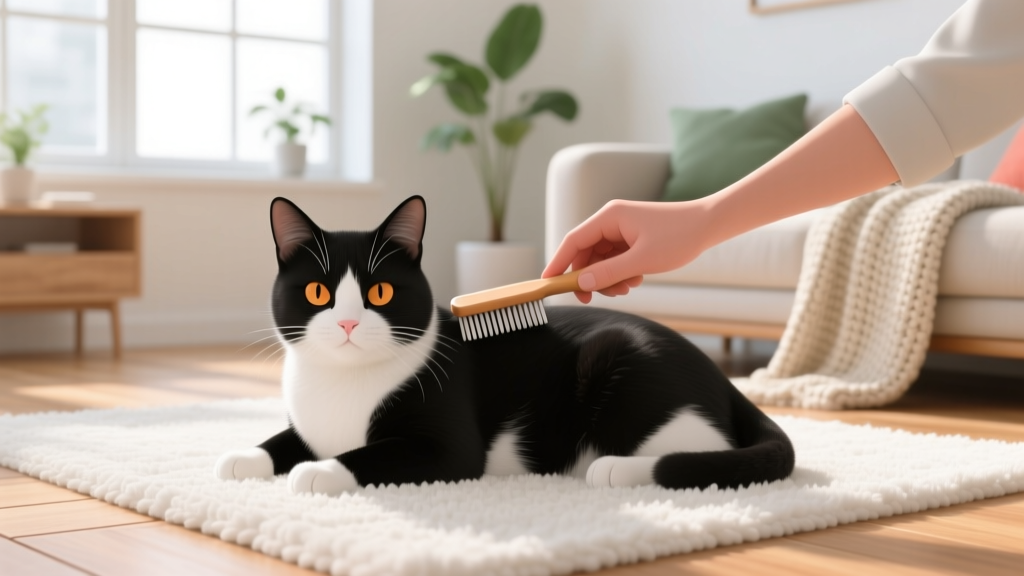
A shorthair coat is dense, straight, and usually self-cleaning. Grooming should remove loose fur, support skin circulation, and prevent matting behind ears, on the back of legs, and along the lower back. A slicker brush or deShedding tool such as the FURminator can reduce shedding, but it should be used gently and not more than once or twice per week. Overusing a deShedding blade can irritate skin and remove too much undercoat. For routine care, a rubber brush, soft bristle brush, or damp microfiber cloth is often enough.
Bathing Frequency and Product Matching
Most indoor shorthairs need bathing only when dirty, greasy, medicated, or flea-treated. A healthy adult may go 3 to 6 months between baths. A senior cat with arthritis, obesity, or dental pain may need spot cleaning more often. Use cat-specific shampoos because human products have different pH. For sensitive skin, Virbac Epi-Soothe, Earthbath Oatmeal and Aloe, and Burt's Bees Oatmeal Shampoo are widely available options. For medicated needs, chlorhexidine-based products such as Virbac Hexadine may be used only under veterinary direction.
Water temperature should feel warm, not hot, about 100 to 102 degrees Fahrenheit. Wet the coat from neck to tail, avoiding the ears, eyes, and nose. Lather for 30 to 60 seconds, then rinse thoroughly because shampoo residue can cause itching. Towel dry with a high-absorbency towel such as PetFusion microfiber, then use a cool blow dryer on low if the cat tolerates it. Never use high heat close to skin. If the cat becomes stressed, use a Feliway diffuser in the grooming room 24 to 48 hours beforehand and stop the session early.
- For shedding season, brush every 2 to 3 days for 3 to 5 minutes instead of one long weekly session.
- For oily tail or chin acne, clean the chin daily with a chlorhexidine wipe such as Virbac Hexadine wipes or Douxo wipes under veterinary guidance.
- For fleas, use veterinarian-recommended products such as Frontline Plus, Revolution Plus, or Bravecto Transdermal according to label and weight.
- For nail care, trim only the clear tip every 2 to 3 weeks. The quick usually begins about 0.5 to 1 millimeter below the pink line in light-colored claws.
- For ear checks, look for dark wax, odor, or head shaking. Do not insert cotton swabs into the canal; clean only the visible flap.
Product matching should follow the cat's skin, not the packaging. A cat with normal skin needs mild cleansing and regular brushing. A cat with dry skin may benefit from omega-3 supplements such as Zesty Paws Wild Alaskan Salmon Oil or VetIQ Wild Alaskan Salmon Oil, but supplements should be discussed with a veterinarian, especially if the cat is on blood-thinning medication or has pancreatitis risk. A cat with allergies may need elimination trials, parasite control, and diagnostic testing rather than more shampoo.
Prepare the Cat for Veterinary and Clinical Visits
Veterinary visits are the clinical backbone of shorthair care. Cats often mask illness, so a routine exam may reveal a heart murmur, kidney issue, dental problem, or early arthritis before owners notice symptoms. Adult cats should have a physical exam at least once per year. Senior cats over age seven benefit from twice-yearly exams because kidney disease, hyperthyroidism, and dental disease can progress quietly. Bring a weight log, food label, medication list, and recent photos of any skin or litter box changes.
Make the carrier part of the routine. A hard-sided carrier such as a Sherpa or Petmate Survival carrier should be stored open in the home with a familiar blanket inside. Feed the cat near the carrier several times per week. A calming spray like Feliway Classic can be used in the carrier 10 to 15 minutes before travel, but never spray directly onto the cat. For anxious cats, ask the veterinarian about gabapentin dosing; a common starting range is 10 to 25 milligrams per pound under veterinary supervision, but do not self-prescribe.
- Call ahead and ask for a cat-friendly exam room or first appointment of the day.
- Bring a towel to cover the carrier and a treat pouch with high-value wet food like Churu.
- Ask the clinic to use a non-slip table mat and gentle restraint rather than scruffing.
- Request a weight measurement on a scale, not a visual estimate, at every visit.
- Ask about bloodwork for cats over age seven or any cat with drinking, urination, weight, or appetite changes.
Clinical visits should teach the owner what to watch for. A good visit includes a body condition score, oral exam, ear exam, heart and lung listen, abdominal palpation, coat and skin check, and discussion of parasite prevention. If the cat has urinary signs, a urinalysis may be recommended. If the cat is overweight, a weight plan should include target pounds, weekly weigh-ins, and a reassessment in 4 to 6 weeks. If the cat has dental tartar, ask whether a cleaning is needed and how home care will be maintained afterward.
Use a Decision Table to Pair Shorthair Type With Clinical Focus
| Shorthair situation | Likely clinical focus | Practical match | Measurement to track |
| Healthy indoor adult | Weight, dental, urinary | Measured meals, brushing, yearly exam | Body condition score near 5 of 9 |
| Heavy-boned British Shorthair | Arthritis, weight, heart | Low-entry litter, ramps, twice-yearly senior checks | Jumping ability and resting breath rate |
| Active American Shorthair | Energy balance, enrichment | Play sessions, puzzle feeder, consistent portions | Weight trend over 30 days |
| Senior cat over 7 years | Kidney, thyroid, dental | Water fountain, soft food, bloodwork and urinalysis | Water intake and litter clump size |
| Cat with oily coat or acne | Skin, parasite, allergy | Weekly chin cleaning, vet-directed shampoo, flea control | Redness, odor, scratching frequency |
| Highly anxious cat | Stress, clinic handling | Feliway, carrier training, short grooming sessions | Time spent hiding versus eating and playing |
The table is a decision aid, not a diagnosis. A cat may fit more than one row, and that is normal. The important step is to choose the clinical focus that matches the cat's current body condition, age, coat quality, stress level, and veterinary history. If two rows conflict, prioritize medical signs such as weight loss, increased thirst, labored breathing, or repeated urinary accidents because those can signal conditions that need testing rather than grooming adjustment alone.
Practical Mistakes That Break the Shorthair Clinical Match
One common mistake is buying the wrong product because it looks professional. A veterinary diet may be ideal for a cat with kidney disease, but it can be too calorie-dense for a sedentary adult. A deShedding tool may be useful for spring shedding, but it can cause soreness on thin skin. A calming diffuser may help anxiety, but it cannot fix litter box avoidance caused by pain. The best match is always built around the cat's current symptoms, weight, coat, and temperament.
Another mistake is inconsistent timing. Cats respond to routines. If brushing happens only when the coat looks bad, the cat learns that grooming is unpredictable and may resist. A better routine is five minutes on the same days each week, followed by a favorite treat. If a full bath is needed, prepare all supplies first: shampoo, towel, microfiber cloth, brush, treats, and a quiet room. Once the cat is wet, the session should last under 10 minutes for most shorthairs.
- Do not use human shampoo, dish soap, tea tree oil products, or essential oil blends without veterinary approval.
- Do not force nail trimming after the cat hisses or bites; split the session into two paws per day if needed.
- Do not treat every shedding problem as a skin disease; seasonal shedding, low indoor humidity, and poor diet can contribute.
- Do not ignore weight changes because the cat looks short-haired and compact.
- Do not rely on online product reviews alone; ask the veterinarian to match products to the cat's diagnosis.
A good clinical match also respects the cat's emotional bandwidth. A shorthair that tolerates a quick tooth check may still hate a full-body exam. A cat that enjoys brushing may still dislike carrier travel. The owner's job is to build a routine that captures the most important health data without creating fear. When that balance is right, a shorthair can stay sleek, sound, and cooperative while receiving the clinical care that truly fits its body and behavior.