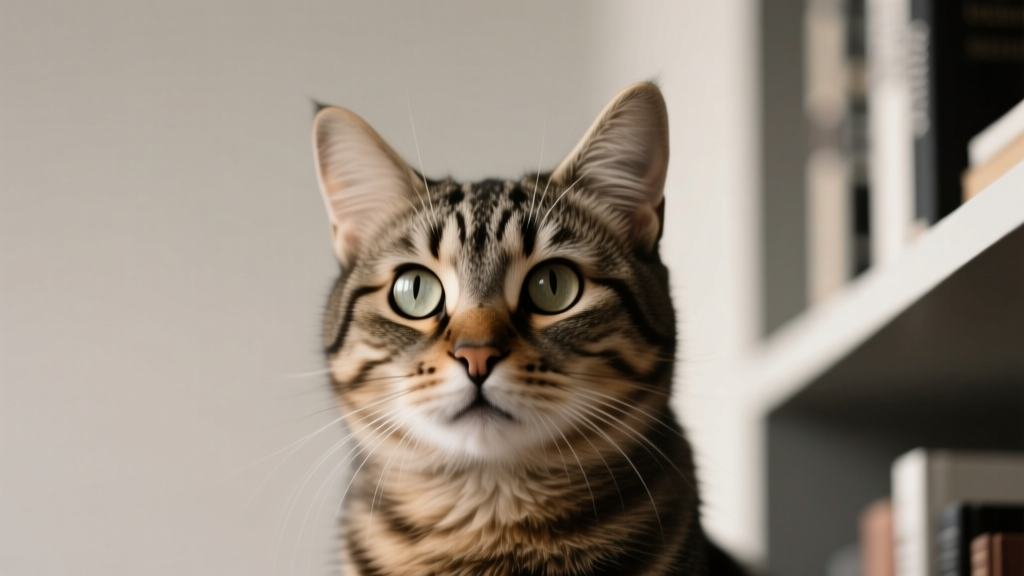
Why Did My Cat Suddenly Change Behavior? 7 Urgent but...
When Your Cat’s Personality Seems to Flip Overnight
\nIf you’ve ever asked yourself, why did my cat suddenly change behavior, you’re not alone—and you shouldn’t ignore it. Cats are masters of masking distress: a 2023 study in the Journal of Feline Medicine and Surgery found that over 82% of cats exhibiting acute behavioral changes had an underlying medical condition confirmed within 14 days of veterinary evaluation. What looks like ‘grumpiness’ could be silent arthritis. What reads as ‘indifference’ may signal early kidney dysfunction. And what feels like ‘rejection’ might stem from something as subtle as a new air freshener disrupting their olfactory world. This isn’t about ‘mood swings’—it’s about decoding a sophisticated communication system designed for survival, not sentimentality.
\n\n1. The Medical Mirage: When Behavior Is a Symptom, Not a Choice
\nCats evolved to hide illness—even from those they trust most. A sudden shift in behavior is often the *first* and *only* outward sign of internal trouble. According to Dr. Sarah Wooten, DVM and clinical advisor for the American Association of Feline Practitioners, “Behavioral changes are the #1 red flag we ask owners about during senior wellness exams—before bloodwork, before imaging. It’s their language when they can’t say ‘I hurt.’”
\nHere’s what to watch for—and what it might mean:
\n- \n
- Increased hiding or avoidance: Could indicate pain (dental disease, abdominal discomfort), hyperthyroidism, or early-stage chronic kidney disease (CKD). In a landmark Cornell Feline Health Center case review, 67% of cats newly hiding more than 4 hours/day were diagnosed with stage II+ CKD or osteoarthritis. \n
- Sudden aggression toward people or other pets: Often linked to oral pain (resorptive lesions), ear infections, or neurological issues like hypertension-induced retinal changes. Note: If your cat hisses, swats, or bites *without warning*—especially during petting—this is rarely ‘personality.’ It’s frequently a pain response. \n
- Excessive vocalization at night: While sometimes age-related (cognitive dysfunction), it’s equally common in cats with undiagnosed hypertension or hyperthyroidism. A 2022 UC Davis study found nighttime yowling correlated with systolic BP >160 mmHg in 79% of geriatric felines tested. \n
- Litter box avoidance: Never assume this is ‘spite.’ It’s commonly caused by urinary tract discomfort (even subclinical cystitis), constipation, or arthritis making the box difficult to enter/exit. \n
✅ Action step: Schedule a full veterinary exam—including weight, blood pressure, dental check, and baseline blood/urine panels—within 72 hours of noticing sustained change (>48 hours). Request a ‘feline-friendly handling’ certified clinic if your cat stresses easily.
\n\n2. The Invisible Environment: How Smells, Sounds, and Shifts Disrupt Their World
\nCats perceive their environment at a sensory intensity humans can’t replicate. A scent you barely notice—a new laundry detergent, neighbor’s smoke drifting through a window, or even your own stress sweat—can trigger profound anxiety. Dr. Mikel Delgado, certified cat behaviorist and researcher at UC Berkeley, explains: “Cats don’t experience ‘background noise.’ Every sound, scent, and visual shift is processed as potential threat or resource. A single change—like moving furniture or installing smart-home devices emitting ultrasonic frequencies—can destabilize their entire sense of safety.”
\nReal-world example: Luna, a 5-year-old domestic shorthair, began urinating on her owner’s bed after her family installed motion-sensor LED lights in the hallway. The lights emitted a high-frequency buzz (inaudible to humans) that caused chronic low-grade stress. Once replaced with incandescent bulbs, her marking ceased in 11 days.
\nKey environmental triggers include:
\n- \n
- New household members (human or pet), especially infants or dogs with poor impulse control \n
- Construction noise, renovations, or even seasonal thunderstorms altering barometric pressure \n
- Changes in routine: altered work schedules, inconsistent feeding times, or reduced interactive play \n
- Olfactory overload: scented candles, essential oil diffusers (toxic and stressful), or strong cleaning products \n
- Loss of vertical territory: removing cat trees, blocking access to windowsills, or installing blinds that eliminate bird-watching spots \n
✅ Action step: Conduct a ‘sensory audit’ of your home. Walk barefoot (to feel floor vibrations), sniff corners (for lingering odors), and sit at cat-height for 10 minutes. Note anything new or intensified in the past 2–4 weeks. Then, revert *one* change at a time for 5 days while journaling behavior—no multi-variable experiments.
\n\n3. The Social Equation: Relationship Shifts, Resource Competition & Unseen Rivalry
\nCats are facultatively social—they choose connection, but only when resources feel abundant and predictable. Sudden behavior changes often reflect recalculations in their social map. This isn’t ‘jealousy’ in the human sense—it’s risk assessment.
\nA 2021 study published in Applied Animal Behaviour Science observed 127 multi-cat households and found that 89% experienced at least one significant behavioral shift within 3 weeks of introducing a new cat—*even if the cats never directly interacted*. Why? Because scent, vocalizations, and resource access patterns shifted invisibly.
\nCommon dynamics to investigate:
\n- \n
- Resource scarcity: Are there enough litter boxes (n+1 rule), quiet sleeping zones, food/water stations, and vertical perches? A cat hoarding toys or guarding the food bowl may be signaling insecurity—not dominance. \n
- Unseen conflict: Subtle tension—like staring, tail flicking, or blocked pathways—can cause chronic stress. One cat may stop grooming or eating near another, leading to weight loss or matting. \n
- Human attention reallocation: Bringing home a new baby, starting remote work, or even recovering from illness changes interaction rhythms. Cats notice *when* you’re present—not just *that* you are. \n
- Loss or absence: The departure of another pet, a roommate, or even a regular visitor can trigger prolonged mourning behaviors: lethargy, decreased appetite, or searching vocalizations. \n
✅ Action step: Map resource locations using a floor plan. Ensure no cat must pass another’s ‘core zone’ (sleeping/eating area) to reach essentials. Introduce positive associations: feed all cats simultaneously in separate rooms, use Feliway Classic diffusers in shared spaces, and conduct daily 5-minute ‘treat-and-retreat’ sessions to rebuild confidence.
\n\n4. The Age Factor: Developmental Transitions You Can’t See Coming
\nBehavioral shifts aren’t exclusive to illness or environment—they’re also tied to developmental stages. Kittens mature into adolescents (6–18 months) with hormonal surges and boundary-testing. Adults (3–10 years) may develop subtle anxieties as sensory acuity declines. Seniors (11+ years) face cognitive, metabolic, and mobility changes that alter how they engage with the world.
\nWhat’s normal vs. concerning?
\n- \n
- Kittens/Adolescents: Increased play aggression, territorial marking (if unneutered), or testing boundaries is typical—but biting that breaks skin or destroys property warrants intervention. \n
- Mature Adults: Gradual decrease in activity is expected; sudden lethargy or disinterest in favorite toys is not. \n
- Seniors: Mild confusion at night or slower movement is common; pacing, vocalizing without apparent cause, or forgetting litter box location signals possible feline cognitive dysfunction syndrome (CDS) or metabolic disease. \n
Dr. Tony Buffington, Professor Emeritus of Veterinary Clinical Sciences at Ohio State, emphasizes: “We used to call it ‘old cat syndrome.’ Now we know CDS affects ~55% of cats aged 11–15 and ~80% over 16. Early intervention—environmental enrichment, antioxidant-rich diets, and anti-anxiety supplements like SAM-e—can slow progression significantly.”
\n✅ Action step: For cats over 10, add twice-daily puzzle feeders, install ramps to favorite perches, and schedule biannual senior wellness exams (including blood pressure and thyroid screening).
\n\nBehavioral Red Flags & Next-Step Timeline
\nNot all changes demand emergency care—but some do. Use this evidence-based timeline to prioritize action:
\n| Behavior Change | \nDuration Threshold | \nRecommended Action | \nVet Visit Urgency | \n
|---|---|---|---|
| Urinating outside the litter box + straining or crying | \nAny occurrence | \nCheck for blood in urine; isolate from other cats | \nER within 24 hours — potential urinary blockage | \n
| Refusing food or water for >24 hours | \n24 hours | \nOffer warmed wet food, syringe small amounts of water | \nSame-day vet visit — risk of hepatic lipidosis | \n
| Sudden aggression with no provocation | \n3+ episodes in 48 hours | \nMinimize handling; secure safe space | \nWithin 72 hours — rule out pain/neurological cause | \n
| Disorientation, circling, head pressing | \nFirst observation | \nPrevent falls; record video | \nER immediately — possible brain or toxin issue | \n
| Excessive grooming leading to bald patches | \n5+ days | \nCheck for fleas, skin lesions, or environmental irritants | \nWithin 1 week — rule out allergy or anxiety | \n
Frequently Asked Questions
\nIs sudden behavior change always a sign of illness?
\nNo—but it should always be treated as a potential medical red flag until proven otherwise. Research shows approximately 60–70% of acute behavioral shifts in cats have an underlying medical cause. Even when environmental or social factors are involved, coexisting health issues (e.g., arthritis worsening stress sensitivity) are common. Always start with a vet exam before assuming it’s ‘just stress.’
\nCan stress really make my cat sick—or just act differently?
\nStress doesn’t just change behavior—it directly impacts physiology. Chronic stress elevates cortisol, suppressing immune function and increasing risk of feline interstitial cystitis (FIC), upper respiratory infections, and gastrointestinal upset. A 2020 study in Veterinary Record showed stressed cats were 3.2x more likely to develop recurrent urinary issues. So yes: stress is both a cause *and* a consequence—and a legitimate medical concern.
\nHow long does it take for a cat to adjust after a move or new pet?
\nThere’s no universal timeline—some cats settle in 3–5 days; others need 4–6 weeks. Key indicator of successful adjustment: voluntary, relaxed interaction (not just tolerance). If your cat hasn’t resumed normal sleep, grooming, or feeding patterns within 10 days—or exhibits worsening signs like weight loss or vomiting—consult a veterinary behaviorist. Patience matters, but prolonged withdrawal is not ‘normal settling.’
\nWill giving my cat more attention fix sudden aloofness?
\nNot necessarily—and sometimes, it makes things worse. For anxious or overstimulated cats, forced attention increases stress. Instead, practice ‘consent-based interaction’: extend a finger for sniffing; if they lean in or blink slowly, proceed gently. If they turn away, walk away. Respect withdrawal as communication—not rejection. Rebuilding trust is about predictability and choice, not proximity.
\nAre there supplements or medications that help with sudden behavior changes?
\nYes—but only under veterinary guidance. Prescription options like gabapentin (for situational anxiety) or clomipramine (for chronic anxiety) exist, but they address symptoms, not root causes. Over-the-counter options like L-theanine, B-complex vitamins, or pheromone diffusers (Feliway Optimum) show modest efficacy in controlled studies—but none replace diagnostics. Never medicate without ruling out pain or disease first.
\nCommon Myths About Sudden Behavioral Shifts
\nMyth #1: “Cats are just moody—it’ll pass.”
\nReality: Unlike humans, cats lack the neurobiological capacity for transient ‘moods’ disconnected from physiological or environmental stimuli. Persistent change = meaningful data point requiring investigation.
Myth #2: “If my cat is eating and using the litter box, they’re fine.”
\nReality: Many cats with serious conditions (early diabetes, hyperthyroidism, mild renal failure) maintain appetite and elimination initially—while exhibiting subtle but critical behavior shifts like increased thirst, restlessness, or nighttime vocalization. Normal intake ≠ normal health.
Related Topics (Internal Link Suggestions)
\n- \n
- Cat aggression toward owners — suggested anchor text: "why is my cat suddenly aggressive" \n
- Feline cognitive dysfunction signs — suggested anchor text: "is my senior cat showing dementia symptoms" \n
- Multi-cat household stress solutions — suggested anchor text: "how to reduce tension between cats" \n
- Best calming aids for anxious cats — suggested anchor text: "safe cat anxiety supplements vet-approved" \n
- When to worry about cat hiding behavior — suggested anchor text: "is it normal for my cat to hide all day" \n
Your Next Step Starts With Observation—Not Assumption
\nYou’ve already taken the most important action: noticing. Why did my cat suddenly change behavior isn’t a question to Google endlessly—it’s a prompt to gather data with compassion and clarity. Start today: grab a notebook (or use our free Cat Behavior Journal PDF) and log *what changed*, *when*, *what else happened around that time*, and *how your cat responds to gentle interaction*. Don’t diagnose—document. Then, partner with your veterinarian as a collaborator, not a last resort. Most causes are treatable, reversible, or manageable—with the right lens. Your cat isn’t broken. They’re communicating. And now, you know how to listen.