Why Cats Sit on the Radiator in Winter
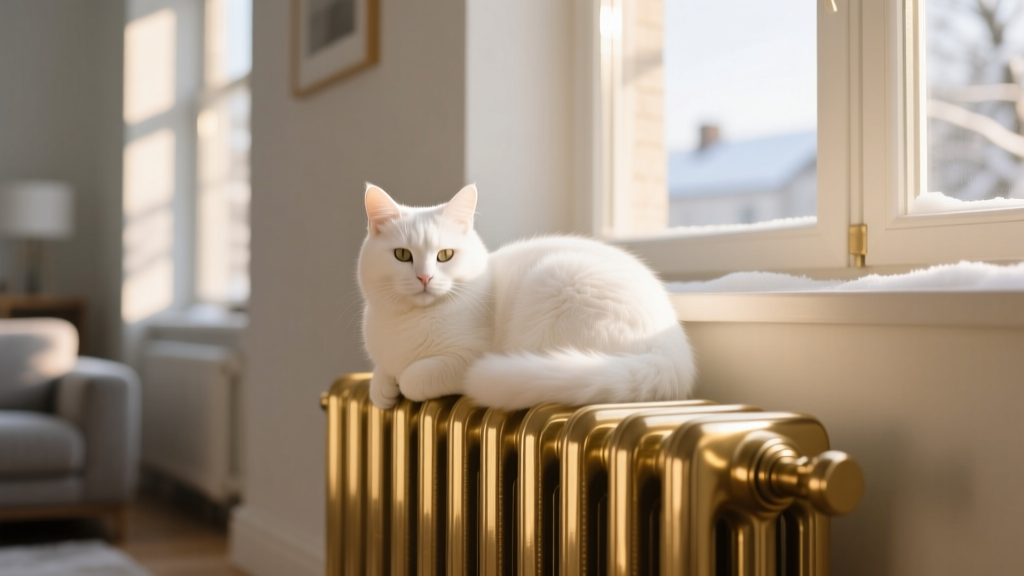
You turn the heating on, the radiator gives that familiar tick… tick… as it warms up, and within minutes your cat appears like they’ve been summoned by a secret household ritual. Next thing you know, they’re perched on top of the radiator (or wedged against it), eyes half-closed, paws tucked, looking deeply satisfied—like they pay the bills and you’re lucky to live in their heated apartment.
If you’ve ever wondered, “Are they cold?” “Is this safe?” or “Why do they act like the radiator is the greatest invention since tuna?” you’re not alone. Radiator-lounging is one of those classic winter cat behaviors that’s equal parts practical and hilarious. And it tells you more about feline instincts—and your cat’s mood—than you might think.
The scientific (and evolutionary) reason cats love radiators
Cats are heat-seekers by design. Domestic cats descended from wildcats that evolved in warm, arid environments. That background still shows up in the modern living room: cats conserve energy by resting a lot, and warmth helps them do it efficiently.
A few key biology points explain the radiator obsession:
- Cats have a higher “comfort temperature” than humans. People often feel comfortable around the low 70s°F (low 20s°C). Many cats prefer it warmer. If your home feels “fine” to you, your cat may still be thinking, “Cozy… but we could do better.”
- Warmth supports energy conservation. Heat reduces the energy your cat needs to spend maintaining body temperature, leaving more energy for important activities like brief sprints at 2 a.m. and intense staring at a wall.
- Heat soothes muscles and joints. Just like humans, warmth can feel calming on sore or stiff bodies. That’s especially relevant for senior cats, cats with arthritis, or cats who simply slept “wrong” on your favorite chair.
- Cats are ambush predators. In nature, an effective hunter rests for long stretches and saves energy for short bursts of action. A warm, elevated perch is basically the deluxe version of a sun-baked rock.
A radiator also provides something sunlight does: a steady source of radiant heat (and often a gentle convection current of warm air). To a cat, it’s a winter sunbeam you can set your watch by.
Different ways cats “do radiator,” and what each version means
Not all radiator-sitting is the same. The exact pose and positioning can tell you what your cat is seeking—heat, safety, attention, or all three.
1) The classic “loaf” on top
Your cat perches on top of the radiator with paws tucked under, tail wrapped, eyes soft. This is peak comfort behavior. They’re minimizing exposed surface area (a heat-conserving posture) while soaking up warmth.
Common household scene: You’re on a video call, you glance over, and your cat looks like a perfectly risen bread loaf—motionless, serene, and completely uninterested in your deadlines.
2) The “full-body press” against the radiator
Some cats lean their side, back, or even their face against the radiator. This is direct heat transfer: the cat version of pressing a cold hand to a mug of tea. If you notice your cat pressing hard or switching sides frequently, they’re maximizing warmth.
What to watch: If the radiator is very hot, this behavior can increase the risk of overheating or minor burns, especially on hairless cats or cats with thin coats.
3) The “radiator plus blanket” combo
If your cat drapes themselves across the radiator and wedges a blanket or towel underneath, they’re building a microclimate—like a tiny heat tent. Cats are excellent at making “nests” that trap warmth.
Translation: “This is my heated suite. Please do not disturb the occupant.”
4) The “guard post” radiator sit
Sometimes the radiator is near a window or hallway. Your cat may sit there not only for warmth, but for vantage. A warm lookout spot is a dream location: comfort plus surveillance.
Common sign: Ears pivoting, eyes tracking, tail tip twitching—your cat is relaxed, but monitoring their territory.
5) The “radiator takeover” when you sit down
Maybe your cat ignores the radiator until you’re settled on the couch, then suddenly claims it. That can be attention-seeking, routine-based behavior, or a mild case of “I like being near you… from a warm place.” Cats often choose heat sources where people gather because it’s socially valuable and predictably calm.
What this behavior says about your cat’s mood and feelings
Radiator-sitting is usually a sign of good things—comfort, security, and self-regulation.
- Contentment and trust: A cat who can fully relax near a radiator (eyes half-closed, slow blinking, loose posture) feels safe in that space.
- Self-soothing: Warmth can reduce stress. Some cats seek heat after a startling noise, a visitor, or a trip to the vet. It’s their version of “going somewhere calming.”
- Low-grade neediness (the sweet kind): If your cat chooses the radiator in the same room as you, it can be social comfort. They may not sit on your lap, but they want to share your “den.”
- Possible discomfort: If your cat suddenly becomes obsessed with heat sources—radiators, heating vents, laptops—especially if paired with reduced activity or changes in appetite, it can sometimes hint at pain or illness.
Related heat-seeking behaviors you might notice
If your cat is a radiator enthusiast, you may also see:
- Sunbeam chasing: Moving from patch to patch as the light shifts, like they’re following an invisible schedule.
- Sleeping on electronics: Routers, game consoles, laptop keyboards—warm, humming, and often placed in “important” areas.
- Burrowing: Under blankets, inside laundry piles, between couch cushions. Warmth plus cover equals security.
- “Hot laundry” magnetism: Fresh-from-the-dryer clothes are basically a spa day.
- Vent camping: Sitting on or near forced-air vents, especially when the heat kicks on.
These behaviors all share a theme: cats are experts at environmental comfort engineering.
When radiator-sitting is normal—and when it might be a concern
Normal (and very common)
- Your cat uses the radiator mainly during colder months.
- They remain playful at times, eat normally, and interact as usual.
- The behavior is predictable: same spot, same hours, same cozy routine.
Potential concerns to keep on your radar
- Sudden, intense heat-seeking: If your cat abruptly becomes glued to heat sources and seems lethargic, it’s worth a vet check.
- Weight loss or increased thirst: Heat-loving plus other physical changes can signal an underlying issue (for example, some cats with hyperthyroidism also seek warmth or show behavior changes).
- Stiffness, reluctance to jump, or hiding more: Heat can be a comfort strategy for pain, including arthritis.
- Overheating signs: Panting, drooling, restlessness, or moving away and back repeatedly as if they can’t get comfortable.
- Safety hazards: Very hot radiators, exposed metal edges, unstable perches, or cords/curtains nearby can pose risks.
If you’re unsure, a good rule is: heat-seeking is usually normal, but heat-seeking plus a change in energy, appetite, grooming, litter box habits, or mobility deserves attention.
How to respond (and how to encourage it safely)
You don’t need to ban the radiator lounge—just make it cat-friendly and safe.
- Create a safer perch: If your cat sits on top, consider a radiator shelf or a stable platform designed for pets. It gives them traction and reduces slipping.
- Add a heat-buffering layer: A folded towel or a thin mat can make the surface more comfortable and reduce direct contact with very hot metal. Avoid thick materials that could trap too much heat against the radiator if it runs extremely hot.
- Offer alternative warm spots: Heated cat beds (low-watt, pet-safe), self-warming mats, or a cozy bed near (not on) the radiator can satisfy the same need.
- Support senior cats: If your older cat is a radiator regular, add ramps or stools to help them reach favorite spots without painful jumps.
- Mind the humidity: Heated homes can be dry. If your cat is parked near heat sources all winter, consider a humidifier—good for skin, coats, and comfort.
- Respect the “do not disturb” sign: A cat in deep heat-loaf mode is recharging. If you want more cuddles, invite them gently rather than scooping them up mid-toast.
One of the best relationship moves you can make is to meet the need underneath the behavior. Your cat is telling you, “Warmth matters.” When you provide safe, cozy options, you’re speaking their language.
Fun facts and research-flavored nuggets
- Cats are masters of microclimates. They don’t just want a warm room—they want the warmest usable pocket of space, with good visibility and minimal disturbance.
- The loaf position is efficient. Tucking paws under the body reduces heat loss through extremities and helps maintain core warmth. It’s comfort and clever biology.
- Heat plus height is a double win. Elevated resting spots can reduce stress because cats feel more in control of their environment. A radiator perch often provides that “safe lookout” feeling.
- Winter routines become rituals. Cats are pattern learners. If the radiator turns on at predictable times, your cat can build a daily schedule around it—like a tiny furry commuter who never misses their train.
FAQ: Cats and radiators in winter
Is it normal for my cat to sit on the radiator all day?
In winter, it can be completely normal—especially for cats who are older, short-haired, or simply heat obsessed. If “all day” comes with normal appetite, play, grooming, and litter box habits, it’s usually just a preference. If it’s a new behavior paired with lethargy or other changes, check with your vet.
Can a radiator burn my cat?
Most cats will move if something is uncomfortably hot, but burns are possible depending on radiator type and temperature, especially for hairless breeds, kittens, seniors, or cats with reduced sensation or mobility. If your radiator gets very hot to the touch, add a buffer (like a towel) and provide a nearby warm alternative.
Why does my cat sit on the radiator but won’t sit on my lap?
Heat is a powerful motivator, and lap-sitting is about more than affection—it’s also about body position, restraint, and personal preference. Some cats prefer closeness “side-by-side” rather than “on top of.” If your cat chooses a radiator in the same room as you, that may be their version of companionship.
Do cats get cold indoors?
They can. Even if your home feels comfortable to you, cats may seek warmer spots due to their preferences, coat type, age, body condition, or health. Drafts, cold floors, and nighttime temperature drops can make a cat more likely to camp out near heaters.
My cat keeps moving between the radiator and other places—why?
That’s normal thermoregulation. Cats adjust their position to maintain a comfortable temperature, switching between warmer and cooler spots as needed. Think of it as fine-tuning their internal thermostat.
Should I get a heated bed instead?
A pet-safe heated bed or self-warming mat can be a great option, especially if your radiator is too hot or unstable. Many cats love having a warm spot that’s predictable, soft, and placed where they already like to hang out.
If your cat becomes a tiny winter radiator ornament every year, you’re seeing a blend of instinct, comfort-seeking, and clever environmental choice. Give them safe warmth, a little respect for their cozy rituals, and enjoy the sight of a perfectly toasted feline.
Does your cat have a favorite winter heat spot—or a funny radiator routine (like sprinting to it the moment the heat clicks on)? Share your story with fellow cat people on catloversbase.com.