Why Cat Behavior Changes at Home
Why Your Cat’s Behavior Changed Overnight — And Why It Matters More Than You Think
\nIf you’ve ever asked yourself why cat behavior changes at home, you’re not alone — and you shouldn’t ignore it. What looks like 'just acting weird' — hiding more, avoiding affection, over-grooming, litter box avoidance, or sudden aggression — is often your cat’s only way of signaling that something is off. Unlike dogs, cats rarely vocalize distress; instead, they alter behavior first, long before physical symptoms appear. In fact, a 2023 study published in the Journal of Feline Medicine and Surgery found that 68% of cats exhibiting new behavioral shifts had an underlying medical condition — yet nearly half were dismissed as 'just stressed' for weeks or months before diagnosis. This isn’t about quirks — it’s about communication, welfare, and prevention.
\n\n1. The Silent Alarm: Medical Causes Masquerading as Behavioral Shifts
\nLet’s start with the most urgent truth: behavior is often the first symptom of illness. Cats evolved to hide weakness — a survival instinct that makes them expert concealers of pain and disease. A cat who suddenly stops jumping onto the windowsill may have early arthritis. One who begins urinating outside the litter box could be suffering from urinary tract inflammation — not spite. According to Dr. Sarah Lin, DVM and feline internal medicine specialist at the Cornell Feline Health Center, 'When we see behavior change in cats over age 5, our default should always be a full diagnostic workup — bloodwork, urinalysis, and orthopedic exam — before assuming it’s purely environmental.'
\nCommon medical triggers include:
\n- \n
- Dental disease: Severe gingivitis or tooth resorption causes chronic pain — leading to food avoidance, irritability, or withdrawal. \n
- Hyperthyroidism: Especially in senior cats, this metabolic disorder causes restlessness, vocalization at night, weight loss despite increased appetite — all mistaken for 'grumpiness' or 'aging.' \n
- Cognitive dysfunction syndrome (CDS): Affecting ~55% of cats aged 11–15 and ~80% over age 16, CDS manifests as disorientation, altered sleep-wake cycles, reduced interaction, and inappropriate elimination — frequently mislabeled as 'confusion' without veterinary assessment. \n
- Chronic kidney disease (CKD): Early CKD often presents not with vomiting or lethargy, but with increased water intake, subtle litter box aversion (due to discomfort during urination), or decreased grooming — behaviors easily attributed to 'moodiness.' \n
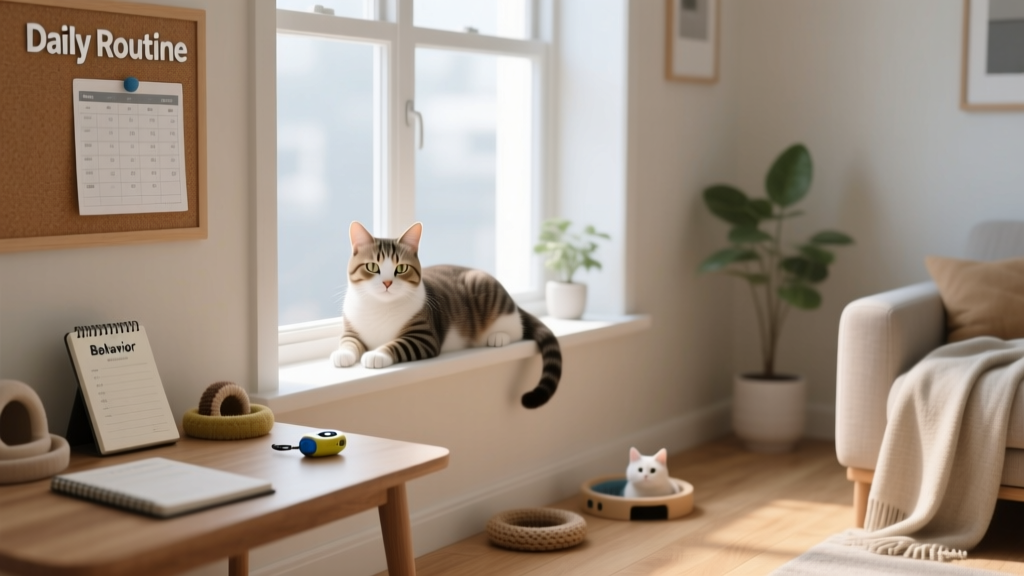
Pro tip: Track changes using the Feline Behavioral Assessment Tool (FBAT), developed by the International Society of Feline Medicine. Note duration, frequency, context (e.g., 'only when guests arrive'), and any concurrent physical signs (e.g., limping, squinting, coat dullness). Bring this log to your vet — it’s worth more than a 10-minute observation.
\n\n2. Environmental Stressors: The Invisible Weight on Your Cat’s Nervous System
\nCats are exquisitely sensitive to their surroundings — not just physically, but neurologically. Their amygdala-to-cortex ratio is higher than dogs’, meaning threat perception is faster and more persistent. Even seemingly minor home changes can trigger lasting behavioral adaptations.
\nConsider these real-world cases:
\n- \n
- The 'Quiet Move' That Wasn’t: A client moved her cat’s litter box from the laundry room to a closet during renovations. Within 48 hours, the cat began spraying door frames. Why? Not because she disliked the closet — but because the new location lacked visual escape routes and felt trapped. The spraying was a territorial reassurance behavior. \n
- The 'New Plant' Incident: Introducing a non-toxic snake plant triggered chronic vigilance in a formerly relaxed tabby. She stopped napping in her favorite sunbeam — not due to fear of the plant, but because its tall, vertical shape mimicked a predator silhouette in low light, activating her prey-avoidance reflexes. \n
Key environmental levers to audit:
\n- \n
- Vertical space disruption: Removing shelves, blocking access to cat trees, or installing ceiling fans that create air turbulence near perches. \n
- Olfactory overload: Scented candles, air fresheners, or even new laundry detergent can overwhelm a cat’s 200 million olfactory receptors (vs. humans’ 5 million). \n
- Sound pollution: Ultrasonic pest repellers (inaudible to us but painful to cats), HVAC cycling, or construction noise below 20 Hz — frequencies cats detect and find physiologically stressful. \n
- Human schedule shifts: Remote work ending, kids returning to school, or inconsistent feeding times disrupt circadian entrainment — directly impacting cortisol rhythms and baseline anxiety. \n
Dr. Tony Buffington, Professor Emeritus at Ohio State University and pioneer in environmental enrichment research, emphasizes: 'Cats don’t adapt to change — they accommodate it. Accommodation requires energy. Chronic accommodation depletes resilience, making them vulnerable to both behavioral and immune compromise.'
\n\n3. Social Dynamics: When Household Shifts Alter the Feline Hierarchy
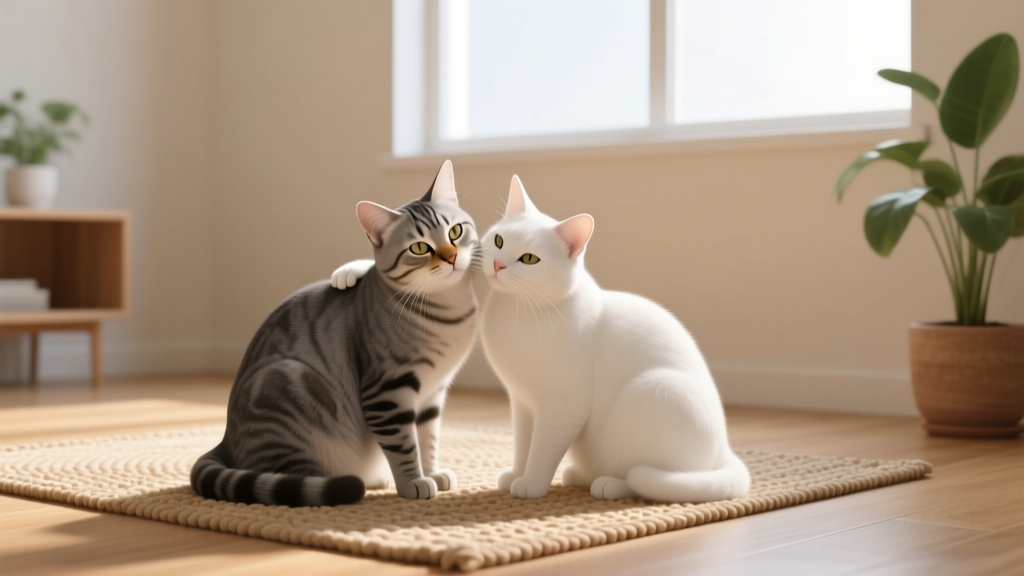
\nCats are facultatively social — meaning they *choose* to cohabit, but only under precise conditions of resource security and spatial autonomy. Behavior changes often reflect recalibrations in the invisible social map of your home.
\nHere’s what actually happens when you add or remove members:
\n- \n
- New human (baby, partner, roommate): Cats don’t ‘get jealous’ — they assess resource access. A baby’s cries mimic distress vocalizations, triggering vigilance. A new adult may monopolize lap time or block access to favorite napping spots — prompting displacement behaviors like sleeping on keyboards or guarding doorways. \n
- New pet (dog or cat): Introductions aren’t about friendship — they’re about boundary negotiation. A cat who starts hissing at the dog *after* three months isn’t ‘finally snapping’ — she’s responding to the dog’s maturing confidence and reduced deference. Her aggression is a preemptive boundary reinforcement. \n
- Loss of a companion (human or animal): Grief in cats is measurable: decreased activity, altered sleep patterns, reduced appetite, and vocalization changes. A 2022 University of Lincoln study confirmed cortisol spikes and REM sleep suppression in bereaved cats for up to 6 weeks — far longer than previously assumed. \n
Actionable step: Map your home’s 'resource zones' — litter boxes, food/water stations, resting spots, scratching surfaces, and escape routes. For multi-cat households, follow the 'N+1 rule': one more of each resource than the number of cats, placed in separate locations. Never cluster resources — this forces competition and undermines security.
\n\n4. Life Stage Transitions: Aging, Puberty, and Developmental Milestones
\nBehavioral shifts aren’t always reactive — many are developmental or chronological. Ignoring these natural arcs leads to misinterpretation and inappropriate interventions.
\nFor kittens (3–6 months): Sudden biting during play isn’t 'aggression' — it’s oral exploration meeting incomplete bite inhibition training. For adolescents (6–18 months): Increased roaming, vocalization, and marking often signal hormonal surges — especially in unneutered males, but also in spayed females experiencing ovarian remnant syndrome.
\nFor seniors (11+ years): Don’t chalk up confusion or nighttime yowling to 'just getting old.' These may indicate hypertension-induced retinal changes (causing vision loss), hyperthyroidism, or CDS. Critically, age-related behavior changes are treatable — not inevitable.
\nA landmark 2021 clinical trial (published in Veterinary Record) showed that 72% of senior cats with documented cognitive decline showed measurable improvement in orientation and interaction after 8 weeks of environmental enrichment + prescription antioxidants — proving behavior is modifiable, not fixed.
\n\n| Trigger Category | \nMost Common Behavioral Signs | \nFirst Action Step | \nTimeframe for Veterinary Consult | \n
|---|---|---|---|
| Medical | \nLitter box avoidance, excessive grooming, vocalization, appetite loss, hiding, aggression on handling | \nCheck for physical signs: gum color, body temperature, mobility, coat quality, litter box residue (blood, crystals) | \nWithin 48 hours if signs persist >24 hrs or involve elimination changes | \n
| Environmental | \nIncreased vigilance, redirected scratching, sleeping in unusual places, startle responses, decreased play | \nConduct a 'stress audit': eliminate scents, add vertical space, install white noise, restore routine predictability | \n7–10 days — if no improvement, consult a certified cat behaviorist (IAABC or ACVB) | \n
| Social | \nResource guarding, urine marking, inter-cat aggression, avoidance of specific people/rooms | \nSeparate resources, use pheromone diffusers (Feliway Optimum), implement gradual reintroductions with positive association | \nWithin 3 days if aggression escalates or injury occurs | \n
| Developmental/Aging | \nDisorientation, altered sleep-wake cycle, decreased interaction, repetitive vocalization, pacing | \nBaseline bloodwork + blood pressure check; assess home for safety (non-slip rugs, accessible litter boxes) | \nAt first sign — early intervention dramatically improves outcomes | \n
Frequently Asked Questions
\nIs my cat’s behavior change just 'getting older' — or should I worry?
\n'Getting older' isn’t a diagnosis — it’s a risk factor. While some slowing occurs, significant changes (like forgetting litter box location, staring into corners for minutes, or sudden fear of familiar people) are red flags. According to the American Association of Feline Practitioners, any new behavior lasting >5 days in a cat over age 7 warrants medical evaluation. Age-related changes are manageable — but only when identified early.
\nCan stress really cause physical illness in cats?
\nAbsolutely — and it’s well-documented. Chronic stress suppresses IgA antibodies in mucosal linings, increasing susceptibility to upper respiratory infections (URIs) and cystitis. A 2020 study in Frontiers in Veterinary Science found cats in high-stress households had 3.2x higher incidence of feline idiopathic cystitis (FIC) flare-ups. Stress doesn’t 'cause' disease — it removes the body’s protective buffers.
\nMy cat changed after I got a new pet — will they ever get along?
\nCoexistence ≠ friendship. Most cats learn to tolerate other pets through clear boundaries and resource security — not forced interaction. Success depends on gradual desensitization (using scent-swapping and visual barriers first), never punishment. Expect 2–6 months for stable dynamics. If active aggression persists beyond 8 weeks, consult a board-certified veterinary behaviorist — not a trainer.
\nHow do I know if it’s behavioral vs. medical — without expensive tests?
\nStart with the 'Rule of Three': Does the behavior occur in three different contexts? (e.g., same issue with food, litter box, and greeting). Does it happen at three different times of day? Is it consistent across environments (e.g., same at friend’s house)? If yes, it’s likely medical. If it’s context-specific (e.g., only when vacuuming), it’s likely environmental. But never skip diagnostics — many conditions (like early kidney disease) show zero outward signs until advanced stages.
\nWill getting another cat help my lonely, withdrawn cat?
\nRarely — and often worsens isolation. Loneliness isn’t a feline concept; insecurity is. Adding a cat increases competition for resources and destabilizes established routines. Instead, enrich your current cat’s world: interactive feeding puzzles, scheduled play sessions mimicking hunting sequences (5-min bursts, 3x/day), and safe outdoor access (catios or harness walks). Bonding happens through shared positive experiences — not forced companionship.
\nCommon Myths About Cat Behavior Changes
\nMyth #1: 'Cats are aloof — so behavior changes are just personality.'
\nReality: Cats are highly attuned observers. What reads as 'aloofness' is often selective engagement based on safety and predictability. A truly 'aloof' cat wouldn’t live with humans — wild felids avoid us entirely. Persistent withdrawal signals unmet needs.
Myth #2: 'If they’re eating and using the litter box, they must be fine.'
\nReality: This is dangerously misleading. Cats with severe dental pain, early-stage hyperthyroidism, or anxiety-driven cystitis often maintain baseline elimination and appetite — while exhibiting profound behavioral shifts. Relying solely on these two metrics misses 60%+ of early-stage conditions, per ISFM guidelines.
Related Topics (Internal Link Suggestions)
\n- \n
- Feline Stress Signals You’re Missing — suggested anchor text: "subtle cat stress signs" \n
- How to Introduce a New Cat Without Conflict — suggested anchor text: "safe cat introduction guide" \n
- Senior Cat Care Checklist: Age-Appropriate Wellness — suggested anchor text: "veterinary care for older cats" \n
- Enrichment Ideas for Indoor Cats — suggested anchor text: "indoor cat enrichment activities" \n
- When to See a Veterinary Behaviorist (Not Just a Vet) — suggested anchor text: "certified cat behaviorist near me" \n
Your Next Step Starts Today — Not Tomorrow
\nUnderstanding why cat behavior changes at home isn’t about fixing a 'problem' — it’s about deepening your relationship through attentive stewardship. Every shift is data. Every change is a conversation waiting to be translated. Start small: tonight, spend 5 minutes observing your cat’s baseline — where they nap, how they greet you, how they use space. Compare it to notes from last month. Then, pick one item from the behavior triggers table above and take that first action — whether it’s scheduling bloodwork, adding a shelf, or adjusting feeding times. Delaying investigation costs more than money: it costs peace of mind, trust, and sometimes, precious time. You don’t need to solve everything at once — but you do need to begin. Your cat has already spoken. Now it’s your turn to listen — and respond.