Cat Paw Bumping the Fridge Door: Hunger Pattern
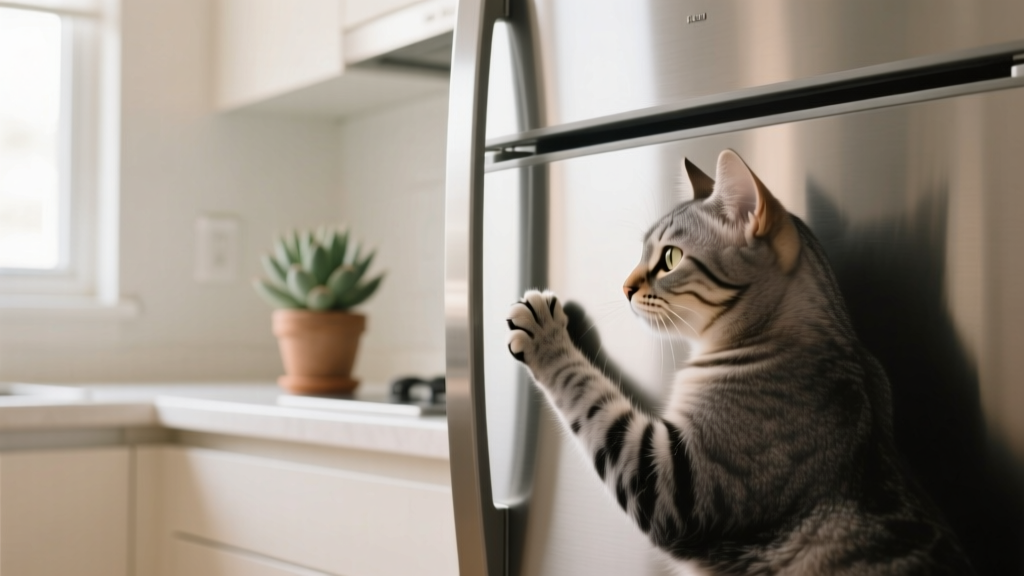
You’re in the kitchen, minding your own business, and you hear it: thump… thump… thump. You turn around and there’s your cat—standing like a tiny bouncer at a club—raising one paw to tap the fridge door with impressive confidence. Maybe they glance back at you, maybe they chirp, maybe they act like this is a completely reasonable way to request room service.
If you’ve ever wondered why your cat paw-bumps the fridge door (especially at the same times every day), you’re not alone. It’s one of those hilariously specific behaviors that feels random until you look at it through a cat’s eyes: a smart, routine-loving hunter who has learned that humans are basically food-dispensing machines with handles.
This behavior is often a hunger pattern—but it can also be a communication strategy, a habit loop, or even a little emotional punctuation (“I’m impatient, thanks”). The good news: it’s usually normal, and it’s definitely meaningful.
Why Cats Do This: The Science (and Evolution) Behind “Tap the Food Box”
Cats are opportunistic hunters. In the wild, their survival depends on noticing patterns and repeating what works. If stalking the same path at dusk yields a mouse, they’ll do it again. If pawing at a certain spot makes prey move, they’ll paw again. That “repeat successful behaviors” wiring is still very much present in your housecat.
The fridge, from a cat’s perspective, is a fascinating object:
- It’s where interesting smells come from. Proteins, fats, dairy—cats are drawn to rich odors, even if they won’t eat everything inside.
- It predicts human behavior. Many cats learn that when you open the fridge, food appears somewhere nearby—whether that’s their bowl being topped up or you prepping something that “might accidentally” drop.
- It’s a reliable landmark. Cats love stable routines and stable objects. A fridge is consistent: same place, same door, same sounds.
From a learning theory standpoint, fridge pawing is commonly shaped by reinforcement (sometimes without you realizing it). If paw-bumping leads to you approaching the fridge, speaking to them, or feeding them—even once in a while—your cat’s brain files it under: “This works.”
And because cats are excellent at timing patterns, they often attach this behavior to predictable hunger windows: mornings, after work, or that suspiciously early hour they’ve decided is “breakfast o’clock.”
A Detailed Breakdown: Different Contexts of Fridge Paw-Bumping
Not all fridge taps are the same. The context matters. Here are some common versions and what’s likely going on.
1) The “Meal Time Reminder” Tap
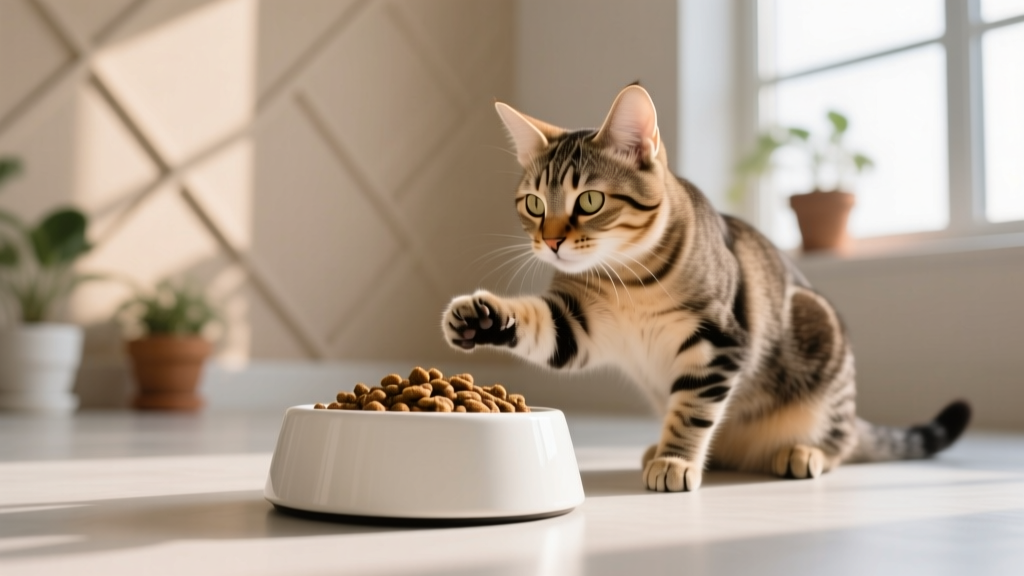
This is the classic: your cat starts pawing the fridge around the same time daily, then looks at you like you’re late for an appointment. They may pace, weave around your legs, or lead you toward their feeding area.
What’s happening: Your cat has a strong internal clock, plus a learned association that your kitchen routine equals food.
2) The “You Opened It Once, So Now It’s A Thing” Tap
You open the fridge, your cat shows up instantly, and now they’ve added fridge-tapping to their repertoire—even when it’s not meal time.
What’s happening: Curiosity + reinforcement. If your cat got a treat once (or even just attention), they may try to recreate the conditions.
3) The “I Hear the Can/Bag Sound” Tap
Some cats don’t care about the fridge itself—they care about the sound patterns in the kitchen. A can opener, a crinkly bag, the clink of a spoon. The fridge becomes the place where “food sounds begin.”
What’s happening: Sound cues are powerful predictors, and cats can learn them faster than we expect.
4) The “I’m Bored and the Fridge is Interactive” Tap
Your cat taps the fridge, taps a cabinet, taps the water bowl, taps the window… basically inventing percussion in your home.
What’s happening: Your cat may be under-stimulated. Pawing is a way to engage with the environment and recruit you into providing enrichment.
5) The “I Want What You Have” Tap
You’re cooking chicken, and suddenly your cat becomes a fridge inspector. They paw, sniff, and sit in strategic positions to maximize their odds.
What’s happening: This is social learning and opportunism. Your cat knows good things happen when humans handle food.
What This Behavior Says About Your Cat’s Mood and Feelings
Fridge paw-bumping is communication, and cats are surprisingly deliberate communicators. Here’s what the emotional tone might be, based on body language:
- Relaxed and confident: Tail up, soft eyes, a gentle tap. This is polite requesting: “Hey, whenever you’re ready.”
- Impatient or frustrated: Faster tapping, more vocalizing, tail flicking, maybe a dramatic flop on the floor. This is: “I have been wronged.”
- Anxious or uncertain: Crouched posture, wide eyes, startle-y movements. Less common with fridge tapping, but can happen in multi-cat homes where access to food feels tense.
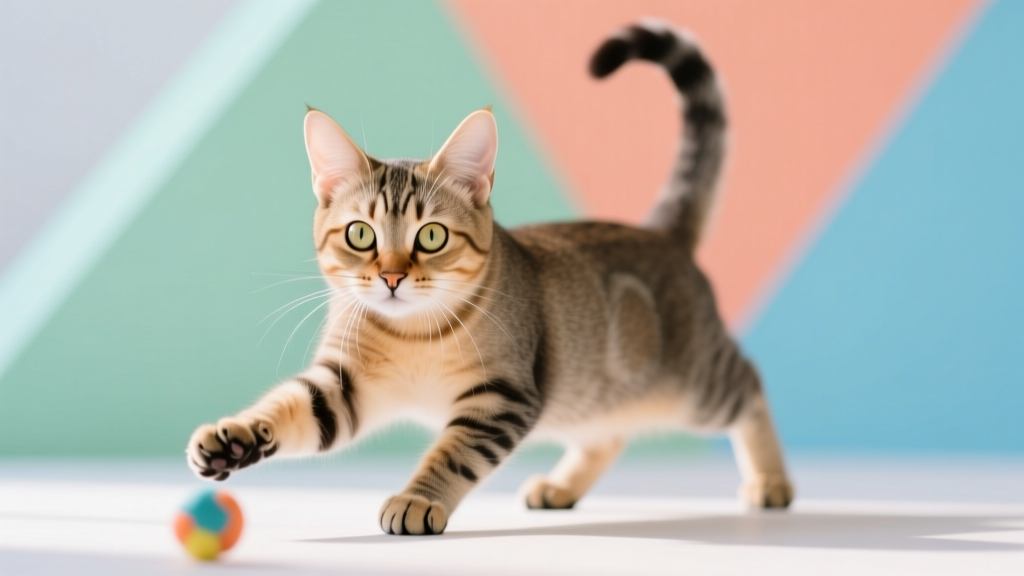
- Playful/attention-seeking: The tap is followed by zoomies, rolling, or pouncing at your feet. This can be a “notice me” strategy as much as a food request.
One important note: cats can be both hungry and seeking reassurance. Routines are comforting. A cat who taps the fridge may be saying, “Can we do the predictable thing now?”
Related Behaviors You Might Also Notice
If your cat is a fridge-tapper, you may also see other “food signaling” behaviors, such as:
- Leading you to the kitchen and checking whether you’re following
- Sitting by the feeding area like a small, judgmental statue
- Knocking things off counters (a shockingly effective way to summon humans)
- Meowing with a specific tone that only appears around meal times
- Pawing cabinets where treats are stored
- “Love-bombing” your legs with rubbing and weaving right before food appears
These behaviors often cluster because they’re all part of the same learning loop: your cat experiments, you respond, and the behavior becomes a reliable tool.
Normal vs. Concerning: When Fridge Pawing Might Need Attention
Most of the time, fridge paw-bumping is normal—a quirky, understandable habit. But it can signal something more if it changes suddenly or comes with other symptoms.
Usually Normal
- Your cat taps the fridge mainly near scheduled feeding times
- The behavior is consistent, not escalating
- Your cat maintains a healthy appetite, weight, and energy
- No vomiting/diarrhea or major behavior changes
Potentially Concerning (Worth a Vet Check)
- Sudden increase in hunger or frantic food-seeking, especially in older cats (possible thyroid issues, diabetes, or other medical causes)
- Weight loss despite eating
- Vomiting, diarrhea, or increased thirst/urination
- Nighttime yowling and restlessness paired with intense food demands
- A new obsession with food after a diet change or medication
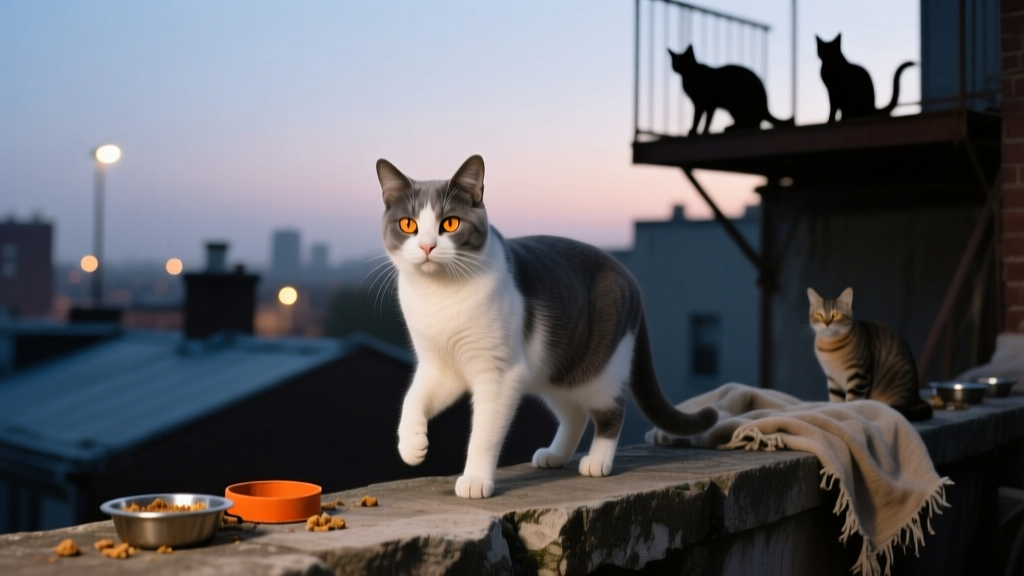
Also consider the social picture: in multi-cat households, fridge pawing can reflect food insecurity—a cat who doesn’t feel safe eating at the bowl may become more “pushy” about accessing resources.
How to Respond (Without Accidentally Training a Tiny Kitchen Manager)
If you don’t mind the behavior, you can simply acknowledge it and keep feeding routines consistent. But if the tapping is becoming loud, persistent, or inconvenient (midnight percussion, anyone?), you can shape it into something more peaceful.
1) Make Meals Predictable
Feed at consistent times. Cats thrive on routine, and predictability reduces anxious food-requests.
2) Use an Automatic Feeder
If your cat has learned that you are the key to food, shifting the “food delivery” to an automatic feeder can reduce fridge-directed begging. Bonus: it helps with early-morning wake-ups.
3) Don’t Reward the Tap in the Moment (If You Want It to Fade)
If fridge tapping reliably leads to immediate feeding, it becomes stronger. Instead:
- Wait for a pause (even 2–3 seconds of quiet)
- Then calmly prepare food
- Reinforce the calm moment, not the tapping
4) Teach an Alternate “Ask” Behavior
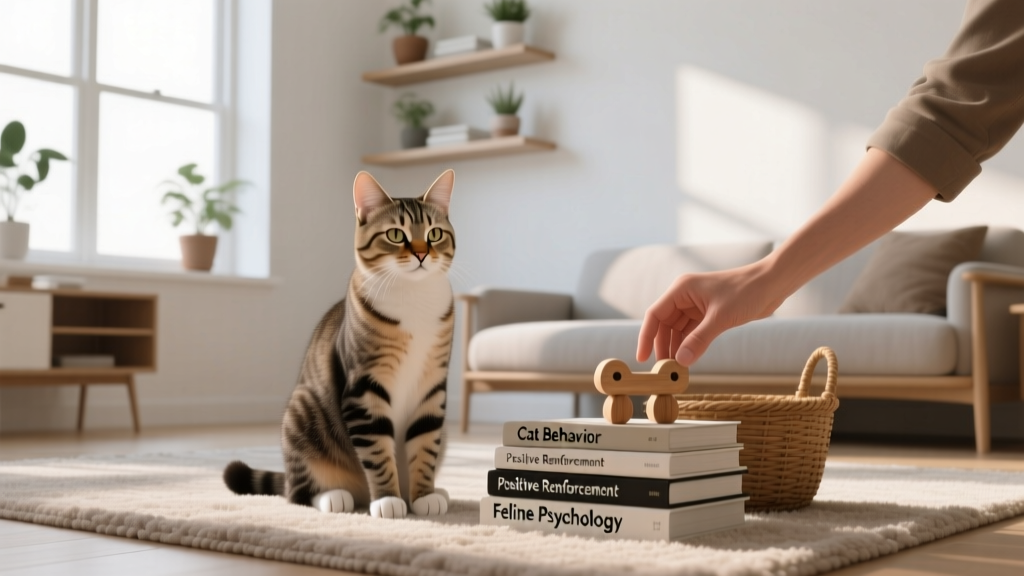
Pick something you like: sitting on a mat, touching a target, or waiting by the bowl. Reward that instead. Cats are excellent at learning simple routines when the reward is clear.
5) Increase Enrichment If It’s Boredom-Driven
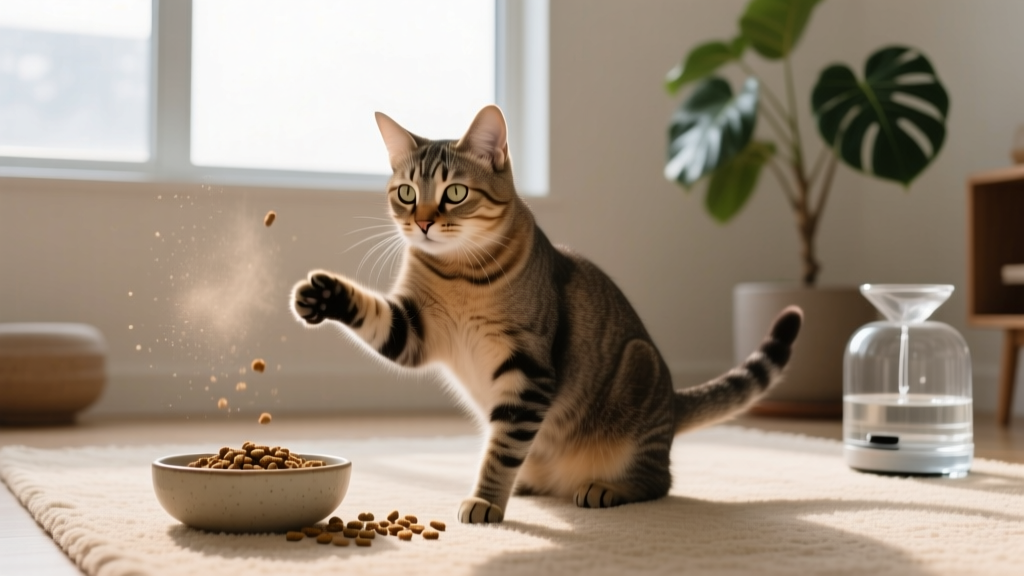
Try puzzle feeders, treat balls, short play sessions before meals, or “hunt” games where you scatter kibble. A cat who gets to stalk and pounce is often less likely to invent loud kitchen hobbies.
6) Check the Diet and Portioning
If your cat seems genuinely hungry all the time, talk to your vet about calories, meal frequency, and whether a higher-protein or higher-fiber food could help them feel satisfied.
Fun Facts and Research Nuggets
- Cats are masters of human training. Studies and observations of cat-human communication show cats adjust their behavior based on what gets a response. A fridge tap that works becomes a fridge tap that happens often.
- They can learn time-based routines. Cats anticipate events and can become active shortly before regular feeding times—part internal rhythm, part pattern learning.
- “Solicitation purring” is a thing. Some cats use a purr with a higher-frequency element that humans find especially hard to ignore—often deployed when they want food. If your fridge tap comes with a very persuasive purr, you may be hearing it.
- Paws are multi-tools. Cats use their paws to explore, manipulate, and communicate. A tap isn’t just noise—it’s a tactile experiment and a visual signal aimed at you.
FAQ: Cat Paw Bumping the Fridge Door
1) Is my cat pawing the fridge always a sign of hunger?
Often, yes—but not always. It can also mean curiosity, habit, attention-seeking, or boredom. Look for patterns (time of day, what happens right before/after) and body language (relaxed request vs. frantic demand).
2) Should I ignore my cat when they paw the fridge?
If you want the behavior to decrease, avoid rewarding it immediately. Instead, wait for a brief pause and then reward calm behavior. If you don’t mind it and your cat is healthy, there’s no need to ignore them completely—just try not to make “tap = instant food” a strict rule.
3) Why does my cat tap the fridge even after eating?
Some cats are snack-motivated and will always check for “bonus food.” Others have learned that fridge activity predicts treats or attention. If it’s excessive or paired with weight loss, increased thirst, or vomiting, check in with your vet.
4) My cat only does this when I’m in the kitchen. Why?
Because the behavior is aimed at you. The fridge is the prop; you’re the audience and the dispenser of good things. Many cats won’t bother tapping if the “food-opening human” isn’t present.
5) Can I train my cat to ask more politely?
Yes. Teach an alternative behavior (sit on a mat, wait by the bowl, touch a target). Reward that consistently, and the fridge-tapping often fades because your cat has found a better strategy.
6) Does fridge pawing mean my cat is spoiled?
It means your cat is smart and has learned a pattern. Cats repeat what works. If you’ve ever fed them after a tap—even once—you’ve given them useful data. That’s not “spoiled,” that’s learning.
Fridge paw-bumping is one of those behaviors that feels silly until you realize it’s a little window into feline cognition: pattern recognition, communication, and a dash of charming persistence. With a consistent routine and a few training tweaks, you can turn the fridge tap from a noisy demand into a polite conversation—on terms that work for both of you.
Does your cat tap the fridge, paw the pantry, or run a full kitchen “food inspection” every evening? Share your cat’s funniest hunger patterns and stories with the Cat Lovers Base community at catloversbase.com—we’d love to hear what your clever little roommate has invented.