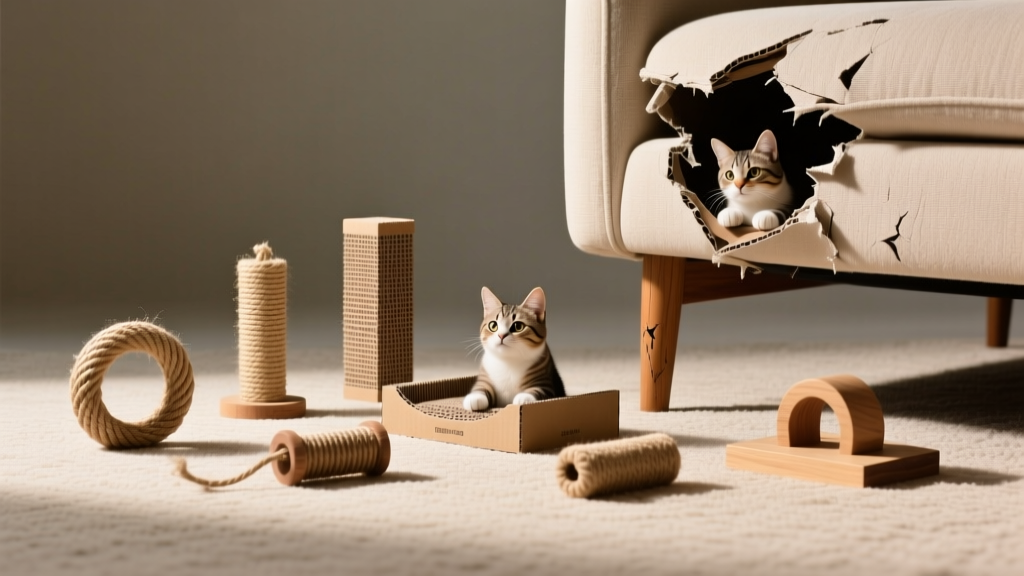
How to Correct a Cat’s Behavior
Why "How to Correct a Cat’s Behavior" Is the Wrong Question—And What to Ask Instead
If you’ve ever typed how to correct a cats behavior into Google at 3 a.m. while stepping barefoot on a shredded sofa cushion—or worse, cleaning up urine on your favorite rug—you’re not failing. You’re asking the wrong question. Cats don’t misbehave; they communicate unmet needs through actions we label as ‘bad.’ The real goal isn’t correction—it’s compassionate translation. According to Dr. Sarah Wooten, DVM and certified feline behavior consultant with over 15 years of clinical experience, ‘92% of so-called “problem behaviors” stem from stress, environmental mismatch, or undiagnosed medical issues—not defiance.’ That means every hiss, bite, or inappropriate elimination is data—not disobedience. In this guide, we’ll walk you through a proven, step-by-step framework grounded in veterinary ethology and positive reinforcement science—not folklore, dominance myths, or outdated discipline tactics.
Step 1: Rule Out Medical Causes—Before You Change a Single Thing
Before adjusting litter box placement or buying a new scratching post, rule out pain or illness. Urinating outside the box? Could be interstitial cystitis, urinary crystals, or arthritis making the box painful to enter. Sudden aggression? May signal dental disease, hyperthyroidism, or early-stage kidney disease. A 2023 study published in the Journal of Feline Medicine and Surgery found that 68% of cats referred for ‘aggression’ or ‘litter box avoidance’ had at least one underlying medical condition—and 41% showed full behavioral resolution after treatment alone.
What to do:
- Schedule a full wellness exam—including urinalysis, blood panel (T4, SDMA, creatinine), and orthopedic assessment—even if your cat seems ‘fine.’
- Ask your vet specifically: ‘Could this behavior be linked to pain, sensory decline (hearing/vision loss), or neurologic changes?’
- Track timing: Does the behavior happen only at night? After meals? During storms? Patterns often point to triggers (e.g., nocturnal anxiety in senior cats with cognitive dysfunction).
Pro tip: Record a 60-second video of the behavior (e.g., scratching the couch, lunging at ankles) and share it with your vet. Context matters more than description.
Step 2: Decode the Real Motivation—Not the Symptom
Cats rarely act without purpose. But their logic isn’t human. Here’s how to interpret common ‘problems’ through an ethological lens:
- Scratching furniture: Not destruction—it’s scent-marking (via paw glands), muscle stretching, and claw maintenance. Your couch isn’t a target; it’s the tallest, most textured vertical surface available.
- Biting during petting: Not ingratitude—it’s overstimulation. Most cats have a petting threshold of 12–30 seconds before skin sensitivity spikes. Tail flicking, flattened ears, or sudden stillness are pre-bite warnings.
- Attacking feet at dawn: Not malice—it’s redirected predatory drive. Indoor cats lack outlets for hunting sequences (stalking → chasing → pouncing → killing → eating). Your ankle becomes the ‘prey’ when instinct overrides impulse control.
- Litter box avoidance: Often a hygiene or safety issue—not spite. A 2022 Cornell Feline Health Center survey found 73% of cats avoided boxes due to location (too noisy, near washer/dryer), substrate (scented litter, too shallow), or cleanliness (cleaned less than once daily).
Behavioral ethologist Dr. Mikel Delgado, PhD, explains: ‘Cats don’t hold grudges or seek revenge. They respond to immediate environmental contingencies. If a behavior persists, the environment is reinforcing it—even unintentionally.’ For example: You yell when your cat jumps on the counter → cat associates your voice with attention → repeats behavior to trigger interaction.
Step 3: Build the Right Environment—Not Just the Right Rules
Force-free behavior change happens by designing for success—not enforcing compliance. Think like an interior designer for feline well-being:
- Vertical space: Add at least one tall, stable cat tree per floor. Studies show cats with >3 vertical territories show 40% lower cortisol levels (stress hormone) than those with none.
- Hunting simulation: Rotate 3–5 interactive toys (wand teasers, food puzzles) daily. Feed 80% of calories via play-based foraging—not bowls. This satisfies the predatory sequence and reduces nighttime activity surges.
- Safe retreats: Provide covered beds, cardboard boxes, or tunnel systems in low-traffic zones. A stressed cat needs control over exposure—especially in multi-pet or high-activity homes.
- Litter logistics: Follow the ‘N+1’ rule: one box per cat + one extra. Place boxes in quiet, accessible locations (not basements or laundry rooms). Use unscented, clumping clay or soft paper litter—depth: 2–3 inches. Scoop twice daily; fully replace litter weekly.
Real-world case: Luna, a 4-year-old Siamese, began urinating on her owner’s bed after a new puppy arrived. Her vet ruled out UTI. Behaviorist intervention focused not on ‘stopping’ the behavior—but on creating a dedicated, elevated ‘sanctuary zone’ with her own litter box, food station, and window perch. Within 5 days, incidents ceased. Why? She regained agency and security—not obedience.
Step 4: Reinforce Desired Behaviors—Strategically and Consistently
Punishment doesn’t teach alternatives—it teaches fear. Positive reinforcement does the opposite: it builds trust and clarity. But timing, consistency, and precision matter.
The 3-Second Rule: Reward must occur within 3 seconds of the desired action—or the cat won’t connect cause and effect. That means keeping treats (or clicker + treat) within arm’s reach during training sessions.
What to reward (with examples):
- Using the scratching post instead of the couch: Click + treat as paws make contact, not after.
- Remaining calm during nail trims: Reward each 5-second interval of stillness—not just at the end.
- Entering carrier voluntarily: Drop a treat inside daily—even when not traveling.
Important nuance: Never use food rewards for aggression-related behaviors (e.g., rewarding a cat for sitting calmly *after* biting). Instead, reinforce incompatible behaviors—like ‘touching your hand with nose’ instead of biting.
According to the American Association of Feline Practitioners (AAFP), consistent positive reinforcement increases long-term behavior retention by 300% compared to punishment-based methods—and reduces re-homing risk by 62%.
| Step | Action | Tools Needed | Expected Outcome (Within 7 Days) |
|---|---|---|---|
| 1 | Complete full veterinary workup & document behavior patterns (time, location, triggers) | Vet visit, notebook/app, phone camera | Medical causes ruled in/out; baseline behavior map established |
| 2 | Add 2 vertical spaces + 1 safe retreat zone; switch to unscented litter & N+1 boxes | Cat tree, covered bed, litter, scooper | Reduced hiding, increased resting in open areas; fewer litter box incidents |
| 3 | Implement daily 10-min play session ending with ‘hunt-catch-eat’ sequence (use treat-dispensing toy) | Wand toy, puzzle feeder, high-value treats (tuna flakes, freeze-dried chicken) | Decreased dawn attacks; calmer evening energy; improved sleep cycle |
| 4 | Click-and-treat 3x/day for one desired behavior (e.g., using post, entering carrier, gentle head-butting) | Clicker or marker word (“yes!”), treats, timer | Increased frequency of target behavior; visible anticipation (e.g., running to post when you pick up clicker) |
| 5 | Observe & log progress; adjust one variable weekly (e.g., move post closer to couch, add catnip to post) | Journal, pen, patience | Clear understanding of what works—and what doesn’t—for your unique cat |
Frequently Asked Questions
Can I use a spray bottle to stop my cat from scratching furniture?
No—and here’s why: Spray bottles induce fear, not learning. A 2021 study in Applied Animal Behaviour Science showed cats subjected to aversive sprays developed increased avoidance of owners, higher baseline heart rates, and were 5.2x more likely to redirect aggression toward other pets. Worse, the cat never learns *what to do instead*. Instead, place a sturdy scratching post directly beside the furniture, rub it with catnip, and reward any interaction—even sniffing. Within days, preference shifts.
My cat bites me when I pet them—is this aggression or overstimulation?
It’s almost always overstimulation. Watch for subtle cues *before* biting: tail twitching, skin rippling along the back, flattened ears, sudden stillness, or dilated pupils. Stop petting at the first sign—not after the bite. Gradually increase tolerance by ending sessions *before* warning signs appear, then rewarding calmness with treats. Over 2–4 weeks, many cats extend their ‘petting window’ significantly.
Will neutering/spaying fix my cat’s spraying behavior?
It helps—but only if done *before* the behavior starts. Neutering reduces spraying in ~90% of males who haven’t yet developed the habit. But if spraying began after 1 year of age, it’s likely stress- or territory-driven—not hormonal. In those cases, environmental enrichment and pheromone diffusers (Feliway Optimum) are far more effective than surgery alone.
How long does it take to see real improvement?
Most owners notice measurable shifts in 3–7 days—especially with environmental tweaks and consistent play. Full habit replacement (e.g., switching from couch to post) typically takes 2–6 weeks. Patience isn’t passive waiting; it’s daily, tiny, evidence-based adjustments. As Dr. Wooten reminds us: ‘Cats don’t fail training. Humans fail to read the signals.’
Is it okay to use a leash to ‘retrain’ my indoor cat?
Leash walking can be enriching—if introduced properly. But it’s not a behavior-correction tool. Never use a leash to pull, restrain, or punish. Start indoors with a harness (not collar) for 5 minutes daily, pairing with treats. Only add outdoor time when your cat walks *toward* you willingly. Forced ‘training’ creates lasting anxiety. Leashes should expand choice—not restrict it.
Common Myths About Cat Behavior Correction
Myth #1: “Cats need to know who’s boss.”
False. Dominance theory has been thoroughly debunked in feline science. Cats are not pack animals seeking hierarchy—they’re solitary hunters forming fluid social bonds. Asserting ‘dominance’ (e.g., holding down, staring down, alpha rolls) induces terror, not respect. It damages trust and often escalates fear-based aggression.
Myth #2: “If I ignore bad behavior, it’ll go away.”
Sometimes—but often, it worsens. Ignoring doesn’t remove the motivation. A cat scratching the couch because it’s the best stretch surface won’t stop unless you provide a better alternative *and* make the couch less appealing (double-sided tape, aluminum foil). Passive ignoring = passive reinforcement.
Related Topics (Internal Link Suggestions)
- Feline Stress Signs — suggested anchor text: "subtle signs your cat is stressed"
- Best Scratching Posts for Stubborn Cats — suggested anchor text: "top-rated cat scratching posts"
- How to Introduce a New Cat Without Aggression — suggested anchor text: "safe cat introduction checklist"
- DIY Cat Enrichment Ideas on a Budget — suggested anchor text: "low-cost cat enrichment activities"
- When to Call a Certified Cat Behaviorist — suggested anchor text: "certified feline behavior consultant near me"
Your Next Step Starts Today—No Perfection Required
You don’t need to overhaul your home overnight. You don’t need special certifications or expensive gear. You just need one observation, one small adjustment, and one moment of curiosity instead of frustration. Start tonight: watch your cat for 5 minutes without touching them. Note where they rest, what they sniff, when they stretch, what they avoid. That’s your first data point—the foundation of real understanding. Then, pick *one* item from the step-by-step table above and implement it tomorrow. Track it. Adjust. Repeat. Because how to correct a cats behavior isn’t about fixing the cat—it’s about deepening the relationship. And that kind of change doesn’t happen in a day. It happens in the quiet, consistent, compassionate choices you make—starting now.