Why Cats Sit on the Foyer Entry Bench
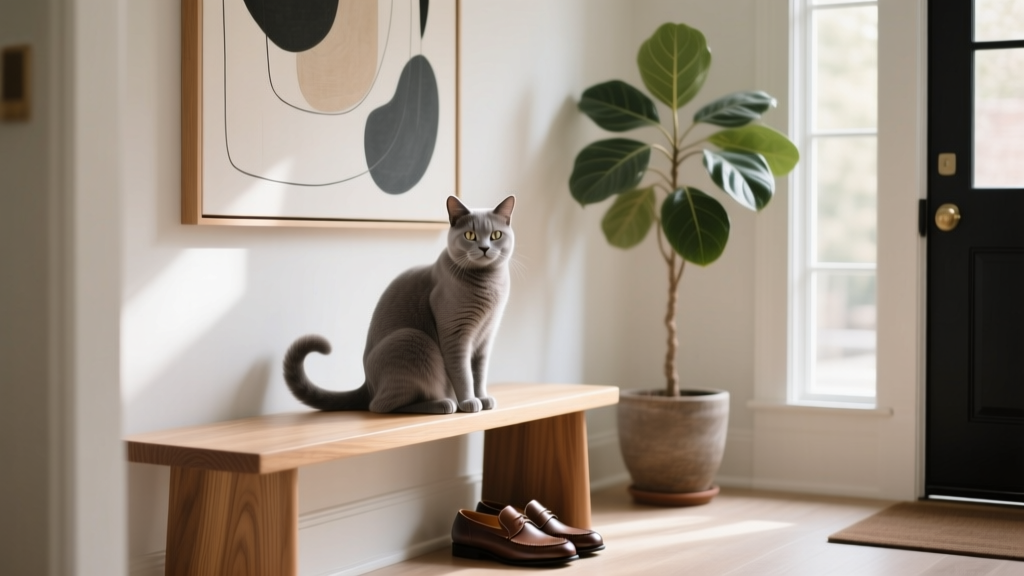
You’re trying to leave the house. Shoes in one hand, keys in the other, maybe a bag sliding off your shoulder. You glance toward the foyer entry bench—the one you bought for practical reasons, like a responsible adult—and there’s your cat. Sitting perfectly centered like a tiny, furry bouncer. Calm. Alert. Watching you lace up as if this is their official job.
Sometimes they do it when you come home, too. You open the door and there they are, perched on the bench like they’ve been expecting you. Other times, they’re on that bench at completely random moments, staring at the front door like it might start telling stories.
If you’ve ever wondered, “Why this spot?” you’re not imagining patterns. Cats choose locations with purpose—even when the purpose is “because it feels right.” The foyer bench is a surprisingly meaningful piece of real estate in a cat’s mind.
The Scientific (and Evolutionary) Reason This Spot Is So Appealing
Cats are both predators and potential prey. That combo shapes almost everything about how they use space. In the wild, a good resting spot provides:
- A clear view of what’s coming and going
- A quick escape route if something feels threatening
- A safe boundary—like a wall behind them—so no one can sneak up
- Access to important resources (food, people, warmth, information)
Your entryway is basically a “news feed” for your cat. Every time the door opens, the world sends updates: scents from other animals, humans, food places, weather, construction smells, neighbor perfume, the dog from down the hall, and whatever mysterious thing you stepped in on the sidewalk.
The bench is often elevated, strategically placed, and predictable. From a feline perspective, that’s a command center. Sitting there isn’t random—it’s surveillance, social monitoring, and comfort all bundled into one neat loaf-shaped package.
Breaking Down the Behavior: Different Contexts, Different Reasons
“My cat sits on the foyer bench” can mean several different things depending on timing, posture, and what else is happening in the home. Here are the most common scenarios.
1) The “You’re Leaving” Bench Sit
You grab your jacket and your cat appears on the bench like they teleported.
This is often a mix of:
- Routine awareness: Cats are excellent at pattern recognition. Shoes + keys + a certain bag = departure.
- Proximity-seeking: Some cats don’t cling, but they like being nearby when important things happen.
- Soft “protest” behavior: Not dramatic—more like, “I notice you are doing a leaving thing, and I would prefer you didn’t.”
Many cats choose a spot that’s close enough to observe you but not so close that they risk being stepped on. The bench is a safe compromise: involved, but protected.
2) The “Welcome Home” Bench Sit
You open the door and your cat is already there, sitting tall with bright eyes—maybe with a chirp, maybe with that silent stare that somehow feels like judgment.
This often means:
- Social bonding: Cats have their own greeting rituals. Being present at the door is a social check-in.
- Anticipation of good things: Dinner, treats, playtime, attention—many cats connect your arrival to rewards.
- Territory management: They’re watching the boundary of the home. You are a “moving part” of that boundary.
If your cat rubs their cheeks on the bench edge after you arrive, they may be “resetting” the scent profile—reapplying the home’s familiar smell after outside air rushed in.
3) The “Door Watch” Bench Sit (No One Is Coming or Going)
Your cat stares at the front door like it owes them money.
Possible reasons:
- Sound detection: Cats hear frequencies we miss. They might be tracking elevator movement, hallway footsteps, or outdoor animals.
- Scent drift: Smells seep in under doors—especially in apartments. Your cat might be monitoring another pet nearby.
- Environmental enrichment: The doorway is stimulating. It’s the cat version of sitting by a window, just with more “who’s out there?” energy.
Sometimes it’s as simple as: the bench is comfortable and the entryway offers interesting drafts, light patterns, or the soundscape of the building.
4) The “I’m Avoiding Someone” Bench Sit
If there’s tension between pets, the foyer bench can become a strategic neutral zone—especially if it provides an exit path (doorway to another room, hallway access, or a staircase).
Cats manage social stress by controlling distance. A bench near a boundary helps them feel less trapped.
5) The “Warm Spot” or “Texture Spot” Bench Sit
Some benches hold heat, catch sun, or have a cushion with irresistible texture. A surprising number of “mysterious cat behaviors” are simply “excellent fabric choice, human.”
What Sitting on the Entry Bench Can Mean About Your Cat’s Mood
Your cat’s body language gives the real story. Here are common “bench sit” moods:
- Relaxed and content: Loaf position, slow blinks, soft eyes, tail wrapped loosely. They feel safe in that location.
- Curious and alert: Upright posture, ears forward or swiveling, eyes bright, whiskers slightly forward. They’re gathering information.
- Worried or on edge: Low body, ears slightly back, tail tucked close, tense muscles. Something about the doorway feels uncertain (sounds, scents, visitors, another animal outside).
- Possessive/territorial: Blocking the bench, stiff posture, direct stare, potentially vocalizing when someone passes. This can happen in multi-cat homes.
- Affection-seeking: Rolling when you approach, chirping, rubbing on the bench edge, reaching out a paw gently. They’ve turned the bench into a “greeting station.”
One of the sweetest interpretations: for some cats, the entry bench is where “family transitions” happen—people leaving, returning, changing energy. Cats notice those moments, and many want a front-row seat.
Related Behaviors You Might Also Notice
If your cat loves the foyer bench, you may also see:
- Following you to the door but not going outside
- Sniffing your shoes intensely (yes, it’s weird; yes, it’s normal)
- Rubbing cheeks on bags or coats (scent marking with friendly facial pheromones)
- Flopping down in your path as you try to leave (classic “pay the attention toll”)
- Door dashing attempts (not the same as bench sitting, but sometimes connected)
- Vocal greetings—trills, chirps, or a very bossy meow when you arrive
All of these orbit the same theme: the doorway is a high-value, high-information area.
When This Behavior Is Normal… and When It Might Be a Concern
Normal: Most of the time, a cat sitting on the entry bench is simply a well-chosen vantage point. If your cat is eating, sleeping, using the litter box normally, and their posture on the bench looks relaxed or curious, you can file this under “quirk + excellent taste in furniture.”
Potential concern signs:
- Sudden obsession with the door paired with pacing, yowling, or agitation
- Hiding near the entryway with flattened ears or trembling
- Guarding the bench and attacking or swatting other pets or people who pass
- Increased startle response to normal hallway sounds
- New “watching the door” behavior after a move, construction noise, or the arrival of a new pet
These can signal stress, territorial anxiety, or conflict with another cat (sometimes one you don’t even own—like a neighborhood cat lingering outside).
If the bench sit comes with other behavior changes—reduced appetite, litter box issues, over-grooming, hiding more than usual—consult your veterinarian or a certified cat behavior professional. Physical discomfort can also make cats choose specific spots or become more vigilant.
How to Respond (or Encourage It) in a Cat-Friendly Way
If you like the behavior and it isn’t causing problems, you can lean into it and make the entry bench a positive “cat station.”
Make the Bench More Cat-Approved
- Add a washable mat or blanket with a non-slip underside. Comfort matters, and cats love predictable textures.
- Provide a vertical option nearby (a small cat tree or wall shelf). Some cats prefer height for security.
- Use pheromone support (like a feline facial pheromone diffuser) if the entryway is a stress hotspot.
Turn Departures and Arrivals Into Predictable Rituals
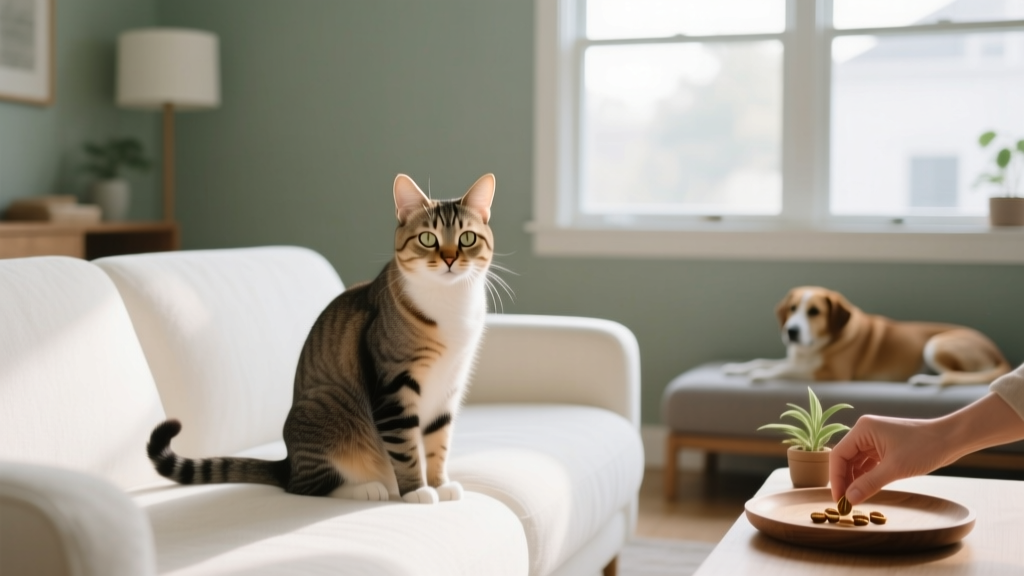
- Offer a tiny “departure treat” or scatter a few pieces of kibble in a puzzle toy as you leave. This helps cats who get mildly anxious about you going.
- Greet calmly when you return. If your cat is excited, reward with a brief play session rather than overstimulating petting.
- Teach a “station” behavior: reward your cat for sitting on the bench while you put on shoes. This can prevent door-dashing and makes the bench a safe job.
Address Door-Dashing If It’s Part of the Pattern
If your cat is using the bench as a launchpad to escape, avoid chasing (it turns into a game or raises stress). Instead:
- Block visual access temporarily (a tall baby gate inside the entryway if possible)
- Increase indoor enrichment (more play, climbing spaces, sniffing opportunities)
- Reward calm bench sitting before opening the door
Fun Facts and Research Nuggets About Doorway Behavior
- Cats map their territory in “scent zones,” and thresholds (like doorways) are major boundary points. Facial rubbing deposits pheromones that communicate familiarity and safety.
- Monitoring entrances is a common feline strategy in multi-cat environments. Even friendly cats keep an eye on shared pathways to avoid surprise encounters.
- Cats learn human routines with impressive accuracy. Many can predict your return based on subtle cues like time of day, light levels, and household sounds—sometimes even before you reach the door.
- Your shoes are information-dense objects. From a cat’s point of view, they’re a portable collection of the outside world’s scent messages, which can be both exciting and slightly suspicious.
FAQ: Common Questions About Cats and the Entry Bench
Why does my cat sit on the bench and stare at the door?
Usually they’re tracking sounds or scents you can’t detect, or they’re simply enjoying a high-interest vantage point. Check their body language: relaxed loaf means “curious and calm,” while tense crouching may suggest stress.
Is my cat guarding the house?
In a way, yes—cats monitor territory boundaries. It’s not “guarding” like a trained dog, but it is surveillance and boundary-checking. If it’s calm, it’s normal. If they lunge at people or pets passing by, it may be resource guarding or social tension.
My cat sits there when I’m leaving. Are they sad?
Some cats do experience mild separation distress, but many are simply responding to routine. If your cat also vocalizes excessively, over-grooms, or stops eating when you’re gone, consider separation-related stress and talk to a vet or behaviorist.
Why does my cat rub on the bench or my shoes near the door?
That’s scent marking with friendly facial pheromones. They’re labeling the area (and your stuff) as familiar and “part of the group,” which can be both comforting and a way to overwrite outside smells.
Should I move my cat if they’re on the bench?
If they’re safe and not blocking you, it’s usually best to let them be. If you need the space, lure them off with a treat or toss a toy rather than picking them up every time—many cats prefer choice over handling.
What if my cat hisses when people come in?
That’s often fear or overstimulation at a high-traffic boundary. Give your cat an escape route (a nearby cat tree or open doorway to another room), reduce forced greetings, and consider gradual visitor desensitization with treats at a comfortable distance.
Your foyer entry bench may look like a simple piece of furniture, but to your cat it’s a sensory observation deck, a boundary marker, and sometimes a sweet little meeting place where “family events” happen twice a day.
Does your cat claim the entry bench like it’s their personal throne? Share your funniest (or most puzzling) foyer stories with the Cat Lovers Base community at catloversbase.com—we love a good “my cat runs the household” tale.