Why Cats Sit on the Kitchen Table Corner Edge
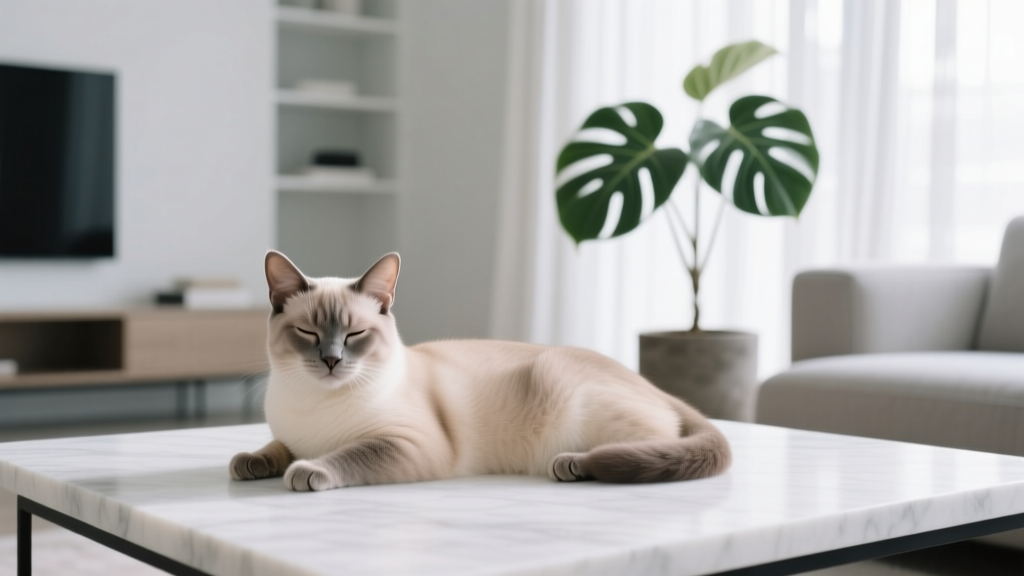
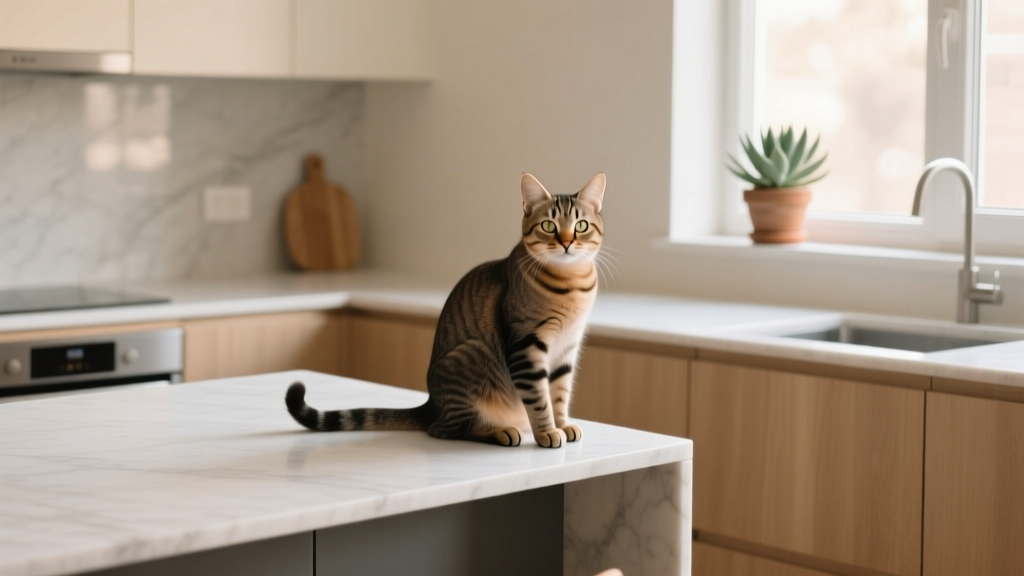
You walk into the kitchen to refill your coffee, and there’s your cat—perched like a tiny gargoyle on the corner edge of the kitchen table. Not the comfy chair. Not the wide, stable center of the table. The corner. The spot where you’re convinced one sneeze would send them sliding off like a cartoon.
They blink at you slowly, tail wrapped neatly around their paws, looking both regal and slightly mischievous. You shoo them (again). They hop down (eventually). Five minutes later, they’re back on the corner like it’s reserved seating.
If you’ve ever thought, “Why that exact spot?”—you’re in excellent company. Cats choose locations with purpose, even when their choices look baffling to us. The corner edge is a feline favorite for a mix of instincts, comfort, communication, and good old-fashioned cat logic.
1) The scientific (and evolutionary) reasons cats love edges
Cats are both predators and—depending on the neighborhood—potential prey. That dual role shaped a brain that’s always scanning for vantage points, safe escape routes, and useful information. The kitchen table corner edge checks a surprising number of those boxes.
Vantage point + control
Elevation matters. Even a small height boost can make a cat feel more secure. From a table corner, your cat can monitor:
- Doorways and foot traffic
- Other pets’ movements
- Food prep (important research)
- Your routine—especially if you’re the Treat Provider
Edges are “information hubs”
Cats navigate their world using scent and whisker feedback. The edge of a table is a boundary line—an area where things change: air currents, movement, sounds, and the ability to reach down or jump away. Corners are even better because they offer two edges meeting at once.
Instinctive “sit where I can launch” positioning
Cats are built for sudden acceleration. A corner edge gives them a clean launch line for a jump to a chair, counter, window ledge, or floor. It’s the feline equivalent of standing near the exit at a party: no commitment, easy getaway.
Whisker and body awareness practice
That “how are you not falling?” balance is not luck. Cats are extremely skilled at body positioning. Sitting on a narrow edge can be a form of proprioceptive practice—using tiny adjustments in paws, core muscles, and tail to stay stable. It’s like a casual balance exercise… that also happens to put them in the middle of everything.
2) A detailed breakdown: different contexts where corner-sitting shows up
The same behavior can mean different things depending on what else is going on. Here are common scenarios cat owners recognize immediately.
“You’re cooking, so I’m supervising” corner-sitting
You chop vegetables. Your cat appears on the corner closest to your hands. This is prime monitoring territory—close enough to observe, far enough to avoid the scary cutting board noises. Many cats choose the corner because it’s near you but not directly in your workspace (from their perspective).
What it often means: social interest, curiosity, and a desire to be included.
“This is the best sunbeam” corner-sitting
Sometimes the corner is exactly where a patch of warmth hits at 10:30 a.m. Cats are professional heat-seekers. If the corner edge is warm from sunlight—or from residual heat near appliances—they’ll return like it’s scheduled.
What it often means: comfort-seeking, relaxation, contentment.
“I heard a noise” corner-sitting
A delivery truck rumbles by. A neighbor’s door slams. Your cat climbs up and sits tall on the corner, body slightly tense, ears rotating like satellite dishes.
What it often means: alertness, assessing potential threat, gathering information.
“The other cat/dog can’t reach me here” corner-sitting
Multi-pet homes have invisible maps of “safe zones.” A corner edge can be a strategic perch—difficult for a dog to access without being obvious, and easy for the cat to bail out from if needed.
What it often means: boundary-setting, seeking personal space, mild social stress management.
“I’m waiting for something” corner-sitting
Some cats pick a corner like it’s a bus stop: they sit, watch, and anticipate. Dinner tends to happen in the kitchen. People pass through. The pantry lives there. Lots of predictable payoffs.
What it often means: expectation, routine-driven behavior, mild food motivation.
3) What sitting on the table corner says about your cat’s mood
Location is one piece of the puzzle; body language is the rest. Here’s how to read the vibe.
- Relaxed loaf or tucked paws, soft eyes: feeling safe, content, possibly enjoying the social “hangout.”
- Tail neatly wrapped, ears forward, slow blinking: calm curiosity and friendly engagement.
- Upright posture, muscles slightly tight, ears swiveling: alert, investigating sounds, not fully relaxed yet.
- Tail flicking, pupils large, head tracking movement: aroused/overstimulated—could be playful, could be mildly irritated.
- Crouched low, ears angled sideways/back: uneasy; the corner may be a “safe checkpoint,” not a lounging spot.
One extra clue: if your cat chooses the corner closest to you and stays while you move around, it’s often social—your cat is sharing space in a way that still feels controlled and safe.
4) Related behaviors you might also notice
Corner-sitting rarely shows up alone. If your cat loves table edges, you may also see:
- Counter-surfing: not always “bad,” often a search for height, stimulation, or food smells.
- Perching on narrow ledges (banisters, chair backs): similar balance and vantage point appeal.
- Following you into the kitchen: the kitchen is a high-value social and sensory zone.
- Rubbing cheeks on table corners: facial pheromones mark familiar, comforting territory.
- “Meatloaf” posture near edges: ready to move quickly if needed.
- Knocking small objects off edges: sometimes play, sometimes attention-seeking, sometimes “this shouldn’t be here.”
If your cat seems particularly obsessed with corners—rubbing, sitting, and circling—remember: corners are scent-marking hotspots and information stations.
5) When it’s normal… and when it might be a concern
Most of the time, sitting on the kitchen table corner edge is normal feline behavior. It’s just your cat choosing a strategic, interesting perch.
Likely normal if:
- Your cat is eating, drinking, using the litter box normally
- They jump up and down with ease
- Body language is relaxed or mildly curious
- No sudden behavior change—this is a long-term habit
Worth a closer look if you notice:
- Sudden new clinginess to that spot paired with hiding or jumpiness (possible stress)
- Wobbliness, misjudged jumps, or falling (balance issues, pain, vision problems)
- Stiffness when getting down (arthritis or discomfort)
- Obsessive pacing and inability to settle (anxiety, discomfort, or medical issues)
- Increased vocalizing in the kitchen along with restlessness (could be hunger, cognitive changes in seniors, or stress)
If your cat’s edge-sitting comes with coordination changes, unusual pupils, head tilt, vomiting, or a noticeable personality shift, a veterinary check is a smart next step. “Quirky” is adorable—until it’s new and paired with other signs.
6) Tips for responding (without turning it into a daily argument)
Many people want cats off the table for hygiene or safety. Others don’t mind. Either way, you can work with the instinct instead of fighting it.
If you want to discourage table-corner sitting:
- Create a better legal perch nearby: A cat tree, barstool with a washable mat, or a window perch in the kitchen area can satisfy the same needs (height + view + people).
- Reward the alternative: Toss a treat onto the cat tree when your cat chooses it. Cats repeat what works.
- Make the table less rewarding: Keep food scraps cleared, cover butter dishes, and wipe down scent trails. If the table doesn’t pay off, interest drops.
- Use gentle environmental deterrents: Double-sided tape strips or a temporary table cover can make the edge less appealing. Skip anything that scares your cat (loud traps), which can create anxiety around the kitchen.
- Be consistent: If “sometimes allowed” is the rule, your cat will gamble for the jackpot.
If you don’t mind it and want to encourage it safely:
- Stabilize the environment: Remove fragile items from the edge zone and ensure the table doesn’t wobble.
- Add a designated mat at the corner: A small, washable placemat gives traction and a clear “cat spot.”
- Offer enrichment during kitchen time: A puzzle feeder on the floor, a lick mat (cat-safe), or a toy rotation can prevent boredom-driven table exploration.
- Teach a cue like “Place”: Lure your cat onto their mat/perch, mark with “yes,” reward. Soon you can redirect politely when you’re cooking.
The relationship win: when your cat has a predictable place to be near you, they feel included—without you constantly playing bouncer.
7) Fun facts and research-y nuggets about edge love
- Cats prefer control of space. Studies on feline stress repeatedly show that access to vertical space and hiding/perching options can improve a cat’s sense of security—especially in multi-cat homes.
- Whiskers are not just “cute.” They’re sensory tools that help cats gauge openings and nearby surfaces. Edges provide rich sensory feedback: where the surface ends, where the air changes, where movement is easiest to detect.
- Kitchen smells are an enrichment buffet. Even if your cat never gets a bite, the scent landscape changes constantly—meat, herbs, toast, packaging, water running—making the kitchen a naturally stimulating “observation deck.”
- Corners concentrate scent marks. When cats rub their face on corners, they’re depositing pheromones from facial glands—essentially labeling the space as familiar and safe.
FAQ: Common questions about cats sitting on table edges
1) Is my cat trying to dominate me by sitting on the table?
Usually, no. Cats aren’t plotting household takeovers in the way “dominance” myths suggest. Sitting high is more about safety, comfort, and getting good information. If it happens mostly when you’re in the kitchen, it’s often social interest and routine.
2) Why the corner specifically instead of the middle of the table?
Corners offer two edges (more sensory information), an easy jump-off route, and often the best view of entrances. Plus, corners are frequently closest to where humans stand—your cat may be choosing “near you” while still feeling in control.
3) How do I keep my cat off the table without scaring them?
Give them a better option nearby (cat tree, stool, perch), reward that option, and reduce the table’s rewards (no food smells, no fun clutter). Gentle texture deterrents can help, but avoid loud or punitive methods that can create stress.
4) My cat only does this when I cook. Is it begging?
Sometimes it’s food-motivated, but it’s also “together time.” Cooking is noisy, smelly, and full of predictable patterns—cats love predictable patterns. If your cat seems intent on the cutting board, offer a floor-based enrichment alternative so they can participate safely.
5) Should I worry my cat will fall?
Most healthy cats are excellent at balance. If your cat is young or middle-aged and agile, occasional edge-perching is typically fine. If you notice wobbling, misjudging jumps, stiffness, or new clumsiness—especially in seniors—talk to your vet.
6) Does this mean my cat is anxious?
Not necessarily. Many confident cats perch on corners simply because it’s interesting. Anxiety is more likely if you see tense body language, hiding, over-grooming, aggression, or sudden changes in where they choose to sit.
That kitchen table corner edge isn’t just a random cat choice—it’s a tiny command center: great view, quick escape, rich smells, and the perfect place to keep an eye on their favorite human. Once you start reading the context and body language, the behavior becomes less “Why are you like this?” and more “Oh, I get it.”
Does your cat have a favorite weird perch—table corner, chair back, refrigerator top, or the one spot you really wish they’d stop choosing? Share your story (and what you’ve noticed about their mood when they do it) over at catloversbase.com—we’d love to hear about your household’s most dedicated kitchen supervisor.