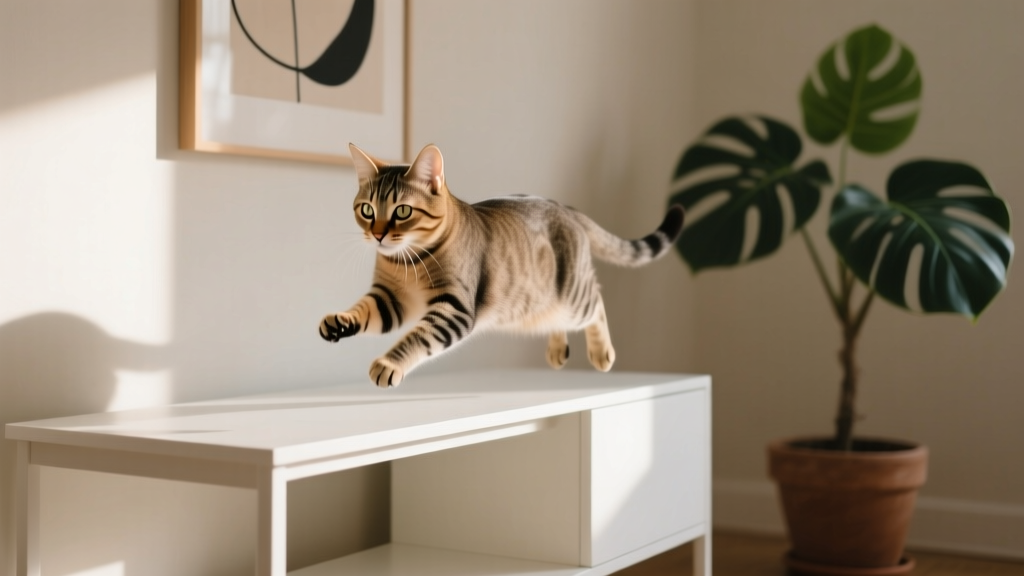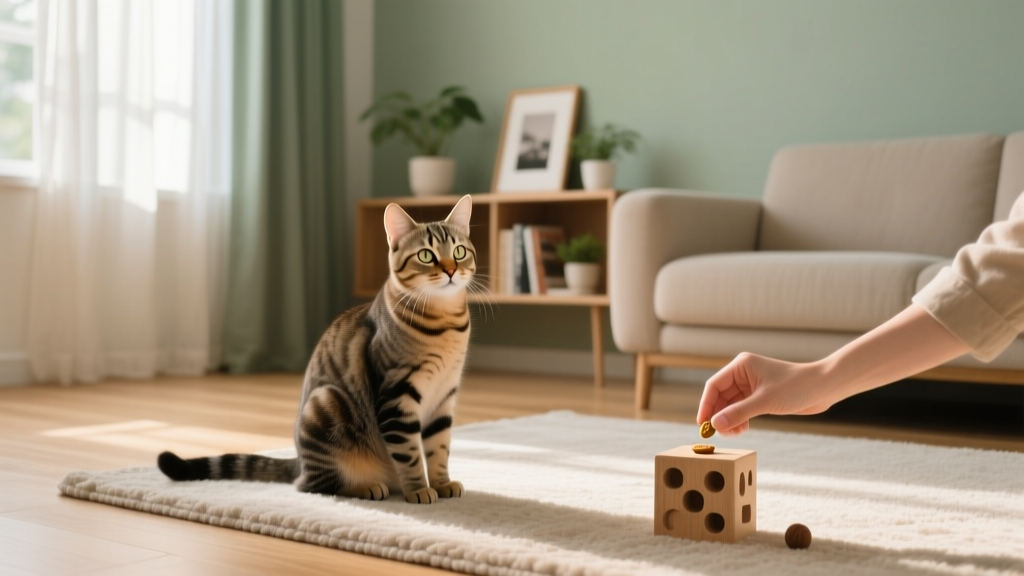
Cat Climbing Behaviors: 7 Instinctive Moves (2026)
Why Your Cat’s Climbing Isn’t Just Cute — It’s Survival Wiring
What behaviors do cats do for climbing isn’t just a curiosity question — it’s a window into your cat’s evolutionary psychology, physical literacy, and emotional safety. Unlike dogs, who evolved as pack-oriented ground hunters, domestic cats descend from solitary, arboreal ancestors like the African wildcat (Felis lybica), whose survival depended on mastering vertical terrain: escaping predators, ambushing prey, surveying territory, and thermoregulating in sun-dappled branches. Today, even indoor cats retain this hardwired repertoire — but without appropriate outlets, those same behaviors can manifest as scratched walls, knocked-over lamps, or chronic stress. Understanding what behaviors do cats do for climbing transforms you from a frustrated owner into an empathetic habitat designer — one who sees scratching not as destruction, but as grip calibration, and leaping not as chaos, but as neuromuscular rehearsal.
The 7 Core Climbing Behaviors — Decoded & Demystified
Cats don’t ‘climb’ as a single action — they deploy a coordinated sequence of instinctive, biomechanically precise behaviors. Each serves a distinct functional purpose, and recognizing them helps you distinguish confident mastery from anxiety-driven scrambling. Below are the seven most frequently observed climbing behaviors, explained with real-world examples and veterinary insights.
1. Paw-Over-Paw Ascension (The ‘Staircase Grip’)
This is the quintessential climbing motion: front paws reach upward, grasp a surface (a shelf edge, carpeted post, or tree bark), then pull while the hind legs push — followed immediately by the rear paws stepping up *into* the space just vacated by the front paws. It creates a stable, low-center-of-gravity ascent ideal for narrow or unstable surfaces. Dr. Sarah Lin, DVM and feline behavior specialist at the Cornell Feline Health Center, notes: “This gait isn’t just efficient — it’s neurologically protective. The alternating limb pattern engages proprioceptive feedback loops that help cats recalibrate balance mid-movement, especially critical when navigating unfamiliar heights.” Watch for smooth rhythm and relaxed ear position — signs of confidence. Jerky, uneven pacing or flattened ears may indicate fear or musculoskeletal discomfort (e.g., early-stage arthritis).
2. Kneading & Hooking (Grip Calibration)
Before committing to a vertical climb — especially on soft or textured surfaces like sisal rope or upholstered posts — cats often knead rapidly with their front paws, extending and retracting claws while pressing down. This isn’t ‘making biscuits’ nostalgia; it’s tactile assessment. They’re testing surface friction, depth of fiber penetration, and claw anchorage strength. A 2022 study published in Applied Animal Behaviour Science found that cats spent 37% longer kneading before ascending surfaces rated ‘low-grip’ by force sensors — confirming its role as a pre-climb risk assessment. If your cat kneads intensely but never climbs the post, the material may be too slippery or too shallow for secure hooking.
3. Tail Counterbalancing (The Living Gyroscope)
You’ve seen it: your cat inches along a narrow ledge, tail held rigidly horizontal or swept wide like a tightrope walker’s pole. This isn’t posture — it’s active inertial stabilization. By shifting tail mass laterally or vertically, cats adjust their center of gravity in real time, compensating for shifts in head/limb position. When descending, many cats hold their tail low and curled forward — lowering rotational inertia to slow descent speed. Behaviorist Dr. Elena Torres observes: “A tail held stiffly straight out behind during climbing often signals hyper-vigilance — the cat feels exposed. In contrast, a gently swaying tail suggests relaxed control.”
4. Rear-Leg Push-Off & Hip Extension
Unlike humans who rely heavily on quadriceps for vertical propulsion, cats generate explosive climbing power primarily through hip extension — driving the femur backward while engaging gluteal and hamstring muscles. You’ll see this as a pronounced ‘crouch-and-spring’ motion before a leap onto a high perch, or as deep, deliberate pushes when scaling a tall cat tree. This behavior is especially vital for older cats: reduced hip mobility directly correlates with decreased vertical exploration. A 2023 University of Edinburgh feline mobility study found that cats over age 10 showed 42% less hip extension range during climbing tasks — a key indicator for early osteoarthritis screening.
5. Head-First Descent (The Controlled Reverse)
Most cats descend trees or shelves head-first — a behavior that seems counterintuitive until you understand the biomechanics. Their shoulder joints rotate far more freely than human shoulders, allowing front paws to grip securely while hind legs dangle and ‘walk down’ the surface. This method provides maximum visual input (they can watch their footing) and superior braking control via front-claw engagement. However, if your cat consistently backs down or jumps instead, it may signal pain in the forelimbs or shoulders — common in cats with chronic tendonitis or previous injuries. Never assume ‘jumping down’ is normal; repeated 3+ foot drops strain joints and increase long-term arthritis risk.
6. Perch-Surveying Posture (The Strategic Pause)
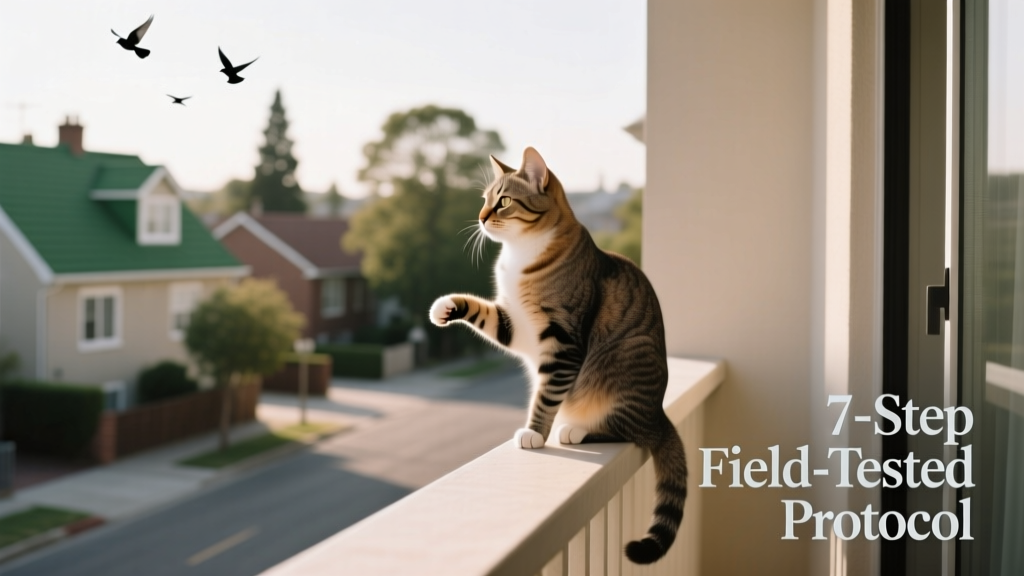
Once at height, cats rarely settle immediately. Instead, they adopt a distinctive ‘perch survey’: sitting or standing upright with weight evenly distributed, ears swiveling independently, eyes scanning peripherally, and whiskers forward. This isn’t laziness — it’s territorial mapping and threat assessment. Ethologists classify this as a ‘vigilance behavior’ directly linked to climbing motivation. Indoor cats who lack elevated vantage points often develop redirected frustration (excessive grooming, vocalization) or engage in inappropriate climbing (curtains, cabinets) simply to access this sensory need. Providing at least three tiered perches at varying heights satisfies this innate imperative.
7. Vertical Stretching & Spinal Arching (Neuromuscular Reset)
After climbing — or even before — cats perform full-body stretches: front paws extended forward, hind paws pushing back, spine deeply arched. While often called ‘stretching,’ this behavior serves dual purposes: resetting spinal alignment after angular joint loading and stimulating mechanoreceptors along the vertebral column. It’s a self-regulatory behavior that reduces muscle fatigue and enhances proprioceptive accuracy for subsequent climbs. Skipping this stretch after frequent climbing may indicate pain or neurological sensitivity — worth discussing with your vet during wellness exams.
Climbing Behavior Assessment Table: What to Observe & What It Means
| Behavior Observed | Typical Context | Healthy Sign? | Red Flag Indicators | Action Step |
|---|---|---|---|---|
| Paw-over-paw with rhythmic flow | Ascending cat tree, bookshelf, window sill | ✅ Yes — indicates confidence and coordination | Jerky motion, skipping steps, excessive paw lifting | Assess surface stability; consult vet for gait evaluation |
| Intense kneading before gripping | Approaching new scratching post or fabric-covered perch | ✅ Yes — shows tactile assessment and grip readiness | No kneading + immediate slipping or claw disengagement | Replace with deeper-textured material (e.g., 10mm+ sisal) |
| Tail held rigidly horizontal or wide | Navigating narrow ledges or open shelving | ✅ Yes — active balance control | Tail tucked tightly, rapid side-to-side flicking, or complete immobility | Reduce exposure to narrow paths; add wider, enclosed perches |
| Head-first descent with controlled steps | Leaving favorite high perch or cat tree platform | ✅ Yes — optimal biomechanical strategy | Backing down slowly, jumping >2 ft, or freezing mid-descent | Add intermediate landing platforms; rule out shoulder pain |
| Perch-surveying for >90 seconds | After reaching top shelf or window seat | ✅ Yes — fulfills vigilance need | Constant pacing, vocalizing, or fleeing perch after <30 sec | Check for environmental stressors (other pets, outside stimuli) |
Frequently Asked Questions
Why does my cat climb onto me — and is it dominance?
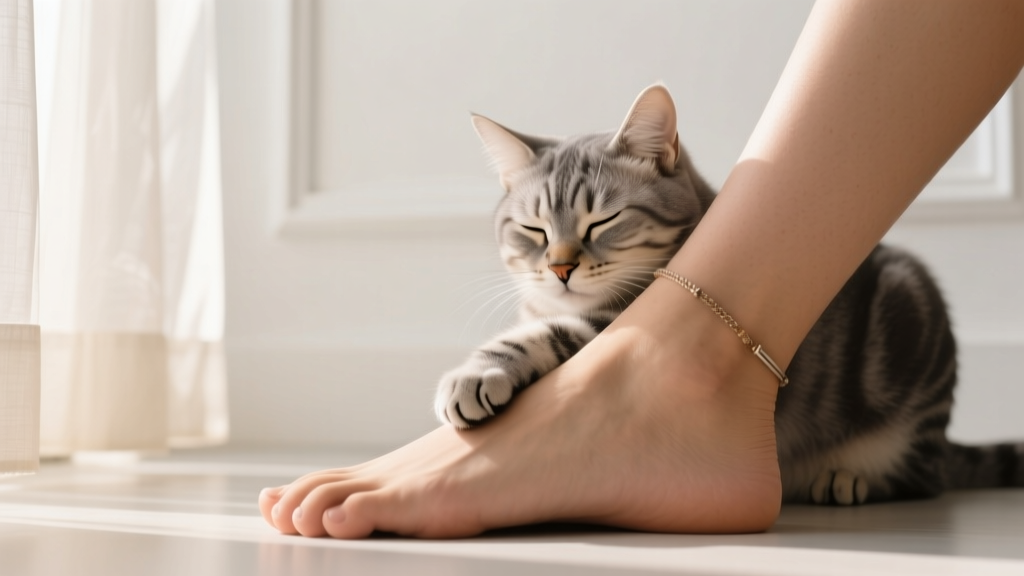
No — it’s not dominance. When cats climb onto your shoulders, lap, or head, they’re seeking warmth, scent security (you carry their familiar pheromones), and an elevated vantage point *within their trusted social unit*. In multi-cat homes, this behavior often signals bonding — your body becomes a ‘safe tower.’ If accompanied by purring and kneading, it’s affectionate. If tense or accompanied by hissing, it may indicate anxiety-driven seeking of refuge.
My senior cat stopped climbing — should I be worried?
Yes — abrupt cessation of climbing is one of the earliest, most sensitive indicators of declining mobility or pain. A 2021 Journal of Feline Medicine & Surgery study found that 83% of cats diagnosed with osteoarthritis had reduced vertical activity *six months before* owners noticed limping. Don’t dismiss it as ‘just getting old.’ Schedule a vet visit with focus on orthopedic and neurological exam — and ask about therapeutic options like targeted joint supplements (e.g., glucosamine-chondroitin-MSM blends proven effective in feline trials) and environmental modifications (ramps, lower perches).
Is it okay to discourage climbing altogether?
No — and it’s biologically counterproductive. Suppressing natural climbing behaviors increases cortisol levels, correlates with higher rates of urinary tract disease (FIC), and contributes to obesity. Instead of discouraging, redirect: provide species-appropriate alternatives (wall-mounted shelves, floor-to-ceiling towers with resting platforms every 12–18 inches), use double-sided tape on off-limits surfaces (not punishment — aversion), and enrich with vertical play (feather wands moved upward, treat-dispensing toys placed at height).
Do all cats climb — or are some breeds truly ‘non-climbers’?
All healthy cats possess the anatomical capacity and neural wiring to climb — but individual expression varies widely due to early socialization, past trauma, or physical limitations. Breeds like Maine Coons or Abyssinians often display exuberant verticality, while heavier-set breeds (e.g., British Shorthair) may prefer lower, sturdier perches. However, labeling any cat as ‘non-climbing’ risks overlooking unmet needs. Even a cat who avoids shelves may seek height via laundry baskets, cardboard boxes on stools, or draped blankets — all functional substitutes.
How high can cats safely climb indoors?
Safety depends less on absolute height and more on structural integrity and fall mitigation. Cats routinely scale 6–8 ft cat trees safely — but only if platforms are wide (>12” depth), surfaces non-slip, and landings cushioned (carpet, mats). The real danger isn’t height itself, but sudden collapse, wobbling bases, or unsecured furniture. Anchor all tall furniture to walls. Avoid ‘top-heavy’ designs. For cats under 1 year or over 12 years, limit max perch height to 4 ft unless supervised — their neuromuscular recovery time slows significantly.
Common Myths About Cat Climbing
Myth #1: “Cats climb because they’re bored.”
Reality: While enrichment matters, climbing is driven by hardwired neurobiological imperatives — not mere pastime. Boredom may increase frequency, but the behavior itself persists even in highly stimulated cats. Depriving cats of vertical space triggers measurable physiological stress responses (elevated salivary cortisol), per a 2020 UC Davis study.
Myth #2: “If my cat climbs curtains, they just need better scratching posts.”
Reality: Curtain-climbing is rarely about claw maintenance — it’s about vertical pursuit (chasing light patterns or insects), insecure footing (curtains sway, triggering chase reflex), or insufficient alternative height options. Adding a sturdy, tall post *near* the curtain window — plus blocking access temporarily with tension rods — addresses root cause better than replacing posts alone.
Related Topics (Internal Link Suggestions)
- Feline Vertical Enrichment Guide — suggested anchor text: "how to build a cat-friendly vertical environment"
- Signs of Arthritis in Cats — suggested anchor text: "subtle signs your cat has joint pain"
- Best Cat Trees for Senior Cats — suggested anchor text: "low-impact climbing furniture for older cats"
- Why Cats Scratch Furniture — suggested anchor text: "the real reasons cats scratch and how to redirect"
- Indoor Cat Exercise Ideas — suggested anchor text: "daily play routines that satisfy hunting instincts"
Ready to Turn Climb-Driven Chaos Into Confident Connection
Understanding what behaviors do cats do for climbing doesn’t just explain why your sofa has claw marks — it reveals how your cat experiences safety, autonomy, and joy. Every knead, tail sweep, and poised perch is data: a real-time report on their physical comfort, emotional state, and environmental fit. Start small this week: observe your cat’s next climb for 60 seconds. Note which behaviors appear, where they pause, and how they descend. Then, choose *one* adjustment from the table above — whether it’s adding a 2-inch-wide shelf ledge, swapping a flimsy post for a 10-mm sisal-wrapped model, or anchoring that wobbly bookcase. These aren’t fixes — they’re conversations in feline body language. And the best part? When you meet their climbing needs, you don’t just get fewer scratches — you get a calmer, more confident, deeply bonded companion. Your next step: download our free Vertical Enrichment Checklist (with 12 vet-approved perch specs and placement guidelines) — no email required.