Cat Paw Holding Your Wrist: Gentle Control Signal
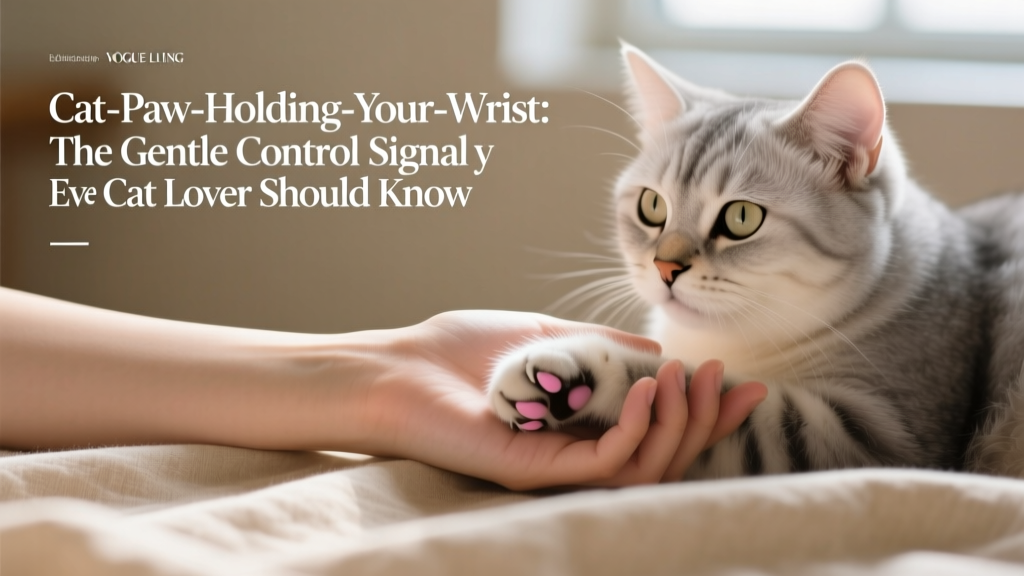
You’re on the couch, finally settled. Your cat hops up like they own the place (because… they do), circles twice, and flops beside you. You reach down for a few strokes. Purrs happen. Eyelids droop. And then—soft as a whisper—your cat places a paw on your wrist. Not a swat. Not a grab. Just… a calm little “hold.”
If you’ve ever frozen mid-pet, wondering whether you’re being lovingly claimed or politely managed, you’re not alone. Wrist-holding is one of those sweet, slightly mysterious cat gestures that feels intimate and oddly intentional. And in many cases, it is.
Why Cats Hold Your Wrist: A Scientific & Evolutionary Backstory
Cats are both predators and prey. That dual identity shaped a communication style that’s subtle, tactile, and designed to prevent conflict. Wild and feral cats rely heavily on body language—small signals that reduce the need for noisy, risky confrontations.
Touch is a big part of that. In cat social groups (usually related females and their kittens), gentle physical contact helps regulate closeness, cooperation, and comfort. Think of it as “social glue.” A paw resting on you can be an extension of that contact-based communication: a way to maintain connection, direct your behavior, or set boundaries without escalating.
There’s also an element of learning history. Your cat has likely discovered that placing a paw on your wrist changes what you do. Maybe you pause, pet differently, stop scratching the “too much” spot, or keep your hand conveniently nearby for more strokes. Cats are excellent at repeating behaviors that reliably produce results—especially when the results involve warmth, attention, or control over their personal bubble.
What’s Actually Happening? Contexts Where Wrist-Holding Shows Up
That gentle paw can mean slightly different things depending on what else is going on—ears, tail, whiskers, muscles, and timing. Here are the most common “translations.”
1) “Stay right there.” (Affection + proximity control)
This is the classic: your cat is enjoying contact and wants your hand to remain within easy reach. They don’t want more petting right now; they want you nearby. Many cats prefer being together without constant stroking—like a friend who wants to sit close but doesn’t want a hug marathon.
You’ll recognize it by: soft eyes, loose body, slow blinks, gentle purring, paw placed lightly with no claw.
2) “That spot is fine. Don’t move.” (Petting guidance)
Some cats “steer” your hand. The paw lands on your wrist when you drift away from the best scratch zone—cheek, chin, base of the ears. It can also happen when you’re about to switch to a less popular area (hello, belly).
You’ll recognize it by: a slight shift of the cat’s head toward your hand, cheek rubs, whiskers forward, maybe a tiny nudge.
3) “Pause.” (Boundary setting without aggression)
Cats often start with polite signals before they escalate. Wrist-holding can be a “yellow light” that says, “I like you, but I’m close to my limit.” It’s a gentler alternative to swatting.
You’ll recognize it by: purring that abruptly stops, skin twitching, tail flicks, ears rotating sideways, pupils getting larger, body becoming less floppy and more tense.
4) “I’m overstimulated.” (The pre-bite moment)
Overstimulation isn’t “bad behavior”—it’s a nervous system issue. Petting can feel good until suddenly it doesn’t, and the cat needs it to stop immediately. A paw pinning your wrist can be a last-ditch attempt to control the hand before a nip happens.
You’ll recognize it by: quick tail thumps, rippling back skin, tense shoulders, ears partially back, sudden head turn toward your hand.
5) “You’re mine.” (Social bonding + scent marking setup)
Sometimes the wrist hold is part of a bigger bonding routine: paw on wrist, then cheek rub, then rolling against your forearm. Cats have scent glands in the cheeks and around the face; keeping you close helps them mark you as safe, familiar “family.”
You’ll recognize it by: face rubbing, kneading nearby, relaxed posture, maybe drooling (yes, happy drool is a thing).
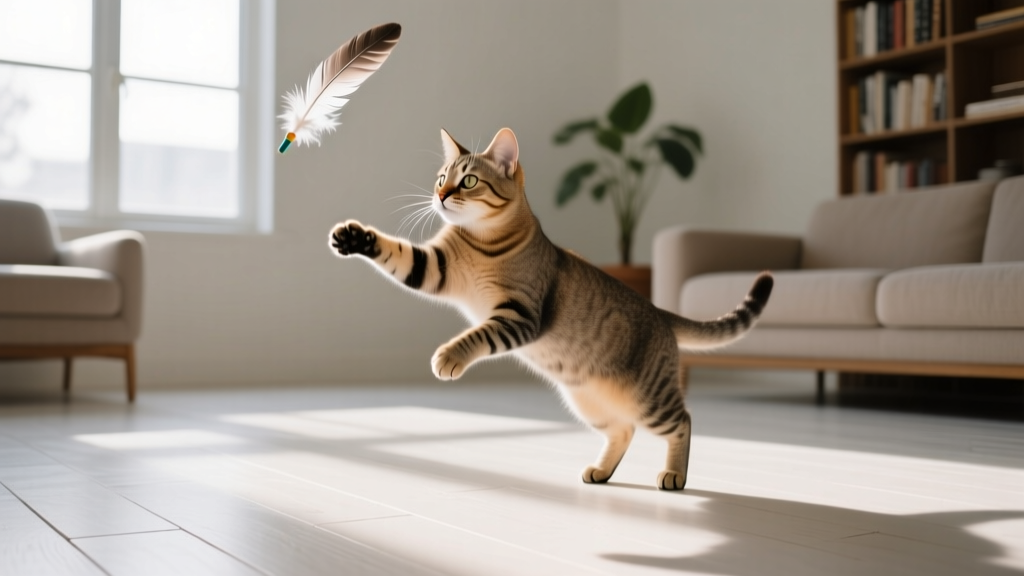
6) “Play with me… but gently.” (Hunting practice vibes)
For some cats—especially young ones—holding your wrist is a softened version of prey capture. Not because they want to hurt you, but because their brain says, “Movement! Must catch!” If you wiggle your fingers, you might see the paw clamp a little more.
You’ll recognize it by: bright eyes, bouncy energy, quick movements, a playful tail, and possibly a grab that turns into bunny-kicks if you let it.
What Wrist-Holding Says About Your Cat’s Mood
Think of the paw as a punctuation mark. Here’s a quick mood guide based on the “rest of the sentence” (their body language):
- Calm and cuddly: loose body, slow blinks, steady purr, paw resting lightly. Your cat feels safe and wants connection.
- Content but in charge: paw hold + stillness, as if they’re anchoring you. Your cat is enjoying the moment and managing the pace.
- Slightly conflicted: purring plus tail flicks or tense shoulders. They like attention, but their tolerance is thinning.
- Overstimulated or irritable: stiff body, dilated pupils, ears back, abrupt movements. Your cat needs a break.
- Playful hunter mode: paw grip tightens when you move, cat gets wiggly, may mouth your hand. They want play—but ideally not with your skin.
The big theme: wrist-holding is often about gentle control. Not dominance in a “trying to rule the house” way—more like a cat’s version of adjusting the volume of interaction.
Related Behaviors You Might Notice
If your cat holds your wrist, you may also see these “cousin behaviors”:
- Kneading: a comfort behavior rooted in kittenhood, often paired with affection and relaxation.
- Soft paw taps (“pat-pat”): a polite request for attention or a gentle “stop that.”
- Chin or cheek rubbing: scent marking and social bonding—your cat is labeling you as familiar.
- Love bites: light nips that can be affectionate or overstimulation-related, depending on body language.
- Grabbing your hand then licking: a mixed grooming-play combo that often means they’re very comfortable with you.
- Blocking your hand with a paw: similar to wrist-holding, often a clear boundary cue.
When Wrist-Holding Is Normal vs. When to Worry
Most of the time, this behavior is perfectly normal and even a compliment. It becomes worth a closer look if you notice changes in intensity, frequency, or your cat’s overall comfort.
Normal, healthy wrist-holding
- Light paw contact, relaxed claws
- Your cat’s body stays loose and comfortable
- No sudden aggression—no hard bites or repeated scratching
- It happens in predictable situations (petting time, cuddling, grooming)
Potential concerns
- Sudden new irritability: a cat who didn’t mind petting now clamps your wrist and reacts aggressively. This can signal pain (arthritis, dental issues, skin sensitivity).
- Clawing or gripping tightly: especially if paired with growling, hissing, or intense pupils.
- Compulsive or anxious contact seeking: constantly grabbing and unable to settle may indicate stress, under-stimulation, or changes in the home.
- Guarding behavior: holding your wrist and blocking others while acting tense could reflect insecurity or resource guarding (yes, some cats treat humans as resources).
If you suspect pain or your cat’s behavior changes quickly, a vet check is a smart first step—behavior often shifts when cats don’t feel well.
How to Respond (and How to Encourage the Sweet Version)
Your goal is to show your cat you “speak paw,” while keeping everyone safe and comfortable.
If it seems affectionate
- Pause your hand for a moment. Let them enjoy the closeness without extra stimulation.
- Offer slow blinks. It’s a friendly signal many cats return.
- Pet in short bursts. Two to five strokes, then stop and see if they request more.
- Reward calm contact. Soft praise or a small treat can reinforce gentle interaction (especially for cats learning to keep claws in).
If it’s a boundary or overstimulation signal
- Stop petting immediately. Don’t test the limit. Respect earns trust.
- Slowly withdraw your hand. Avoid quick jerks that can trigger chase/play instincts.
- Give space. Let your cat reset. Overstimulated cats often need a minute of no-touch time.
If it turns into play-grabbing
- Don’t wrestle with your hand. That teaches “human skin is a toy.”
- Swap in a toy. Keep a wand toy or kicker nearby; redirect the grabbing to something appropriate.
- Build a play routine. Two short play sessions daily can dramatically reduce hand-focused hunting.
A helpful mindset: wrist-holding is feedback. Your cat is telling you how they’d like the interaction to go—speed, pressure, duration, and sometimes “no thanks.”
Fun Facts & Research Notes
- Cats use “distance-increasing” signals before aggression. Subtle cues—turning the head away, tail flicking, skin twitching—often come before swats or bites. Wrist-holding can be part of that “polite warning” toolkit.
- Touch can be social, not just functional. In friendly cat relationships, mutual grooming and body contact help maintain bonds. Your wrist may be serving as a cozy “anchor point.”
- Cats learn what works fast. If wrist-holding consistently makes you stop doing something annoying (from their perspective), it can become their go-to strategy—smart and civilized, honestly.
- Purring isn’t always pure bliss. Cats sometimes purr when they’re conflicted or trying to soothe themselves. Pair purring with body cues before assuming “they love this.”
FAQ: Cat Paw Holding Your Wrist
Why does my cat hold my wrist when I stop petting?
Often it’s a “keep your hand nearby” signal, not necessarily “continue petting.” Some cats want contact without more stimulation. Pause your hand and see if they nudge for more or simply relax.
Is wrist-holding a sign of dominance?
Usually no. It’s more about communication and controlling the interaction in a low-key way. Cats prefer subtle social cues over confrontation, and a gentle paw is a perfect example.
My cat holds my wrist and then bites—why?
This commonly happens with overstimulation or play instincts. Look for tail flicks, tense posture, dilated pupils, or sudden intensity. Try shorter petting sessions and redirect mouthy behavior to toys.
Do cats do this more with their favorite person?
Frequently, yes. Cats tend to use intimate touch behaviors with people they trust. That said, some cats are generally “hands-on” with everyone, while others reserve it for one chosen human.
Should I pull my hand away when my cat grabs my wrist?
Pulling away quickly can trigger a chase response or escalate the grab. Instead, pause, relax your hand, and slowly move away or redirect with a toy—especially if you suspect play energy.
Can this behavior mean my cat is anxious?
It can, if it’s intense, constant, or paired with other stress signs (hiding, over-grooming, startling easily, changes in appetite). In that case, look for recent changes in the home and consider a vet or behavior consult.
One Tiny Paw, Lots of Meaning
A cat holding your wrist is often a small, tender moment of communication: “Stay,” “Enough,” “Right there,” or “You’re safe with me.” The magic is in noticing the details—tail, ears, tension, timing—and responding in a way that makes your cat feel understood.
Has your cat ever placed a paw on your wrist at the exact moment you tried to move? Share your funniest, sweetest, or most puzzling wrist-hold stories with the Cat Lovers Base community at catloversbase.com.