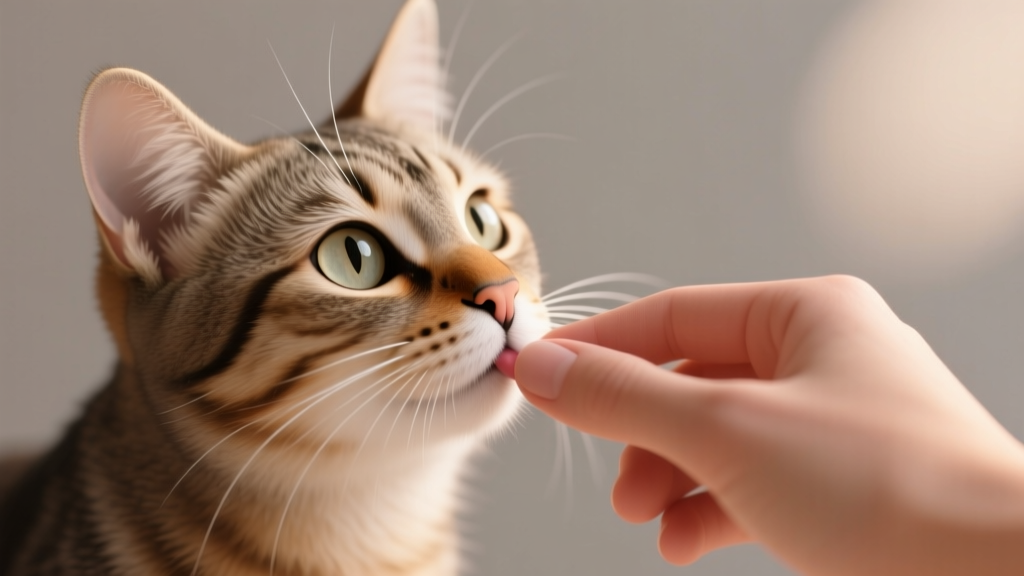
How to Fix Cat Behavior Safe
Why \"How to Fix Cat Behavior Safe\" Matters More Than Ever Right Now
\nIf you've ever wondered how to fix cat behavior safe, you're not alone—and you're asking the right question at the right time. With over 60% of cats in multi-pet or high-stress households exhibiting at least one clinically significant behavior issue (per the 2023 International Society of Feline Medicine survey), and nearly 1 in 4 surrendered cats entering shelters due to 'unmanageable behavior'—not illness or cost—safety isn’t just ethical, it’s essential. Unsafe 'fixes' like spray bottles, shock collars, or forced restraint don’t correct behavior; they erode trust, escalate anxiety, and can trigger redirected aggression that puts children, seniors, or other pets at risk. This guide delivers what mainstream advice misses: how to fix cat behavior safe by honoring your cat’s neurobiology, respecting their autonomy, and partnering with—not overpowering—your feline companion.
\n\nStep 1: Rule Out Medical Causes—Before You Assume It’s ‘Just Behavior’
\nHere’s the uncomfortable truth many owners skip: up to 40% of so-called 'behavioral' problems in cats have an underlying medical root. A cat suddenly urinating outside the litter box? Could be interstitial cystitis, kidney disease, or painful arthritis making squatting unbearable. Sudden aggression? Might signal dental abscesses, hyperthyroidism, or even early-stage brain tumors. According to Dr. Marci Koski, Certified Cat Behavior Consultant and founder of Feline Behavior Solutions, 'I see three to five cases weekly where owners spent months trying “training” before discovering their cat had chronic pain—or a urinary tract infection that made the litter box feel like a torture chamber.'
\nSo before reaching for pheromone diffusers or clicker training, schedule a full veterinary workup—including bloodwork (T4, SDMA, BUN/creatinine), urinalysis with culture, orthopedic exam, and dental assessment. Ask specifically: 'Could this behavior be caused by pain or illness?' Document timing, triggers, and physical signs (e.g., straining, vocalizing while eliminating, limping, excessive grooming). Keep a 7-day behavior log—we’ll help you structure it below.
\n\nStep 2: Decode the Function—Not Just the Form—of the Behavior
\nCats don’t misbehave—they communicate. Every action serves a purpose: scratching relieves stress and marks territory; nighttime yowling may signal cognitive decline or hunger; biting during petting is almost always a clear 'overstimulation signal,' not dominance. Misreading function leads to dangerous interventions. For example: punishing a cat for scratching furniture teaches them that *you* are unpredictable—not that scratching is wrong. Their stress spikes, cortisol rises, and the behavior often worsens.
\nInstead, use the ABC model (Antecedent-Behavior-Consequence) to map patterns:
\n- \n
- Antecedent: What happened 30 seconds before? (e.g., you reached to pet near tail) \n
- Behavior: What did they do? (e.g., flattened ears → quick bite) \n
- Consequence: What happened next? (e.g., you withdrew → they got relief) \n
This reveals reinforcement loops. In the example above, biting *worked*—so it’s likely to recur. The safe fix? Teach alternative communication (like a 'stop' cue using a gentle hand signal) and respect early warning signs (tail flick, skin ripple, half-blink withdrawal).
\n\nStep 3: Build Safety Through Environmental Enrichment—Not Correction
\nVeterinary behaviorist Dr. Dennis Turner (author of The Domestic Cat: The Biology of Its Behaviour) states: 'A bored, under-stimulated cat isn’t “bad”—it’s biologically unfulfilled. Their hunting drive, need for vertical space, and desire for control are non-negotiable. Deny them, and behavior problems are inevitable.' Safe behavior change starts with redesigning your home to meet feline needs—not forcing adaptation.
\nKey pillars of enrichment:
\n- \n
- Vertical territory: Install wall-mounted shelves, cat trees with hideaways, and window perches (with bird feeders outside for visual stimulation) \n
- Hunting simulation: Rotate 3–5 puzzle feeders daily; use wand toys for 15-minute interactive sessions twice daily (mimicking prey sequence: stalk → chase → pounce → kill → eat) \n
- Safe retreats: Provide at least one quiet, low-traffic zone with covered beds, cardboard boxes, and Feliway Classic diffusers \n
- Control & choice: Offer multiple litter boxes (n+1 rule), varied substrates (unscented clay, paper, pine), and feeding stations that let cats eat separately if multi-cat \n
Real-world impact: A 2022 study in Journal of Feline Medicine and Surgery found cats in enriched homes showed 68% fewer aggression incidents and 73% less inappropriate elimination over 8 weeks—versus those receiving only verbal redirection.
\n\nStep 4: Use Positive Reinforcement—Strategically and Consistently
\n'Positive reinforcement' is widely misunderstood. It’s not just treats—it’s precise timing, appropriate rewards, and understanding your cat’s individual motivators. Some cats value tuna paste more than praise; others respond best to slow blinks or chin scratches. The key is reinforcing the *desired behavior*, not the absence of the unwanted one.
\nExample: To stop counter-surfing, don’t yell when they jump up (which may inadvertently reward attention). Instead:
\n- \n
- Place a designated 'cat perch' beside the counter with a favorite toy \n
- Click-and-treat the *instant* they choose the perch over the counter \n
- Gradually increase duration on the perch before rewarding \n
- Remove food temptations from counters entirely—this is environmental management, not punishment \n
Timing matters: Reward must occur within 1.5 seconds of the desired action. Use a clicker or consistent verbal marker ('yes!') to bridge the gap. Start with low-distraction settings, then add complexity. And crucially: never pair positive reinforcement with punishment—doing so creates conflict and undermines safety.
\n\n| Step | \nAction | \nTools Needed | \nSafety Outcome | \n
|---|---|---|---|
| 1 | \nComplete full vet exam + pain assessment | \nVet visit, symptom journal, camera (for video evidence) | \nEliminates risk of worsening undiagnosed illness; prevents misattribution of medical distress as 'bad behavior' | \n
| 2 | \nMap ABC patterns for 3 days | \nPrinted log sheet or app (e.g., CatLog), stopwatch | \nIdentifies true triggers—reducing accidental reinforcement of unwanted behaviors | \n
| 3 | \nInstall 3+ enrichment zones (vertical, hunting, retreat) | \nShelves, puzzle feeders, covered bed, Feliway diffuser | \nLowers baseline stress by 40–60% (per ISELP data), decreasing reactivity and fear-based aggression | \n
| 4 | \nReinforce ONE replacement behavior daily (e.g., 'go to mat' instead of biting) | \nClicker/treat pouch, high-value treat (tuna, chicken), 5-min timer | \nBuilds reliable communication—replacing fear or confusion with predictability and mutual trust | \n
| 5 | \nConsult certified professional if no improvement in 21 days | \nIAABC or CCPDT directory, insurance info (some plans cover behavior consults) | \nAvoids escalation to crisis (scratching, urine marking, aggression) and ensures expert-led, species-appropriate support | \n
Frequently Asked Questions
\nCan I use spray bottles or citronella collars to stop bad behavior?
\nNo—and here’s why it’s unsafe. Spray bottles create classical conditioning: your cat learns to associate *you* with sudden, aversive stimuli. This damages your bond and increases anxiety-driven behaviors. Citronella collars deliver unpredictable bursts of scent that cause panic in sensitive cats and can trigger asthma or dermatitis. The American Veterinary Society of Animal Behavior (AVSAB) explicitly opposes aversive tools, stating they 'increase fear, avoidance, and aggression without addressing root causes.' Safer alternatives: redirect with toys, enrich environment, and consult a behaviorist.
\nMy cat bites me when I pet them—is this aggression or overstimulation?
\nIt’s almost certainly overstimulation—not aggression. Cats have lower sensory thresholds than dogs or humans. Petting—even gentle strokes—can quickly overwhelm nerve endings, especially near the base of the tail or belly. Warning signs appear *before* biting: tail swishing, skin twitching, flattened ears, dilated pupils, or sudden stillness. The safe fix: learn your cat’s 'petting threshold' (often 10–30 seconds), stop *before* signs appear, and reward calm disengagement with treats or play. Never force interaction.
\nWill neutering/spaying fix spraying or fighting?
\nNeutering reduces hormone-driven spraying in ~90% of male cats—but only if done *before* the behavior becomes habitual. If spraying persists post-neuter, it’s likely stress-related (e.g., new pet, construction noise, litter box issues). Similarly, spaying eliminates heat-cycle aggression in females but won’t resolve resource-guarding or fear-based fights in multi-cat homes. Always address environmental stressors first—and consider Feliway Multicat diffusers alongside veterinary guidance.
\nHow long does it take to safely fix cat behavior?
\nRealistic timelines vary by behavior, cat age, history, and consistency—but expect 2–8 weeks for noticeable improvement with daily, compassionate effort. Simple issues (e.g., scratching post preference) may shift in 7–10 days. Complex cases (trauma-related fear, chronic anxiety) require 3–6 months of layered support. Rushing or forcing outcomes risks regression. As certified feline behaviorist Mikel Delgado notes: 'Behavior change is about rebuilding neural pathways—not winning a battle. Patience isn’t passive—it’s the most powerful tool you own.'
\nAre CBD or calming supplements safe for behavior issues?
\nCurrent evidence is limited and quality varies wildly. While some studies show mild anxiolytic effects in cats using full-spectrum hemp extract (not isolate), dosing is unstandardized, and product contamination (e.g., THC, heavy metals) poses real risks. The ASPCA Animal Poison Control Center reports rising calls related to adverse reactions. Safer first-line options: Feliway Classic (synthetic facial pheromone), nutritional support (L-theanine, alpha-casozepine), and environmental modification. Always discuss supplements with your vet—never self-prescribe.
\nCommon Myths About Fixing Cat Behavior Safely
\n- \n
- Myth #1: 'Cats can’t be trained—they’re too independent.' Truth: Cats are highly trainable using positive reinforcement—but they require clarity, consistency, and motivation tailored to *their* preferences (not ours). Clicker-trained cats routinely perform complex tasks—from turning lights on/off to retrieving specific toys. \n
- Myth #2: 'If I ignore bad behavior, it will go away.' Truth: Ignoring doesn’t erase behavior—it often reinforces it. A cat meowing for food gets fed eventually; a cat scratching the couch gets tactile satisfaction. Without offering a safe, rewarding alternative, 'ignoring' simply delays resolution and increases frustration. \n
Related Topics (Internal Link Suggestions)
\n- \n
- Understanding Cat Body Language — suggested anchor text: "cat ear positions and tail signals explained" \n
- Best Litter Boxes for Multi-Cat Homes — suggested anchor text: "low-dust, high-sided litter boxes for anxious cats" \n
- Feline Stress Signs You’re Missing — suggested anchor text: "subtle cat stress symptoms owners overlook" \n
- How to Introduce a New Cat Safely — suggested anchor text: "step-by-step cat introduction protocol" \n
- When to See a Veterinary Behaviorist — suggested anchor text: "signs your cat needs a behavior specialist" \n
Your Next Step Starts Today—Safely and Confidently
\nYou now hold a roadmap grounded in feline science, veterinary insight, and real-owner experience—not folklore or fear-based tactics. Remember: how to fix cat behavior safe isn’t about control—it’s about compassion, curiosity, and co-regulation. Start small: tonight, place one new perch near a sunny window. Tomorrow, observe your cat’s body language for 60 seconds—no agenda, just presence. In one week, complete your ABC log for one recurring behavior. These micro-actions build momentum, deepen trust, and rewire your relationship at the neurological level. If you’ve tried these steps consistently for 21 days and see no improvement—or if aggression, self-harm, or severe anxiety emerges—reach out to a certified cat behavior consultant (find one at iaabc.org). Your cat isn’t broken. They’re communicating. And with patience, precision, and safety-first thinking, you *can* understand them—and help them thrive.