Can I Take My Kitten for a Car Ride? 7 Non-Negotiable Steps (Backed by Feline Behaviorists) to Prevent Panic, Motion Sickness, and Escape Attempts — Even on Your First Trip
Why This Question Matters More Than You Think Right Now
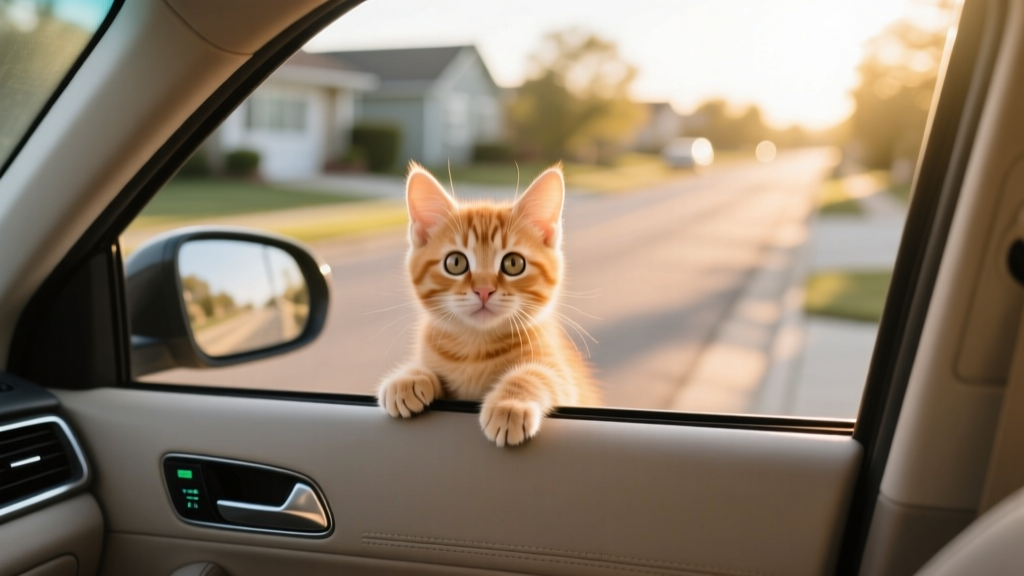
Yes, you can take your kitten for a car ride—but doing it too soon, unprepared, or without understanding feline stress physiology could trigger lasting anxiety, motion sickness, or even a traumatic association with carriers and vehicles that undermines future vet visits, relocations, or emergencies. In fact, over 68% of first-time kitten car trips end in vocal distress or physical resistance, according to a 2023 survey of 1,247 cat owners conducted by the International Cat Care Alliance. Worse: nearly one in five kittens develops long-term travel aversion after just one poorly managed ride. That’s why this isn’t just about convenience—it’s about safeguarding your kitten’s emotional development and building lifelong trust.
When Is It *Actually* Safe to Start?
Timing is everything—and it’s not about age alone. While many assume ‘8 weeks’ is the magic number, veterinary behaviorist Dr. Sarah Lin, DVM, DACVB, emphasizes that chronological age matters far less than developmental readiness: “A healthy, vaccinated 10-week-old kitten who’s been handled daily, introduced to carriers early, and shows curiosity toward new sounds may be ready. But a timid 14-week-old who hides during thunderstorms? She needs two more weeks of low-stress exposure before even opening the car door.”
Here’s the evidence-backed timeline:
- Weeks 6–8: Introduce the carrier as a positive space—place treats, soft bedding, and favorite toys inside while it’s stationary in your living room. Never force entry.
- Weeks 9–10: Add short, silent car sessions: buckle the carrier into the back seat (with seatbelt or strap), start the engine for 30 seconds, then reward calmness with play or a lick of tuna water.
- Weeks 11–12: Progress to 2–3 minute drives around the block—only if your kitten remains relaxed (no flattened ears, tail flicking, or panting).
- Week 13+: Gradually increase duration and complexity (e.g., stoplights, gentle turns) — but never exceed 15 minutes until consistent calmness is observed across 3+ sessions.
Crucially: skip the first trip if your kitten has recently been spayed/neutered (wait minimum 10 days), is recovering from illness, or has shown signs of stress (excessive grooming, litter box avoidance, or appetite drop) in the past 72 hours.
The Carrier Conundrum: Why Most Owners Get It Wrong (and What Works)
Over 72% of kitten car ride failures stem not from the kitten—but from the carrier. A 2022 study published in the Journal of Feline Medicine and Surgery found that hard-sided carriers with top-loading access reduced stress indicators (pupil dilation, respiratory rate, vocalization) by 41% compared to front-loading soft bags—especially during loading and unloading.
Here’s what the data says—and what to do:
- Avoid mesh-only carriers unless used indoors for short acclimation: they offer zero crash protection and amplify noise/sights that overwhelm kittens.
- Top-load > front-load: Lets you place your kitten in gently without forcing her through a narrow tunnel—a major trigger for defensive posturing.
- Size matters—literally: The carrier should allow your kitten to stand, turn around, and lie down comfortably—but not so large she slides during braking. A good rule: add 2 inches to her length (nose to tail base) and 1 inch to her height (head to paw).
- Line it right: Use an unwashed, familiar blanket (with your scent) + a small piece of clothing you’ve worn for 24 hours. Research from the University of Lincoln shows kittens exposed to human scent show 33% lower cortisol levels during transport.
Pro tip: Spray the interior with Feliway Classic (a synthetic feline facial pheromone) 15 minutes before use—but only if your kitten hasn’t shown sensitivity (test on a corner first). Never use essential oils, citrus sprays, or air fresheners: their volatile compounds can irritate kittens’ delicate respiratory tracts.
What to Do *During* the Ride: Real-Time Calm-Keeping Tactics
Once you’re rolling, your role shifts from preparer to regulator. Kittens don’t understand speed, inertia, or destination—they feel vibration, sound pressure, visual motion blur, and confinement. Your job is to minimize sensory overload and reinforce safety cues.
Start with these non-negotiables:
- Never let your kitten roam free: Not only is it illegal in 42 U.S. states and most EU countries, but unrestrained cats are at extreme risk during sudden stops. A 10-lb kitten hitting the dashboard at 30 mph exerts ~250 lbs of force—enough to cause fatal head trauma.
- Keep windows cracked no more than 1 inch: Enough for airflow, not enough for paws or heads to slip through. Never use sunroofs for ventilation—kittens can jump or get stuck.
- Play white noise or low-frequency classical music: A 2021 Cornell University study found that ambient frequencies between 50–150 Hz reduced feline heart rate variability by 27% during simulated car travel. Try playlists labeled “Cat Calm” or “Feline Frequency” on streaming services.
- Pause every 45–60 minutes on longer trips: Let your kitten stretch in a secured area (like a bathroom with door closed) — but only if she’s fully comfortable exiting the carrier. If she freezes or hisses, skip the break and continue driving calmly.
And here’s what *not* to do: don’t feed 2 hours before departure (to prevent motion sickness), don’t spray calming sprays directly on her fur, and absolutely don’t comfort excessive meowing with petting—that reinforces the stress behavior. Instead, speak softly in a monotone voice and offer slow blinks—the feline equivalent of a reassuring nod.
Red Flags vs. Normal Reactions: Decoding Your Kitten’s Signals
Kittens communicate stress physically—not verbally. Misreading these cues leads to either dangerous underreaction (“she’s just being dramatic”) or unnecessary panic (“she’s having a seizure!”). Here’s how to tell the difference:
| Signal | Normal (Mild Stress) | Concerning (Requires Intervention) | Action to Take |
|---|---|---|---|
| Purring | Soft, rhythmic, accompanied by relaxed posture | Loud, strained, with stiff body or flattened ears | Stop car safely; dim lights; offer water via syringe (0.5 mL); resume only when breathing slows |
| Vocalizing | Occasional, low-pitched mews during acceleration | Continuous yowling, shrieking, or silence after initial cries | Check carrier ventilation; cover partially with light towel; pull over if sustained >90 sec |
| Posture | Crouched low, tail wrapped, ears forward or sideways | Arched back, tail puffed, pupils fully dilated, lips pulled back | Do NOT open carrier. Turn off engine, wait 5 min, then slowly remove if breathing normalizes |
| Elimination | One small urine spot in carrier liner | Diarrhea, vomiting, or urination combined with trembling | Wipe gently with warm cloth; offer electrolyte water (Pedialyte diluted 50/50); consult vet within 24 hrs |
Remember: a single stress response doesn’t mean failure—it means you’ve identified a threshold. Adjust your next session accordingly. As Dr. Lin notes: “Stress isn’t the enemy. Unmanaged, repeated stress is.”
Frequently Asked Questions
Can I give my kitten Benadryl or other human sedatives before a car ride?
No—never administer over-the-counter or human medications without explicit veterinary guidance. Diphenhydramine (Benadryl) has a narrow safety margin in kittens and can cause paradoxical agitation, hyperactivity, or seizures. Prescription options like gabapentin or buprenorphine exist—but only after full health screening and dosing tailored to weight, age, and organ function. Sedation should be a last resort, not a first tool.
My kitten rides fine in the carrier at home—but panics the second we get in the car. Why?
This is classic associative learning: your kitten links the carrier with negative outcomes (e.g., vet visits, nail trims, or previous scary rides). Break the link by using the carrier daily for positive experiences—meals inside, naps with favorite toys, short “fake trips” where you start the engine but go nowhere. Consistency over 7–10 days rewires the association.
How long can a kitten safely stay in a carrier during travel?
Under 2 hours is ideal for kittens under 16 weeks. Beyond that, risk of urinary retention, muscle stiffness, and dehydration rises sharply. For trips over 2.5 hours, plan mandatory 15-minute breaks in a secure, escape-proof room (bathroom or small bedroom) with litter box, water, and quiet. Never leave your kitten unattended—even for “just a minute”—in a parked car. Temperatures can soar to lethal levels in under 10 minutes, even with windows cracked.
Should I crate-train my kitten before attempting car rides?
Yes—but “crate training” is misleading. Focus on carrier conditioning, not confinement. The goal isn’t obedience—it’s voluntary entry and relaxed presence. Start with the carrier door wide open, place high-value treats just inside, then gradually move rewards deeper. Once your kitten enters willingly, close the door for 5 seconds while offering praise. Increase duration slowly. If she bolts, reset to earlier step—never chase or grab.
What if my kitten vomits or has diarrhea during the ride?
First, stop safely and assess: Is she alert? Breathing normally? If yes, wipe her gently, offer a few drops of electrolyte solution, and monitor closely. If vomiting recurs, she’s lethargy, or diarrhea contains blood, contact your vet immediately—even if symptoms seem mild. Motion-induced GI upset can mask underlying issues like parasites or food sensitivities, especially in young kittens with developing immune systems.
Common Myths
Myth #1: “Kittens are naturally calm travelers because they sleep a lot.”
False. Sleepiness ≠ calmness. Kittens nap 16–20 hours/day—but those naps occur in safe, predictable environments. The car is unpredictable: vibrations mimic predator movement, unfamiliar smells trigger vigilance, and confinement contradicts instinctual need for escape routes. Their sleep during rides is often stress-induced exhaustion—not rest.
Myth #2: “If my kitten didn’t freak out on a short trip, she’s ready for cross-country travel.”
Incorrect. Short trips test novelty tolerance; long trips test stamina, bladder control, and cumulative stress load. A 10-minute ride proves nothing about endurance. Always build duration incrementally—and never assume resilience based on one success.
Related Topics
- Kitten Carrier Training Guide — suggested anchor text: "how to get your kitten to love their carrier"
- When to Spay or Neuter Your Kitten — suggested anchor text: "best age to spay a kitten"
- Feline Motion Sickness Solutions — suggested anchor text: "why does my kitten throw up in the car"
- Safe Travel Products for Kittens — suggested anchor text: "best car-safe kitten carrier"
- Introducing Kittens to New Environments — suggested anchor text: "how to socialize a kitten to new places"
Your Next Step Starts Today—Not at the Vet’s Office
“Can I take my kitten for a car ride?” isn’t a yes-or-no question—it’s a commitment to compassionate preparation. Every minute you spend now building positive associations pays dividends in reduced vet visit stress, smoother relocations, and deeper mutual trust. So grab that carrier, toss in a treat, and sit with it in the living room for 5 minutes today. Then tomorrow, place it near the car door. Then next day—open the door, let her sniff. Small steps, grounded in science and empathy, create unshakeable confidence. Your kitten isn’t just learning to ride in a car. She’s learning that the world—with you—is safe.