Why Cats Sit on the Hallway Console Table
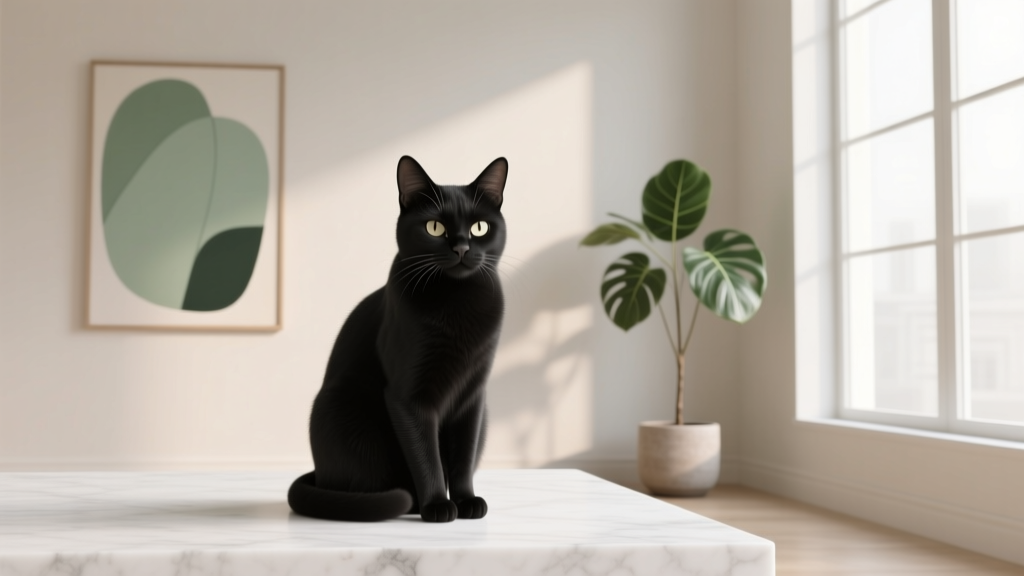
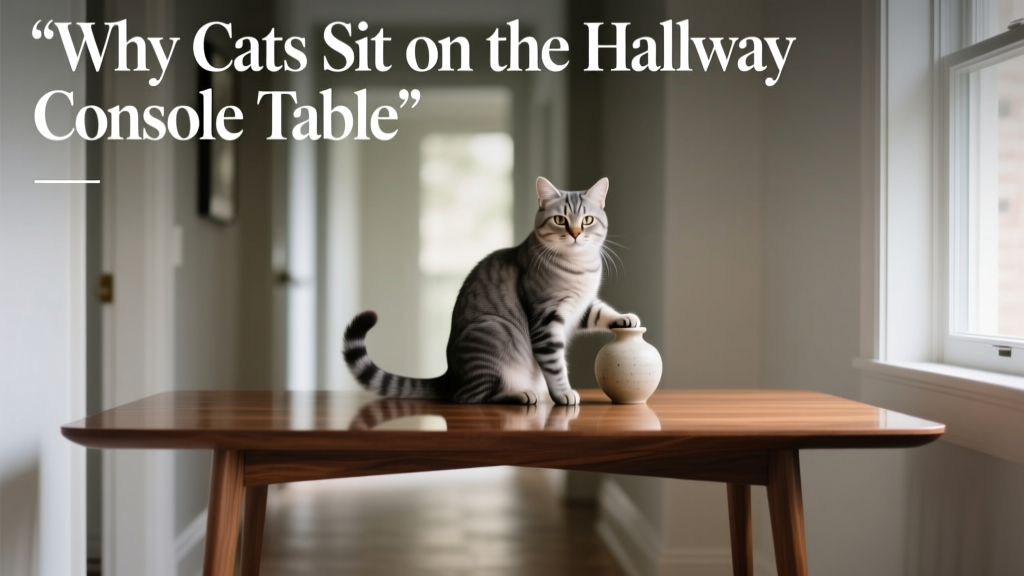
You walk in the front door with groceries, keys, and maybe a faint hope of making it to the kitchen without dropping something. And there—perched like a tiny, whiskered doorman—your cat is sitting on the hallway console table. Not on the comfy cat bed. Not on the couch. On the narrow table where you put mail, sunglasses, and the occasional “I’ll deal with this later” pile.
They blink slowly as if to say, “You’re late.” Or they stand up and rub their cheek on your bag. Or they simply watch, perfectly still, as your entire entrance routine plays out. If you’ve ever wondered why this particular spot becomes Cat Central, you’re not imagining things: hallway console tables are basically feline gold.
The scientific (and evolutionary) reasons cats love that spot
To understand the hallway console table, it helps to think like a small predator with strong territorial instincts. Domestic cats are descendants of wildcats who survived by carefully controlling access to resources and by staying aware of movement in and out of their “core area.” Even indoor cats still run that software.
Hallways are traffic funnels. In many homes, the hallway is a natural corridor between rooms. It’s where people pass through, where sounds echo, and where changes happen—doors open, shoes come off, deliveries arrive. Cats are drawn to places that provide information. From an elevated console table, your cat can monitor the whole “ecosystem” without having to chase it.
Height equals safety and advantage. Cats feel more secure when they can observe without being approached from all sides. Even a modest elevation—like a console table that’s only waist-high—can feel like a lookout point. In feline terms, height reduces surprise and increases control.
Scent communication is central. The entryway is saturated with scents: outdoors, other people, packages, your shoes, and the invisible “story” of wherever you’ve been. Cats are highly motivated to investigate and manage scent. Sitting on the console table gives them access to the scent buffet and a place to add their own scent via cheek rubbing (facial pheromones) or simply by resting their body there.
Territory management is a real job (in your cat’s mind). Cats don’t just live in space—they organize it. Many cats develop preferred “stations” for surveillance, greeting, and decompression. The hallway table often becomes a multi-purpose station: lookout + greeting zone + scent checkpoint.
Different contexts: what “console table sitting” can look like
The same behavior can mean different things depending on the moment. Here are some common scenarios cat owners recognize, with what’s likely going on behind the eyes.
1) The “welcome committee” perch
Your cat is on the console table right when you come home, tail up, eyes soft, maybe a chirp or two. This is often social affiliation: they’ve learned your arrival predicts attention, food, or simply the comforting return of their favorite human. The table puts them at face level, which makes greetings easier and less intimidating than approaching your feet.
2) The “security guard” shift
Your cat sits there when the house is quiet, especially at times when neighbors are active or deliveries occur. They may stare toward the door, ears swiveling like radar dishes. This is vigilance. Cats are experts at detecting subtle sound changes—footsteps in the hallway, a car door outside, the tiny clink of keys.
3) The “I want something” checkpoint
You pass the hallway to go to the kitchen, and your cat is there like a furry toll booth. Sometimes they hop down and lead you somewhere. This can be attention-seeking, but it’s also smart learning: your cat has figured out you’re most predictable in the hallway. If they need food, play, or a door opened, this is a high-success location to request it.
4) The “this smells suspicious” investigation
You return from visiting a friend with a dog, and suddenly your cat claims the console table and sniffs your jacket with deep seriousness. This is scent processing. Cats use smell to determine whether you’re “you,” whether there’s a potential threat, and whether the territory needs re-marking. Some cats will rub the table edge or your bag afterward—essentially stamping it with “approved.”
5) The “I need space, but not too much space” compromise
If your home is busy—kids, guests, other pets—your cat may use the console table as a social boundary. They can be near you without being in the center of chaos. It’s the feline equivalent of sitting on the arm of the couch rather than in the crowd.
What it can say about your cat’s mood and feelings
The posture and facial expressions matter more than the location alone. Here are some quick emotional translations:
- Relaxed and connected: Loose body, tail wrapped or gently draped, slow blinks, possibly a soft meow or head-bunt when you approach.
- Curious and engaged: Upright posture, ears forward, eyes bright, whiskers slightly forward, sniffing the air or objects.
- On alert (but not panicked): Still body, ears pivoting, tail tip twitching, staring toward the door. Often normal “monitoring.”
- Uncertain or stressed: Crouched posture, wide pupils, ears angled sideways or back, body tense. The table may be a refuge spot in a scary moment.
- Territorial or possessive: Blocking access, swatting when you move items, intense rubbing or scratching nearby. This can happen when routines change or a new pet/person is introduced.
Think of the console table as a stage. Your cat’s body language tells you what play is being performed today.
Related behaviors you might also notice
If your cat loves the hallway console table, you may see a whole constellation of “entryway behaviors”:
- Rubbing cheeks on table corners, keys, or your bag: Depositing friendly facial pheromones that help them feel secure.
- Rolling on the hallway runner: A mix of comfort, scent-marking, and attention-seeking.
- Zoomies right after you arrive: Excitement + relief + energy release. Some cats get a burst of play drive when their favorite human returns.
- Sniffing shoes intensely: Shoes carry concentrated outdoor scents; cats read them like newspapers.
- “Guarding” the door: Sitting by the door or scratching near it, especially in multi-cat homes or if outdoor cats are visible.
When this is normal…and when it might be a concern
Most of the time, a cat sitting on a hallway console table is completely normal—just a clever choice of real estate. But context matters.
Typically normal:
- Your cat is relaxed, friendly, and uses the spot predictably.
- They get down easily, eat and drink normally, and behave like themselves.
- The behavior increases around arrival times, guests, or interesting noises.
Worth a closer look (and possibly a vet or behavior consult) if:
- Sudden new clinginess or guarding at the entryway appears alongside hiding, appetite changes, or increased irritability.
- They seem unable or reluctant to jump down, hesitate before jumping up, or show stiffness—possible pain (arthritis is common, even in middle-aged cats).
- They start urinating/spraying near the entry or aggressively blocking family members. This can signal anxiety, territorial stress, or outdoor-cat pressure.
- Obsessive vigilance (hours of tense staring at the door) happens with other stress signs like overgrooming or disrupted sleep.
If you suspect pain, stress, or sudden behavior change, it’s always fair to start with a veterinary check. Cats are masters of hiding discomfort, and “odd location choices” can sometimes be their quiet way of coping.
How to respond (or encourage it) in a cat-friendly way
If you don’t mind your cat’s hallway perch, you can make it safer and even use it to strengthen your relationship.
- Make the perch stable and non-slip. Add a grippy mat or a small runner so your cat feels secure and doesn’t skid when turning around. Avoid wobbly décor.
- Offer an approved alternative at the same “value.” If you’d rather keep the table clear, place a cat tree, wall shelf, or sturdy stool nearby. The key is similar height and similar sightlines to the door.
- Turn arrivals into calm connection. If your cat greets you, reward with a gentle hello, a brief pet (if they enjoy it), or a treat tossed onto a mat. Predictable rituals reduce anxiety and build trust.
- Use it as a training station. Teach “mat” or “station” behavior on a small pad placed on the console (or nearby). Reward your cat for sitting there instead of weaving around your feet while you carry bags.
- Manage the scent drama. If your cat gets tense when you come home smelling like other animals, offer a “reset” routine: change clothes, wash hands, and let them sniff at their pace. Don’t force cuddles immediately.
- Keep fragile items minimal. Cats don’t knock things over out of spite; they knock things over because gravity is interesting and objects are in the way of important cat business. Reduce temptation.
If your cat is using the table because they crave height and safety, adding more vertical territory throughout the home (shelves, tall scratching posts, window perches) often reduces “counter-surfing” and improves confidence.
Fun facts and research-adjacent nuggets
- Cats are “edge” enthusiasts. Corners and edges concentrate scent marking opportunities. That’s why table corners get so much cheek rubbing—facial glands leave pheromones that signal familiarity and comfort.
- Vertical space can reduce conflict in multi-cat homes. Behavior research and shelter best-practices consistently emphasize vertical territory as a key resource for lowering stress and allowing cats to avoid each other peacefully.
- Your entryway is a scent hotspot. Even if you can’t smell it, your cat can detect the invisible history on packages, shoes, and coats. The console table isn’t just a seat; it’s an information desk.
- Cats prefer control over closeness. Many cats enjoy being near their people while maintaining an exit route. A hallway perch gives them both: proximity and a plan.
FAQ: Cats and the hallway console table
1) Is my cat trying to “guard” me when they sit there?
Sometimes it looks like guarding, but it’s usually monitoring and routine. If your cat remains relaxed and friendly, they’re likely just keeping tabs on household activity. True guarding behavior is more intense and comes with blocking, swatting, or increased tension—especially around specific people or pets.
2) Why does my cat sit there only when I’m about to leave?
They may have learned your departure cues (shoes, keys, jacket) and are responding to the pattern. Some cats seek contact before separation; others position themselves to watch the door. If your cat seems anxious, add a calming pre-departure ritual: brief play, a treat puzzle, then a low-key goodbye.
3) My cat knocks things off the console table. Are they being naughty?
They’re being a cat. Objects on a narrow surface interfere with movement, invite investigation, and make excellent “what happens if…” experiments. Clear the path and provide a more cat-appropriate perch nearby. If knocking increases to get your attention, reward calm behaviors instead of reacting to the crash.
4) Could this mean my cat is anxious?
It can, especially if the sitting is accompanied by dilated pupils, crouching, startle responses, hiding, or new house-soiling near the door. But many confident cats also choose the entryway because it’s interesting. Watch the whole body language picture.
5) How can I keep my cat off the console table without upsetting them?
Give them an alternative with the same benefits: height, stability, and a view of the hallway. Place a cat tree or shelf nearby and reward your cat for using it. Make the table less appealing by removing clutter and using a temporary deterrent like double-sided tape or a textured runner—while you build the habit of using the better perch.
6) My older cat started sitting there more often. Should I worry?
Not automatically, but consider comfort and mobility. Older cats often seek spots that are easy to access and provide security. If you notice stiffness, reluctance to jump, changes in grooming, or irritability when touched, schedule a vet check for possible arthritis or pain.
If your cat has claimed the hallway console table, you’re living with a tiny strategist: part greeter, part lookout, part scent analyst. With a few tweaks—safer surfaces, better vertical options, and calm arrival routines—you can support what your cat is trying to do: feel secure, informed, and connected to you.
Does your cat have a favorite “weird but perfect” perch in your home? Share your hallway-table stories (and any hilarious welcome rituals) with the Cat Lovers Base community at catloversbase.com.