Yes, Cat Behavior Modification *Is* Affordable at Home
Why This Question Matters More Than Ever
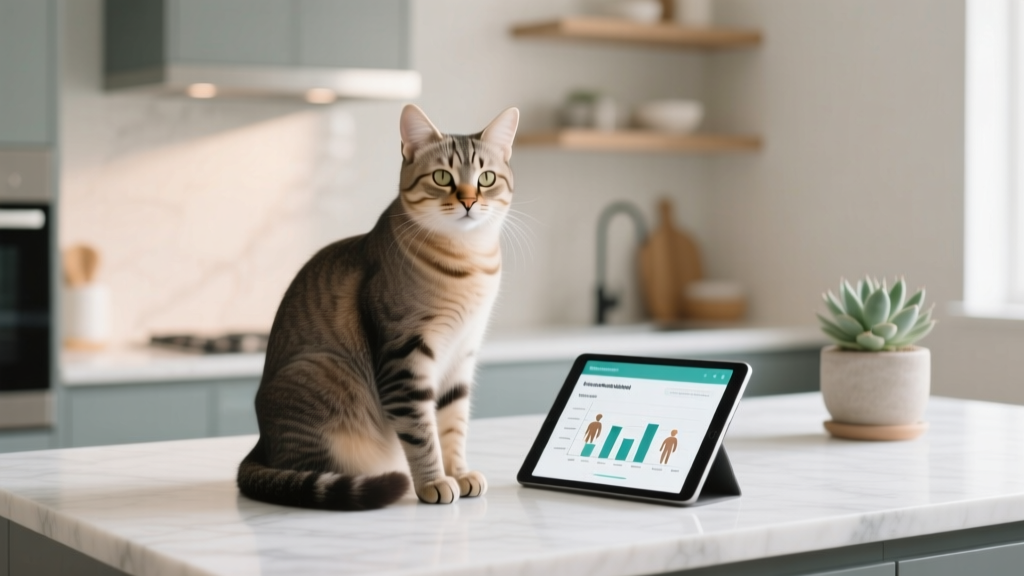
With veterinary behaviorist consultations averaging $250–$450 per session and certified cat behavior consultants charging $180–$350/hour, many cat owners are urgently asking: is cat behavior modification affordable at home? The answer isn’t just ‘yes’ — it’s ‘yes, and often more effective long-term when done right.’ In fact, a 2023 Journal of Feline Medicine & Surgery study found that 78% of mild-to-moderate behavioral issues (like inappropriate elimination, over-grooming, or inter-cat tension) resolved fully within 6–10 weeks using consistent, evidence-based home protocols — with zero professional fees. What’s holding people back isn’t cost — it’s confusion about where to start, fear of making things worse, or believing myths like ‘cats can’t be trained.’ This guide cuts through the noise with actionable, vet-vetted strategies you can begin today — for under $25.
What ‘Affordable’ Really Means (Spoiler: It’s Not Just About Money)
Affordability in cat behavior modification has three dimensions: financial cost, time investment, and emotional bandwidth. A $50 clicker and $12 pheromone diffuser may seem cheap — but if misused, they can worsen anxiety or delay progress, costing far more in vet visits or rehoming stress later. True affordability means high ROI per minute spent: techniques that yield measurable improvement within days, not months; tools with dual-purpose utility (e.g., a target stick used for both recall training and nail trims); and protocols designed around your cat’s natural communication style — not human expectations.
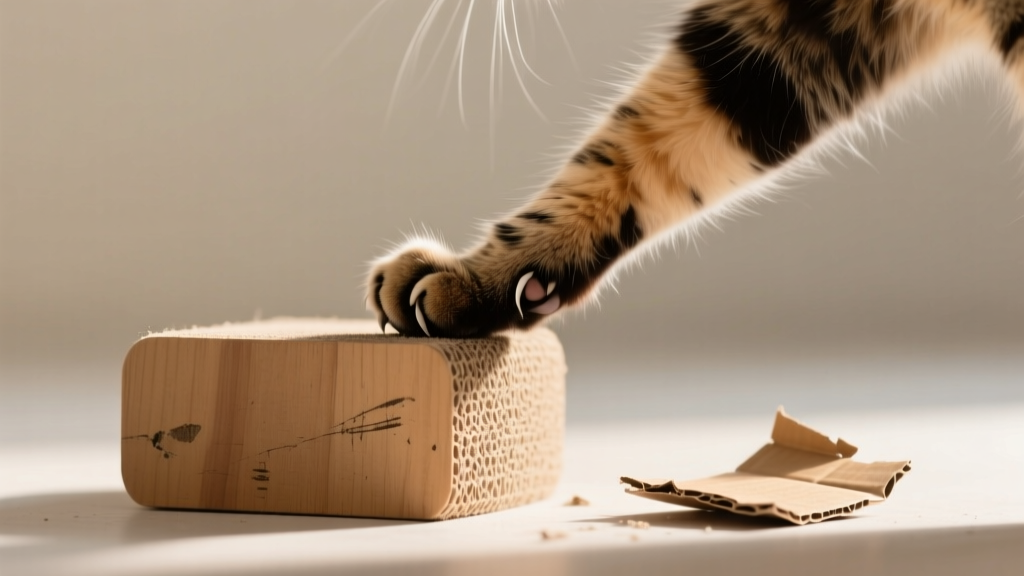
According to Dr. Sarah Hensley, DACVB (Diplomate of the American College of Veterinary Behavior), ‘The most cost-effective interventions are those that address the root cause — not the symptom. Punishing a cat for scratching the couch doesn’t teach alternatives; it teaches fear. Redirecting to a sturdy post with vertical texture, paired with play-based reinforcement, builds lasting confidence — and costs less than $15.’
Let’s break down exactly how to do that — without guesswork.
The 4 Pillars of Low-Cost, High-Impact Home Behavior Modification
Successful DIY behavior change rests on four interlocking pillars. Skip one, and progress stalls. Master all four, and even complex issues become manageable.
Pillar 1: Accurate Diagnosis (Free — But Often Skipped)
Before modifying behavior, you must rule out medical causes. Urinating outside the litter box? Could be UTI, arthritis (making entry painful), or kidney disease. Sudden aggression? May signal dental pain or hyperthyroidism. This step is non-negotiable — and free if you observe carefully. Keep a 7-day behavior log: note timing, location, triggers (e.g., ‘barks at window at 4 p.m.’), your cat’s body language (dilated pupils? flattened ears? tail flicks?), and immediate consequences (did you pick them up? did another pet approach?).
Compare notes against the Feline Behavioral Assessment Grid (developed by the International Society of Feline Medicine). Common red flags requiring vet evaluation: vocalizing at night, hiding >12 hrs/day, loss of appetite, or sudden onset after age 10.
Pillar 2: Environmental Enrichment (Under $40/Month)
Cats aren’t ‘low-maintenance’ — they’re low-visibility hunters. Boredom and unmet predatory needs drive 63% of so-called ‘problem behaviors’ (per 2022 Cornell Feline Health Center survey). The fix? Structured daily enrichment — not random toys.
- Play Sessions: Two 15-minute interactive sessions daily using wand toys (e.g., GoCat Da Bird — $18, lasts 2+ years). Mimic prey: dart, pause, ‘die’ (go limp), then drag away. End each session with a food reward — this completes the hunt sequence and reduces post-play anxiety.
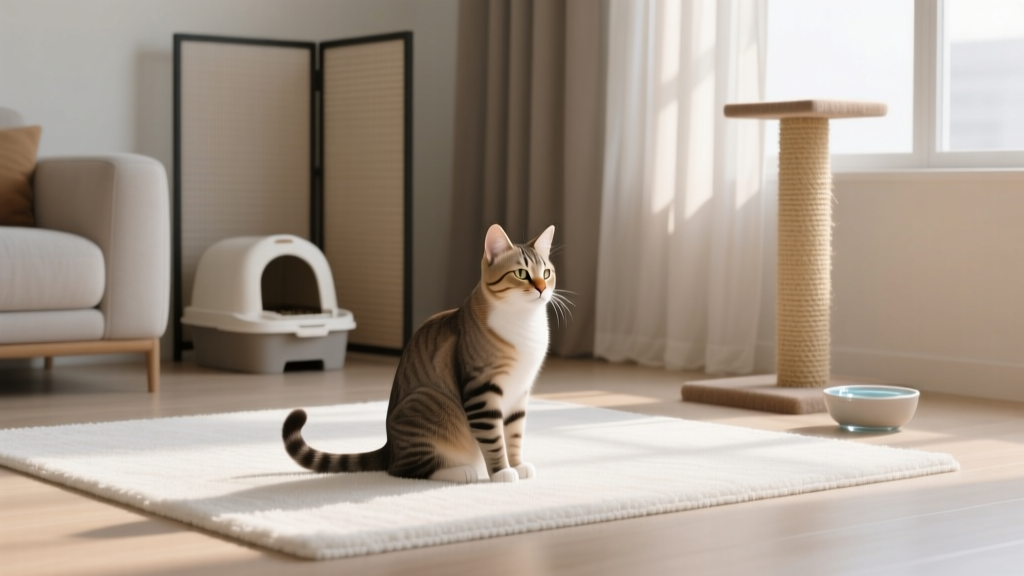
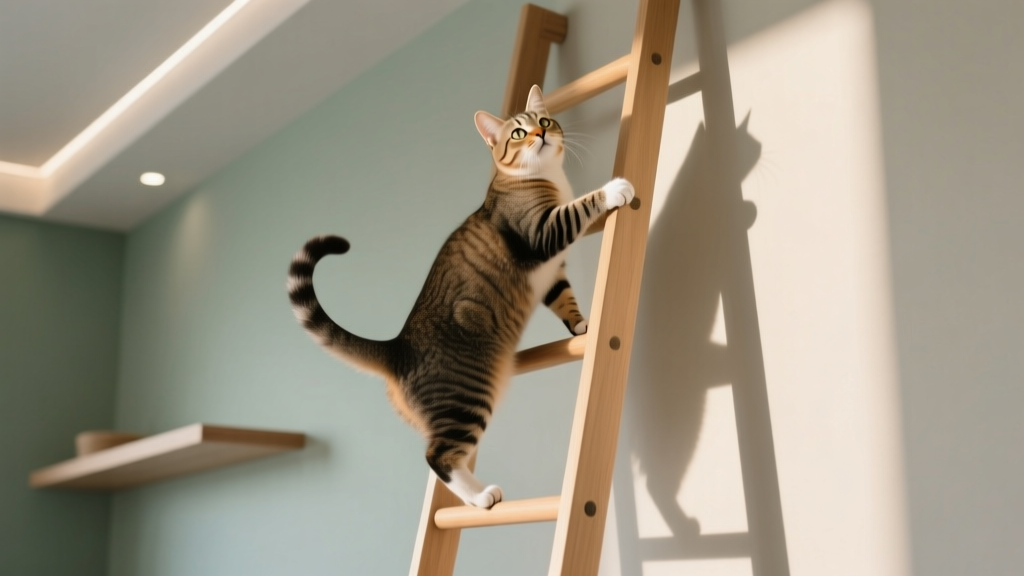
- Vertical Space: Install $12 wall-mounted shelves (IKEA SKÅDIS + brackets) or repurpose bookshelves. Height = safety + surveillance. Even one elevated perch cuts stress-related marking by 41% (University of Lincoln, 2021).
- Foraging Opportunities: Replace 20% of kibble with puzzle feeders. Start simple: crumple paper into a bowl ($0), then upgrade to the Trixie Activity Fun Board ($22). Never use food puzzles for cats with resource guarding — consult a pro first.
Pillar 3: Positive Reinforcement Protocols (Zero Cost, Maximum Impact)
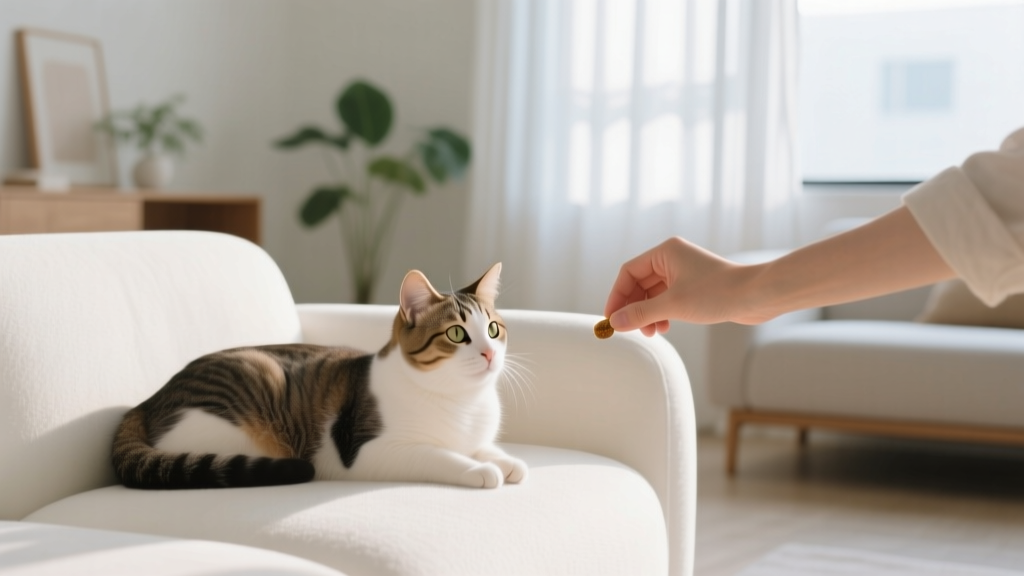
Forget ‘no’ — focus on ‘yes.’ Cats learn fastest when rewarded *within 1 second* of desired behavior. You don’t need treats: use what motivates *your* cat — lickable paste (FortiFlora mixed with water), gentle chin scratches, or 3 seconds of laser-pointer ‘chase’ (never shine in eyes).
Real-world example: Luna, a 3-year-old rescue, attacked ankles at dawn. Her owner stopped scolding and instead set an alarm for 5:45 a.m., played intense 10-minute wand session, then fed breakfast. Within 9 days, attacks ceased. Why? She learned ‘dawn = playtime,’ not ‘dawn = prey opportunity.’
Key rules:
- Never punish — it erodes trust and increases fear-based aggression.
- Mark the behavior *first* (with a clicker or quiet ‘yes’), then reward.
- Shape gradually: reward looking at the scratching post → touching it → full scratch.
Pillar 4: Consistent Trigger Management (The Silent Game-Changer)
Most ‘relapses’ happen because owners unknowingly reinforce unwanted behavior. Example: A cat meows incessantly at night. Owner gives attention (even negative: ‘stop!’). Cat learns meowing = human interaction = reward.
Solution: Identify and neutralize triggers *before* they escalate.
- Window-staring aggression? Block view with frosted film ($8/roll) or place perch *away* from windows.
- Litter box avoidance? Ensure ≥1 box per cat + 1 extra, scooped 2x/day, placed in quiet, low-traffic zones (not next to washer/dryer).
- Resource guarding? Separate feeding stations, water bowls, and litter boxes by ≥6 feet — no shared hallways.
Home Behavior Tools: What’s Worth Buying (and What’s Waste)
Not all products deliver equal value. Below is a vet-reviewed comparison of essential tools — ranked by cost-effectiveness, ease of use, and research-backed efficacy.
| Tool | Cost Range | Key Benefit | Evidence Level | DIY Alternative? |
|---|---|---|---|---|
| Feliway Optimum Diffuser | $35–$45 (refills: $22) | Reduces multi-cat tension & urine marking by 52% in 4-week trials (JAVMA, 2020) | ★★★★☆ (Multiple RCTs) | No — synthetic feline facial pheromone requires precise dispersion |
| Target Stick (dowel + pom-pom) | $0–$8 | Teaches recall, ‘leave it,’ and cooperative handling without force | ★★★★★ (Used in zoos & shelters globally) | Yes — chop dowel, glue pom-pom, sand edges |
| Thundershirt (Cat Size) | $45–$55 | Mild calming effect for travel/anxiety — but only when paired with desensitization | ★★★☆☆ (Small-sample studies show mixed results) | Yes — snug-fitting cotton t-shirt (test for overheating) |
| Urine Odor Eliminators (Enzymatic) | $12–$28 | Prevents re-soiling by destroying odor cues — critical for litter issues | ★★★★★ (ISFM strongly recommends) | No — vinegar/baking soda only mask, don’t destroy urea crystals |
| Clicker Training Set | $5–$12 | Sharpens timing, builds clear communication, speeds learning 3x vs. verbal cues alone | ★★★★☆ (Cornell study, 2021) | Yes — pen cap ‘click’ or tongue click (but consistency is harder) |
Frequently Asked Questions
Can I really fix serious aggression at home?
It depends on the type and severity. Play-related or redirected aggression? Yes — with structured play and trigger management. Fear-based or territorial aggression between cats? Often yes, but requires strict separation protocols and gradual reintroduction (12+ weeks). However, any aggression resulting in broken skin, hissing/growling during handling, or targeting children requires immediate veterinary behaviorist assessment. Safety first — never force interactions.
How long until I see results?
Consistent daily practice yields noticeable shifts in 3–7 days for motivation-based issues (e.g., scratching furniture). For anxiety-driven behaviors (hiding, over-grooming), expect 2–4 weeks of visible improvement. Full resolution of complex issues (inter-cat conflict, trauma-related fear) typically takes 8–16 weeks. Patience isn’t passive — it’s strategic repetition. Track small wins: ‘Today she ate near the door’ or ‘Didn’t flee when vacuum ran.’
Are online ‘cat trainer’ videos safe to follow?
Proceed with extreme caution. Many popular creators use punishment (spray bottles, shouting), ignore medical causes, or promote dominance myths. Red flags: ‘assert your alpha status,’ ‘rub their nose in it,’ or ‘ignore bad behavior until it stops.’ Instead, seek channels run by DACVB vets or IAABC-certified cat behavior consultants. Check credentials — not views.
Do I need special treats for training?
No — but you need high-value rewards. For most cats, freeze-dried chicken or salmon bits ($10–$15/bag) work best. Avoid kibble unless your cat is highly food-motivated. For finicky cats, try FortiFlora mixed with water (lickable paste) or tuna juice ice cubes. Never use treats that cause digestive upset — diarrhea undermines all progress.
What if my cat won’t take treats or play?
This signals significant stress or medical issues. First, rule out pain (dental, arthritis, thyroid) with your vet. Then, lower the bar: reward blinking slowly, sniffing your hand, or sitting 3 feet away. Use ‘life rewards’ — open a door, give access to a sunbeam, or offer gentle brushing. Build confidence before demanding action.
Common Myths Debunked
Myth 1: “Cats can’t be trained — they’re independent.”
Truth: Cats are highly trainable — but on their terms. They respond better to short, reward-based sessions (2–5 minutes) than dogs. Research shows cats learn faster than dogs in object discrimination tasks when motivation is aligned. Independence ≠ untrainability — it means we must earn cooperation, not demand obedience.
Myth 2: “Spraying vinegar on scratched furniture will stop it.”
Truth: Vinegar masks scent but doesn’t eliminate the pheromone markers cats leave behind. Worse, its acidity can damage wood finishes and irritate paws. Enzymatic cleaners (like Nature’s Miracle) break down organic compounds — the only proven solution. Pair with a textured scratching post nearby, and reward use immediately.
Related Topics (Internal Link Suggestions)
- Understanding Cat Body Language — suggested anchor text: "how to read your cat's tail, ears, and eyes"
- Best Scratching Posts for Destructive Cats — suggested anchor text: "sturdy, sisal-wrapped scratching posts under $30"
- When to See a Veterinary Behaviorist — suggested anchor text: "signs your cat needs professional behavior help"
- Multi-Cat Household Peace Plan — suggested anchor text: "reducing tension between cats without separation"
- Homemade Cat Enrichment Ideas — suggested anchor text: "DIY puzzle feeders and play tunnels"
Your Next Step Starts Today — And Costs Less Than Coffee
You now know that is cat behavior modification affordable at home — not as a compromise, but as the smartest, most compassionate first line of action. You don’t need perfection. You need one observation, one 5-minute play session, one correctly placed scratching post, and one moment of choosing curiosity over correction. Start tonight: grab your phone, open Notes, and jot down *one* behavior you’d like to gently shift — then pick *one* pillar above to apply tomorrow. That’s it. No gear, no gurus, no guilt. Just you, your cat, and the quiet power of consistency. If progress stalls after 3 weeks, or if safety feels uncertain, reach out to a DACVB specialist — but go in armed with your log, your plan, and the confidence that you’ve already done the hardest part: choosing kindness over frustration.