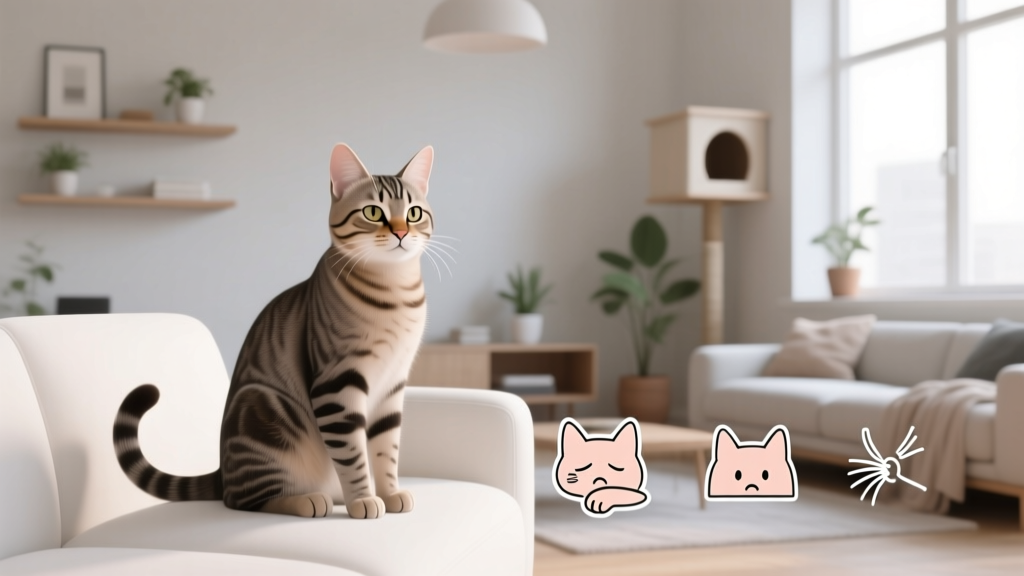
What Does Cat Behavior Mean in Apartment Living? 7 Hidden...
Why Your Cat’s Apartment Behavior Isn’t ‘Just Being Moody’ — It’s a Full-Time Communication System
If you’ve ever wondered what does cat behavior mean in apartment settings — like why your usually calm tabby suddenly starts scratching the front door at 3 a.m., or why she hides under the bed every time the neighbor’s dog barks downstairs — you’re not overthinking. You’re observing. And what you’re seeing is far more nuanced than ‘cute quirks.’ Apartment living reshapes feline psychology in profound, often invisible ways: limited territory, amplified noise, vertical space constraints, and constant proximity to human routines all compress your cat’s natural behavioral repertoire into high-stakes signals. Ignoring them doesn’t just risk litter box accidents or furniture damage — it can silently erode trust, trigger chronic stress, and even pave the way for urinary tract issues. In fact, a 2023 Cornell Feline Health Center study found that 68% of cats exhibiting ‘unexplained’ behavior changes in urban rentals were later diagnosed with stress-related cystitis — a condition directly linked to unaddressed environmental anxiety.
1. The Apartment-Specific Stress Trifecta: Noise, Space, and Social Density
Unlike outdoor or suburban homes, apartments layer three unique stressors that don’t exist in traditional cat habitats: acoustic confinement, territorial compression, and involuntary social exposure. Let’s break them down — and how each manifests in observable behavior.
Noise amplification is the stealthiest culprit. Hard surfaces (tile, laminate, concrete) bounce sound waves, turning hallway footsteps, elevator dings, or even HVAC hums into persistent auditory intrusions. Cats hear frequencies up to 64 kHz — nearly twice the human range — and perceive sustained low-frequency vibrations as potential threats. That’s why many apartment cats develop ‘startle lunges’ (sudden, panicked dashes), excessive grooming (a displacement behavior), or hyper-vigilant perching on top of bookshelves — scanning for danger they can’t escape.
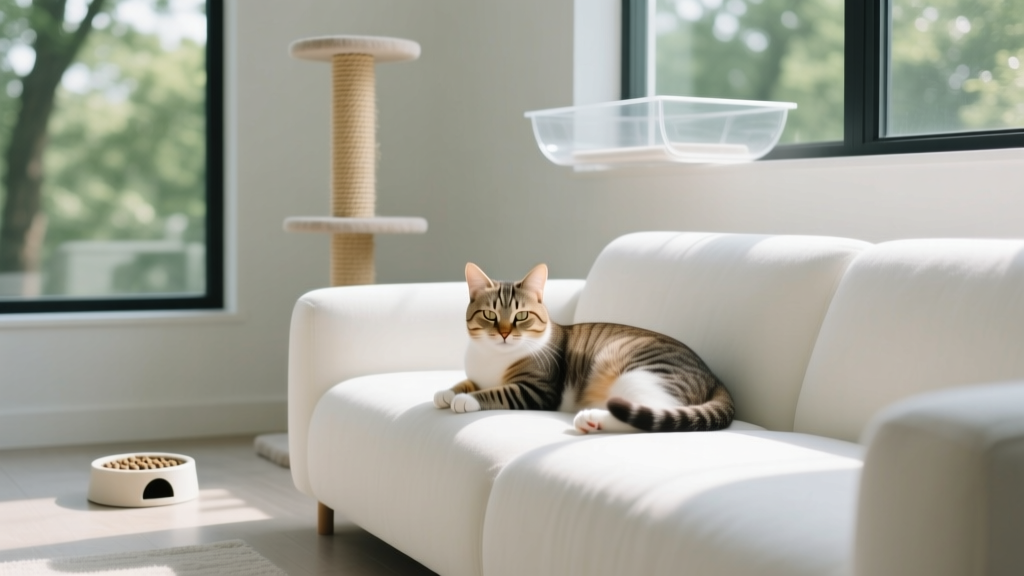
Territorial compression hits hardest when vertical space is underutilized. A 500-square-foot studio offers less than 1/10th the ground-level territory of even a modest house yard. But cats don’t think in square footage — they think in layers. When shelves, window perches, and cat trees are absent or poorly placed, your cat’s ‘safe zone’ shrinks to a single corner — triggering resource guarding (e.g., sleeping exclusively on your laptop), redirected aggression (biting your hand after hearing a knock), or urine marking on soft surfaces (like laundry piles or couch cushions) — not out of spite, but as olfactory boundary reinforcement.
Social density matters more than you think. Even if you live alone, shared walls, floors, and hallways mean your cat hears, smells, and sometimes sees other animals and people constantly. Dr. Sarah Wooten, DVM and certified feline specialist, explains: ‘Cats don’t need physical contact to feel threatened — scent trails from other pets through vents, muffled vocalizations, or even the vibration of heavy footsteps overhead can activate their sympathetic nervous system for hours. That’s why so many apartment cats appear ‘jumpy’ or ‘clingy’ without obvious cause.’
Real-world example: Maya, a 3-year-old rescue Siamese in a Boston high-rise, began refusing her litter box after her upstairs neighbor adopted two large dogs. Her vet ruled out UTI, but a home behavior assessment revealed her box was placed directly beneath a shared floor vent — carrying canine scent and vibration. Relocating it to a quiet closet with a covered entry cut accidents by 92% in one week.
2. Decoding the 7 Most Misinterpreted Apartment Behaviors (With Actionable Fixes)
Below are the most frequent behaviors owners mistake for ‘personality’ — but are actually precise, context-specific messages about your apartment’s suitability for feline life:
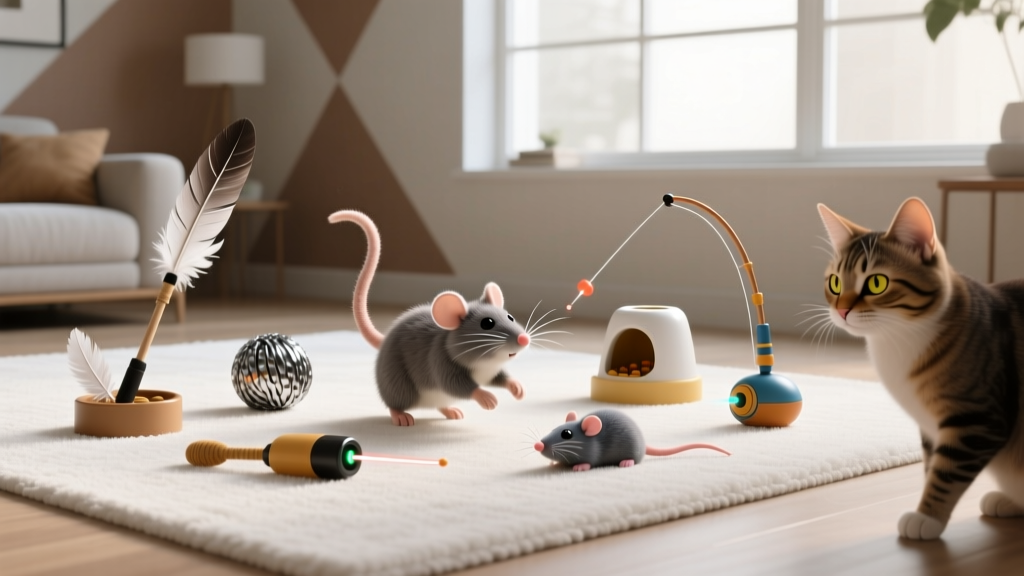
- Midnight zoomies (‘the 3 a.m. Olympics’): Not ‘energy to burn’ — it’s circadian misalignment. Indoor cats often revert to crepuscular hunting rhythms, but without outdoor stimuli, that energy erupts in frantic bursts. Fix: Shift play sessions to dusk/dawn with wand toys mimicking prey movement; add puzzle feeders that dispense kibble only after 5–10 minutes of focused effort.
- Excessive kneading on blankets or your lap: Often read as affection — but in confined spaces, it’s also self-soothing and territory claiming via scent glands in paws. If paired with drooling or vocalizing, it signals heightened anxiety. Fix: Provide a dedicated ‘knead zone’ — a heated, fleece-lined cat bed placed away from high-traffic zones and near a window view.
- Scratching baseboards or door frames: Not defiance — it’s structural anchoring. Without tall, stable scratching posts (≥36” height, sisal-wrapped, floor-to-ceiling preferred), cats seek vertical stability where walls meet floors — the only place offering full-body resistance. Fix: Anchor two 42” posts — one near the main entrance (for boundary reinforcement), one near the sleeping area (for security signaling).
- Avoiding the litter box despite cleanliness: Rarely medical first — usually location-based aversion. Common culprits: placement near noisy appliances (washer/dryer), shared bathroom use (humans entering disrupts privacy), or insufficient box count (rule: n+1 boxes, where n = number of cats). Fix: Audit sightlines, sound levels, and foot traffic — then relocate boxes to quiet, low-traffic corners with clear escape routes.
- Staring intently at blank walls or windows: Not zoning out — it’s auditory tracking. High-frequency sounds (rodent activity in walls, HVAC cycling, insect wings) register as prey movement. If accompanied by chattering teeth, it’s frustrated hunting instinct. Fix: Install ultrasonic deterrents in wall cavities (safe for cats), add bird-safe window decals to reduce false triggers, and offer daily ‘hunt’ simulations with treat-dispensing balls.
- Bringing ‘gifts’ (toys, socks, hair ties) to your pillow: This isn’t generosity — it’s resource sharing in a perceived den. In apartments, your bed is often the highest, safest vantage point. She’s depositing valued items where she feels most secure. Fix: Designate a ‘gift basket’ — a small wicker basket beside your bed — and reward deposits with gentle praise (no punishment), reinforcing positive association.
- Over-grooming one spot (e.g., belly, inner thigh): Classic stress dermatitis. Apartment cats lack natural distraction — no grass to roll in, no sun-baked rocks to warm on — so grooming becomes compulsive self-regulation. Rule out fleas and allergies first, then assess environmental triggers. Fix: Introduce tactile enrichment — soft-bristle brushes used daily, textured mats under food bowls, and daily 5-minute ‘brush-and-bond’ sessions during calm hours.
3. The Apartment Behavioral Audit: A Step-by-Step Environmental Checklist
Before assuming behavior is ‘just how she is,’ run this evidence-based 10-minute audit. Developed with input from the International Association of Animal Behavior Consultants (IAABC), it targets the top 5 environmental gaps in urban cat housing.
| Step | Action to Take | Tools Needed | Expected Outcome |
|---|---|---|---|
| 1. Sound Mapping | Walk barefoot through your apartment at 6 a.m., 2 p.m., and 10 p.m. Note every audible external/internal noise (elevator, pipes, neighbors, AC unit). Rank each 1–5 for intensity and duration. | Smartphone voice memo app, notebook | Identifies chronic auditory stressors you’ve habituated to but your cat perceives as threats. |
| 2. Vertical Zone Scan | Measure accessible height from floor to highest stable perch (shelf, cat tree, windowsill). Note if ≥3 distinct levels exist (low/mid/high) and if any offer visual cover (curtains, plants, tunnels). | Tape measure, notepad | Reveals whether your cat has true ‘escape routes’ — critical for reducing conflict and stress. |
| 3. Litter Box Traffic Analysis | Time how long it takes to reach each box from your cat’s favorite nap spot. Note if path crosses high-traffic zones, loud appliances, or doors that slam. | Stopwatch, floor plan sketch | Uncovers hidden accessibility barriers — e.g., a box ‘in the bathroom’ may be unusable if the door closes frequently. |
| 4. Scent Inventory | List all scented products used weekly (laundry detergent, air fresheners, cleaning sprays). Cross-check against ASPCA’s list of feline-toxic ingredients (e.g., phenols, citrus oils, tea tree). | Product labels, ASPCA Toxic Plant & Product Database (online) | Eliminates olfactory overload — cats have 200 million scent receptors vs. humans’ 5 million. |
| 5. Human-Routine Sync Check | Log your daily schedule for 3 days: wake/sleep times, work hours, meal prep, guest visits. Compare to when your cat exhibits target behaviors (e.g., biting at 4 p.m.). | Calendar app or paper log | Exposes timing patterns — e.g., ‘zoomies’ often spike 15–30 mins before owner returns home, signaling anticipatory stress. |
4. When to Call a Professional — and What to Ask For
Not all behavior shifts require intervention — but certain red flags demand expert eyes within 72 hours. According to the American Veterinary Medical Association (AVMA), sudden onset of inappropriate elimination, prolonged hiding (>24 hrs), or aggression toward familiar people warrants immediate veterinary consultation to rule out pain or neurological causes. If medical issues are cleared, seek a certified cat behavior consultant (look for IAABC or CCPDT credentials), not just a trainer. Why? Because apartment-specific issues require environmental diagnostics — not obedience drills. Ask these three questions before hiring:
- “Do you conduct remote video assessments of my actual apartment layout and daily routine — not just generic advice?”
- “Can you provide a written, room-by-room environmental modification plan — including budget-friendly swaps?”
- “Will you coordinate with my veterinarian if medical comorbidities (e.g., arthritis limiting jumping) are suspected?”
Case in point: Leo, a 7-year-old tuxedo in Chicago, began yowling nonstop at night. His vet found mild kidney disease — but his behavior consultant discovered his favorite perch (a radiator ledge) had been blocked by new furniture, forcing him to sleep on cold tile. Adding a heated pad + repositioning furniture resolved 90% of vocalizations in 4 days — proving that even medical conditions interact powerfully with environment.
Frequently Asked Questions
Why does my cat scratch the apartment door but not my furniture?
Door scratching is almost always territorial or anxiety-driven — not destructive. Apartment doors represent boundaries between ‘safe zone’ and ‘unknown territory’ (hallway, stairs, shared spaces). Your cat is reinforcing her claim using scent glands in her paws and visible claw marks. Furniture scratching, by contrast, is typically for stretching or nail maintenance. Solution: Install a sturdy, upright scratching post directly beside the door — angled slightly outward — and reward use with treats. Never punish; that associates the door with fear.
Is it normal for my apartment cat to stare out the window for hours?
Yes — but monitor for signs of frustration. Prolonged staring with dilated pupils, tail flicking, or chattering jaws indicates ‘barrier frustration’: she sees birds or squirrels but can’t hunt. This builds stress hormones. Mitigate with ‘prey simulation’ — rotate window-mounted bird feeders (outside only), use interactive laser pointers *followed by a tangible treat*, and add a ‘bird TV’ (YouTube channel with nature footage) on a tablet mounted at cat-eye level.
My cat hides when guests arrive — should I force her out?
No — forced exposure worsens trauma. Apartment hiding spots (under beds, inside closets) are vital safe zones. Instead, create a ‘guest protocol’: confine guests to one room initially, keep doors open to your cat’s sanctuary, and offer high-value treats (tuna paste, freeze-dried chicken) near — but not inside — her hideout. Over 2–3 visits, gradually decrease distance. Patience builds trust faster than coercion.
Can apartment cats get depressed? What are the signs?
Yes — though ‘depression’ is a human term, cats absolutely experience prolonged anhedonia (loss of pleasure) and lethargy due to chronic environmental deprivation. Key signs: sleeping >20 hrs/day, ignoring favorite toys, reduced appetite *without weight loss*, and grooming decline (matted fur, greasy coat). Rule out thyroid disease or arthritis first. Then, enrich incrementally: start with one new window perch, add daily 5-min play, and introduce novel scents (catnip, silvervine) weekly. Improvement typically begins in 10–14 days.
How do I know if my cat’s behavior is ‘normal apartment adaptation’ vs. a real problem?
Ask two questions: (1) Did this behavior start after a change? (move, new roommate, renovation, new pet)? (2) Is it causing distress to your cat or your household? Occasional zoomies or door-scratching are adaptive — but daily litter box avoidance, aggression, or vocalization that disrupts sleep or relationships signals unmet needs. Trust your gut: if you’re Googling ‘why does my cat…’ weekly, it’s time for targeted action — not waiting.
Common Myths About Apartment Cat Behavior
Myth #1: “Cats are low-maintenance — they’ll adapt to any space.”
Reality: Cats don’t ‘adapt’ — they tolerate or deteriorate. A 2022 University of Lincoln study tracked 127 indoor-only cats across urban apartments and found those without vertical space or window access showed cortisol levels 40% higher than counterparts with enriched environments — a biomarker of chronic stress linked to shortened lifespans.
Myth #2: “If my cat isn’t meowing or hissing, she’s fine.”
Reality: Most stressed apartment cats go silent — withdrawing, over-grooming, or developing subtle avoidance. Vocalization is often a *late-stage* sign. Watch body language: flattened ears, rapid tail thumps, half-closed eyes in non-sleeping moments, or consistently low-hanging tail indicate discomfort long before noise begins.
Related Topics (Internal Link Suggestions)
- Best Cat Trees for Small Apartments — suggested anchor text: "space-saving cat trees for studios"
- How to Stop Cat Scratching on Walls and Doors — suggested anchor text: "apartment-friendly scratching solutions"
- Litter Box Placement Guide for Rentals — suggested anchor text: "where to put litter box in small apartment"
- Cat-Proofing Your Apartment: A Landlord-Friendly Checklist — suggested anchor text: "rental-approved cat safety tips"
- Quiet Cat Breeds for Apartment Living — suggested anchor text: "least vocal cat breeds for condos"
Your Next Step Starts With One Observation
You now know that what does cat behavior mean in apartment contexts isn’t about decoding ‘mystery’ — it’s about listening to a sophisticated, location-specific language your cat has no choice but to speak. Every paw-knead, every stare, every midnight sprint carries data about safety, control, and belonging in her micro-world. Don’t wait for crisis. Tonight, pick one behavior from this article — maybe the litter box location or that scratched door — and spend 10 minutes auditing it using our table. Then, make one tiny, irreversible upgrade: move a perch, add a cardboard tunnel, swap a scented cleaner. Consistency compounds. In 30 days, you won’t just understand her better — you’ll have co-created a space where her instincts aren’t suppressed, but honored. Ready to begin? Download our free Printable Apartment Behavior Audit Checklist — complete with room-by-room prompts and vet-vetted product shortcuts.