Why Cats Sit on the Garden Path Stepping Stone
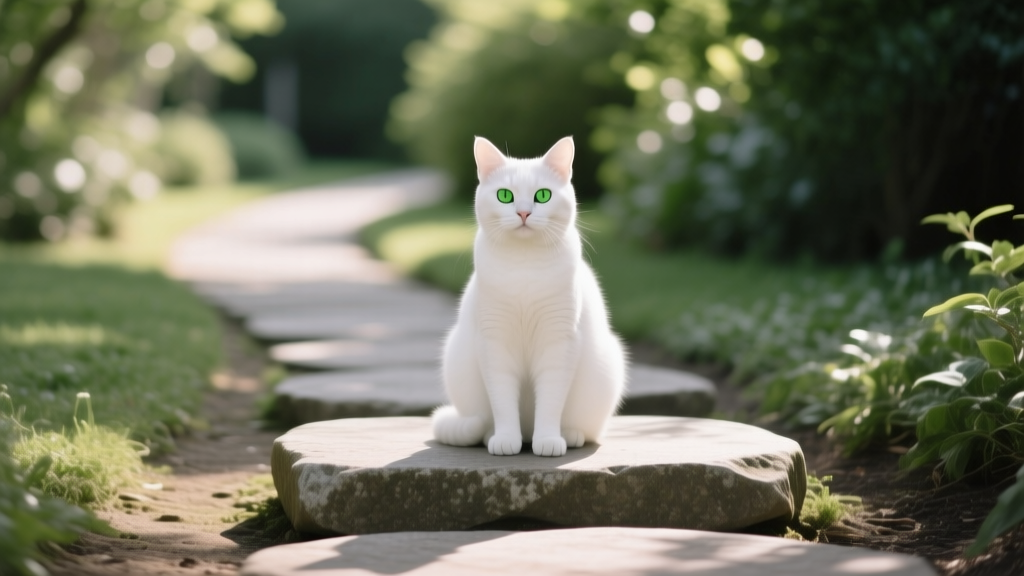
You’re carrying a watering can, thinking peaceful garden thoughts, when you spot it: your cat, perfectly loafed on the one stepping stone you need to reach the herb bed. They’re not just “in the way.” They’re centered. Composed. Almost smug. You pause—because who wants to step over a cat-shaped speed bump?—and your cat blinks slowly as if to say, “Yes, I chose this exact rock. For reasons.”
If you’ve ever wondered why your cat plants themselves on the garden path like a tiny furry traffic cone, you’re not alone. This is one of those wonderfully ordinary behaviors that’s actually packed with feline logic: comfort, safety, strategy, communication, and a dash of “I like being where the action is.”
1) The scientific (and slightly sneaky) reason: cats love strategic spots
Cats are both predators and prey in the evolutionary sense. That combination shapes almost everything they do. A stepping stone in the garden path can be a surprisingly perfect “cat base” for a few big reasons:
- Visibility and control: From a path, a cat can monitor who’s coming and going—humans, dogs, squirrels, birds, delivery people, the neighbor’s cat with the questionable attitude. Paths are natural “high-traffic” lanes, even if they’re not elevated.
- Predictable movement patterns: Animals (including humans) tend to follow paths. Cats notice patterns quickly. If you always walk the same route, the stepping stone becomes a reliable observation post.
- Thermal comfort: Stone absorbs heat from the sun and holds it longer than grass or soil. In cooler weather, a sun-warmed stepping stone is basically a heated lounge. In hot weather, stone can also feel cooler than surrounding earth after shade moves in—depending on the time of day and the material.
- Dry, clean, and stable: Wet grass clings. Mud is rude. A stepping stone is firm underfoot and usually dry faster than the lawn. Cats are famously picky about where they place their bodies.
- Scent communication: Cats use scent as a social network. Sitting where feet pass can help deposit and “mix” scents—your scent, their scent, other animals’ scents—creating a familiar, claimed area.
In short: the stepping stone is a comfortable, strategic “control panel” in the middle of your cat’s outdoor world.
2) A detailed breakdown: what “sitting on the stepping stone” looks like in different contexts
Not all garden-path lounging is the same. The context changes the meaning.
They sit on the same stone every day
This is classic routine behavior. Cats thrive on predictable patterns because predictability equals safety. That stone may be “the spot” where they see you come out with your coffee, where the sun hits at 10 a.m., or where the neighborhood cat patrols at noon. Repetition is your cat saying, “This place works.”
They sit there only when you’re outside
Your cat may be doing “social proximity”—hanging near you without being underfoot (ironically, they are underfoot). Some cats aren’t cuddly indoors but become quietly companionable outside. The path is where you move, so your cat chooses the path to stay connected to you.
They sprawl dramatically across multiple stones
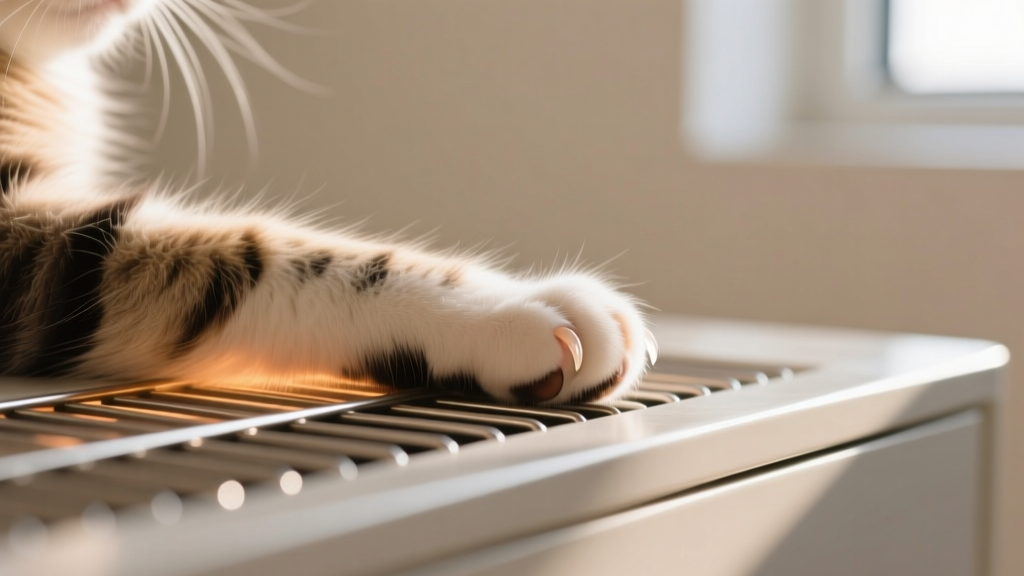
This often shows peak relaxation and confidence. A cat who is tense will sit upright, ready to move. A cat who is comfortable will stretch, flop, or half-dangle a paw off the edge like they pay rent.
They sit on the stone and stare at the hedge, fence line, or bushes
This is “watch duty.” Something is interesting there—birds, rustling leaves, a lizard, a mouse runway, or a rival cat’s scent. Your cat may be running a mental security system while appearing to do absolutely nothing.
They sit on the stepping stone when it’s cold out
Stone warms nicely in sun. Even in chilly air, a sunlit surface can be pleasantly toasty. If your cat is drawn to the stone only on bright winter days, it’s likely a heat-seeking mission.
They sit there after rain
Stepping stones are dry islands. If the yard is damp, your cat may choose the path to avoid soggy paws and dirty fur. This is less “mysterious behavior” and more “I refuse to be moist.”
They sit there when guests arrive
Paths are entry routes. If your cat likes to monitor newcomers, the garden path is an excellent early-warning system. Some cats also use “block and observe” behavior: staying in a position that slows movement and gives them time to evaluate.
3) What it means about your cat’s mood and feelings
Your cat’s body language will tell you whether the stepping stone is a spa, a watchtower, or a stress zone.
- Relaxed and content: Soft eyes, slow blinks, paws tucked (loaf), tail resting, ears neutral. They’re comfortable and enjoying the environment.
- Curious and engaged: Head turning, ears rotating like satellite dishes, focused stare, occasional chirps. They’re tracking movement and information.
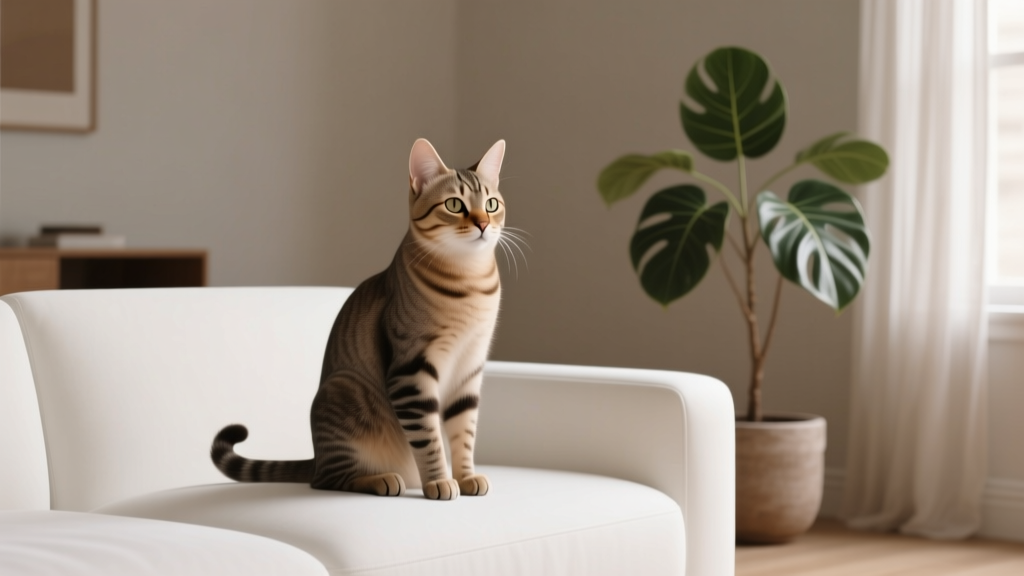
- Confident territory-owner energy: Upright sit, calm scanning, unbothered posture when you approach. This often shows a cat who feels secure in the yard.
- Unsure or tense: Crouched low, tail tight to body, ears angled sideways or back, sudden startles. The stone may be a “safe point” they’re using to cope with something stressful.
- Seeking attention (subtle or not): Meows when you pass, rolling, reaching a paw toward your ankle, weaving near your legs. They’ve learned the path is where they can reliably get interaction.
One of the sweetest interpretations: many cats choose stepping stones because they want to be near you while still having personal space. It’s the feline version of sitting at the same table but not necessarily holding hands.
4) Related behaviors you might also notice
If your cat loves the garden path stone, you may also catch these familiar “strategic spot” habits:
- Doorway camping: Sitting in thresholds to monitor two rooms at once (and to be inconvenient in a very specific way).
- Driveway lounging: Warm concrete, wide view, lots of scents. (This one needs safety management—more on that below.)
- Perching on steps: Elevated visibility plus easy retreat indoors.
- Sitting on your laptop/book: Warmth + attention + “your hands belong on me.” Same logic, different location.
- Patrolling the same route: Cats often do little “security loops” around the yard perimeter, then pause at observation points like stones or deck posts.
5) When it’s normal… and when it might be a concern
Most stepping-stone sitting is completely normal, especially if your cat appears relaxed and otherwise healthy. But there are a few situations where you’ll want to look closer.
Normal behavior signs
- They’re alert but calm, and they move normally when they choose to.
- They eat, drink, and use the litter box as usual.
- They show typical grooming and play behavior.
Potential concern signs
- Hiding in plain sight: If your cat suddenly sits outside for long periods and seems withdrawn, they may be avoiding something indoors (stress, conflict with another pet, noise) or feeling unwell.
- Mobility issues: If they hesitate to step off the stone, limp, sit with an unusual posture, or seem stiff, arthritis or injury could be involved.
- Heat stress risk: On very hot days, stone can become dangerously hot. Panting, drooling, lethargy, or bright red gums are red flags—bring them inside and contact a vet.
- Territorial anxiety: If they’re sitting on the path and growling, yowling, spraying nearby, or obsessively watching one area, they may be stressed by outdoor cats or other animals.
- Safety hazards: If the path is near a driveway, street, or dogs, the habit may be risky even if your cat is calm.
If you see sudden behavior changes, ongoing tension, or physical symptoms, it’s worth a vet check and/or a behavior consult. Cats are masters of subtle “I don’t feel great” signals.
6) Tips for responding to (or encouraging) the behavior
You don’t have to evict your cat from the stepping stone, but you can shape the situation so it works for both of you.
If you want to keep it friendly (and keep your toes safe)
- Teach a cheerful “move” cue: Use a consistent word (“Scoot!”), toss a treat a few feet away, and reward when they relocate. Repeat gently. Cats learn quickly when the payoff is reliable.
- Create an even better nearby spot: Place a flat outdoor mat, a low bench, or a cat-safe cushion near the path where they can still supervise. Many cats will choose the best comfort-to-view ratio.
- Add shade options: A small canopy, shrub cover, or a shaded bed gives them choices so they’re not glued to the stone during hot weather.
If the behavior seems attention-driven
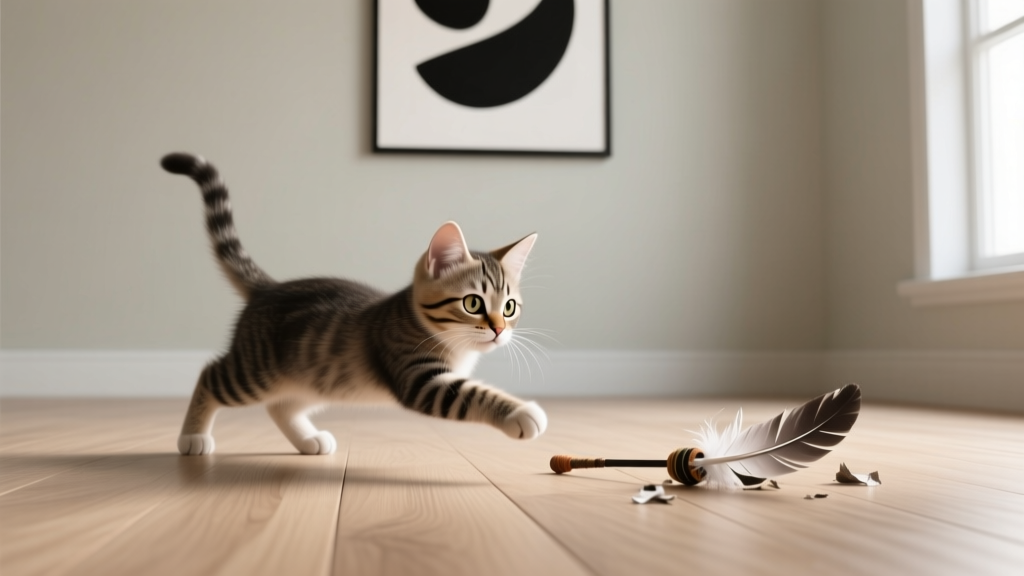
- Offer “path-time” rituals: A two-minute wand-toy session or a few treat tosses in the grass can satisfy the desire for interaction without turning you into a hostage negotiating for access to the basil.
- Reward calm presence: If your cat sits nicely off to the side, acknowledge them—slow blink, gentle praise, or a treat. Cats repeat what works.
If you’re worried about territorial stress
- Block visual triggers: If they fixate on a fence line, use garden screening or plants to reduce sightlines.
- Clean and deter outside-cat visits: Motion-activated sprinklers or lights can reduce unwanted visitors, which often lowers your cat’s need to “guard” the path.
- Consider a catio or supervised outings: You get the enrichment, they get the safety, and the stepping stone can remain a fun lookout rather than a battleground.
7) Fun facts and research-ish nuggets (without the snooze)
- Cats love “edges” and “routes”: In behavioral ecology, predators often patrol along boundaries and travel corridors. Your garden path is basically a tiny wildlife highway.
- Warm surfaces are a big deal: Cats have a higher preferred ambient temperature than most humans. A sun-warmed stone can be genuinely irresistible, especially to short-haired cats or seniors with stiff joints.
- Scent matters more than we think: Cats gather a huge amount of information through scent. Areas with repeated foot traffic collect interesting odors—soil, plants, other animals, you. Sitting there is partly “reading the news.”
- Slow blinking outside is a trust signal: If your cat slow blinks at you from their stepping-stone throne, that’s a relaxed social gesture—basically a feline friendly wave.
8) FAQ: Common questions about cats and stepping stones
Is my cat trying to trip me on purpose?
Not usually. Cats don’t plan pranks the way humans do, but they absolutely learn cause-and-effect: “When I sit here, the human stops and talks to me.” If the behavior gets attention, it sticks.
Why that one specific stepping stone?
It might have the best sun angle, the most stable footing, the best view of the yard, or the richest scent profile. Cats are incredibly detail-oriented about comfort and vantage points.
Should I move my cat if I need to walk there?
Yes, kindly. Use a treat toss, a “move” cue, or lure them to a nearby perch. Avoid pushing with your foot or stepping over them closely—startling can create negative associations with the path (and with you).
My cat only does this at night—why?
Cats are crepuscular, meaning they’re often most active at dawn and dusk. Nighttime path-sitting can be patrol behavior, listening for small prey, or monitoring nighttime wildlife and other cats.
Does this mean my cat is marking territory?
Possibly in a mild way. Sitting, rubbing, and rolling can deposit scent from glands on the face and body. It’s not always “aggressive marking”—often it’s comfort marking, like making the space smell familiar and safe.
Is it safe for my cat to lounge on garden stones?
Usually, yes—if the area is secure and temperatures are safe. Watch for extreme heat (stones can burn paws) and ensure there’s no access to roads, toxic plants, pesticides, or aggressive animals.
Your cat on the stepping stone isn’t just being quirky—they’re choosing a spot that meets a whole checklist of feline priorities: warmth, visibility, safety, routine, and connection with you. Once you see it that way, it becomes less “Why are you blocking the path?” and more “Ah, you’ve selected the ideal command center for garden supervision.”
Does your cat have a favorite “inconvenient” spot outdoors—stepping stones, stairs, the exact place you need to kneel to weed? Share your story (and your cat’s best garden-throne photos) with us on catloversbase.com.