Why Cats Follow You Into the Bathroom
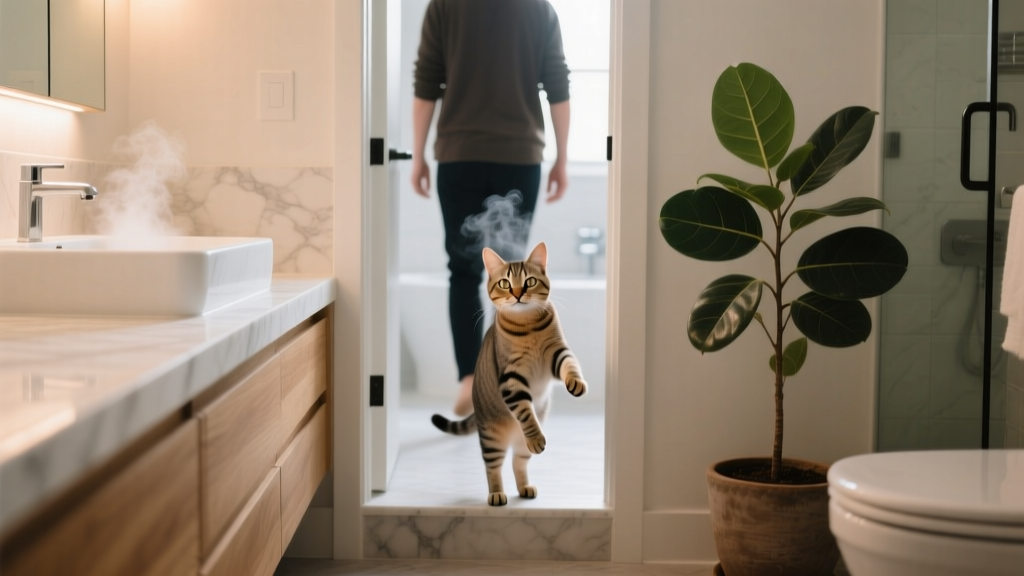
You know the scene: you slip into the bathroom for a little privacy—maybe for two minutes of peace—and suddenly there’s a soft thunk on the door. A paw snakes under the crack like a tiny, furry locksmith. Or you turn around and your cat is already inside, sitting with the calm authority of a tiny lifeguard, watching you brush your teeth as if it’s a high-stakes event.
If your cat seems deeply committed to accompanying you to the bathroom, you’re not alone. This is one of those “cat owner rites of passage” behaviors—equal parts hilarious, baffling, and oddly flattering. And yes, there are real reasons behind it. Some are sweet, some are practical, and a few are simply… very cat.
1) The Scientific (and Evolutionary) Reasons Cats Do This
Cats didn’t evolve as solitary hermits; they evolved as flexible social creatures who keep tabs on what matters in their territory. Even though our cats are domesticated, their brains still run a lot of “wild cat software.” The bathroom behavior often comes down to three big drivers:
- Territory monitoring: Cats feel safest when they understand what’s happening in their environment. Closed doors can interrupt their “map” of the home and who’s where.
- Social attachment: Many cats form strong bonds with their people. Following you is a normal “I’m with you” behavior—especially in multi-cat homes or with cats who chose you as their favorite.
- Vulnerability instincts: In the wild, using the bathroom is a vulnerable moment. Your cat may be hardwired to keep watch during “private” activities—or they may assume you want a lookout, because that’s what a good teammate would do.
Also: the bathroom is full of interesting sensory stuff. It’s warm, echo-y, smells strongly like “you,” and contains water sources that move, splash, and gurgle. For a curious predator-brain, it’s basically a mini theme park.
2) What’s Actually Going On? A Context-by-Context Breakdown
“My cat follows me into the bathroom” can mean a dozen different things depending on the details. Here are the most common versions—and what they’re likely about.
The Door Guard: Sitting Outside Like a Bouncer
Your cat plants themselves outside the door, sometimes staring at the handle, sometimes meowing, sometimes just waiting in silence like they’re on a stakeout.
- Most likely: They don’t like barriers between you and them, and they want to maintain access to you and the space.
- Bonus explanation: Some cats find closed doors genuinely stressful because it reduces their ability to monitor territory.
The Shadow: Slips In and Tries to Be Invisible
This cat doesn’t demand attention; they just… appear. They may sit behind your legs or against the cabinet, blinking slowly like a tiny therapist.
- Most likely: Comfort and companionship. You’re predictable in there—you’re standing still, not vacuuming, not moving furniture. It’s a calm moment they can “share.”
The Lap Enthusiast: “Now Is the Time to Cuddle”
Some cats treat bathroom time as premium cuddle time. If you sit, they assume your lap is now open for business.
- Most likely: Seeking warmth, contact, and a secure “contained” interaction. The smaller space can make social contact feel safer and more focused.
The Water Fan: Fascinated by the Sink, Tub, or Toilet
Your cat hops into the empty tub. They demand sink drips. They sit on the toilet lid like a royal throne occupant.
- Most likely: Water curiosity. Moving water is intriguing and may feel fresher than standing water.
- Practical note: If your cat is drawn to bathroom water, make sure they have multiple fresh water stations elsewhere too.
The Conversationalist: Meowing Like It’s a Podcast
Some cats use the bathroom as their personal echo chamber. They chirp, trill, meow, and “answer” your responses.
- Most likely: Attention and social engagement. Bathrooms can amplify sound, and your cat may have learned it’s a great place to get a reaction.
The “You’re Trapped” Strategist
Ever notice your cat suddenly remembers they need something the moment you’re in the bathroom? Food. Play. The mystery toy under the dresser. Your immediate service.
- Most likely: Learned behavior. You’re a captive audience, and cats are brilliant pattern-learners.
3) What This Says About Your Cat’s Mood and Feelings
Bathroom-following can reveal a lot about your cat’s emotional state in the moment. Look at the body language:
- Relaxed companionship: Tail neutral or gently curved, soft eyes, slow blinks, sitting or loafing nearby. This is the cat version of “I like being around you.”
- Affection and bonding: Head bunts, cheek rubs on your legs, kneading, purring. Your cat is mixing closeness with scent-marking—basically saying, “You’re my person.”
- Seeking reassurance: Extra vocalizing, pacing, rubbing repeatedly, following very closely. This can happen if the home is busy, there’s a new pet, construction noises, visitors, or a schedule change.
- Curiosity and playfulness: Wide, bright eyes; playful pounces at towels; pawing at shower curtains; investigating every corner. This is normal exploration behavior in a “high interest” room.
- Frustration or stress at separation: Yowling, scratching the door, trying to force entry, or getting agitated when the door closes. This might suggest your cat doesn’t tolerate being shut out—or is experiencing heightened anxiety.
It can also be about routine. Cats often become emotionally attached to predictable patterns (yes, even your bathroom schedule). If you always wake up, use the bathroom, then feed them, your cat may follow because “bathroom time” predicts “breakfast time.”
4) Related Behaviors You Might Also Notice
If your cat is a bathroom companion, you may also see these familiar “shadow cat” habits:
- Following you from room to room and settling nearby, not necessarily demanding attention.
- Waiting outside doors (bedroom, laundry room, office) as though they’re on duty.
- Supervising chores—folding laundry, making the bed, cleaning the litter box (the irony is not lost on them).
- Vocal “check-ins” when you’re out of sight, like a little “Where are you?” chirp.
- Scent-marking your path—rubbing their face on your legs, ankles, or the doorframe after you pass.
In many homes, bathroom-following is part of a bigger pattern: your cat likes to keep their favorite human within eyesight, or at least within “pounceable” distance.
5) When Bathroom-Following Is Normal… and When It Might Be a Concern
Most of the time, this behavior is completely normal—often even a sign of trust and social bonding. But there are a few situations where it’s worth looking closer.
Typically Normal
- Your cat follows calmly, sits nearby, and leaves when you leave.
- Your cat is curious about water or enjoys the cool tub/sink.
- Your cat is more clingy at predictable times (morning routine, bedtime routine).
Potential Red Flags
- Sudden clinginess: If your previously independent cat suddenly can’t let you out of their sight, consider stressors (new pet, move, noise) and also possible medical issues.
- Excessive vocalizing or distress: If your cat panics when separated, scratches frantically, or seems inconsolable behind a closed door, anxiety may be at play.
- Increased thirst and water obsession: If your cat becomes fixated on the sink or bathtub and seems to drink more than usual, speak with your veterinarian. Increased drinking can be linked to health concerns like kidney disease, diabetes, or hyperthyroidism.
- Attention-seeking paired with odd litter box changes: If they’re following you while also urinating outside the box, straining, or visiting the litter box frequently, that’s a vet call.
If you’re ever unsure, look for the pattern: is it stable and context-based, or is it a sudden behavior shift with other symptoms?
6) Tips for Responding to (or Encouraging) the Behavior
You don’t have to “fix” bathroom-following unless it causes stress for you or your cat. But you can shape it into something comfortable and safe.
If You Don’t Mind the Company
- Create a safe spot: Put a small bath mat or folded towel in a corner so your cat has a designated place to sit instead of weaving underfoot.
- Offer calm connection: A slow blink, a gentle “hello,” or a brief cheek rub can satisfy your cat’s need for contact without turning it into a full play session.
- Redirect water fascination safely: Consider a pet water fountain outside the bathroom. Many cats love moving water, and this keeps them away from toilet bowls and cleaning residues.
If You Want More Privacy
- Change the routine cues: If your cat associates bathroom time with food, try feeding at a slightly different moment or using an automatic feeder to remove the “follow-to-get-breakfast” pattern.
- Provide an alternative “hangout” nearby: A perch, bed, or scratching post outside the bathroom door can become their new station.
- Practice short, low-drama separations: Close the door briefly while your cat has something wonderful (a treat puzzle, a lickable treat, a favorite toy). Gradually increase time so “door closed” predicts “good things,” not abandonment.
Safety Reminders
- Keep toilet lids closed to reduce drinking and prevent accidents.
- Be cautious with bath products and cleaners—cats can be sensitive to residues they step on and later lick off their paws.
- Watch for door-darting: some cats will sprint in as you enter, which can become a tripping hazard.
7) Fun Facts and Research-Adjacent Nuggets
- Cats use proximity as social language: Many cats don’t show affection like dogs do. Simply choosing to be near you—especially when you’re stationary—can be a big bonding signal.
- Your cat may be scent-collecting: Bathrooms carry strong “you” smells (shampoo, soap, laundry, skin scent). Cats gather scent information the way we scroll headlines: it’s how they keep up with their world.
- Small spaces can feel secure: Enclosed areas reduce the number of directions something “unexpected” can appear from. For some cats, that makes the bathroom a comfortable observation post.
Also, consider the comedy of it: your cat may be acting like your privacy is a myth—because to them, in a shared territory, it kind of is.
FAQ: Cats Following You Into the Bathroom
1) Does my cat following me into the bathroom mean they love me?
Often, yes—it can be a sign of trust, attachment, and social interest. But it can also mean curiosity, habit, or a desire for resources (like water or attention). Look for relaxed body language and friendly contact behaviors (slow blinks, gentle rubbing) for the clearest “affection” clues.
2) Why does my cat cry outside the bathroom door?
Some cats dislike closed doors because it blocks access to you and interrupts their territory monitoring. If the crying is intense or escalates to scratching, try easing separation with enrichment outside the door and short, positive “door closed” practice sessions.
3) Why is my cat obsessed with the sink or bathtub when I’m in there?
Moving water is fascinating, and bathrooms often smell strongly of you. If your cat is drinking from the faucet, consider adding a water fountain and placing extra water bowls around the home. If you notice increased thirst overall, check in with your vet.
4) Is it okay to let my cat in the bathroom?
Usually, yes—as long as it’s safe. Keep toilet lids closed, store cleaning products securely, and make sure your cat isn’t chewing on dangerous items (floss, hair ties, cotton swabs). If your cat gets underfoot, offer a designated mat or perch.
5) My cat suddenly started following me everywhere, including the bathroom. Should I worry?
A sudden change can be stress-related (routine change, visitors, new pet) or medical. If it’s paired with changes in appetite, thirst, litter box habits, sleep, or energy, schedule a vet visit to rule out health issues.
6) How do I stop bathroom-following without hurting my cat’s feelings?
Make the alternative more appealing than the bathroom: a cozy bed outside the door, a treat puzzle, or a timed feeder that delivers something tasty while the door is closed. Keep your responses calm and consistent, and avoid scolding—cats don’t interpret that as “privacy,” they interpret it as “my human is unpredictable.”
Whether your cat is your bathroom bodyguard, sink supervisor, or professional door greeter, the behavior is usually a mix of bonding, curiosity, and routine. It’s one of those small daily quirks that—once you understand it—starts to feel less like an invasion and more like a tiny social ritual.
Does your cat have a specific bathroom “job” (lap warmer, faucet inspector, towel thief)? Share your funniest or sweetest bathroom-following stories with the Cat Lovers Base community at catloversbase.com—we’d love to hear what your cat gets up to when you’re just trying to brush your teeth.