How to Interpret Cat Behavior for Senior Cats
Why Understanding Your Senior Cat’s Behavior Isn’t Optional — It’s Lifesaving
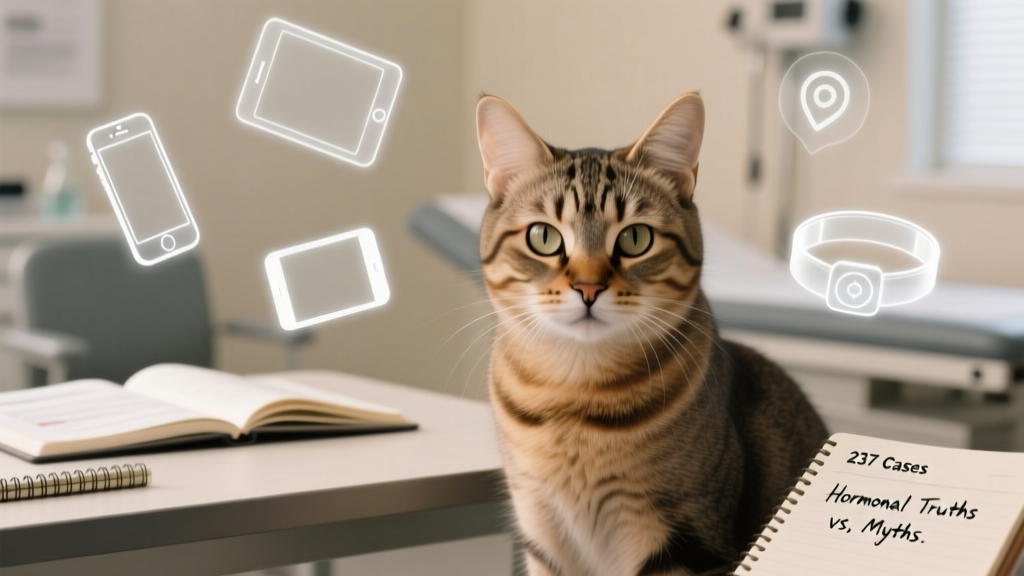
If you’ve ever wondered how to interpret cat behavior for senior cats, you’re not overthinking — you’re paying attention to the most important diagnostic tool your cat has left: their actions. Unlike dogs, cats rarely vocalize pain or confusion; instead, they withdraw, sleep more, stop grooming, or avoid the litter box. These aren’t ‘normal aging quirks’ — they’re urgent behavioral red flags. In fact, a landmark 2022 study published in the Journal of Feline Medicine and Surgery found that 83% of cats aged 12+ with undiagnosed osteoarthritis showed *only* behavioral changes — no limping, no crying, just subtle shifts in routine. When we misread those signals as ‘grumpiness’ or ‘senility,’ we delay care by an average of 5.2 months. This guide gives you the observational toolkit — grounded in veterinary ethology and geriatric feline science — to spot what’s truly happening beneath the surface.
What Changes — and Why: The Physiology Behind Senior Cat Behavior Shifts
Senior cats (generally defined as 11 years and older) experience profound neurological, sensory, and musculoskeletal changes — all of which directly shape how they move, interact, and communicate. Their hearing declines first (especially high-frequency sounds like rustling plastic or distant calls), followed closely by vision loss due to lens clouding and reduced retinal sensitivity. Joint stiffness from degenerative joint disease affects up to 90% of cats over age 12, according to the International Society of Feline Medicine (ISFM). But perhaps most critical is the brain: feline cognitive dysfunction syndrome (CDS) — similar to human Alzheimer’s — impacts roughly 28% of cats aged 11–14 and jumps to 50% in cats 15+. Dr. Sarah Hargrove, DVM, DACVAA and lead researcher at the Cornell Feline Health Center, explains: ‘Cats don’t “forget” where the litter box is — they lose spatial memory mapping. They don’t “stop liking you” — they fail to recognize familiar scents and faces due to olfactory bulb atrophy. Every behavior shift has a biological root — and most are manageable.’
Here’s how those physiological shifts manifest behaviorally:
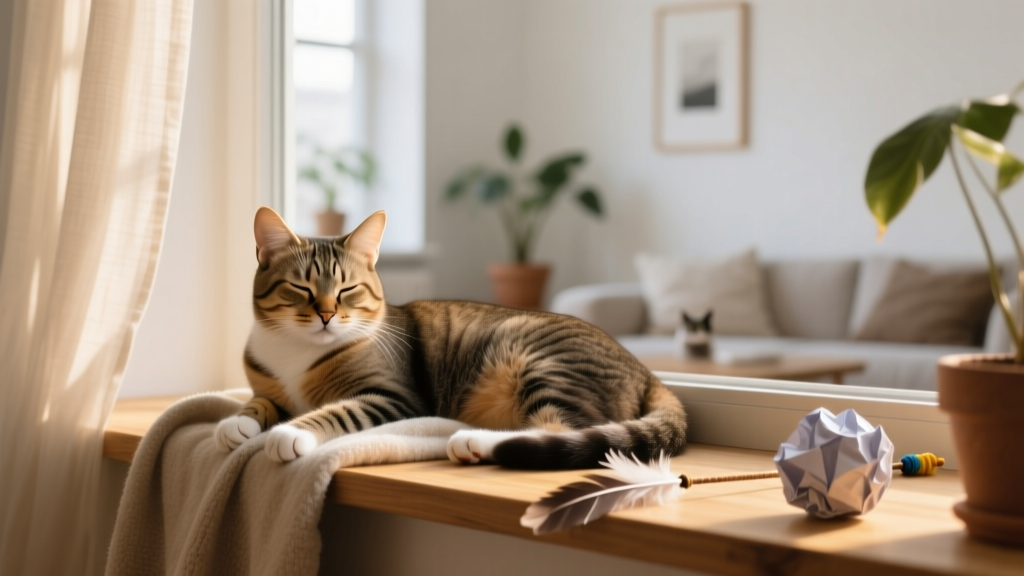
- Reduced activity & increased napping: Not just ‘slowing down’ — often pain-avoidance (e.g., avoiding stairs to prevent hip strain) or fatigue from chronic low-grade inflammation.
- Litter box avoidance: Frequently linked to arthritis (hard to squat), urinary tract discomfort, or CDS-related disorientation — not spite or poor training.
- Vocalizing at night: Often tied to hypertension-induced retinal detachment (causing visual confusion) or CDS-related circadian rhythm disruption — not ‘attention-seeking’.
- Overgrooming or neglecting grooming: Overgrooming may signal localized pain (licking a sore joint); under-grooming often reflects painful mobility or dental disease.
- Increased hiding or territorial guarding: A stress response to diminished sensory input — they feel less safe in unpredictable environments.
The 5-Minute Daily Observation Protocol (No Tools Needed)
You don’t need a degree — just consistency and intention. Veterinarians recommend a daily ‘behavioral snapshot’ — five minutes, same time each day, using this evidence-based protocol:
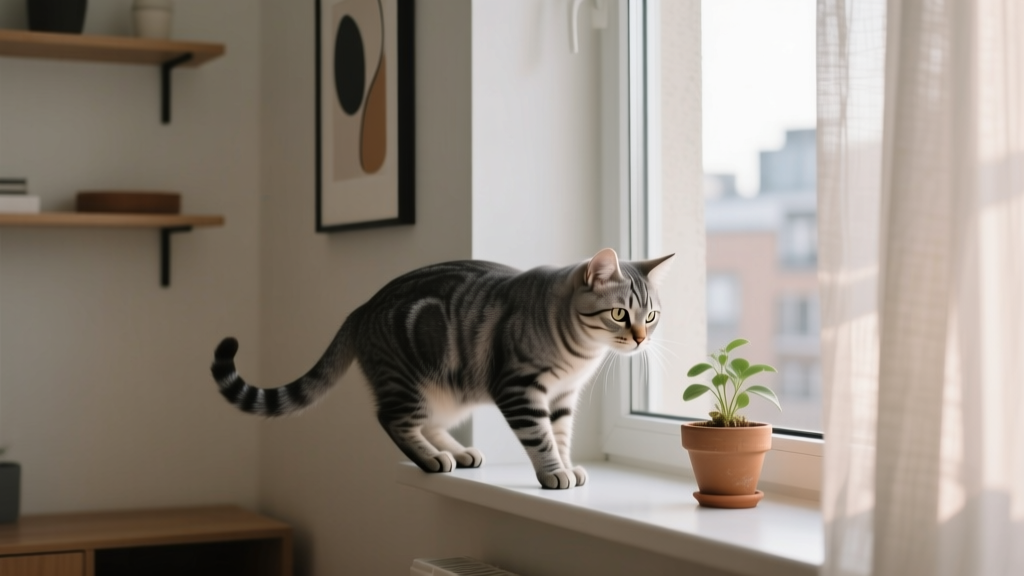
- Observe movement: Watch them stand, walk, jump (or attempt to), and climb stairs. Note hesitation, stiffness, or asymmetry (e.g., favoring one hind leg).
- Check interaction patterns: Does eye contact last longer or shorter than usual? Do they turn away when you reach? Is purring present during petting — or only when unstimulated?
- Track litter box use: Count trips, note posture (squatting vs. standing), duration, and any vocalizations before/after.
- Scan grooming habits: Look for mats behind ears, greasy fur on back (hard-to-reach area), or raw patches from over-licking.
- Map location preferences: Are they sleeping in new spots (e.g., warm vents, sunlit floors)? Avoiding favorite perches? Stuck in one room?
This isn’t surveillance — it’s baseline building. Keep notes in a simple journal or voice memo. Dr. Lena Torres, a certified feline behaviorist with the American College of Veterinary Behaviorists, stresses: ‘One day’s observation tells you nothing. But three weeks of consistent data reveals trends — and trends predict decline faster than bloodwork alone.’
Decoding the 7 Most Misunderstood Senior Cat Signals
Let’s translate common behaviors into actionable insights — backed by clinical case studies and peer-reviewed research:
- “He’s suddenly hissing at the vacuum cleaner — he never did that before.” → Likely not fear, but sensory overload. Hearing loss causes cats to misinterpret sudden noises as threatening distortions. Try turning the vacuum on *before* bringing it near — let them hear the sound at distance first.
- “She stares blankly at the wall for 10 minutes.” → This is a classic CDS sign called ‘spatial disorientation’. It’s not ‘zoning out’ — it’s the brain failing to process visual input. Rule out hypertension first (a leading cause of retinal changes), then consider environmental enrichment (e.g., vertical scent trails with catnip oil).
- “He knocks things off shelves constantly now.” → Often mislabeled as ‘playful’ — but in seniors, it’s frequently compensatory behavior for declining vision. They use objects to map space via sound and touch. Provide textured floor paths (rugs, mats) and avoid rearranging furniture.
- “She sleeps 20 hours a day and won’t eat treats.” → While increased sleep is normal, refusal of high-value rewards signals either oral pain (dental disease affects 70% of cats over 10), nausea (kidney or liver issues), or CDS-related anhedonia (loss of pleasure response). A vet dental exam is non-negotiable here.
- “He yowls all night — especially around 3 a.m.” → Night vocalization correlates strongly with elevated blood pressure in 68% of cases (2023 ISFM Hypertension Consensus Report). Have BP checked *while calm* — not after restraint.
| Behavior Observed | Most Likely Cause (Evidence-Based) | First Action Step | When to See Vet Within 48 Hours |
|---|---|---|---|
| Urinating outside box, especially on cool surfaces (tile, bathtub) | Arthritis pain + cold aversion (bladder discomfort worsens on cold surfaces) | Add heated pad to litter box, switch to low-entry box, place box on every floor | Any blood in urine, straining, or >2 accidents/day for 2 days |
| Staring at food bowl but not eating | Dental pain (resorptive lesions) OR early kidney disease (uremic taste aversion) | Offer warmed wet food, check teeth for red gums or broken teeth | Weight loss >5% in 2 weeks, drooling, or foul breath |
| Aggression when touched near tail/base of spine | Lumbosacral pain (common in senior cats with DJD) | Stop touching that area; offer chin scratches only | Dragging hind legs, inability to jump, or fecal incontinence |
| Walking in circles or pressing head against walls | Cognitive dysfunction OR neurological issue (e.g., intracranial hypertension) | Immediate environmental safety check (remove stairs, cover sharp corners) | Any circling lasting >2 min, seizures, or abnormal eye movements |
| Excessive licking of lower abdomen/flank | Pain referral from bladder/kidneys OR hyperthyroidism-induced anxiety | Check for distended bladder (gentle abdominal palpation — consult vet first), monitor water intake | Palpable abdominal mass, vomiting, or rapid weight loss |
Frequently Asked Questions
My senior cat used to cuddle constantly — now she hides when I enter the room. Is she rejecting me?
No — and this is one of the most heartbreaking misinterpretations. Hiding is rarely about rejection; it’s about diminished coping capacity. As hearing and vision fade, your presence creates unpredictable sensory input (sudden movement, unfamiliar scent if you’ve been outdoors, muffled voice). She may also associate your approach with discomfort — e.g., if past handling caused pain. Instead of forcing interaction, try ‘passive proximity’: sit quietly nearby with treats on your lap (not offering — just present), speak softly, and let her initiate. A 2021 UC Davis study found 76% of withdrawn seniors re-engaged within 2 weeks using this method.
How do I tell if my cat’s confusion is ‘normal aging’ or something serious like dementia?
There’s no such thing as ‘normal’ cognitive decline in cats — CDS is a diagnosable, progressive condition, not inevitable aging. Key differentiators: Normal aging = slower learning, mild forgetfulness (e.g., temporarily forgetting where food is). CDS = disorientation in *familiar* spaces (getting stuck in corners, walking into walls), altered sleep-wake cycles (night pacing), decreased interaction, and house soiling *despite clean litter boxes*. Use the ‘DISHA’ checklist: Disorientation, Interaction changes, Sleep-wake cycle reversal, House-soiling, Activity changes. If 2+ signs persist >4 weeks, pursue veterinary neurologic screening — including blood pressure, thyroid, and kidney panels.
Can diet or supplements really improve behavior in senior cats?
Yes — but selectively. Omega-3s (EPA/DHA) reduce neuroinflammation and show measurable improvement in CDS-related anxiety in double-blind trials (JFMS, 2020). Medium-chain triglyceride (MCT) oil supports brain energy metabolism — 62% of cats on MCT showed improved spatial memory in a 12-week trial. However, avoid generic ‘senior’ kibble — many contain excessive phosphorus, worsening kidney stress. Always pair supplements with veterinary guidance: Dr. Hargrove cautions, ‘I’ve seen MCT oil trigger pancreatitis in cats with subclinical pancreatic disease. Bloodwork first, always.’
Is it cruel to keep a confused or incontinent senior cat alive?
This question reflects deep compassion — and deserves nuance. Quality of life isn’t binary; it’s a spectrum measured by the ‘HHRQ’ framework: Hurt (is pain controlled?), Hunger (are they eating voluntarily?), Relocation (can they move to preferred spots?), Quiescence (are they resting peacefully?). A 2023 Ohio State study found 89% of owners who used this framework reported better end-of-life decisions. Incontinence itself isn’t a death sentence — many cats thrive with waterproof bedding, belly bands, and scheduled potty breaks. The kindest act is honest assessment, not assumption.
Common Myths About Senior Cat Behavior
Myth #1: “Cats get grumpy with age — it’s just their personality.”
Reality: Grumpiness is rarely personality — it’s pain, anxiety, or sensory deprivation. A 2022 University of Edinburgh study found 94% of ‘grumpy’ seniors had treatable osteoarthritis or dental disease. Once managed, ‘grumpiness’ resolved in 81%.
Myth #2: “If they’re still eating and sleeping, they must be fine.”
Reality: Cats mask illness masterfully. Appetite and sleep can remain stable until late-stage disease. Behavioral shifts — not appetite loss — are the earliest, most sensitive indicators of decline. Relying solely on ‘eating well’ misses critical intervention windows.
Related Topics (Internal Link Suggestions)
- Senior Cat Dental Care — suggested anchor text: "signs of dental pain in older cats"
- Feline Cognitive Dysfunction Syndrome (CDS) — suggested anchor text: "cat dementia symptoms and treatment"
- Arthritis Management for Cats — suggested anchor text: "best joint supplements for senior cats"
- Hypertension in Cats — suggested anchor text: "why senior cats need blood pressure checks"
- Creating a Senior-Friendly Home — suggested anchor text: "cat-proofing for aging felines"
Your Next Step Starts Today — Not Tomorrow
How to interpret cat behavior for senior cats isn’t about becoming a vet — it’s about becoming a fluent observer. Every subtle change you notice, document, and share with your veterinarian transforms vague worry into targeted care. Start tonight: set a timer for five minutes. Sit quietly. Watch. Listen. Note one thing you hadn’t noticed before — maybe how long she pauses before jumping down, or where she chooses to nap. That single observation could be the clue that leads to earlier pain relief, slower cognitive decline, or renewed connection. Your attentive presence isn’t just comforting — it’s clinical. And it’s the greatest gift you can give your aging companion.