How to Study Cat Behavior for Indoor Cats
Why Studying Your Indoor Cat’s Behavior Isn’t Optional—It’s Lifesaving
If you’ve ever wondered how to study cat behavior for indoor cats, you’re not just curious—you’re already practicing compassionate stewardship. Indoor cats live 3–5 years longer than outdoor cats on average (AVMA, 2023), yet they face unique psychological risks: chronic low-grade stress, under-stimulation, and misinterpreted signals that can silently erode their well-being. Unlike dogs, cats rarely vocalize distress overtly; instead, they withdraw, overgroom, litter outside the box, or develop idiopathic cystitis—a stress-related urinary condition affecting up to 65% of chronically anxious indoor cats (Journal of Feline Medicine and Surgery, 2022). This isn’t about ‘reading minds’—it’s about learning their language. And the good news? You don’t need a degree in ethology. With structured observation, pattern recognition, and empathy as your tools, you can decode what your cat is truly saying—even when they’re sitting perfectly still.
Step 1: Build Your Behavioral Baseline (The First 72 Hours)
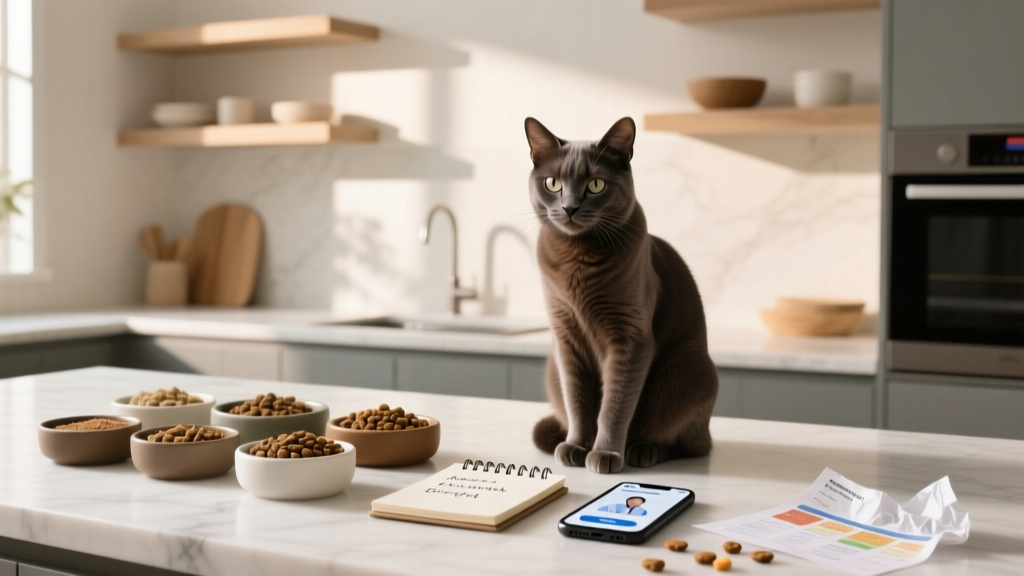
Before interpreting anything, you must know what’s *normal* for *your* cat. Most owners skip this critical phase—and then mistake baseline quirks for red flags. Start by choosing one quiet, low-distraction room (e.g., your bedroom or a sunlit corner of the living room) and commit to 15 minutes of uninterrupted, non-intrusive observation per day for three consecutive days. No treats. No toys. No calling their name. Just watch—and record. Use a simple notebook or voice memo app to log: time of day, location, posture (crouched? stretched? tail position?), ear orientation, pupil size, breathing rate, and any vocalizations (even subtle chirps or trills). Dr. Sarah Wooten, DVM and certified feline behavior consultant, emphasizes: ‘Baseline isn’t static—it’s dynamic. A cat who naps 18 hours a day at age 3 may only sleep 14 at age 10. Your data must reflect individual rhythm, not textbook averages.’
Key pitfalls to avoid: anthropomorphizing (e.g., assuming ‘guilt’ after scratching furniture) or conflating fear with aggression. Instead, ask: ‘What preceded this behavior?’ and ‘What did my cat do *immediately after*?’ Context is everything. In one documented case, a 5-year-old Siamese began urinating on laundry piles—not out of spite, but because her owner had recently switched detergents. The new scent masked her own pheromones, triggering territorial insecurity. Only baseline tracking revealed the timing correlation: incidents occurred within 90 minutes of laundry being folded and left out.
Step 2: Decode the Silent Language—Body, Face, and Space
Cats communicate primarily through micro-expressions and spatial choices—not meows. In fact, adult cats rarely meow at other cats; they reserve it almost exclusively for humans (a fascinating adaptation noted in a 2021 University of Sussex study). So when your cat meows persistently at dawn, it’s not ‘demanding breakfast’—it’s signaling a mismatch between their natural crepuscular rhythm and your human schedule. Here’s how to read the subtler, more reliable signals:
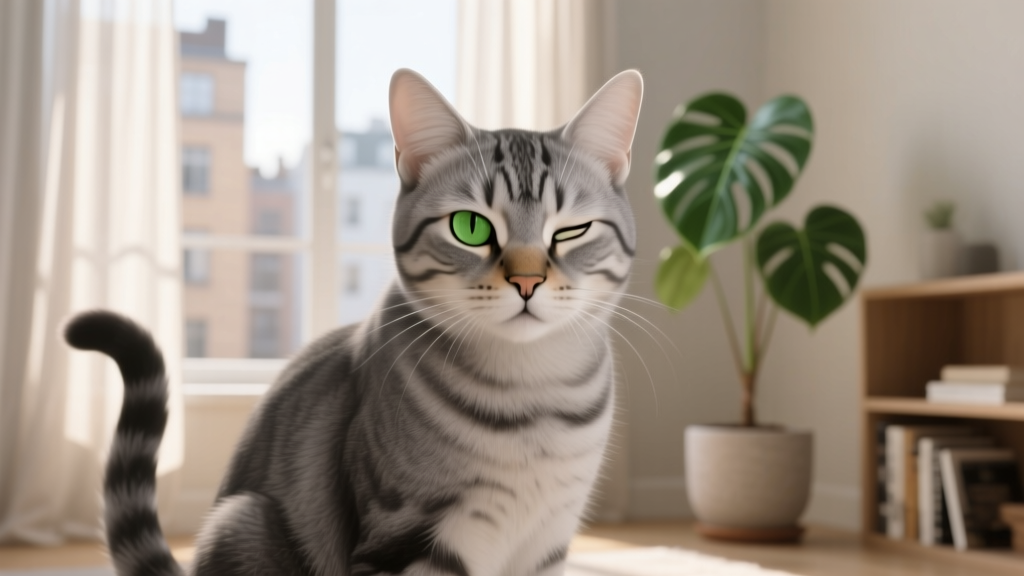
- Ears: Forward and slightly tilted = relaxed curiosity. Swiveling rapidly = scanning for threats. Flattened sideways (‘airplane ears’) = acute fear or defensive readiness.
- Tail: Upright with quiver = greeting + affection. Low and twitching = irritation or hunting focus. Puffed and arched = full-blown fear response (‘Halloween cat’).
- Eyes: Slow blinks = trust signal (‘cat kisses’). Dilated pupils in low light = normal. But if pupils stay dilated in calm, well-lit rooms? Likely hyperarousal or pain.
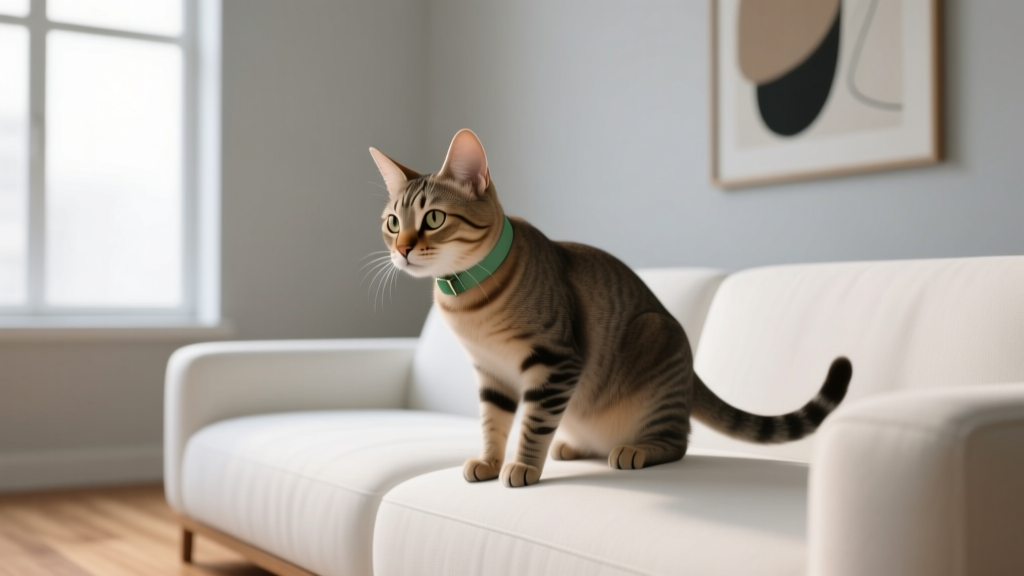
- Space use: A cat sleeping under the bed daily isn’t ‘shy’—they’re self-regulating sensory input. Conversely, sudden avoidance of favorite perches may indicate joint pain (common in cats >7 years) or aversion to a nearby air vent’s noise/frequency.
Pro tip: Film short clips (with consent if sharing online) during routine moments—mealtimes, play sessions, or post-nap stretches. Review at 0.5x speed. You’ll spot flickers of ear movement, whisker tension, or shoulder hunching invisible in real time. One shelter behaviorist used this method to identify early osteoarthritis in 12 senior cats—before X-rays confirmed joint degeneration.
Step 3: Map the Enrichment Gap—Where Stimulus Meets Stress
Indoor cats aren’t ‘bored’—they’re biologically wired for 12–16 hours of daily predatory activity: stalking, chasing, pouncing, capturing, and consuming. Confinement without outlets doesn’t cause laziness; it causes allostatic load—the physiological wear-and-tear from chronic, unresolved stress. The solution isn’t just ‘more toys.’ It’s designing an environment that satisfies the *sequence* of the hunt. Veterinary behaviorist Dr. Tony Buffington (Ohio State) calls this the ‘Predatory Sequence Framework’: Search → Stalk → Chase → Pounce → Kill → Eat → Groom → Sleep. Most commercial toys stop at ‘chase.’
So how do you study whether your cat’s environment meets these needs? Conduct a ‘Stimulus Audit’: Walk through each room noting: (1) Vertical space (cat trees, shelves, window perches), (2) Visual access to the outdoors (bird feeders visible? Squirrel traffic?), (3) Novel scent sources (rotating safe herbs like catnip or silvervine), (4) Puzzle feeders used *daily*, and (5) Safe hiding spots with multiple exits (crucial for stress resilience). Then compare against your baseline logs. Do you see increased ‘searching’ behaviors (nose-to-the-floor sniffing, head-turning) near puzzle feeders? Does your cat spend >5 minutes watching birds vs. 30 seconds? These are measurable indicators of engagement—not guesswork.
| Stimulus Category | What to Observe (During 15-Min Sessions) | Healthy Indicator | Red Flag Sign |
|---|---|---|---|
| Vertical Exploration | Time spent climbing, perching, or surveying from height | ≥3 separate vertical locations used weekly | No vertical use for >72 hours; flattened posture on floor |
| Foraging Activity | Interaction with food puzzles or scattered kibble | Spends ≥4 mins actively working puzzle (not just batting) | Leaves puzzle untouched; eats only from bowl |
| Sensory Variety | Response to new scents/textures (e.g., crinkly paper, dried lavender) | Sniffing + pawing + rolling within 30 sec | Avoidance, lip-licking, or rapid grooming after exposure |
| Play Completion | Post-play behavior after interactive session | Grooms then sleeps deeply (≥20 min) | Immediately hides, overgrooms, or attacks owner’s hand |
| Rest Quality | Depth & location of sleep cycles | Multiple deep-sleep episodes in open, elevated spots | Only sleeps in enclosed spaces (boxes, closets); shallow, twitchy sleep |
Step 4: Recognize the Subtle Escalation Ladder—From Whisper to Warning
Cats rarely jump from contentment to crisis. They emit escalating signals—most owners miss the first three tiers. Think of it as a 5-step ladder:
- Whisper: Increased blinking frequency, gentle tail-tip flicks while resting (mild alertness)
- Murmur: Brief ear swivels toward sounds, brief pauses mid-grooming, slight whisker retraction
- Statement: Hiding for >2 hours/day, reduced appetite, excessive licking of one body area (e.g., belly)
- Shout: Urinating outside the box, aggressive swatting at ankles, vocalizing at night
- Scream: Self-mutilation, refusal to eat for >24 hrs, trembling, panting at rest
The goal of studying cat behavior isn’t to wait for Tier 4—it’s to intervene at Tier 2. In a landmark 2020 Cornell Feline Health Center study, cats whose owners identified and adjusted environmental stressors at Tier 2 showed 89% fewer veterinary visits for behavioral issues over 12 months versus controls. One owner noticed her Maine Coon began ‘murmuring’—frequent ear swivels and paused grooming—every time the neighbor’s dog barked. She installed sound-dampening curtains and added white noise during peak barking hours. Within 10 days, the behavior vanished. No medication. No trainer. Just attentive observation + targeted intervention.
Frequently Asked Questions
How long does it take to accurately study cat behavior?
Consistency matters more than duration. Aim for 15 minutes daily for 14 days to establish reliable patterns. Research shows behavioral baselines stabilize after Day 7 for 78% of cats—but Days 10–14 reveal contextual triggers (e.g., weekend vs. weekday routines, visitor effects). Avoid ‘binge-watching’—sporadic 2-hour sessions create skewed data.
Can I use video cameras to study my cat’s behavior when I’m away?
Yes—with caveats. Use motion-activated, non-intrusive cameras (no flashing lights or audio recording unless legally compliant). Focus on high-traffic zones: feeding areas, litter boxes, and favorite napping spots. Review footage for *duration* (how long they linger near windows) and *repetition* (how many times they scratch the same spot), not just isolated events. Never use cameras to monitor for ‘misbehavior’—this undermines trust and skews natural behavior.
My cat seems ‘perfect’—no issues. Do I still need to study their behavior?
Absolutely. ‘Perfect’ often means ‘successfully suppressing stress.’ Healthy cats display micro-variations daily: different nap locations, altered grooming sequences, shifts in toy preference. Tracking these nuances helps you detect deviations *early*. One client’s ‘flawless’ 8-year-old Persian began spending 2 extra minutes rubbing her chin on the doorframe each morning—subtle, but consistent. A vet visit revealed early-stage dental resorption, treatable before pain escalated.
Should I keep a journal or use an app?
Start analog. Pen-and-paper journals reduce cognitive load and improve observational focus (per UC Davis Human-Animal Interaction Lab, 2023). Once patterns emerge, transition to digital tools like ‘CatLog’ or ‘Feliway Tracker’ for trend analysis. Avoid apps that auto-interpret behavior—they lack nuance and may pathologize normal quirks.
What if I notice concerning behavior during my study?
Rule out medical causes first. Schedule a vet visit with your behavioral notes in hand—including timestamps, duration, and antecedents. Many ‘behavioral’ issues (e.g., litter box avoidance) stem from UTIs, arthritis, or hyperthyroidism. As Dr. Wooten states: ‘If it’s new, it’s medical until proven otherwise.’
Common Myths About Studying Indoor Cat Behavior
Myth #1: “Cats are aloof and don’t want interaction—so studying them is pointless.”
Reality: Cats form strong social bonds but express them differently. A 2022 Oregon State University study found 64% of indoor cats show secure attachment to owners—demonstrated by seeking proximity when stressed, not just when fed. Studying reveals *how* they seek connection: following you room-to-room, sitting beside you while you work, or bringing ‘gifts’ (toys, socks).
Myth #2: “If my cat eats, uses the litter box, and sleeps, they’re fine.”
Reality: These are survival behaviors—not wellness indicators. A cat with chronic kidney disease may eat normally for months while bloodwork deteriorates. Likewise, litter box use doesn’t rule out urinary discomfort—many cats urinate outside due to pain association, not defiance.
Related Topics (Internal Link Suggestions)
- Indoor Cat Enrichment Ideas — suggested anchor text: "indoor cat enrichment ideas"
- Signs of Stress in Cats — suggested anchor text: "signs of stress in cats"
- Best Puzzle Feeders for Cats — suggested anchor text: "best puzzle feeders for cats"
- How to Introduce a New Cat Safely — suggested anchor text: "how to introduce a new cat safely"
- Feline Hyperesthesia Syndrome Explained — suggested anchor text: "feline hyperesthesia syndrome"
Your Next Step Starts Today—Not Tomorrow
Studying your indoor cat’s behavior isn’t a project—it’s an ongoing dialogue. You don’t need perfection. You need presence. Pick one 15-minute slot tomorrow. Sit quietly. Open your notebook. Watch—not to fix, not to judge, but to understand. Note where your cat chooses to be, how they hold their body, what catches their eye. That first entry is the foundation of deeper trust, earlier interventions, and a richer life—for both of you. Download our free 7-Day Cat Behavior Tracker (PDF) to get started with pre-formatted observation grids, body language quick-reference cards, and vet-approved interpretation prompts—designed specifically for indoor cats.