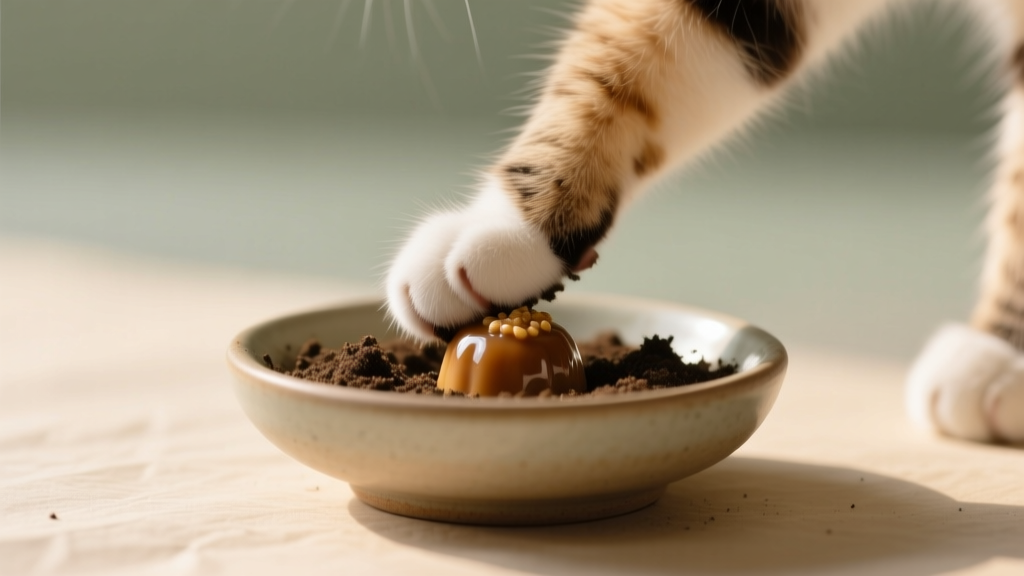
Cat Paw Burying Treats: Food Preservation Instinct
You open the treat bag and your cat appears like magic—tail up, eyes bright, the whole “I was starving and you took your time” performance. You toss a few treats onto the floor. Crunch, crunch… and then something odd: your cat eats one, sniffs the next, and starts scratching the floor beside it like they’re trying to cover it with invisible sand. Maybe they even pat at the treat, circle it, and “bury” it with a few serious paw-sweeps.
If you’ve ever watched this and thought, “Are you saving it for later? Are you offended by my treat selection? Are you… doing interior design?”—you’re in excellent company. Paw-burying treats is one of those behaviors that feels hilariously human until you realize it’s powered by ancient feline instincts.
Why Cats “Bury” Treats: The Evolutionary Backstory
Domestic cats may live in climate-controlled luxury, but their brains are still running a survival-savvy operating system. In the wild, food is valuable, unpredictable, and sometimes risky to advertise. Many small predators and scavengers—cats included—have behaviors that help them manage leftovers and reduce conflict.
At its core, paw-burying is about two things:
- Food preservation: Saving something for later by hiding it (or attempting to) from competitors.
- Scent management: Reducing odor that could attract other animals—or signal “Hey, I’ve got food!” to a rival.
This connects to a broader feline habit: covering evidence. Think of how many cats scratch to cover their waste in the litter box. That instinct comes from balancing safety and territory—some cats hide scents to avoid drawing attention, while more confident cats may leave scents uncovered as a statement. With treats, a similar internal calculation can happen: “I’m not eating this now, and I don’t want anyone else to claim it.”
Even though your living room isn’t a savannah, your cat’s instincts don’t always know that. If the treat smells strong, if there are other pets in the home, or if your cat feels uncertain about eating at that moment, the “hide it” program can kick in.
What the Behavior Looks Like (and What It Means) in Different Situations
Not all paw-burying is created equal. The context often tells you whether your cat is saving, avoiding, or communicating something.
1) The “I’m Saving This for Later” Scratch
Your cat eats a few treats, then starts pawing near the remaining ones. They may glance around, sniff again, and perform a few deliberate scratching motions on the floor beside the treat. Sometimes they’ll even move it slightly with their nose.
What’s going on: Your cat is motivated to keep the treat but not to eat it right now. They may be full, distracted, or simply practicing a stash-and-return strategy.
2) The “This Smells Too Strong” Cover-Up
Some treats (especially fishy ones) have an intense odor. A cat may sniff, recoil a tiny bit, then paw at the floor as if trying to cover the smell. This can look a lot like litter-covering.
What’s going on: This can be mild aversion, sensory overload, or an attempt to reduce a scent they find “too much.” It doesn’t always mean the treat is bad—just that the smell is bold.
3) Multi-Pet Homes: The “Don’t Let the Others See This” Move
If you have another cat (or a nosy dog), you might notice paw-burying happens more often. Your cat might carry the treat away, drop it somewhere “safer,” then scratch around it.
What’s going on: This is classic resource management. Your cat is trying to reduce the chance of someone else finding it or challenging them for it.
4) The “I Want It, But Not Here” Relocation Ritual
Some cats will pick up the treat, walk a few steps, drop it, then scratch around it. Or they’ll attempt to push it under a rug edge, into a corner, or behind furniture.
What’s going on: Your cat is seeking a more secure stash location. Cats prefer to eat (and store) resources where they feel safe.
5) The “I’m Done Eating” Signal
You’ll sometimes see this after a meal, not just with treats. The cat scratches near the bowl or on the floor next to it.
What’s going on: This can be the feline equivalent of “closing the kitchen.” It may be habit, tidying, scent management, or a subtle message: “No more right now.”
What Paw-Burying Says About Your Cat’s Mood
This behavior can reveal a lot about how your cat is feeling in that moment—especially when you look at body language.
- Calm and content: Slow, methodical pawing; relaxed tail; ears neutral. Often a “saving for later” scenario.
- Unsure or cautious: Frequent sniffing; pausing; looking around; ears slightly to the side. Your cat might be assessing safety or the treat’s smell.
- Mildly annoyed or overstimulated: Quick, choppy scratching; tail flicks; walking away abruptly. Could mean “too much smell” or “not in the mood.”
- Guarded around other pets: Body between the treat and the room; rapid eating followed by burying; watchful staring. Resource anxiety may be in play.
A helpful lens: paw-burying is often a management behavior—your cat is trying to control their environment (food, scent, access) in a way that makes them feel secure.
Related Quirky Behaviors You Might Notice
If your cat buries treats, you may also spot these cousin behaviors:
- Scratching around the food bowl: Sometimes after eating, sometimes before. Not always about sharpening claws—often about scent and ritual.
- Covering food with objects: Cats may drag a sock, paper, or toy near the bowl like an adorable (and ineffective) “lid.”
- Carrying food away: Some cats prefer to eat in a safer spot. This is common in cats who feel exposed while eating.
- Caching toys: “Hiding” toys in corners or under furniture can be a play-version of resource storing.
- Burial gestures on hard floors: Cats will do the motion even when there’s nothing to move—instinct doesn’t require success to be expressed.
When It’s Normal (and When It Might Be a Concern)
Most of the time, paw-burying treats is perfectly normal—just your tiny predator doing tiny predator things. Still, behavior always deserves a quick wellness check when patterns change.
Likely Normal
- Your cat occasionally buries treats but otherwise eats normally.
- The behavior happens more with certain smelly treats or in certain locations.
- Your cat seems relaxed and returns later to eat the treat (or tries to).
Possible Concern Signals
- Sudden refusal of favorite treats paired with burying, especially if appetite drops overall.
- Repeated pawing and walking away from meals, not just treats—could indicate nausea, dental pain, or stress.
- Obsessive scratching near food that escalates, looks frantic, or disrupts normal routines.
- Weight loss, drooling, bad breath, pawing at the mouth, or chewing on one side—these can point to dental problems.
- Resource tension in multi-pet homes (blocking, stalking, fights, “drive-by” stealing).
If you’re seeing appetite changes, signs of pain, or escalating stress around food, a vet check is a smart first step. When health is ruled out, a behavior plan can help with household dynamics and feeding routines.
How to Respond (and When to Encourage It)
You don’t need to “correct” paw-burying. It’s usually harmless communication mixed with instinct. The goal is to support your cat’s comfort and keep treats safe and hygienic.
1) Offer Smaller Portions
If your cat regularly tries to stash treats, give fewer at a time. This lets them finish without feeling like they need to manage leftovers.
2) Use a Treat Mat or Shallow Dish
If the scratching is loud or damages floors, a small silicone mat can redirect the behavior to a safe surface—your cat still gets to do their ritual without redecorating your hardwood.
3) Create a “Safe Snack Spot”
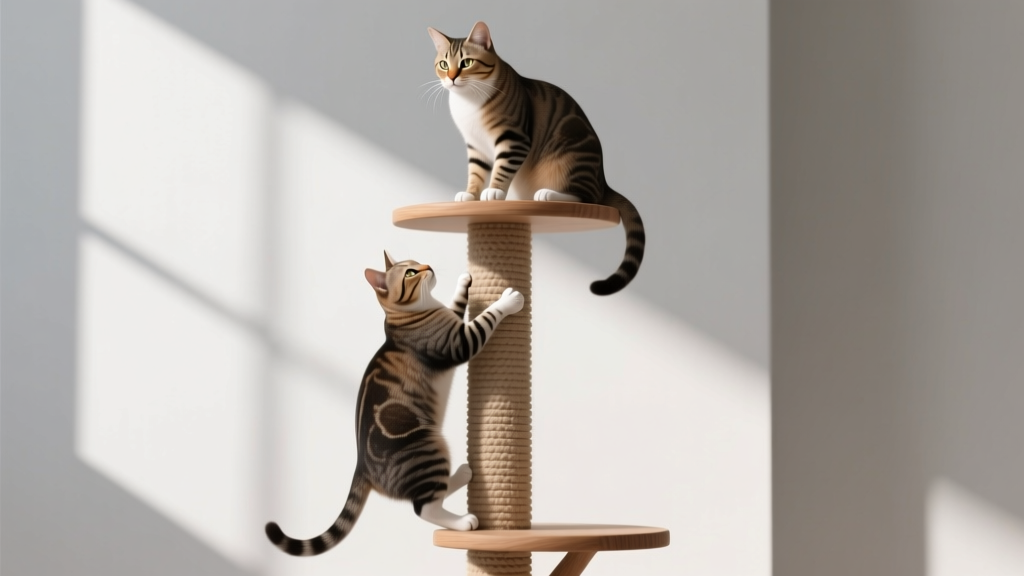
Some cats bury food because they feel exposed. Try feeding treats in a quieter corner, on a cat tree platform, or in a low-traffic room.
4) Prevent Pet-to-Pet Tension
If you have multiple pets, separate treat time. Give each pet their own space, and pick up leftovers quickly. Reducing competition often reduces caching and burying attempts.
5) Don’t Leave Perishables Out
If your cat “buries” wet treats or moist food, remove it after a reasonable time. Instinct doesn’t equal food safety—covered leftovers can spoil.
6) Turn It Into Enrichment
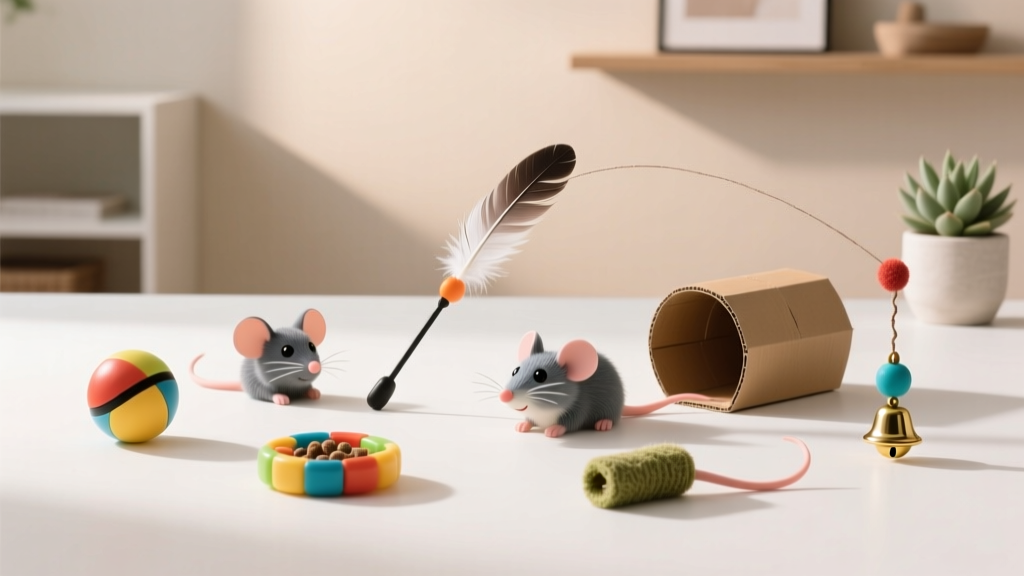
If your cat seems to enjoy the ritual, you can channel it into healthy foraging behaviors: puzzle feeders, treat balls, or scatter-feeding a few pieces in a snuffle-style mat designed for cats. It scratches the “hunt and manage resources” itch in a cleaner way.
Fun Facts and Research-Flavored Nuggets
- The burying motion is a “fixed action pattern.” In plain terms: cats have built-in behavior sequences that can trigger even when the environment (like a tile floor) doesn’t cooperate.
- Scent is social information for cats. Managing scent around food can be a way of reducing attention from other animals—especially in multi-cat settings.
- Not all cats cover things for the same reason. Personality, confidence, early experiences, and household competition all shape whether a cat hides resources or boldly leaves them out.
- Some cats stash to control timing, not hunger. A cat might love a treat but prefer to eat it later when they feel safer, calmer, or less observed.
FAQ: Cat Paw Burying Treats
Why does my cat scratch the floor next to a treat but not cover it?
Because the behavior is instinctive, not logical. Your cat’s brain is performing a “cover it” routine even if the surface can’t be moved. It’s the same reason some cats “dig” on blankets—motion first, results second.
Does burying mean my cat hates the treat?
Not necessarily. It can mean they’re full, distracted, or saving it. If your cat sniffs, makes a face, and consistently refuses that treat type, then yes—taste or smell may be the issue.
Is my cat trying to hide food from me?
Your cat isn’t plotting against your snack budget, but they may be managing access. If they’ve learned that food disappears quickly—or that another pet steals it—hiding becomes a reasonable strategy.
My cat buries treats but never comes back for them. Why?
Some cats stash impulsively, then lose interest, or they forget the location (especially if it wasn’t truly hidden). It can also mean the treat was interesting enough to manage, but not appealing enough to eat.
Can I train my cat to stop doing it?
You can reduce it by changing the setup: smaller portions, quieter feeding spots, separate pets during treats, and removing leftovers. “Stopping” the instinct entirely isn’t the goal—comfort and practicality are.
Should I worry if my cat starts doing this suddenly?
If it’s paired with appetite changes, chewing discomfort, weight loss, vomiting, or hiding behavior, talk to your vet. Sudden changes around food can be medical or stress-related.
That little paw-scrape beside a treat is one of those moments where you can practically see your cat’s wild ancestry flicker on—right there on your kitchen floor, under your perfectly modern lighting.
If your cat has a particularly dramatic “burying” technique (bonus points for trying to cover treats with a sock), share your story on catloversbase.com. Cat quirks are better when we compare notes.