Why Cats Sleep With Eyes Half Open
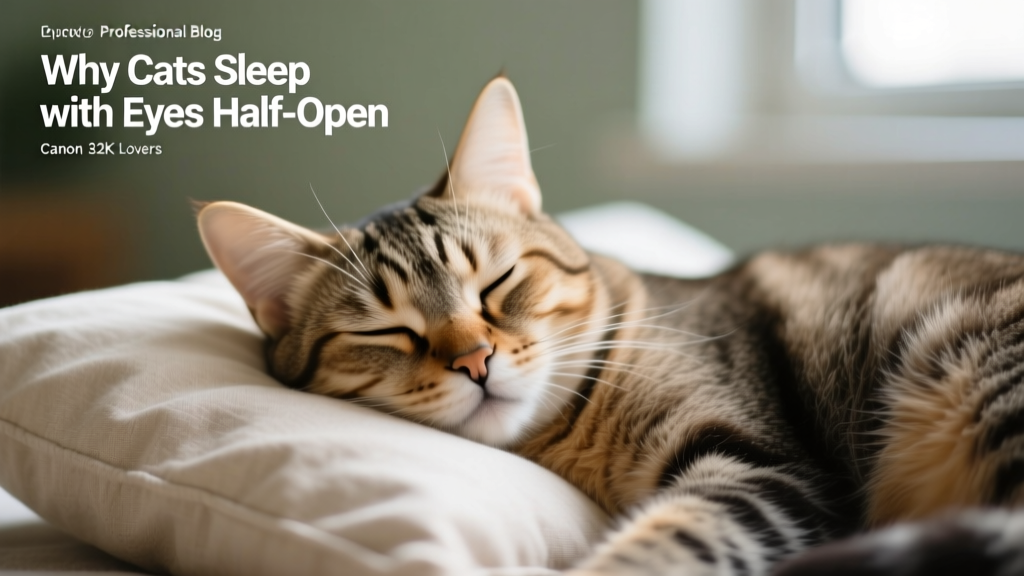
You glance over at your cat curled up on the couch—paws tucked, tail wrapped like a fuzzy comma. The room is quiet. They look completely asleep… except their eyes are slightly open. Not wide, not alert, just a half-moon sliver of eyeball peeking out like they’re keeping tabs on you. You pause mid-step because, honestly, it’s a little creepy. Are they okay? Are they secretly awake? Are they judging you for opening a snack without sharing?
Good news: in many cases, a cat sleeping with eyes half open is totally normal. It’s one of those wonderfully weird feline habits that makes perfect sense once you view it through a cat’s brain—part hunter, part prey, part professional nap enthusiast.
1) The Scientific & Evolutionary “Why”
Cats are masters of “resting while ready.” In the wild (and in the living rooms of their ancestors), sleeping too deeply at the wrong time could mean becoming someone else’s lunch. Even though your house cat has a heated blanket, a full bowl, and zero predators other than the vacuum, their nervous system still runs on old programming.
Here’s what’s happening under the hood:
- Survival instincts: Cats evolved as both predators and potential prey. That double role tends to produce animals that nap often but stay capable of waking fast.
- Light sleep is common: Cats spend a lot of time in lighter sleep stages (especially dozing). During these phases, you may see partially open eyes, ear twitches, or a tail tip flick.
- Third eyelid involvement: Cats have a protective inner eyelid called the nictitating membrane (often called the “third eyelid”). When a cat is very relaxed or drowsy, you might see a pale or slightly translucent film at the inner corner of the eye. This can look like “half open” eyes even when they’re quite sleepy.
So while it can look like your cat is plotting something, it’s often just a normal feline strategy: conserve energy while staying semi-aware.
2) A Detailed Breakdown: Different Contexts Where You’ll See It
Cats don’t sleep the same way in every situation. Where they sleep, how safe they feel, and how tired they are all influence what their eyes do.
They’re in a high-traffic spot
If your cat is napping in the hallway, on the edge of the sofa, or near the kitchen where humans stomp around, half-open eyes can be a “monitoring mode.” They’re resting, but they’re also keeping a tiny thread of attention on the environment—like a security guard who’s technically on break.
They’re dozing, not deeply asleep
Many cats cycle through short naps all day. During a light doze, eyelids may not fully shut. You might also notice:
- slow blinking that never fully closes
- ears rotating toward sounds
- whiskers twitching when you move
They’re “sleeping” socially near you
Cats often nap near the people they trust, but they may still keep their eyes slightly open—especially if you’re moving around. Think of it as, “I’m comfortable enough to rest near you, but I’m also staying updated on your nonsense.”
They’re warm, cozy, and in a weird position
Sometimes it’s purely physical. A cat sprawled in a sun puddle or wedged behind your knees may relax their facial muscles so much that the eyelids don’t fully seal. The body is saying “off duty,” while the eyelids are just… halfway committed.
They just finished grooming or were interrupted
A cat who was grooming and then suddenly decides to nap can drift off quickly without fully “closing up shop.” If they were disturbed mid-rest, they may settle back down with eyes slightly open to keep watch for another interruption.
3) What It Means About Your Cat’s Mood & Feelings
The same behavior can mean different things depending on the rest of your cat’s body language. Here are the most common emotional “translations”:
- Relaxed but alert: Body loose, paws tucked or gently curled, breathing slow. Eyes half open may simply mean light sleep.
- Secure enough to nap near activity: If they choose to sleep near you—even with half-open eyes—it’s often a sign they feel generally safe in the home.
- Mildly vigilant or easily startled: If their muscles seem tense, ears are pinned or constantly swiveling, and they “snap awake” often, half-open eyes may reflect stress or hyper-awareness.
- Not fully settled: Frequent repositioning, tail flicking, and half-open eyes can mean your cat wants to rest but doesn’t feel comfortable enough to fully commit.
A helpful rule: trust the whole cat, not just the eyes. A cat can have half-open eyes and still be perfectly content if their posture and breathing say “calm.”
4) Related Behaviors You Might Also Notice
Cats are rarely “still” sleepers. If your cat sleeps with eyes half open, you might also spot these classic feline sleep quirks:
- Ear radar: Ears pivoting toward tiny sounds while the cat remains motionless.
- Tail-tip twitching: Often a sign of light sleep, dream activity, or mild stimulation from nearby movement.
- Whisker trembles: Sometimes dream-related, sometimes triggered by scents or air movement.
- “Pretend sleeping”: Some cats keep their eyes barely open when they suspect you might pick them up, move them, or—worst of all—stop petting them.
- Slow blinking while drowsy: A cat might drift in and out with partial blinks that look like mini “I love you” signals.
5) When Half-Open Eyes Are Normal vs. When to Be Concerned
Most of the time, this is harmless. That said, eyes are delicate, and a half-open look can occasionally signal discomfort or illness. Here’s how to tell the difference.
Usually normal if:
- Your cat wakes up easily and acts normal afterward
- There’s no redness, discharge, or swelling
- Both eyes look similar (symmetrical)
- Your cat’s appetite, energy, and litter box habits are normal
Worth a call to your vet if you notice:
- Discharge (yellow/green gunk, excessive tearing, crustiness)
- Redness or visible irritation
- Squinting or keeping one eye half closed (especially one-sided)
- Cloudiness or a bluish/gray haze on the eye surface
- Third eyelid showing a lot or suddenly appearing more than usual
- Frequent pawing at the face or rubbing the eye area
- Behavior changes (hiding, not eating, unusual aggression, lethargy)
Eye issues can progress quickly in cats, so it’s smart to get professional guidance if something looks off. If your cat seems in pain, can’t open an eye, or the eye looks injured, treat it as urgent.
6) Tips for Responding to (or Encouraging) This Behavior
You don’t need to “fix” half-open-eye sleeping if your cat is healthy. But you can respond in ways that help your cat feel safe enough to truly relax—fully closed eyelids and all.
- Respect the nap zone: If your cat dozes with eyes half open in a busy area, consider whether they’re being disturbed. Avoid sudden loud noises, and teach kids “sleeping cats are off-limits.”
- Offer better sleeping spots: Add a cozy bed in a quiet corner, a covered cat cave, or a high perch. Elevated and enclosed spaces help cats feel secure.
- Create predictable routines: Cats relax when life is readable. Regular feeding times, consistent play sessions, and calm evenings can reduce vigilance.
- Use slow blinks to communicate: If your cat’s eyes are half open and they’re watching you, give a slow blink and look away. It’s the feline version of “all good here.”
- Mind the room conditions: Bright light, drafts, or dry air can make eyes look more open or irritated. Gentle lighting and comfortable humidity can help.
- Don’t poke the bear (or the sleeper): Waking a cat abruptly can increase their “I must stay vigilant” habit. If you need them to move, call them softly or lure them with a treat rather than startling them.
The goal isn’t to force deeper sleep—it’s to support your cat’s sense of safety. When cats feel secure, their bodies naturally soften.
7) Fun Facts & Research Nuggets About Cat Sleep
- Cats are champion nappers: Many adult cats sleep or rest 12–16 hours a day (and some do even more). That includes both deep sleep and lighter dozing.
- They’re built for short bursts: Cats evolved to hunt in quick sprints, not marathon chases. Lots of rest supports that “burst energy” lifestyle.
- The third eyelid is a built-in shield: The nictitating membrane helps protect and lubricate the eye. Seeing it briefly while your cat is drowsy can be normal, especially after waking.
- Sleeping near you is social: Cats often choose sleeping locations based on safety and social comfort. If your cat naps near you—even half-eyed—it’s often a quiet compliment.
FAQ: Common Questions About Cats Sleeping With Eyes Half Open
1) Is my cat actually asleep if their eyes are half open?
Often, yes. Cats can be in light sleep with partially open eyes, especially if they’re in a stimulating environment. If your cat’s breathing is slow and their body looks relaxed, they’re likely dozing or lightly asleep.
2) Why does my cat sleep with one eye more open than the other?
If it’s occasional and subtle, it may be a relaxed facial position. If it’s frequent, clearly one-sided, or paired with squinting, discharge, or redness, it could indicate irritation, a scratch, or an eye condition—worth checking with your vet.
3) Does this mean my cat doesn’t trust me?
Not necessarily. Many cats do this out of habit or because they’re resting lightly. Trust shows up in the bigger picture: choosing to nap near you, relaxed posture, slow blinks, normal appetite, and comfort in the home.
4) I can see the “third eyelid” when my cat is sleepy. Is that normal?
A small glimpse when your cat is drowsy or just waking can be normal. If the third eyelid stays visible for long periods, appears suddenly, or comes with illness signs (lethargy, not eating, eye discharge), consult your vet.
5) Can dry eye or irritation cause half-open sleeping?
It can. If a cat is uncomfortable, they may not fully close the eye, or they may squint and blink more. Watch for redness, discharge, frequent blinking, or pawing at the face.
6) Should I wake my cat if they’re sleeping with eyes half open?
If they’re otherwise fine, no need. Let them rest. If you suspect pain, injury, or unusual symptoms, gently observe and contact your vet for guidance rather than trying to “test” the eye yourself.
A Final Thought
Cats have a talent for looking mysterious while doing something totally ordinary. Sleeping with eyes half open is often just your cat’s way of balancing comfort with caution—a leftover survival skill wrapped in a modern-day nap.
Have you caught your cat doing the half-open-eye snooze? Share your funniest “I thought they were awake” moments (and your best nap-spot photos) with the Cat Lovers Base community at catloversbase.com. Your cat’s quirky sleep habits might be exactly what another cat parent needs to read today.