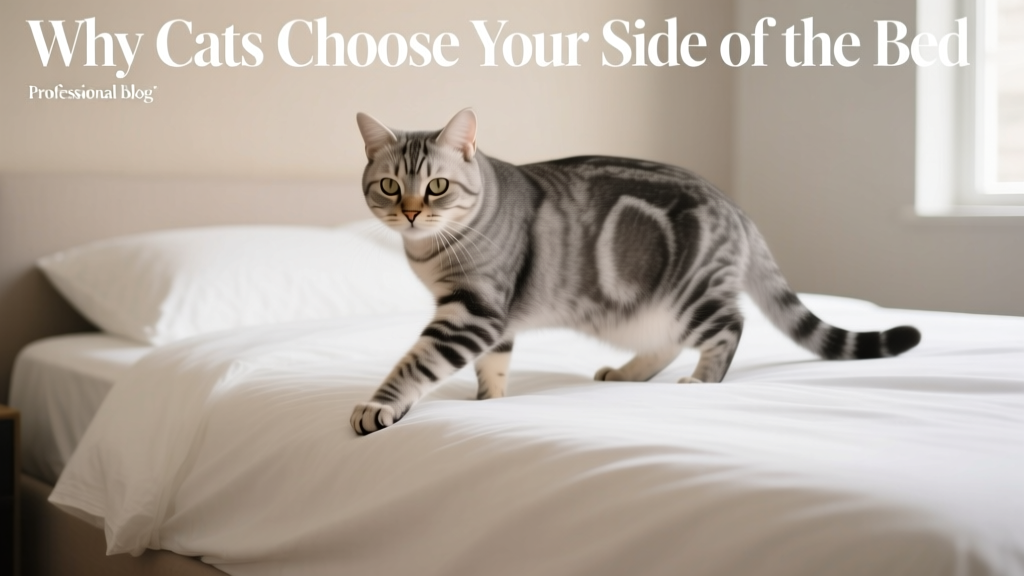
Why Cats Choose Your Side of the Bed
You do the bedtime routine. Teeth brushed, lights out, you slide under the covers… and there it is: a warm, smugly curled cat on your side of the bed. Not the wide-open side. Not the fancy cat bed you bought that looks like a tiny designer sofa. Your side. The spot your body just vacated, still holding your heat like a freshly baked biscuit. You stand there negotiating with a creature who weighs eight pounds but radiates the confidence of a lion.
If you’ve ever asked, “Why do you always pick my spot?” you’re in good company. Cats choosing your side of the bed is one of those classic feline moves that feels personal—sometimes adorable, sometimes mildly rude, often both. The truth is, it is personal… just not in the “I’m plotting against you” way. It’s personal in the “you are my favorite warm, familiar, safe thing” way.
The science and evolution behind “your spot”
To understand this behavior, it helps to think like a small predator who also happens to be someone’s baby. Domestic cats descended from wildcats that survived by being alert, conserving energy, and choosing safe resting places. Sleep is vulnerable time for any animal—especially one that’s both hunter and potential prey. So a cat’s brain is constantly running a quiet background program: Where is the safest, warmest, most predictable place to rest?
Your side of the bed checks several instinctive boxes:
- Warmth conservation: Cats love heat. Your spot is often warmer than the rest of the bed because it’s pre-heated by your body. That warmth helps cats conserve energy—an evolutionary advantage for an animal built for short bursts of intense activity.
- Scent security: Cats rely heavily on scent for comfort and territory. Your sheets and pillowcase are saturated with your smell (and theirs, once they’ve been there). Familiar scent can lower stress and create a “safe zone.”
- Resource ownership: Beds are prime real estate: soft, elevated, centrally located, and typically quiet at night. Cats are natural resource managers. If something is valuable, it’s worth claiming.
- Social bonding: Despite their independent reputation, cats form strong attachments. Resting where you rest can be a form of closeness—like wearing your hoodie, but in cat form.
So yes, your cat is cozy. But they’re also doing what cats do: choosing the best sleep strategy with the information available—heat, scent, safety, and social comfort.
Different contexts: what “your side” can mean in real life
Not all bed-stealing is created equal. The details matter—timing, body language, and what else is going on in the household. Here are common scenarios and what’s likely behind them.
1) You get up for two minutes, and your cat teleports into your place
This is the classic “warm seat” effect. Cats are little heat-seeking missiles. If you get up to grab water and come back to find your spot occupied, your cat probably isn’t making a statement. They’re taking advantage of premium warmth that will fade quickly.
What you’ll notice: Your cat looks extra relaxed—loafed, curled, eyes half-closed. They may squint slowly when you approach, as if to say, “Oh, were you using this?”
2) Your cat sleeps on your side even when you’re not home
Now scent and security take center stage. Cats often cope with a human’s absence by hanging out in places that smell strongly like them. Your side of the bed can function like a giant comfort object.
What you’ll notice: Fur on your blanket, your pillow slightly dented, maybe a few “bonus” paw prints if your cat did a pre-nap knead.
3) Your cat chooses your side while you’re still in bed
If they consistently wedge themselves against you, tuck behind your knees, or settle near your torso, that’s often social bonding. Cats who trust you will sleep near you because you represent safety—your presence reduces their need to stay on high alert.
What you’ll notice: Purring, slow blinks, relaxed ears, occasional gentle headbutts or face rubs on the sheets near you.
4) Your cat picks your side specifically—over your partner’s
This is where cat owners start taking it personally (understandably). Often, the “preferred side” comes down to a mix of scent familiarity, routine, and who the cat is most bonded to. If you feed breakfast, do most play sessions, or simply spend more calm time together, your side may feel like the best social-and-safety bet.
Sometimes it’s also practical: maybe your side is nearer a window, a door, a favorite escape route, or the quietest corner of the room.
5) Your cat chooses your side and then blocks you from lying down
This can still be normal—cats can be hilariously stubborn—but it may also reflect a bit of boundary testing, especially in young confident cats. If your cat stiffens when you try to move them, swats, or growls, it’s less about cuddling and more about resource control.
Think of it as your cat saying, “This bed is important; I’m managing it.” Your job is to teach them they can have comfort without guarding behavior.
What it says about your cat’s mood and feelings
Your cat’s choice of sleeping spot is like a tiny emotional weather report. Here are some common “translations” based on body language and positioning.
- Curled up in a tight ball on your spot: Comfort-seeking, warmth-driven, feeling secure.
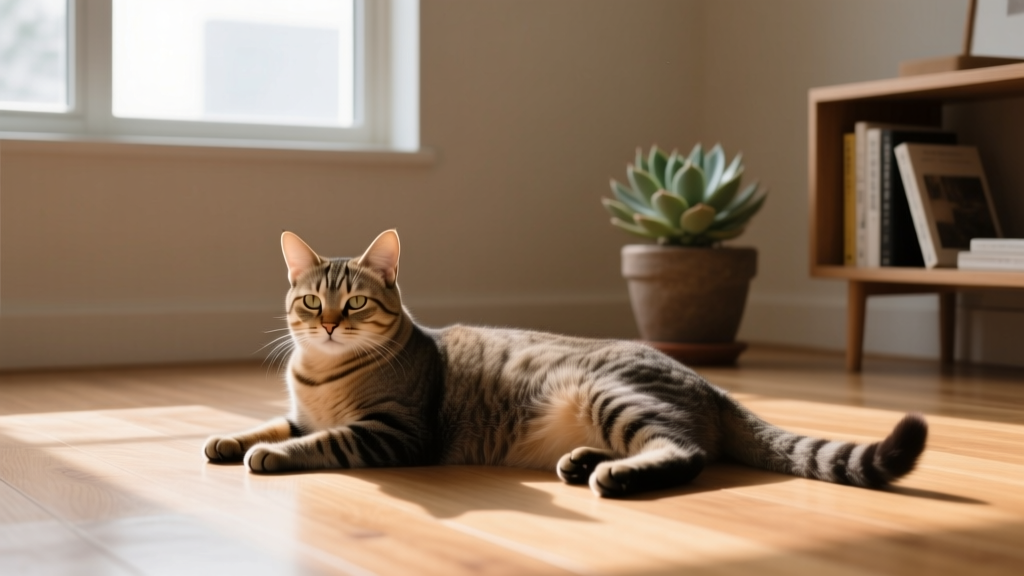
- Sprawled out like they pay rent: High confidence, relaxed environment, “I own this territory.”
- Sleeping pressed against your back or legs: Social bonding, trust, and a desire for closeness.
- Perched near your pillow: Strong attachment, interest in your scent, sometimes a gentle “I’m watching over you” vibe.
- Lying on your side but facing the door: Security strategy. Many cats position themselves to monitor entrances.
- Kneading your blanket on your side before settling: Self-soothing behavior tied to kittenhood; it often shows contentment.
In most cases, your cat choosing your side means you’re associated with safety and comfort. Not a bad reputation to have.
Related behaviors you might notice
If your cat is a “your-side sleeper,” you may also see a few companion quirks:
- Face-rubbing your pillow or sheets: Cats have scent glands on their cheeks. Rubbing deposits friendly “this is mine/this is safe” scent markers.
- Sleeping in your laundry basket: Same logic—your scent plus a cozy nest shape.
- Following you to bed like a bedtime supervisor: Some cats learn routines and treat bedtime as together-time.
- Stealing your chair the moment you stand: Heat + scent + “prime location” habit, just in the living room version.
- “Making biscuits” on your side only: A preferred comfort zone can become the go-to kneading spot.
When it’s normal… and when it might be a concern
Most bed-claiming is perfectly normal. It’s a cat doing cat math: warm + safe + smells-like-my-human = excellent.
That said, pay attention if you notice any of the following changes:
- Sudden clinginess or sudden avoidance: A big shift in sleeping behavior can signal stress, pain, or illness.
- Guarding your side aggressively: Growling, swatting, biting, or intense stiff body posture when you approach could indicate anxiety or resource guarding that needs behavior support.
- Restlessness at night: Pacing, vocalizing, repeatedly changing spots can be discomfort, hyperthyroidism in older cats, or stress.
- New preference for your side paired with hiding elsewhere during the day: Sometimes cats seek your scent when they’re feeling insecure—new pets, new baby, construction noises, visitors, schedule changes.
If the behavior comes with appetite changes, litter box changes, over-grooming, or increased irritability, it’s worth checking in with your veterinarian first. Pain and medical issues can masquerade as “weird new habits.”
How to respond (and how to encourage the sweet version)
If you love the behavior, you can gently encourage it while keeping everyone comfortable. If you don’t love losing your spot every night, you can redirect without hurting your cat’s feelings (yes, cats have feelings about this).
Encourage healthy bedtime bonding
- Create a “cat-approved” sleep zone near your side: A small fleece blanket or a cozy mat on your bed gives your cat a clear target. Bonus points if it holds warmth.
- Build a calm bedtime routine: A short play session (5–10 minutes) followed by a small snack can satisfy hunt-eat-groom-sleep instincts, making your cat more likely to settle peacefully.
- Reinforce calm settling: If your cat lies down nicely where you want them, offer quiet praise or gentle pets—only if they enjoy it.
Redirect without conflict
- Avoid physically dragging your cat: That can create negative associations with the bed and with you.
- Use the “trade up” method: Warm a cat bed with a heating pad (on a safe low setting designed for pets) or place a warm blanket nearby. Then lure your cat with a treat or toy and reward them for choosing the alternate spot.
- Teach an “off” cue: Many cats can learn a simple cue paired with a reward. Consistency matters more than volume—no need to scold.
- If guarding shows up: Increase resources (beds, perches), reduce stressors, and consider working with a qualified cat behavior professional. Don’t try to “dominate” a guarding cat—cats don’t work like that, and it often escalates conflict.
Fun facts and research-flavored tidbits
- Cats are heat lovers by design: A cat’s thermoneutral zone (the temperature range where they don’t have to spend extra energy staying warm) is higher than a human’s. That’s one reason your cat treats every warm rectangle—laptop, laundry, your side of the bed—like a treasure.
- Scent is a comfort language: Cats use scent marking not just to claim territory, but to create a familiar “family smell.” When your cat sleeps on your side, they’re mixing scents in a way that can reinforce social cohesion in their mind.
- Sleeping location is a security choice: Many cats prefer elevated or tucked-away resting spots. On a bed, that can translate to edges, corners, or positions that allow a view of the room and easy escape routes.
- Your routine becomes their routine: Cats are excellent pattern learners. If they’ve learned you get up at 6:30 a.m. and the day begins, your side of the bed can become part of their internal schedule—especially if morning attention or breakfast follows.
FAQ: Why cats pick your side of the bed
Is my cat choosing my side a sign they love me?
Often, yes—it can signal trust and comfort. But it can also be about warmth and habit. The strongest “love clues” are relaxed body language, slow blinking, choosing to settle near you even when other warm spots exist, and seeking gentle contact.
Why does my cat steal my spot the second I get up?
Your spot is freshly warm and smells like you. Cats are opportunistic snugglers. It’s the same reason they sit in the chair you just left—prime heat, prime comfort, minimal effort.
Why does my cat sleep on my pillow or near my head?
Your head area often carries the strongest, most consistent scent. Some cats also like the elevated feel of pillows or the steady rhythm of your breathing. If your cat wakes you by stepping on your face, offering an alternative cozy spot nearby can help.
Should I let my cat sleep in my bed?
If everyone sleeps well and no one has allergy or safety issues, it’s usually fine. If your cat becomes disruptive at night (zoomies, biting toes, demanding food), a bedtime play-and-snack routine and a comfortable alternative sleeping space can improve things quickly.
My cat chooses my side but bites when I try to move them—what does that mean?
That can be resource guarding or pain-related irritability. Start by ruling out medical causes with your vet, especially if the behavior is new. Then work on “trade up” redirection and avoid confrontational handling.
Why does my cat choose my side over my partner’s?
Usually a combination of bonding, scent preference, routine, and sometimes simple logistics (your side might be quieter or closer to a preferred view/exit). It’s not a moral judgment—cats are just very consistent about what feels best.
If your cat has claimed your side of the bed, you’re not alone—and you’re probably a major comfort signal in your cat’s world. Pay attention to the context and body language, and you’ll learn whether you’re seeing warmth-seeking, bonding, security behavior, or the occasional tiny power move.
Does your cat steal your spot every night, or do they have a more creative sleep obsession (laundry baskets, bathtubs, your freshly folded towels)? Share your funniest and sweetest bedtime stories with the Cat Lovers Base community at catloversbase.com.