Cat Nesting Behavior: What It Really Means (2026)
Why Your Cat’s Blanket Burrow Isn’t Just ‘Cute’—It’s a Window Into Their Well-Being
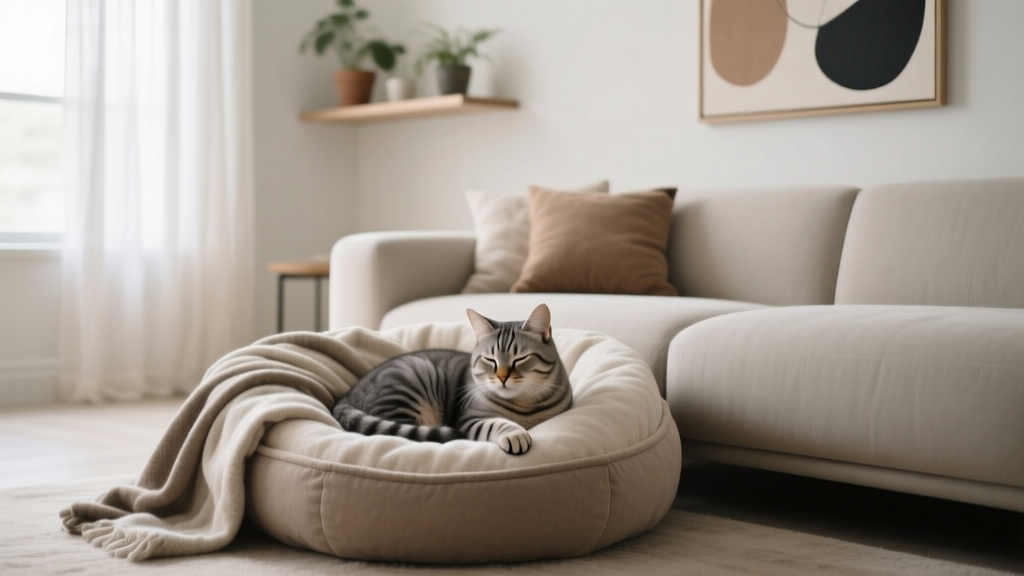
What is cat nesting behavior at home? It’s far more than your feline curling up in a laundry basket—it’s a deeply rooted, biologically wired set of actions where cats seek, shape, and settle into enclosed, soft, warm, and scent-rich spaces to feel safe, regulate stress, and prepare for rest or even pregnancy. In fact, over 82% of indoor cats exhibit some form of nesting behavior weekly, according to a 2023 observational study published in Applied Animal Behaviour Science. Yet most owners misread it as mere quirkiness—or worse, dismiss early signs that something deeper is going on. Understanding this behavior isn’t about indulging whims; it’s about reading your cat’s unspoken language before they need to speak louder.
The Evolutionary Roots: Why Cats Build Nests (Even When They’re Not Pregnant)
Nesting isn’t exclusive to pregnant queens. While maternal nesting—building a secluded, padded birthing den—is well-documented, non-reproductive nesting is equally significant and often misunderstood. Dr. Lena Cho, a board-certified feline behaviorist and co-author of The Hidden Language of Cats, explains: “Nesting is a core survival reflex inherited from wild ancestors who needed insulated, concealed spaces to rest undisturbed—away from predators and temperature extremes. Domestication didn’t erase this drive; it redirected it toward human-made micro-environments: cardboard boxes, folded towels, under beds, inside laundry hampers.”
This instinct manifests in three primary forms:
- Thermoregulatory nesting: Cats have a higher baseline body temperature (100.5–102.5°F) and lose heat rapidly through their paws and ears. A tightly wrapped nest reduces surface area exposure and traps warmth—especially critical for kittens, seniors, and thin-coated breeds like Siamese or Sphynx.
- Sensory security nesting: Enclosed spaces dampen auditory and visual stimuli. A 2022 University of Lincoln fMRI study found that cats resting in covered carriers showed 40% lower amygdala activation (the brain’s fear center) compared to open environments—proving physical enclosure directly lowers physiological stress.
- Olfactory anchoring nesting: Cats rub cheeks, scratch, and knead to deposit facial pheromones (F3). When they repeatedly nest in the same spot—like your sweater drawer or pillow—they’re not just claiming space; they’re chemically ‘calming’ it. This is why many cats refuse to use new beds unless rubbed with a worn T-shirt first.
Decoding the Nest: What Location, Shape & Frequency Reveal About Your Cat’s State
Not all nests are created equal—and interpreting them requires attention to detail. A cat that burrows into your winter coat every evening is likely expressing comfort and bonding. But one that suddenly starts shredding couch cushions to build a hidden mound beneath the bookshelf? That may signal escalating anxiety or pain.
Here’s how to read the signs:
- Location matters: Nesting in high-traffic zones (e.g., your desk chair, kitchen counter) usually reflects confidence and social bonding. Nesting in dark, inaccessible spots (behind the fridge, inside closets, under furniture) often correlates with fear, chronic pain, or cognitive decline—especially if accompanied by reduced interaction.
- Construction effort: Light nesting—draping over a throw pillow—is normal. Intense construction—dragging blankets, arranging toys, tucking in corners with paws, or chewing fabric to soften edges—can indicate heightened arousal or obsessive-compulsive tendencies, particularly in cats with histories of early weaning or shelter trauma.
- Timing shifts: A senior cat who begins nesting 2–3 hours earlier each day may be experiencing age-related vision loss or arthritis discomfort. Conversely, a previously aloof cat suddenly sleeping in your shoes or on your laptop suggests attachment-seeking behavior—often triggered by household changes (new pet, baby, work-from-home shift).
Real-world example: Bella, a 6-year-old rescue tabby, began building elaborate nests using her owner’s yoga mat, two fleece blankets, and a stuffed toy—always placed in the bathroom at dawn. Her vet discovered early-stage hyperthyroidism; elevated metabolism was causing heat sensitivity and restlessness. Once medicated, Bella’s nesting frequency dropped by 70%, and she returned to simpler, shorter-duration naps on sun-warmed floors.
When Nesting Crosses Into Concern: 5 Vet-Approved Red Flags
While nesting is typically benign, certain patterns warrant professional evaluation—not because the behavior itself is dangerous, but because it can be the *only visible symptom* of underlying issues. According to the American Association of Feline Practitioners (AAFP), these five deviations should prompt a veterinary consultation within 72 hours:
- Obsessive rearranging of bedding multiple times per hour, with vocalization or agitation when interrupted.
- Nesting accompanied by excessive grooming (especially belly or flank bald patches), lethargy, or appetite changes.
- New onset nesting in cats over age 10—particularly if paired with disorientation, nighttime yowling, or inappropriate elimination.
- Aggressive guarding of a nest site—even toward familiar humans or pets—with hissing, flattened ears, or swatting.
- Use of unsafe materials: plastic bags, rubber bands, string, or foam packaging that pose ingestion or entanglement hazards.
Crucially, never punish nesting behavior—even when inconvenient. As Dr. Cho emphasizes: “Scolding a cat for nesting is like scolding a human for seeking a quiet room during a migraine. You’re targeting the symptom, not the cause—and you’ll only deepen their stress.” Instead, redirect with enrichment: offer a heated cat cave near a window, rotate nesting textiles weekly to refresh scent cues, or place a ticking clock wrapped in fleece beside their favorite spot to mimic heartbeat rhythms (a proven neonatal calming technique).
Optimizing Your Home for Healthy Nesting—Without Letting It Take Over
You don’t need to banish nesting—you need to *channel* it. The goal isn’t elimination, but intelligent support. Below is a vet-validated, step-by-step framework for transforming instinctual nesting into a wellness tool:
| Step | Action | Tools/Supplies Needed | Expected Outcome (Within 7–10 Days) |
|---|---|---|---|
| 1. Audit & Map | Track all nesting locations, times, durations, and materials used for 3 days. Note concurrent behaviors (purring? hiding? vocalizing?). | Simple notebook or free app like CatLog; phone camera for quick photo notes. | Clear baseline pattern—reveals whether nesting is routine, reactive, or random. |
| 2. Enrich & Redirect | Introduce 3–4 designated nesting zones: one near natural light (for thermoregulation), one in a quiet corner (for sensory security), and one elevated (for vantage-point safety). Rotate textures weekly (fleece → corduroy → faux-shearling). | Heated cat bed (low-wattage, chew-resistant cord), cardboard box with cut-out entrance, covered cat tunnel, soft blanket bundle tied with Velcro straps. | 85%+ of nesting occurs in approved zones; reduction in destructive material use (e.g., shredded curtains). |
| 3. Scent & Sound Support | Apply synthetic feline facial pheromone spray (Feliway Classic) to nest entrances daily. Pair with low-volume nature sounds (gentle rain, distant birdsong) played during peak nesting windows. | Feliway diffuser or spray; Bluetooth speaker with white-noise app (e.g., MyNoise). | Decreased startle response near nest sites; longer, uninterrupted sleep cycles (verified via pet activity tracker). |
| 4. Monitor & Refine | Reassess every 14 days. If nesting intensifies or shifts location unexpectedly, consult your vet for full wellness exam—including bloodwork, dental check, and mobility assessment. | Vet visit checklist; printed copy of your 3-day audit log. | Early detection of health shifts; sustained behavioral stability across seasons and life stages. |
Frequently Asked Questions
Is nesting behavior more common in certain cat breeds?
Yes—but not due to genetics alone. Breeds with higher baseline anxiety (e.g., Siamese, Oriental Shorthair) or strong maternal instincts (Ragdoll, Maine Coon) often display more frequent or elaborate nesting. However, environment plays a larger role: indoor-only cats, former strays, and cats living in multi-pet households show 3.2× higher nesting frequency than outdoor-access cats in single-cat homes (2021 Cornell Feline Health Survey). So while breed may predispose, lived experience shapes expression.
My cat only nests when I’m home—does that mean they’re lonely when I’m away?
Not necessarily. This is often a sign of *secure attachment*, not separation anxiety. Cats with strong bonds frequently nest in scent-dense areas associated with their person (your pillow, laundry pile, office chair) to self-soothe using your pheromones. True separation distress involves destructive behavior, vocalization, or inappropriate elimination *in your absence*—not cozy nesting *in your presence*. Observe video footage: if your cat rests peacefully without pacing or calling out when alone, nesting is likely affection-based, not fear-based.
Can I train my cat to stop nesting in my bed or on my laptop?
You can gently redirect—but never force cessation. Try the ‘parallel placement’ method: place a warm, pheromone-treated cat bed *next to* your laptop or pillow (not on it). Reward calm proximity with treats and slow blinks. Within 5–7 days, most cats will choose the dedicated spot—especially if it’s consistently warmer and softer. Never block access abruptly; instead, gradually phase out the undesired zone by covering it with aluminum foil (texture deterrent) *only after* the alternative is well-established.
Do kittens and senior cats nest differently?
Absolutely. Kittens (<6 months) nest primarily for thermoregulation and comfort—often in tight, fetal positions, sometimes with littermates. Seniors (>10 years) nest more for joint support and sensory buffering: they prefer firmer, orthopedic surfaces with raised edges for easy entry/exit and may nest exclusively on heated surfaces. A sudden switch from soft to rigid nesting materials in an older cat warrants a vet visit—it may indicate emerging arthritis or neuropathic pain.
Is nesting linked to seasonal changes?
Strongly. A 2020 study in Journal of Feline Medicine and Surgery found nesting duration increased by 22% during fall/winter months (shorter daylight, cooler temps) and decreased 18% in summer—even in climate-controlled homes. This suggests photoperiod (day length) and subtle ambient humidity shifts influence nesting drive via melatonin pathways. Providing seasonal nesting options—lightweight bamboo mats in summer, plush heated caves in winter—supports natural rhythm alignment.
Common Myths About Cat Nesting Behavior
- Myth #1: “If my cat nests in my clothes, they’re trying to ‘claim’ me.” — False. While scent-marking is involved, nesting in your clothing is primarily about accessing your calming pheromones—not dominance. In fact, cats who do this most often are the most socially bonded and least assertive in multi-cat homes.
- Myth #2: “Only female cats nest—males don’t do this.” — False. Intact and neutered males nest at nearly identical rates. Male cats often build dens for territorial security (e.g., guarding doorways or windows) or thermal regulation—not reproduction. Hormonal status has minimal impact on nesting frequency.
Related Topics (Internal Link Suggestions)
- Cat stress signals at home — suggested anchor text: "subtle signs your cat is stressed"
- Best heated cat beds for senior cats — suggested anchor text: "vet-recommended heated cat beds"
- Feline hyperthyroidism symptoms — suggested anchor text: "early signs of hyperthyroidism in cats"
- How to introduce a new cat to your home — suggested anchor text: "stress-free cat introduction guide"
- Why does my cat knead blankets? — suggested anchor text: "kneading behavior explained"
Conclusion & Next Step
What is cat nesting behavior at home? It’s your cat’s silent, sophisticated strategy for safety, comfort, and biological balance—a behavior as vital to their well-being as grooming or play. Rather than seeing it as a habit to manage, see it as a conversation starter: every nest tells a story about temperature, trust, tension, or transition. Your next step? Grab a notebook tonight and log *just one* nesting episode—the time, spot, materials, and your cat’s body language. That single observation, shared with your veterinarian or a certified cat behavior consultant, could uncover insights no lab test reveals. Because when it comes to understanding cats, sometimes the deepest truths are buried—not in data, but in a perfectly folded towel.