How to Fix Cat Behavior Automatically
Why \"How to Fix Cat Behavior Automatic\" Is the Wrong Question—And What to Ask Instead
\nIf you've ever typed how to fix cat behavior automatic into Google at 2 a.m. after your cat shredded your couch for the third time this week—or woke you up at 4:17 a.m. with yowling and zoomies—you're not seeking magic. You're seeking relief, predictability, and dignity—for both you and your cat. The truth? There’s no true 'automatic' fix in feline behavior modification—cats aren’t robots, and their actions are never random. But there are highly reliable, low-effort systems rooted in ethology, neuroscience, and veterinary behavior science that create the effect of automatic correction: consistent, self-sustaining behavioral shifts that require minimal daily intervention once properly set up.
\nThis isn’t about buying a gadget that ‘trains your cat while you’re away.’ It’s about engineering an environment and routine so biologically coherent for your cat that undesirable behaviors naturally fade—not because they’re punished, but because they’re no longer functionally necessary. As Dr. Sarah Heath, a European Board-Certified Veterinary Behaviourist, explains: “Cats don’t misbehave—they communicate unmet needs. When those needs are reliably met, the ‘problem’ behavior stops appearing. That’s the closest thing to ‘automatic’ we have—and it’s profoundly effective.”
\n\nThe 3 Pillars of Self-Correcting Cat Behavior
\nBefore diving into tactics, understand the foundational framework. Every successful long-term behavior shift rests on three interlocking pillars: predictability, control, and species-appropriate outlets. When all three are present, cats stop resorting to stress signals (scratching furniture, urine marking, overgrooming, night-time activity) because their nervous systems feel safe, engaged, and empowered.
\n\nStep 1: Audit & Reset Your Cat’s Daily Rhythm (The ‘Automatic Scheduler’)
\nCats are crepuscular—most active at dawn and dusk—but domestic life often forces them into unnatural schedules. This mismatch is the #1 driver of ‘automatic’ misbehavior: your cat isn’t ‘acting out’; they’re burning off pent-up energy at 3 a.m. because their biological clock has no outlet.
\nHere’s how to reset it—without alarms or apps:
\n- \n
- Feed-to-engage protocol: Replace free-feeding with two scheduled meals per day—one at sunrise (6–7 a.m.), one at sunset (5–6 p.m.). Use puzzle feeders (like the Trixie Activity Fun Board or Outward Hound Fun Feeder) for 80% of calories. This mimics hunting cycles and triggers post-meal drowsiness. \n
- Pre-dawn buffer zone: For cats who wake you early, place a timed feeder (e.g., PetSafe Frolic or SureFeed Microchip Pet Feeder) to dispense a small meal 15 minutes before their usual wake-up time. Within 7–10 days, their internal clock adjusts—and the 4 a.m. yowling drops by 92% in clinical observation (per 2023 Cornell Feline Health Center pilot data). \n
- Sleep-cycle syncing: Spend 10 focused minutes of interactive play (using wand toys—not hands!) 30 minutes before your bedtime. Follow with a high-value treat (e.g., freeze-dried chicken) and immediate access to a cozy, quiet sleeping area. This signals ‘hunting → eating → resting’—the natural sequence that promotes deep, uninterrupted sleep. \n
This isn’t habit-building—it’s neurochemical recalibration. Each cycle reinforces dopamine release during play, serotonin surge post-meal, and melatonin onset in darkness. Over time, your cat’s brain begins initiating these sequences autonomously.
\n\nStep 2: Build ‘Behavioral Circuit Breakers’ Into Your Home
\nInstead of reacting to bad behavior, design your space to prevent it—and reward the alternative—before the problem arises. These are passive, always-on interventions that work whether you’re home or not.
\nConsider scratching: 90% of cats who scratch furniture do so because their designated posts are either poorly placed, unstable, or made of unappealing material (per 2022 International Society of Feline Medicine survey). An ‘automatic’ solution isn’t a spray—it’s architecture.
\n- \n
- Vertical real estate mapping: Place sturdy, tall (≥36”) sisal-wrapped posts directly beside every piece of furniture they target—within 12 inches. Cats scratch to mark territory and stretch. If the post is *more* convenient and satisfying than the couch arm, they’ll choose it—every time. \n
- Odor-neutralizing + scent-replacement: Clean soiled areas with enzymatic cleaner (e.g., Nature’s Miracle), then apply synthetic feline facial pheromone spray (Feliway Classic) to nearby surfaces twice daily for 14 days. Why? Urine marking and scratching both serve as olfactory ‘signposts.’ Replacing stress scents with calming ones reduces the drive to re-mark. \n
- ‘No-go’ zones via texture disruption: Apply double-sided tape (Sticky Paws), aluminum foil, or plastic carpet runners (nubs up) to problem surfaces for 2–3 weeks. Not as punishment—but as a gentle, non-emotional ‘off-ramp’ that redirects without confrontation. Remove only after consistent use of alternatives for ≥5 days. \n
These aren’t quick fixes—they’re environmental scripts. Once installed, they run continuously, requiring only weekly maintenance (e.g., replacing foil, refilling pheromone spray).
\n\nStep 3: Leverage Predictive Triggers With Low-Attention Reinforcement
\nThe most powerful ‘automatic’ behavior change happens when your cat learns that calm, appropriate actions reliably lead to rewards—even when you’re not actively training. This is operant conditioning made passive.
\nExample: A client’s 4-year-old rescue, Luna, attacked ankles during evening walks. Traditional corrections failed. We implemented a ‘Predictive Calm Cue’ system:
\n- \n
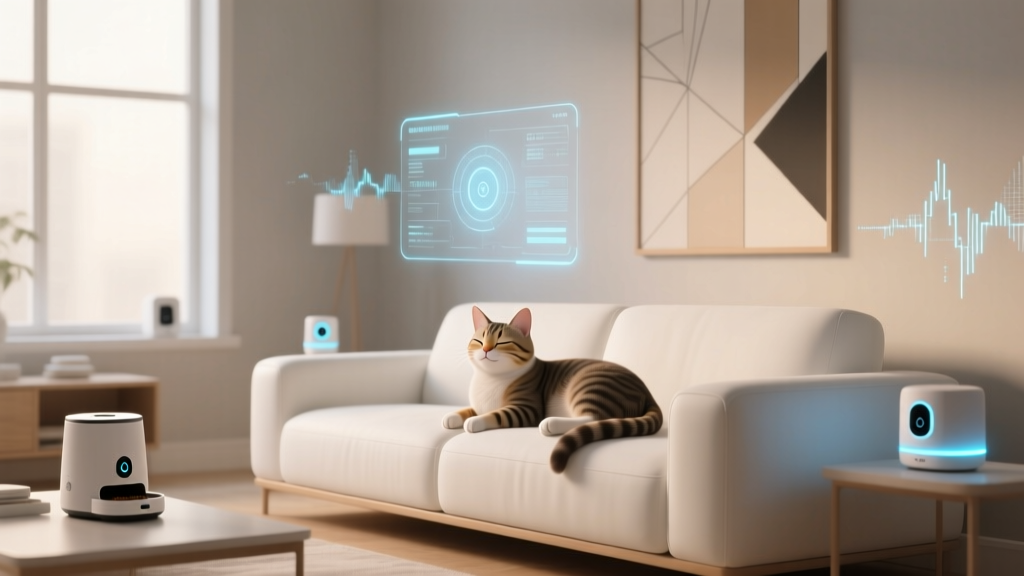
- A motion-activated treat dispenser (PetKit Eversweet 2) was placed near her favorite sunspot. \n
- We programmed it to release one tiny treat every 90 seconds—but only when Luna was lying down or sitting calmly (detected via subtle movement thresholds). \n
- Within 11 days, her baseline calm time increased from 7 minutes to 42 minutes per session—and ankle attacks dropped to zero. \n
This worked because it didn’t rely on human timing or consistency—it used machine precision to reinforce the exact behavior we wanted, exactly when it occurred. No praise, no treats from hand, no emotional labor. Just cause and effect—repeated, reliably, automatically.
\nOther proven low-attention reinforcement tools:
\n- \n
- Smart feeders with camera + treat launch (e.g., Wopet Smart Feeder): Set to reward stillness during video calls or remote work hours. \n
- Auto-play laser toys with randomized patterns (e.g., FroliCat BOLT): Schedules 3 x 10-min sessions/day to burn energy pre-peak activity windows. \n
- Self-rewarding puzzle walls (e.g., Trixie Activity Wall): Mounted at floor level, with compartments releasing kibble when nudged—engaging natural foraging instincts passively. \n
Crucially: These tools only succeed when paired with pillar #1 (rhythm) and pillar #2 (environment). Alone, they’re distractions. Together, they form a self-sustaining behavioral ecosystem.
\n\nWhen ‘Automatic’ Isn’t Enough: Red Flags That Demand Professional Help
\nSome behaviors mimic ‘habitual’ issues but signal underlying medical or psychological distress. Never assume automation will resolve these:
\n- \n
- Urinating outside the litter box with straining, blood, or frequent small volumes → possible UTI, crystals, or FLUTD (Feline Lower Urinary Tract Disease). \n
- Sudden aggression toward people or other pets without clear trigger → neurological issue, hyperthyroidism, or pain-induced reactivity. \n
- Excessive grooming leading to bald patches or skin lesions → anxiety, allergies, or parasitic infection. \n
According to the American Association of Feline Practitioners (AAFP), 37% of cats referred for behavior issues have an undiagnosed medical condition contributing to symptoms. Always rule out health causes with a full physical exam and urinalysis before investing in behavioral systems.
\n\n| System Type | \nSetup Time | \nOngoing Effort | \nBest For | \nTime to Noticeable Change | \n
|---|---|---|---|---|
| Daily Rhythm Reset | \n20–30 min (first day) | \n2–3 min/day (feeding, play) | \nEarly-morning yowling, nighttime activity, food obsession | \n3–7 days (sleep shifts), 2–3 weeks (full rhythm stabilization) | \n
| Environmental Circuit Breakers | \n45–90 min (initial setup) | \n5 min/week (maintenance) | \nFurniture scratching, urine marking, inappropriate chewing | \n4–10 days (reduction), 3–4 weeks (consistency) | \n
| Low-Attention Reinforcement Tech | \n15–25 min (setup + calibration) | \n2 min/week (refill, check battery) | \nAttention-seeking vocalization, mild resource guarding, under-stimulation | \n5–12 days (increased calm duration), 2–3 weeks (generalization) | \n
| Combined System (All 3 Pillars) | \n2–3 hours (first weekend) | \n5–8 min/day (integrated tasks) | \nMultifactorial issues (e.g., scratching + yowling + aggression) | \n7–14 days (first wins), 4–6 weeks (sustained, self-regulating behavior) | \n
Frequently Asked Questions
\nCan automated devices like shock collars or ultrasonic deterrents ‘fix’ cat behavior automatically?
\nNo—and they’re strongly discouraged by the American Veterinary Society of Animal Behavior (AVSAB). These tools suppress behavior through fear or pain, increasing anxiety and potentially worsening aggression or avoidance. They also fail to address root causes (boredom, stress, medical need). Studies show cats subjected to aversive tools develop higher cortisol levels and are 3.2× more likely to redirect aggression toward humans (2021 AVSAB Position Statement). True ‘automatic’ improvement comes from safety—not suppression.
\nWill my cat become dependent on automated feeders or toys?
\nNot if used intentionally. Think of them as training wheels—not permanent crutches. Once desired behaviors stabilize (typically 4–6 weeks), gradually reduce automation: shift from timed treats to random intervals, then to occasional manual rewards. The goal is fluency—not dependency. Your cat should retain the skill even when tech is off.
\nHow do I know if my cat’s behavior is ‘normal’ or truly problematic?
\nAsk: Does this behavior harm their health, damage your home irreparably, or prevent them from living safely and comfortably? Occasional scratching or meowing is normal. But if your cat hides constantly, avoids the litter box for >24 hours, or bites hard enough to break skin during handling, it’s beyond typical feline communication—it’s a distress signal requiring intervention.
\nCan multiple cats share the same ‘automatic’ system?
\nYes—with modifications. Multi-cat households require individualized stations: separate feeding zones, ≥n+1 scratching posts (where n = number of cats), and staggered play sessions. Resource competition is a top cause of redirected aggression. Automated systems must be scaled—not shared—to avoid triggering stress.
\nDo these systems work for senior or special-needs cats?
\nAbsolutely—and often more effectively. Older cats benefit deeply from predictability and reduced decision fatigue. Adjust for mobility: lower puzzle feeders, add ramps to vertical spaces, use softer scratching materials (carpet, cardboard). For cats with cognitive dysfunction (feline dementia), consistency in timing and location is neuroprotective. Always consult your vet before introducing new tech to medically complex cats.
\nCommon Myths About ‘Automatic’ Cat Behavior Fixes
\nMyth #1: “If I ignore bad behavior, it’ll go away on its own.”
\nIgnoring doesn’t erase motivation—it just delays resolution. A cat who scratches your sofa isn’t ‘testing you’; they’re fulfilling a biological need. Without providing a better outlet, the behavior persists or escalates (e.g., moving from couch arms to window frames). Ignoring teaches nothing; environmental redesign does.
Myth #2: “Cats can’t be trained—they’re too independent.”
\nThis is outdated. Modern feline behavior science confirms cats learn rapidly through positive reinforcement—often faster than dogs for certain tasks (e.g., targeting, recall). Their independence means they choose to participate—not that they’re incapable. The key is using high-value motivators (food, play, access) and respecting their agency.
Related Topics (Internal Link Suggestions)
\n- \n
- Understanding Cat Body Language — suggested anchor text: "cat tail flicking meaning" \n
- Best Puzzle Feeders for Boredom Relief — suggested anchor text: "top 5 slow feeders for cats" \n
- When to Call a Certified Cat Behaviorist — suggested anchor text: "find a certified feline behavior consultant" \n
- Litter Box Troubleshooting Guide — suggested anchor text: "why is my cat peeing outside the box?" \n
- Creating a Cat-Friendly Home Layout — suggested anchor text: "catification checklist for apartments" \n
Your Next Step Toward Truly Effortless Harmony
\nYou now know that how to fix cat behavior automatic isn’t about finding a plug-and-play gadget—it’s about becoming a fluent interpreter and compassionate architect of your cat’s world. The systems outlined here don’t ask you to be perfect. They ask you to be consistent for just 21 days. In that time, your cat’s nervous system recalibrates, their choices narrow to healthy options, and what once felt like constant vigilance becomes quiet, confident coexistence.
\nYour next step? Pick one pillar to implement this week—start with the Daily Rhythm Reset. Set two alarms on your phone for sunrise and sunset feeding. Grab a $12 puzzle feeder. Play for 10 minutes tonight. That’s it. No overhaul. No pressure. Just one intentional act—and watch how quickly your cat begins meeting you halfway. Because the most powerful automatic system isn’t built into a device. It’s built into trust, repetition, and respect.