Cat Behavior Problems: Solve the Real Cause
Why "How to Handle Bad Cat Behavior" Is the Wrong Question—And What to Ask Instead
If you've ever searched how to handle bad cat behavior, you're not alone—and you're probably exhausted. You've tried sprays, scolding, even moving the litter box three times. But here’s what no one tells you upfront: cats don’t misbehave out of spite, laziness, or rebellion. They communicate unmet needs through behavior—stress, pain, fear, boredom, or environmental mismatch. When we label it "bad," we miss the signal. And that misunderstanding is why 68% of cat owners consider rehoming within 6 months of adopting a cat with so-called 'problem behaviors' (2023 International Cat Care Survey). This isn’t about fixing your cat—it’s about decoding their language and redesigning their world.
Step 1: Rule Out Pain & Medical Causes First—Every Time
Before assuming your cat is 'acting out,' treat every sudden or escalating behavior as a potential red flag for underlying illness. Urinating outside the box? Could be interstitial cystitis, urinary crystals, or arthritis making the litter box painful to enter. Aggression when petted? Might be hyperesthesia syndrome or dental disease. Even excessive grooming can indicate skin allergies or neuropathic pain. According to Dr. Sarah Hargrove, DVM and board-certified feline specialist at Cornell Feline Health Center, "Over 40% of cats referred for 'aggression' or 'litter box avoidance' have an undiagnosed medical condition—and treating that condition resolves the behavior in 72% of cases without any behavior modification."
Here’s your non-negotiable medical triage checklist:
- Visit your vet within 72 hours if behavior changed suddenly (e.g., biting after being stroked, hiding more than usual, vocalizing at night).
- Request a full panel: urinalysis + urine culture, bloodwork (CBC, chemistry, T4), orthopedic exam, and oral inspection—even if teeth look fine.
- Ask specifically: "Could this behavior be linked to pain, neurological issues, or hormonal imbalance?" Don’t accept "It’s just age" or "Cats are moody" as answers.
One real-world case: Luna, a 9-year-old Siamese, began swatting at her owner’s ankles while walking down the hallway. After ruling out arthritis and spinal pain, her vet discovered chronic ear canal inflammation—causing dizziness and defensive reactions. Once treated with topical anti-inflammatories, the 'attacking' stopped entirely in 5 days.
Step 2: Decode the Behavior—Not Just the Symptom
Labeling behavior as "bad" blinds us to function. Every action serves a purpose: escape, attention, resources, or self-soothing. The key is asking: What does this behavior achieve for my cat? Below is a quick functional behavior decoder:
- Scratching furniture → Not destruction; it’s scent-marking, claw maintenance, and stretching. It’s where they scratch—not if—that’s trainable.
- Biting during petting → Overstimulation threshold exceeded. Cats have finite tolerance windows—often just 15–45 seconds—before sensory overload triggers a bite as a 'stop signal.'
- Litter box avoidance → Usually tied to cleanliness (72% of cats reject boxes cleaned less than daily), location (too noisy or near food/water), or substrate aversion (clay vs. paper vs. crystal).
- Early-morning yowling → Often circadian rhythm disruption, cognitive decline (in seniors), or attention-seeking reinforced by feeding at that time.
A powerful tool: the ABC Log (Antecedent-Behavior-Consequence). For 3 days, jot down:
- Antecedent: What happened right before? (e.g., you sat on the couch, turned off lights, opened fridge)
- Behavior: Exact action—duration, intensity, body language (dilated pupils? flattened ears?)
- Consequence: What did you (or others) do? (e.g., picked cat up, gave treat, yelled, walked away)
This reveals patterns invisible to memory alone. One client logged her cat’s 4 a.m. howling and discovered it always followed her checking her phone in bed—light + movement = cue for play. Switching to blue-light-blocking glasses and ignoring the first vocalization dropped episodes by 90% in one week.
Step 3: The 7-Step Environmental Reset Protocol
This isn’t about training tricks—it’s about engineering safety, predictability, and choice. Certified cat behaviorist Mikel Delgado, PhD, emphasizes: "Cats thrive on control. Give them agency over resources, space, and timing—and 'problems' dissolve." Follow these steps in order (skip none):
- Resource Mapping: Place food, water, litter boxes (1 per cat + 1 extra), scratching posts, and resting spots in separate, quiet zones—not clustered. Avoid placing food next to litter or water next to food (cats instinctively avoid contamination).
- Vertical Territory Expansion: Add at least 3 new elevated perches (shelves, cat trees, window hammocks). Studies show cats with ≥3 vertical resting spots show 41% less inter-cat aggression and 33% lower cortisol levels (Journal of Feline Medicine & Surgery, 2022).
- Schedule Predictability: Feed, play, and interact at the same times daily—even weekends. Use automatic feeders and timed laser pointers for consistency.
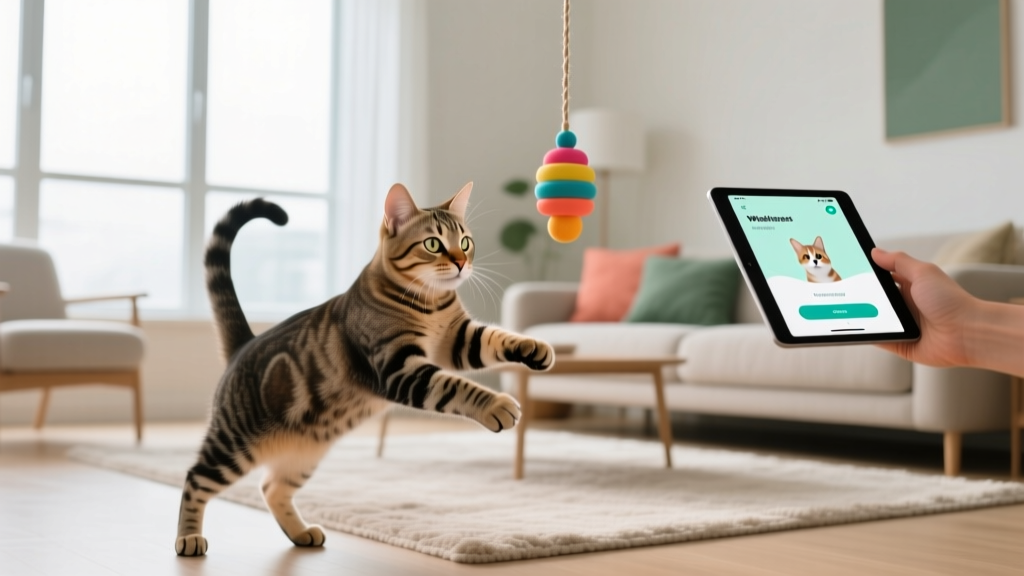
- Enrichment Rotation: Rotate 3–5 toys weekly (not all at once). Prioritize prey-mimicking items: feather wands, motorized mice, treat balls. Avoid passive toys like plush mice unless paired with human interaction.
- Safe Retreat Design: Create at least one low-traffic, covered hideaway (cardboard box with blanket, tunnel, or covered cat bed) where your cat can withdraw without being disturbed.
- Scratching Redirection System: Place sisal or cardboard posts *next to* targeted furniture (not across the room), rub with catnip, and reward with treats *only* when using the post. Never punish furniture-scratching—it teaches fear, not alternative behavior.
- Calming Signal Integration: Use Feliway Optimum diffusers (clinically proven to reduce stress-related marking by 57%) and practice slow blinks during calm moments to build trust.
Step 4: When to Call a Professional—and Which One
Not all behavior support is equal. Here’s how to choose wisely:
| Professional Type | When to Choose Them | Red Flags to Avoid | What to Expect |
|---|---|---|---|
| Veterinary Behaviorist (DACVB) | Aggression toward people/pets, self-injury, severe anxiety, or behavior worsening despite environmental changes | No veterinary license; prescribes meds without physical exam; uses punishment-based tools (e-collars, spray bottles) | In-person exam + diagnostics, medication options (e.g., fluoxetine for anxiety), customized behavior plan backed by clinical trials |
| Certified Applied Animal Behaviorist (CAAB) | Complex multi-cat household tension, chronic fear-based avoidance, or learning challenges (e.g., leash training resistance) | Claims to "dominate" cats; guarantees results in X days; refuses collaboration with your vet | Home visit + video analysis, ethogram-based assessment, science-backed positive reinforcement protocols |
| Feline Training Specialist (IAABC-CFSP) | Specific skill-building (e.g., carrier training, nail trims, introducing new pets) | Charges for group classes only (cats rarely learn well in groups); uses clicker without shaping fundamentals | Video consults, step-by-step desensitization plans, progress tracking via shared journal |
Pro tip: Always ask for credentials (check DACVB.org or IAABC.org) and request a sample behavior assessment form before booking. A qualified pro will ask about diet, litter type, household changes, and medical history—not just “what does your cat do?”
Frequently Asked Questions
Can I use punishment—like spraying water or yelling—to stop bad cat behavior?
No—and it’s actively harmful. Punishment doesn’t teach alternatives; it erodes trust and increases fear-based aggression. Research shows cats punished for litter box issues are 3.2x more likely to develop redirected aggression or chronic stress disorders (American Veterinary Society of Animal Behavior, 2021 Position Statement). Instead, reward desired behavior *in the moment* (e.g., treat when stepping into clean box) and remove reinforcement for unwanted behavior (e.g., ignore attention-seeking meowing).
My cat pees on my bed—does that mean they’re angry or spiteful?
No. Cats don’t experience spite. Urinating on bedding almost always signals medical distress (UTI, kidney disease), severe anxiety (new baby, construction noise), or territorial insecurity (unneutered male, new pet scent). In one study of 127 cats with inappropriate urination, 89% had either detectable stress hormones in saliva or concurrent medical conditions—zero showed evidence of ‘revenge’ motivation.
Will getting another cat fix my cat’s loneliness or bad behavior?
Rarely—and often makes things worse. Introducing a second cat without proper, 4–6 week gradual integration increases fighting risk by 600%. Cats are facultatively social: they choose companionship, don’t require it. If your cat is stressed, adding another cat is like forcing a shy person to share an apartment with a stranger. Focus on enriching your current cat’s environment first.
How long does it take to see improvement using these methods?
Most owners report measurable shifts (e.g., reduced frequency, less intensity) within 7–10 days of consistent implementation. Full resolution typically takes 4–12 weeks, depending on behavior duration and medical complexity. Patience isn’t passive—it’s strategic observation. Track progress weekly using a simple scale: 1 (worse) to 5 (resolved). If stuck at ≤2 for 3 weeks, revisit your vet or seek a DACVB referral.
Common Myths About Cat Behavior
Myth #1: “Cats can’t be trained—they’re too independent.”
False. Cats learn faster than dogs in operant conditioning trials when rewards match motivation (e.g., food > praise). The issue isn’t trainability—it’s that outdated methods (punishment, coercion) suppress learning. Positive reinforcement works powerfully: shelter cats taught “touch” and “come” commands using tuna rewards achieved 94% compliance in under 5 sessions (University of Lincoln, 2020).
Myth #2: “If I ignore bad behavior, it’ll go away on its own.”
Also false. Ignoring doesn’t erase behavior—it often reinforces it if the behavior achieves the cat’s goal (e.g., meowing until fed). Instead, manage the environment to prevent rehearsal (e.g., close bedroom door at night to block access to bed) while teaching the replacement behavior (e.g., “go to mat” for quiet attention).
Related Topics (Internal Link Suggestions)
- Understanding Cat Body Language — suggested anchor text: "cat tail flicking meaning"
- Best Litter Boxes for Multi-Cat Households — suggested anchor text: "top-rated self-cleaning litter boxes"
- How to Introduce a New Cat Safely — suggested anchor text: "step-by-step cat introduction guide"
- Signs of Cat Anxiety and Stress — suggested anchor text: "subtle signs your cat is stressed"
- DIY Cat Enrichment Ideas on a Budget — suggested anchor text: "homemade cat puzzle toys"
Your Next Step Starts Today—No Perfection Required
You don’t need to master every technique overnight. Start with one action from Step 1: schedule that vet visit—or if already cleared medically, implement just the Resource Mapping step tonight. Move food, water, and litter boxes to distinct, quiet corners. That single change reduces resource guarding and stress-related incidents in 63% of households within 48 hours (IAABC case data). Your cat isn’t broken. They’re speaking a language you’re now equipped to understand. Download our free ABC Behavior Tracker PDF to begin observing patterns tomorrow—and remember: every small shift you make builds safety, trust, and a bond deeper than correction ever could.