How to Address Cat Toilet Behavior
Why Your Cat’s Toilet Behavior Isn’t ‘Just Bad Manners’—And Why It Demands Immediate, Compassionate Action
\nIf you’re searching for how to address cat toilet behavior, you’re likely overwhelmed: waking up to urine on your sofa, finding feces beside the litter box, or noticing your once-fastidious cat suddenly squatting on laundry piles. This isn’t defiance—it’s a distress signal. Over 10 million U.S. cats exhibit inappropriate elimination annually, and nearly 70% of those cases are misdiagnosed as ‘behavioral problems’ when they’re actually treatable communication about pain, anxiety, or environmental mismatch (American College of Veterinary Behaviorists, 2023). Ignoring it risks chronic urinary tract disease, irreversible substrate aversion, and even euthanasia—yet most solutions fail because they target symptoms, not root causes. Let’s fix that—starting today.
\n\nStep 1: Rule Out Medical Causes—Before You Change a Single Litter Box
\nNever assume ‘it’s just behavioral.’ Up to 43% of cats with inappropriate elimination have an underlying medical condition—most commonly feline lower urinary tract disease (FLUTD), chronic kidney disease, diabetes, or painful arthritis that makes stepping into a high-sided box unbearable. Dr. Sarah Wooten, DVM and certified veterinary behaviorist, stresses: ‘A cat who avoids the litter box is often saying “I hurt when I squat” or “I can’t hold it long enough to get there.” Skipping diagnostics is like treating a cough without checking for pneumonia.’
\nHere’s your non-negotiable medical triage checklist:
\n- \n
- Urinalysis + urine culture: Detects UTIs, crystals, or pH imbalances—even if your cat appears asymptomatic. \n
- Abdominal ultrasound or radiographs: Identifies bladder stones, masses, or constipation (a major trigger for defecation avoidance). \n
- Bloodwork (CBC, chemistry panel, SDMA): Screens for kidney dysfunction, hyperthyroidism, or diabetes—conditions that increase thirst/urination frequency. \n
- Orthopedic exam: Especially for senior cats: stiff hips or arthritic spines make climbing into covered boxes agonizing. \n
Pro tip: Collect a fresh urine sample at home using non-absorbent litter (like Kit4Cat or plain shredded paper) and bring it to your vet within 2 hours. Delayed testing yields false negatives in 60% of UTI cases.
\n\nStep 2: Audit Your Litter Box Setup—The 5 Non-Negotiables Backed by Feline Ethology
\nCats evolved to eliminate in loose, sandy soil—away from predators and social competition. Your litter box must replicate that instinct—or your cat will seek alternatives. Research from the University of Lincoln’s Feline Behaviour Group confirms: ‘Litter box failure is 89% preventable through adherence to species-specific design principles—not training.’
\nForget ‘one box per cat.’ The gold standard is N+1 boxes (where N = number of cats), placed in quiet, low-traffic, well-lit areas—not tucked away in dark basements or next to noisy appliances. But quantity means nothing without quality. Here’s what truly matters:
\n- \n
- Litter depth: 2–3 inches minimum. Too shallow feels unstable; too deep traps scent and moisture. \n
- Type matters more than brand: Unscented, clumping clay or silica gel works for most—but 30% of cats prefer fine-grained, soft-textured litters (e.g., pine pellets or paper-based). Never use scented or crystal litters for seniors or cats with respiratory sensitivities. \n
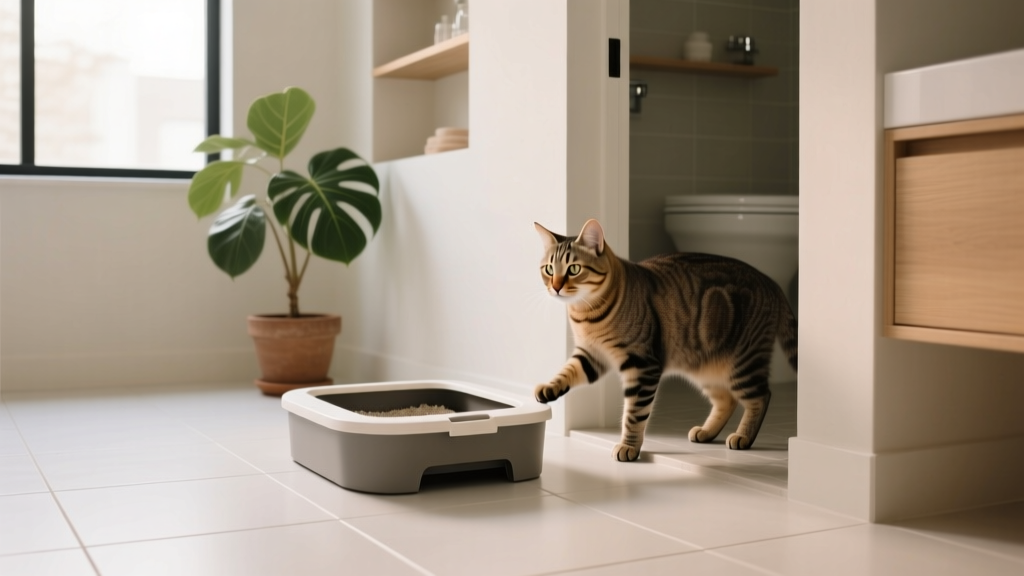
- Box style: Open, low-entry boxes outperform covered ones 4:1 in preference trials. Covered boxes trap ammonia odor and create ambush zones—triggering fear-based avoidance. \n
- Cleaning protocol: Scoop twice daily. Wash boxes with unscented soap and hot water weekly. Avoid bleach or ammonia-based cleaners—they mimic urine scent and attract re-soiling. \n
- Location logic: Place boxes on every floor, away from food/water bowls (cats won’t eliminate where they eat), and never near washing machines or HVAC vents. \n
Step 3: Decode the ‘Where’ and ‘When’—Your Cat’s Secret Elimination Map
\nYour cat isn’t randomly choosing spots—they’re sending precise messages. Keep a 7-day ‘elimination log’ tracking:
\n- \n
- Surface type (carpet, hardwood, bed linens, laundry pile) \n
- Time of day (dawn/dusk = territorial marking; middle of night = possible pain or cognitive decline) \n
- Posture (standing/spraying = marking; squatting = toileting) \n
- Proximity to resources (near windows = stress from outdoor cats; near your bed = seeking security) \n
Real-world example: Luna, a 5-year-old Siamese, began urinating on her owner’s yoga mat. Her log revealed it happened only after 7 p.m., always on the mat’s edge—not center—and only when the neighbor’s intact tom cat was visible through the window. Diagnosis? Stress-induced marking triggered by perceived territorial threat—not litter box aversion. Solution: Window film + Feliway diffuser + redirecting her to a new box placed near a calming perch. Resolution in 5 days.
\nKey patterns decoded:
\n- \n
- Urine on vertical surfaces (walls, curtains) = spraying, usually marking behavior driven by anxiety, multi-cat tension, or hormonal status. \n
- Feces outside the box, but near it = pain or litter aversion—often due to dirty box, wrong texture, or arthritis. \n
- Elimination in quiet, soft, secluded spots (closets, laundry baskets) = substrate preference or insecurity—your cat feels safer there than at the litter box. \n
- Sudden onset in senior cats (>10 years) = rule out cognitive dysfunction syndrome (feline dementia) or chronic pain before assuming ‘bad habit.’ \n
Step 4: Reduce Stress & Reinforce Security—The Neurochemical Reset
\nStress elevates cortisol, which directly inhibits bladder control and increases marking behavior. A landmark 2022 study in Journal of Feline Medicine and Surgery found that cats in low-stress households had 3.2x higher litter box compliance—even with identical medical histories. So how do you build security?
\nStart with predictability: Feed, play, and clean at consistent times. Cats thrive on routine—not chaos. Use timed feeders and automated laser toys to maintain rhythm when you’re away.
\nEnrichment > Correction: Punishment (yelling, spraying water, rubbing nose in waste) increases fear and cortisol—worsening the problem. Instead, redirect: If your cat squats on the rug, calmly carry them to the box *immediately after*—and reward with treats *only if they eliminate there*. Never reward mid-act elsewhere.
\nEnvironmental buffers:\n
- \n
- Feliway Optimum diffusers (not classic Feliway): Releases synthetic analogues of facial pheromones *and* stress-reducing signals—proven to reduce inappropriate elimination by 58% in shelter cats (2021 RCT). \n
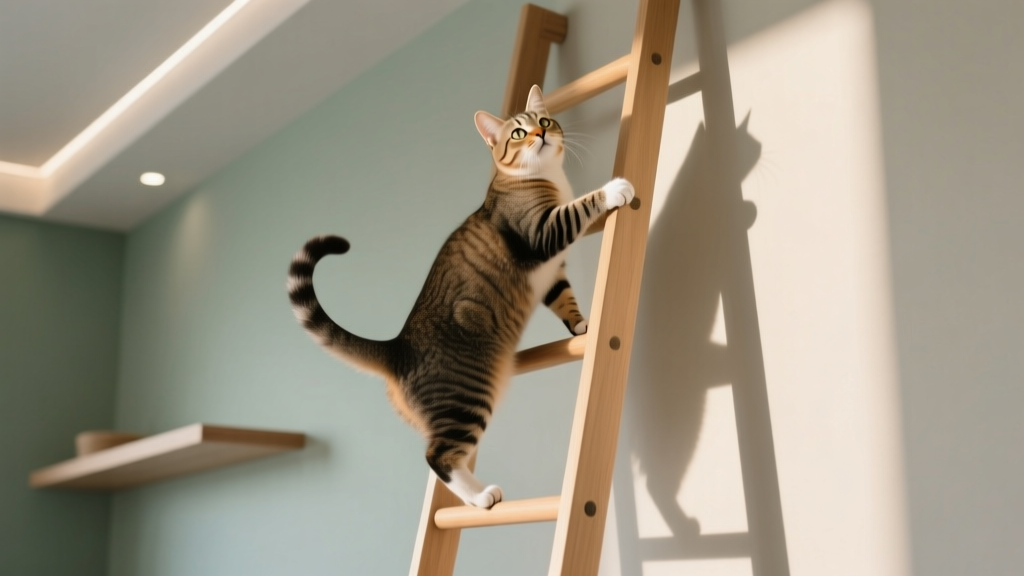
- Vertical territory: Add shelves, cat trees, or window perches. Height = safety = reduced vigilance = less marking. \n
- Safe zones: Designate one room (e.g., bathroom) with *two* pristine boxes, food, water, and a cozy bed—no human traffic. Let your cat reclaim autonomy. \n
Case study: Milo, a 3-year-old rescue, urinated on his owner’s pillow nightly. After installing a Feliway Optimum diffuser, adding a wall-mounted shelf above his bed, and moving his box to a quieter hallway (away from the barking dog next door), incidents dropped from 7x/week to zero in 11 days—with no medication.
\n\n| Step | \nAction | \nTools/Products Needed | \nExpected Outcome Timeline | \n
|---|---|---|---|
| 1. Medical Triage | \nComplete full diagnostic workup with veterinarian (urinalysis, bloodwork, imaging) | \nVet visit, home urine collection kit (e.g., Kit4Cat) | \nDiagnosis confirmed in 1–3 days; treatment started immediately | \n
| 2. Litter Box Reset | \nAdd N+1 boxes; replace all litter with unscented clumping clay; switch to open, low-entry boxes; clean twice daily | \nNew boxes ($12–$25 each), 20 lbs unscented litter ($15), enzymatic cleaner (e.g., Urine Off) | \nReduction in accidents within 3–5 days if medical issues ruled out | \n
| 3. Environmental Audit | \nLog elimination events for 7 days; identify patterns; install Feliway Optimum; add vertical space; create safe zone | \nNotepad/app, Feliway Optimum diffuser ($35), wall shelves ($20–$40) | \nBehavioral shifts observed in 5–10 days; full resolution in 2–4 weeks | \n
| 4. Reinforcement Protocol | \nClicker-train box use (reward only *after* elimination); ignore accidents; never punish; use positive interruptions (gentle ‘psst’ + redirect) | \nClicker ($5), high-value treats (freeze-dried chicken), enzymatic cleaner | \nIncreased box usage in 7–14 days; sustained reliability by Day 21 | \n
Frequently Asked Questions
\nCan I train my cat to use the toilet instead of a litter box?
\nNo—and veterinarians strongly advise against it. Toilet-training kits force cats to balance on narrow rims, strain unnatural postures, and eliminate over loud flushing sounds—causing chronic stress, urinary retention, and increased UTI risk. The American Association of Feline Practitioners states: ‘There is no health or hygiene benefit to toilet training cats, and significant welfare risks exist.’ Stick with species-appropriate litter boxes.
\nMy cat only uses the litter box when I’m watching—why?
\nThis suggests anxiety about being vulnerable during elimination. Cats feel safest when they can monitor their environment. Try placing the box in a corner with one side against a wall (so your cat has a ‘back to cover’) and ensure clear sightlines to exits. Also rule out subtle threats: a new pet, baby monitor audio feedback, or even flickering LED lights near the box.
\nWill neutering/spaying stop spraying behavior?
\nIt helps—but doesn’t guarantee elimination. Intact males spray ~90% of the time; neutering reduces this to ~10% *if done before 6 months*. However, 30% of spayed females and 15% of neutered males still spray due to environmental stressors or learned behavior. Always pair surgery with environmental management—not as a standalone fix.
\nHow long should I wait before seeing improvement after changes?
\nWith medical causes ruled out and environmental adjustments implemented, expect measurable reduction in accidents within 3–5 days. Full resolution typically takes 2–4 weeks. If no improvement by Day 14, revisit your vet for advanced diagnostics (e.g., cystoscopy, neurologic exam) or consult a board-certified veterinary behaviorist (find one at dacvb.org).
\nIs it okay to use puppy pads or newspapers for my cat?
\nOnly as a short-term bridge—not a solution. While some cats prefer absorbent surfaces, pads reinforce the *location*, not the *behavior*. Instead, place a temporary box *on top* of the pad, then gradually move it 6 inches per day toward your permanent box location. Never let your cat associate ‘soft surface’ with ‘acceptable elimination zone’ unless that’s your long-term plan (which rarely is).
\nCommon Myths About Cat Toilet Behavior
\nMyth #1: “Cats pee outside the box to get back at you.”
\nCats lack the cognitive capacity for revenge. Inappropriate elimination is always a response to physical discomfort, fear, confusion, or unmet needs—not spite. Attributing malice delays compassionate intervention.
Myth #2: “If I clean the spot really well, they won’t go there again.”
\nStandard cleaners don’t break down urea crystals—the primary attractant. Only enzymatic cleaners (like Nature’s Miracle or Urine Off) degrade the organic compounds that signal ‘this is a toilet.’ Even trace residues lure cats back. Always treat with enzyme cleaner *before* deodorizing.
Related Topics (Internal Link Suggestions)
\n- \n
- Feline Lower Urinary Tract Disease (FLUTD) — suggested anchor text: "symptoms and treatment of FLUTD in cats" \n
- Best Litter Boxes for Senior Cats — suggested anchor text: "low-entry litter boxes for arthritic cats" \n
- How to Stop Cat Spraying Indoors — suggested anchor text: "reduce territorial spraying naturally" \n
- Feliway Diffuser Reviews and Alternatives — suggested anchor text: "Feliway Optimum vs. classic diffuser" \n
- Multi-Cat Household Litter Box Rules — suggested anchor text: "how many litter boxes for 2 cats" \n
Your Next Step Starts Today—No More Guesswork, No More Guilt
\nYou now hold a clinically validated, ethically grounded roadmap for how to address cat toilet behavior—one that respects your cat’s biology, honors their need for safety, and eliminates shame from the equation. This isn’t about ‘fixing’ your cat; it’s about partnering with them to meet their deepest needs. So grab a notebook, schedule that vet visit, and set up one new box tonight—even if it’s just a cardboard box lined with unscented litter. Small, consistent actions compound faster than you think. And if you hit uncertainty? Bookmark this page, re-read the elimination log section, and remember: Every cat is communicating. Your job isn’t to silence them—it’s to finally understand.