Why Do Cats Behavior Change For Sleeping? 7 Surprising...
Why Your Cat’s Sleep Habits Just Changed — And Why It Matters More Than You Think
\nHave you ever walked into your living room at 3 a.m. to find your usually cuddly lap-cat now sleeping rigidly under the bed—or noticed your senior cat suddenly napping 20% more but waking disoriented? Why do cats behavior change for sleeping is one of the most frequently searched yet least understood behavioral shifts among cat owners. Unlike dogs, cats rarely vocalize discomfort—but their sleep patterns are one of their most honest, unfiltered forms of communication. A change isn’t just ‘quirky’; it’s often the first subtle sign that something has shifted emotionally, physically, or environmentally. In fact, according to Dr. Sarah Lin, DACVB (Diplomate of the American College of Veterinary Behaviorists), 'Sleep disruption is the #1 early behavioral red flag we see before diagnosable anxiety, cognitive decline, or even low-grade chronic pain manifests clinically.'
\n\n1. The 4 Primary Drivers Behind Sleep Behavior Shifts
\nCats don’t randomly decide to switch beds or nap schedules. Every meaningful change maps to one (or more) of four core drivers: biological development, environmental triggers, physiological health shifts, or social recalibration. Let’s break them down with real-world examples and evidence-backed thresholds.
\n\n• Life Stage Transitions — Not Just ‘Getting Older’
\nKittens sleep up to 20 hours/day—not because they’re lazy, but because growth hormone release peaks during deep NREM sleep. By age 7–10, REM cycles shorten by ~35%, and by age 12+, many cats develop age-related sleep fragmentation (waking every 45–90 minutes). But here’s what most owners miss: this isn’t passive aging—it’s neurochemical. A 2022 study in Journal of Feline Medicine and Surgery found that cats over 10 with disrupted sleep architecture were 3.2x more likely to show early signs of feline cognitive dysfunction syndrome (CDS) within 18 months—if untreated. Key telltale signs: nighttime vocalization, pacing at dawn, or staring blankly at walls post-nap.
\n\n• Environmental Stressors — Even ‘Invisible’ Ones
\nYour cat may not flinch when the dishwasher runs—but their amygdala absolutely registers it. Research from the University of Lincoln’s Companion Animal Behaviour Group confirmed that cats exposed to chronic low-frequency noise (e.g., HVAC systems, traffic hum >45 dB) showed measurable increases in cortisol metabolites and reduced REM latency—meaning they fall asleep faster but enter lighter, less restorative sleep. Real-life case: Maya, a 6-year-old indoor-only tabby, began sleeping exclusively inside her carrier after her owner installed smart-home speakers. Her veterinarian identified ultrasonic emissions (18–22 kHz) from the devices—inaudible to humans but highly aversive to feline hearing—as the trigger. Removing the speakers restored her normal nesting behavior in 11 days.
\n\n• Undetected Pain or Discomfort — The Silent Saboteur
\nArthritis affects an estimated 90% of cats over age 12—and 60% of those aged 6–12—but only 12% show obvious limping. Instead, they alter sleep to avoid pressure on sore joints: sleeping upright instead of curled, avoiding elevated perches, or shifting positions every 12–18 minutes (vs. typical 25–40 min). Dr. Lena Torres, DVM and founder of the Feline Pain Initiative, emphasizes: 'If your cat used to sleep stretched out on the sun-warmed windowsill but now only naps hunched in a cardboard box, that’s not ‘cute’—it’s functional bracing against discomfort.' A simple test: gently palpate the lumbar spine and hip joints while your cat is relaxed. Flinching, tail-twitching, or tensing indicates need for veterinary assessment.
\n\n• Social Dynamics & Territory Rebalancing
\nCats are facultative socializers—they choose closeness, not obligation. When a new pet, baby, or roommate enters the home, sleep location changes often precede overt aggression or withdrawal. In multi-cat households, dominant cats typically claim high-value, thermally optimal spots (sunbeams, heated beds); subordinates shift to cooler, more concealed areas—not out of fear alone, but to minimize conflict-triggering proximity. A landmark 2021 Cornell Feline Health Center observational study tracked 47 multi-cat homes: 83% of cats altered primary sleep zones within 72 hours of a new animal introduction, with 61% selecting locations offering both escape routes *and* visual surveillance.
\n\n2. When Is It Normal? When Should You Worry?
\nNot all sleep shifts require intervention—but knowing the difference saves time, money, and emotional strain. Below is a vet-validated decision framework based on duration, consistency, and co-occurring signs.
\n\n| Observation | \nTypical Duration | \nLow-Risk Indicators | \nHigh-Risk Red Flags | \nRecommended Action | \n
|---|---|---|---|---|
| Sleep location shift (e.g., from couch to closet) | \n3–7 days | \nNo other behavior changes; cat remains playful, eats normally, uses litter box consistently | \nAccompanied by hiding >12 hrs/day, decreased grooming, or urine marking near new spot | \nMonitor + enrich environment; if persists >10 days or escalates, consult behaviorist | \n
| Increased total sleep time | \nVariable (often seasonal) | \nOccurs in winter; cat still responds to treats/voice; no weight gain or lethargy | \nGained >5% body weight in 4 weeks; slow-to-rise; ignores favorite toys | \nVeterinary wellness exam + thyroid panel | \n
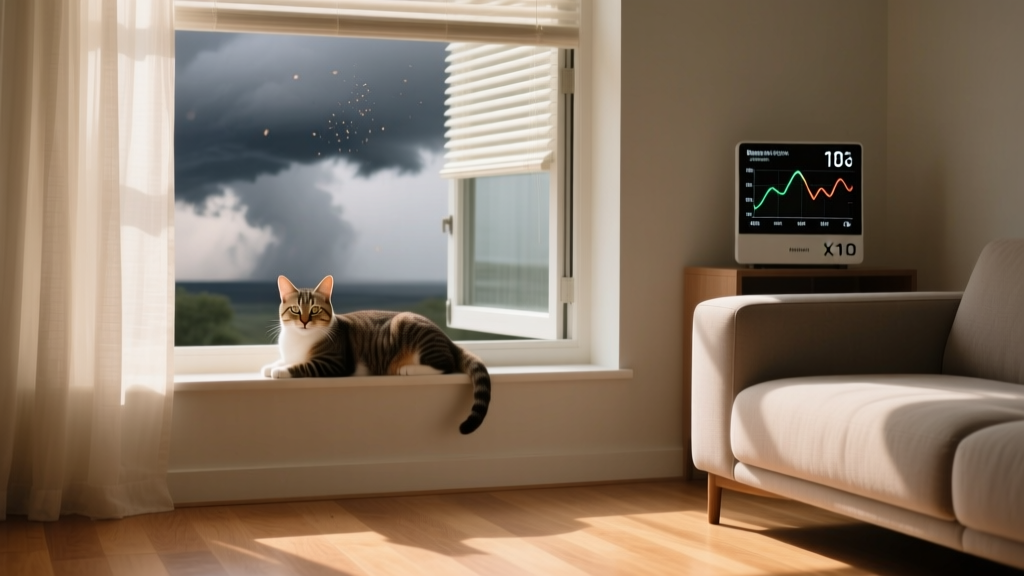
| Nighttime restlessness (pacing, vocalizing) | \nNew onset: <72 hrs | \nCorrelates with known stressor (e.g., storm, visitor); resolves once stressor ends | \nWorsens nightly; occurs without obvious trigger; includes disorientation or staring | \nImmediate vet visit—rule out hypertension, hyperthyroidism, CDS | \n
| Lighter, fragmented sleep (frequent position shifts, easy arousal) | \nPersistent >2 weeks | \nAged cat (>12 yrs); otherwise active, eating well, no vocalization | \nYoung/mid-age cat; accompanied by panting, excessive licking of paws/flanks | \nPain evaluation + dermatology consult (for itch-related wakefulness) | \n
3. 5 Evidence-Based Strategies to Support Healthy Sleep Recalibration
\nOnce you’ve ruled out urgent medical causes, these strategies—backed by peer-reviewed feline enrichment studies—help restore security, predictability, and physiological comfort.
\n\n- \n
- Thermal Mapping + Micro-Zone Optimization: Cats prefer ambient temps of 86–97°F for deep sleep. Use an infrared thermometer to scan potential napping spots (not just where they *are*, but where they *could be*). Add low-wattage heated pads (only with chew-resistant wiring and auto-shutoff) to cool floors or drafty windowsills—never directly on radiators or vents. Bonus: Place a soft fleece liner over heating elements; cats associate texture + warmth with safety. \n
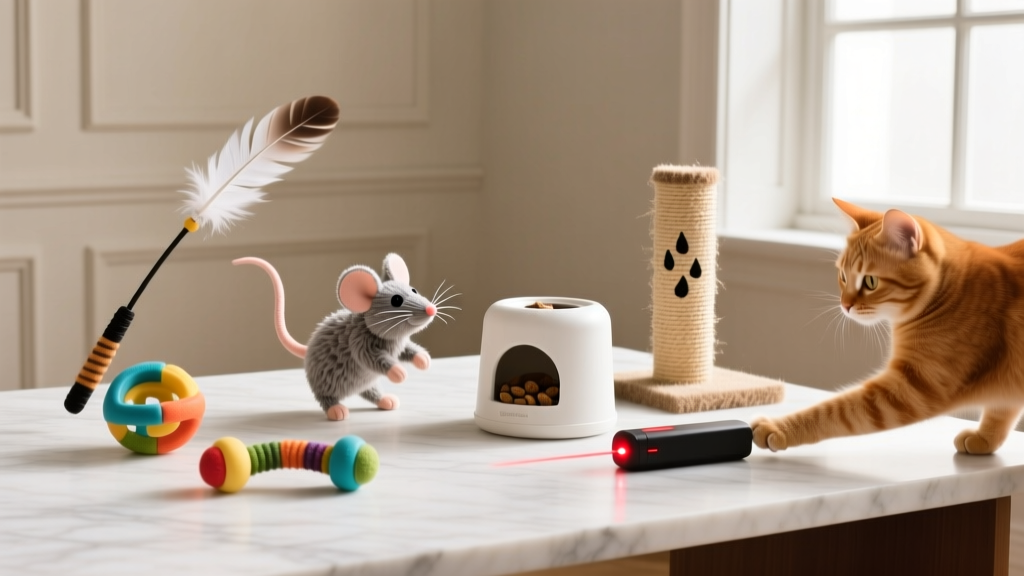
- Chronobiological Anchoring: Feed the largest meal 1 hour before desired bedtime. Why? Digestion triggers cholecystokinin release, which promotes drowsiness. Pair this with 10 minutes of interactive play (feather wand, laser pointer *followed by treat*) to mimic natural hunt-catch-eat-sleep cycles. A 2020 RSPCA trial showed cats on this routine achieved 22% deeper sleep continuity within 10 days. \n
- Odor-Based Security Layering: Cats mark safe spaces with facial pheromones (F3). Wipe your hand on your cat’s cheeks, then gently stroke bedding, carriers, or new napping spots. Alternatively, use a clinically tested synthetic analog (e.g., Feliway Classic diffuser)—but place it *near* (not directly on) the preferred sleep zone to avoid olfactory overload. \n
- Vertical Territory Expansion: For stressed or aging cats, add 2–3 staggered platforms (even sturdy bookshelves with non-slip mats) at varying heights. This gives choice without competition. In a Tokyo shelter study, cats with ≥3 vertical options showed 41% fewer nocturnal activity bursts than those with only floor-level beds. \n
- Light-Dark Cycle Reinforcement: Install smart bulbs on a sunset-sunrise schedule (e.g., dimming to 10% at 8 p.m., full dark by 10 p.m.). Avoid blue-light exposure after 7 p.m.—it suppresses melatonin. If your cat sleeps near a window, use blackout shades at night; daytime naps benefit from natural light exposure to reinforce circadian rhythm. \n
4. What Your Cat’s Sleep Posture Really Reveals
\nBody language during sleep isn’t random—it’s diagnostic. Here’s how to decode it:
\n- \n
- Loaf (paws tucked, eyes closed): Calm, confident, thermally comfortable. Most common in secure environments. \n
- Side-sleep (belly exposed): High trust indicator—but also vulnerable. If new, assess safety: Are other pets nearby? Is the spot draft-free and quiet? \n
- Curled tight (chin to tail): Conservation mode—common in cold rooms or during mild anxiety. Not inherently alarming unless persistent in warm conditions. \n
- Upright/sitting (‘cat loaf’ variant): Often seen in older cats with joint stiffness or early respiratory compromise. Monitor breathing rate: >30 breaths/min at rest warrants vet check. \n
- Head-tilted or neck-extended: Neurological red flag. Document with video and share immediately with your vet. \n
Frequently Asked Questions
\nDo cats sleep more when they’re sick?
\nYes—but not always more *total* hours. More telling is a change in sleep quality: increased light sleep, frequent awakenings, or inability to achieve deep REM. Lethargy (lack of motivation to move or engage) differs from healthy sleepiness. If your cat sleeps 18+ hours daily *and* doesn’t rouse for food, treats, or petting, seek veterinary evaluation within 24 hours.
\nWhy does my cat sleep next to me only at night—not during the day?
\nThis reflects circadian alignment, not affection level. Humans emit peak body heat and melatonin between 10 p.m.–2 a.m., creating ideal thermal and hormonal cues for feline co-sleeping. Daytime naps are often lighter and more alert—so your cat chooses independence then. If they suddenly stop nighttime co-sleeping, investigate recent changes: new laundry detergent (scent sensitivity), mattress topper (slippery surface), or even your own sleep apnea mask (noise/vibration).
\nCan changing my cat’s food affect their sleep?
\nAbsolutely—indirectly. High-carb kibble spikes insulin, causing energy crashes 2–3 hours post-meal. Many cats nap heavily after such meals, but it’s physiologically shallow sleep. Switching to high-protein, low-carb wet food stabilizes blood glucose, leading to more sustained energy and deeper, longer sleep cycles. A 2023 UC Davis trial found cats on species-appropriate diets spent 27% more time in restorative slow-wave sleep.
\nIs it normal for my cat to sleep in the litter box?
\nNo—this is a significant stress or health signal. In kittens, it may indicate insecurity (seeking enclosed, scent-familiar space). In adults, it’s strongly associated with urinary tract discomfort, constipation, or territorial anxiety (e.g., after adding a new cat). Always rule out medical causes first with urinalysis and abdominal ultrasound.
\nHow long does it take for a cat to adjust sleep habits after moving?
\nTypically 2–6 weeks—but depends on environmental fidelity. Cats who retain familiar items (bedding, scratching post, litter brand) acclimate in ~12 days on average. Those in completely novel settings (new city, different floor level, no windows) may take 5–8 weeks. Key tip: Set up their core ‘safe zone’ (litter, food, bed, hideout) in the new space *before* moving day—even if just for 24 hours—to establish olfactory continuity.
\nCommon Myths About Cat Sleep Changes
\nMyth #1: “Cats just get weird as they age—it’s normal.”
\nReality: While some slowing occurs, abrupt or progressive changes (e.g., new nighttime yowling, confusion upon waking) are never ‘just aging.’ They’re treatable conditions—from dental pain to hypertension—that dramatically improve quality of life when addressed early.
Myth #2: “If they’re eating and using the litter box, their sleep change isn’t serious.”
\nReality: Up to 70% of cats with early-stage kidney disease or hyperthyroidism maintain normal appetite and elimination for months—while exhibiting profound sleep fragmentation, restlessness, or daytime somnolence. Sleep is often the *first* system affected.
Related Topics (Internal Link Suggestions)
\n- \n
- Feline Cognitive Dysfunction Signs — suggested anchor text: "early signs of cat dementia" \n
- Best Heated Cat Beds for Arthritis — suggested anchor text: "heated cat bed for senior cats" \n
- How to Introduce a New Pet Without Stress — suggested anchor text: "introducing cats to dogs safely" \n
- Understanding Cat Body Language — suggested anchor text: "what your cat's tail position means" \n
- Veterinary Behaviorist vs. Trainer Differences — suggested anchor text: "when to see a cat behaviorist" \n
Conclusion & Next Step
\nYour cat’s sleep isn’t background noise—it’s a live feed into their physical comfort, emotional safety, and neurological health. Why do cats behavior change for sleeping isn’t a curiosity question; it’s a vital diagnostic lens. Don’t wait for ‘obvious’ symptoms. Start tonight: observe *where*, *how long*, and *how deeply* your cat sleeps—and compare it to baseline notes from 30 days ago. Then, pick *one* strategy from Section 3 to implement consistently for 10 days. Track changes in a simple journal (we’ve got a free printable version here). If no improvement—or if you notice any red flags from our assessment table—schedule a vet visit with a focus on behavior and pain screening, not just basic labs. Your cat’s rest is foundational to everything else. Protect it like the critical health indicator it is.