What Behaviors Do Cats Do Dry Food? 7 Surprising, Often...
Why Your Cat’s Dry Food Rituals Aren’t ‘Just Being Weird’ — They’re Speaking a Language You Can Learn
What behaviors do cats do dry food? From delicately nudging kibble across the floor to refusing the bowl entirely after one bite, these seemingly random acts are rich with meaning — rooted in evolutionary instincts, sensory processing, and emotional states. If you’ve ever watched your cat sniff a new bag of kibble for 90 seconds before walking away, or watched them bat dry food out of the bowl like a toy, you’re not witnessing indifference or stubbornness. You’re observing a complex behavioral repertoire shaped over 10,000 years of domestication — and often, subtle signals about dental discomfort, environmental stress, or even early-stage kidney changes. Understanding these behaviors isn’t just fascinating; it’s one of the most accessible, low-cost ways to catch health shifts weeks before clinical symptoms appear.
1. The ‘Sniff-and-Scatter’: Why Cats Push Dry Food Out of the Bowl (and When It’s a Red Flag)
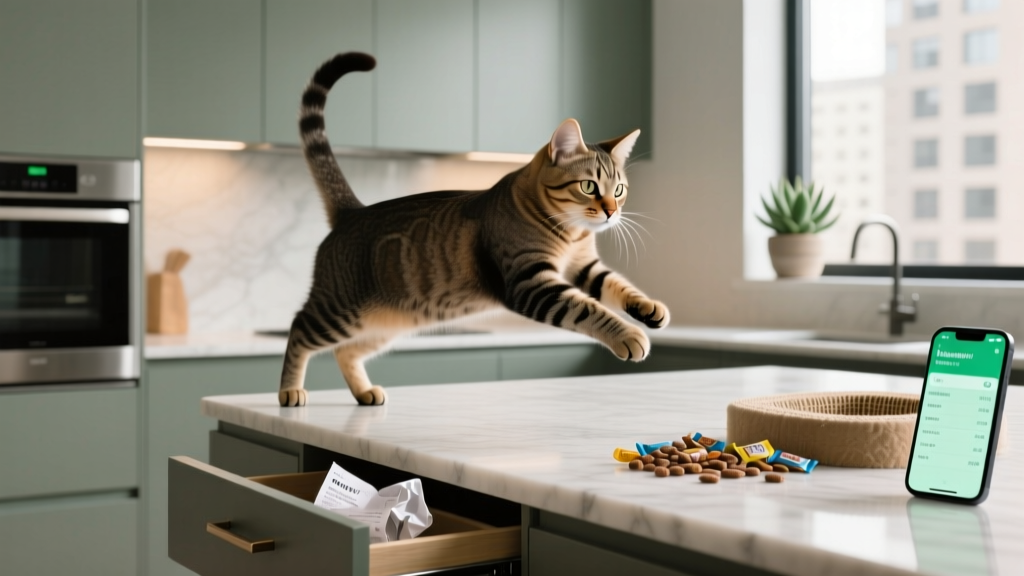
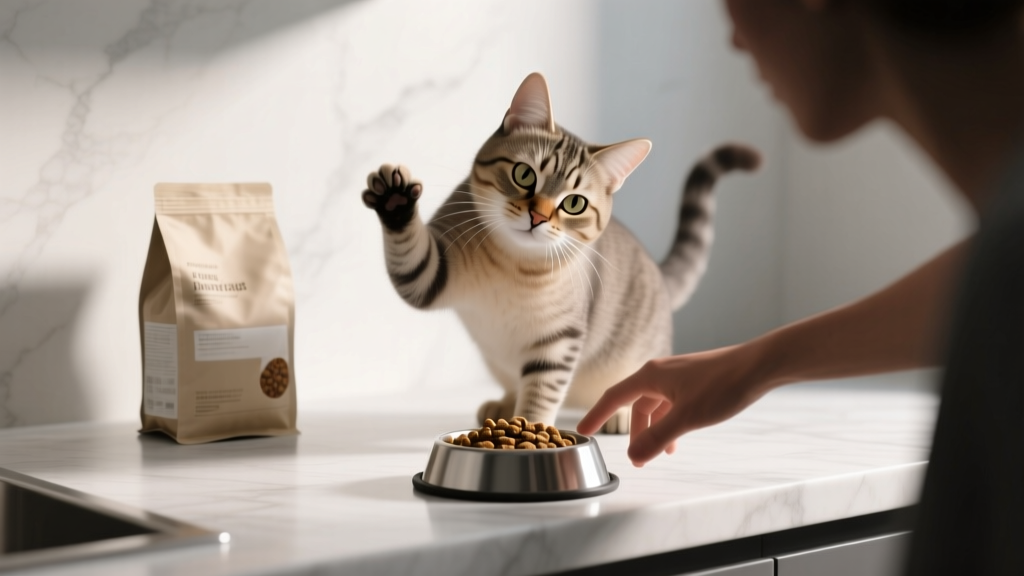
One of the most frequently reported behaviors is the ‘sniff-and-scatter’: your cat dips their nose into the bowl, inhales deeply, then uses a quick paw motion to flick or push kibble onto the floor — sometimes repeatedly. At first glance, this looks like playfulness or pickiness. But according to Dr. Sarah Lin, a feline behavior specialist and certified veterinary technician with 18 years of shelter and private practice experience, this action is primarily a multisensory assessment strategy. Cats have only ~470 taste buds (versus ~9,000 in humans), so they rely heavily on olfaction and tactile feedback to evaluate palatability, freshness, and safety.
Crucially, the *direction* and *consistency* of scattering matter. In a 2022 observational study published in Journal of Feline Medicine and Surgery, researchers tracked 127 indoor cats over 6 weeks and found that 68% scattered kibble occasionally — but only cats exhibiting chronic scattering (>5x/week for ≥2 weeks) showed significantly higher rates of subclinical dental disease (gingivitis, fractured molars) or oral pain on exam. Why? Because dry kibble requires more chewing force than wet food, and cats with sore teeth will avoid biting down — instead using paws to manipulate kibble without oral contact.
Real-world example: Luna, a 7-year-old spayed domestic shorthair, began scattering her kibble every morning after switching to a new grain-free formula. Her owner assumed she disliked the taste — until a vet exam revealed an abscessed premolar. After extraction and pain management, Luna resumed eating from the bowl within 48 hours. The scattering wasn’t rejection — it was avoidance.
✅ Action step: Next time you see scattering, film a 10-second clip (with natural lighting). Look for jaw tension, lip licking, or head shaking during or after the behavior. If present, schedule a dental check — even if teeth look clean. Gum inflammation often hides below the gumline.
2. The ‘Burying Ritual’: When Cats Cover Dry Food (and What It Says About Their Environment)
Burying dry food — whether by scratching at the floor beside the bowl, scraping with hind paws, or pushing kibble under furniture — triggers immediate concern in many owners: “Is my cat rejecting it?” “Is something wrong with the food?” In reality, this is one of the most evolutionarily intact behaviors in domestic cats. Wild felids instinctively cache surplus food to hide scent from scavengers and preserve it for later. While domestic cats rarely need to conserve calories, the neural pathway remains active — especially in multi-cat households or homes with high ambient noise or foot traffic near feeding zones.
Dr. Lin emphasizes context: “Burying isn’t inherently problematic — unless it’s paired with weight loss, decreased appetite over time, or occurs exclusively in one location (e.g., only near the front door when delivery people arrive). That tells us the behavior is stress-triggered, not instinctual.” A 2023 Cornell Feline Health Center survey of 342 caregivers found that 41% of cats who buried dry food did so only when fed in high-traffic areas — and 73% stopped the behavior entirely after moving feeding stations to quiet, low-visibility corners with vertical escape routes (e.g., a nearby cat tree).
⚠️ Important nuance: Burying *only* dry food — while readily consuming wet food from the same location — suggests texture aversion or oral sensitivity. Dry kibble has higher osmotic pressure and can cause transient gum irritation in cats with mild periodontal inflammation — a sensation they associate with the food itself, not the location.
✅ Action step: Try the ‘Silent Zone Test’. For 3 days, feed dry food in a room with closed doors, no human movement, and soft flooring (carpet or rug). Record frequency of burying. If it drops by ≥80%, environmental stress is likely the driver — not food quality.
3. The ‘Single-Bite Exit’: Why Cats Eat One Kibble Then Walk Away (and When It Signals Early Disease)
This behavior — taking one or two pieces, pausing, then deliberately walking away — frustrates owners who equate it with wastefulness or fussiness. But research shows it’s often a highly adaptive energy-conservation tactic. Cats evolved as ‘feast-or-famine’ hunters, eating small, frequent meals (up to 10–20 times daily) rather than large, scheduled feeds. A full bowl of dry food represents an unnatural, overwhelming surplus — triggering satiety signals long before caloric needs are met.
However, a critical shift occurs with age or illness. A landmark 2021 longitudinal study tracking 1,200 senior cats (10+ years) found that a sudden increase in ‘single-bite exits’ — defined as ≥3 episodes/day for ≥5 consecutive days — preceded diagnosis of chronic kidney disease (CKD) in 64% of cases, an average of 11.2 weeks before bloodwork abnormalities appeared. Why? CKD causes subtle nausea and altered taste perception (uremic gustatory dysfunction), making dry food taste metallic or bitter — prompting cats to sample, detect the off-flavor, and disengage.
Other red-flag patterns include: turning head sharply away after biting, excessive licking of lips post-consumption, or increased water intake immediately after the single bite. These aren’t ‘finicky’ habits — they’re neurologically mediated responses to internal physiological change.
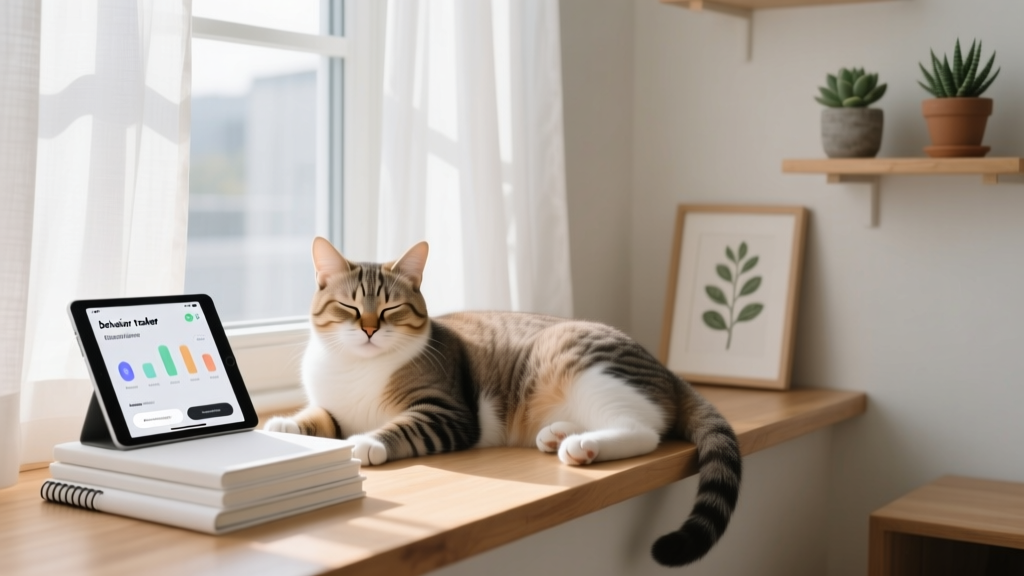
✅ Action step: Keep a simple log: number of bites taken, time spent at bowl, and any associated behaviors (lip licking, yawning, grooming face). Use a free app like ‘CatCare Tracker’ or a physical notebook. Trends over 7 days are far more telling than isolated incidents.
4. The ‘Kibble Play’: Pawing, Batting, and Chasing Dry Food (Instinct, Boredom, or Pain?)
Kibble play — batting pieces across the floor, ‘pouncing’ on rolling kibble, or carrying pieces to another room — is often dismissed as harmless fun. And sometimes, it is. But veterinary behaviorists caution against blanket assumptions. This behavior falls along a spectrum: from healthy predatory rehearsal (especially in kittens and young adults) to displacement activity (stress coping) to oral discomfort compensation.
Here’s how to differentiate:
- Predatory play: Smooth, coordinated movements; eyes focused and dilated; tail held low with tip twitching; followed by brief ‘kill bite’ (gentle nibble) on kibble. Most common in cats under 4 years with ample daily interactive play.
- Displacement play: Jerky, repetitive motions; ears flattened or rotated sideways; accompanied by excessive grooming or vocalizations. Often occurs after household disruptions (new pet, renovation, visitor).
- Pain-compensated play: Avoids using teeth entirely; uses only paws to manipulate; may drop kibble mid-air and stare at it; prefers larger, softer kibble sizes. Strongly associated with dental pain or TMJ inflammation.
A telling clue: if your cat plays with dry food but eats wet food directly from the bowl without paw involvement, oral pain is statistically likely. As Dr. Lin notes: “Cats won’t ‘play’ with food they can comfortably chew. They’ll just eat it.”
✅ Action step: Conduct the ‘Texture Swap Test’. Offer the same brand in both standard kibble and a soft, moistened version (soaked 30 sec in warm water). If kibble play stops and direct eating resumes, oral sensitivity is probable — warranting a dental consult.
| Behavior | Most Likely Driver | Supporting Clues | Urgency Level | First Action |
|---|---|---|---|---|
| Sniff-and-Scatter | Dental pain or olfactory overload | Jaw flinching, lip licking, preference for softer textures | Moderate-High | Schedule dental exam; try smaller kibble size |
| Burying Ritual | Environmental stress or instinctual caching | Occurs only in high-traffic zones; absent with wet food | Low-Moderate | Relocate feeder; add vertical space nearby |
| Single-Bite Exit | Early renal or GI disease, taste alteration | ↑ water intake, subtle weight loss, lip licking | High | Log 7-day pattern; request SDMA blood test |
| Kibble Play | Oral pain OR unmet predatory drive | Teeth avoidance, ear position, consistency with wet food | Moderate | Texture Swap Test; assess daily play volume |
| Food Guarding (staring, growling) | Resource insecurity or anxiety | Worse with other pets/humans present; tense posture | Moderate | Feed separately; use puzzle feeders to build confidence |
Frequently Asked Questions
Do cats bury dry food because they don’t like it?
No — burying is rarely about taste preference. It’s primarily an instinctive caching behavior triggered by perceived abundance or environmental stress. In fact, cats often bury food they enjoy. If your cat consistently avoids eating *after* burying, then investigate dental pain, food spoilage (check bag seal and storage), or recent diet changes — but don’t assume burial equals rejection.
Is it normal for cats to play with dry food instead of eating it?
Yes — but context determines meaning. Occasional batting is healthy predatory rehearsal, especially in young cats. However, if it replaces eating, happens exclusively with dry food, or includes signs of oral discomfort (avoiding teeth contact, dropping kibble), it’s a signal to assess dental health or enrichment needs. Never punish this behavior — it’s communication, not defiance.
Why does my cat eat dry food from the floor but not the bowl?
This often relates to whisker fatigue or tactile sensitivity. Many standard bowls are too deep/narrow, causing whiskers to brush constantly against sides — a painful sensation for cats with sensitive vibrissae. Eating from the floor eliminates that pressure. Try a wide, shallow ceramic dish or a flat plate. If the behavior persists, rule out dental pain or texture aversion with a vet.
Can dry food behaviors indicate anxiety or depression?
Absolutely. Chronic scattering, burying in unusual places (e.g., under your bed), or obsessive kibble rearrangement can be displacement behaviors — outward signs of unresolved stress. A 2020 study in Applied Animal Behaviour Science linked persistent dry-food manipulation to elevated cortisol metabolites in urine samples. Address underlying stressors first (predictable routine, safe spaces, pheromone diffusers) before assuming food is the issue.
Should I switch to wet food if my cat shows these behaviors?
Not automatically. While wet food resolves many oral-sensitivity issues, abrupt diet changes can cause GI upset or refusal. Instead, use behaviors as diagnostic clues: if kibble play stops with moistened kibble, try a high-moisture dry formula. If single-bite exits improve with warmed wet food, discuss hydration support with your vet. Always transition gradually over 7–10 days — and never eliminate dry food without veterinary guidance if your cat has specific dental or metabolic needs.
Common Myths
Myth 1: “Cats scatter dry food to ‘hide’ it from other pets — it’s dominance behavior.”
Reality: Scattering is almost never social signaling. Cats lack the cognitive framework for ‘dominance displays’ over food. Scattering correlates strongly with oral pain or olfactory hypersensitivity — not hierarchy. Multi-cat households show no increase in scattering vs. single-cat homes in controlled studies.
Myth 2: “If a cat plays with kibble, they’re just bored — give them more toys.”
Reality: While enrichment matters, kibble play driven by oral pain won’t resolve with toys alone. In fact, adding more stimulation can heighten stress if the root cause (e.g., a fractured tooth) remains untreated. Always rule out physical discomfort before attributing to behavioral ‘boredom’.
Related Topics (Internal Link Suggestions)
- Dry food dental benefits vs. risks — suggested anchor text: "does dry food clean cats' teeth"
- Best puzzle feeders for kibble — suggested anchor text: "slow feeder bowls for cats"
- Signs of early kidney disease in cats — suggested anchor text: "subtle CKD symptoms in cats"
- How to transition cats from dry to wet food — suggested anchor text: "gradual wet food transition guide"
- Whisker fatigue solutions — suggested anchor text: "best shallow cat bowls"
Your Cat’s Dry Food Behaviors Are Data — Not Drama
What behaviors do cats do dry food? Now you know they’re not random quirks — they’re nuanced, biologically grounded communications. Every scatter, bury, single bite, and paw-bat carries information about your cat’s physical comfort, emotional safety, and evolutionary wiring. Rather than correcting or ignoring these acts, treat them as vital data points in your cat’s wellness dashboard. Start small: choose one behavior you’ve observed, apply the corresponding Action Step this week, and track what changes. You’ll likely spot patterns faster than any lab test — and deepen your bond through attentive, informed care. Ready to go further? Download our free Behavior Interpretation Cheat Sheet — complete with printable logs, vet conversation prompts, and a 7-day observation planner.