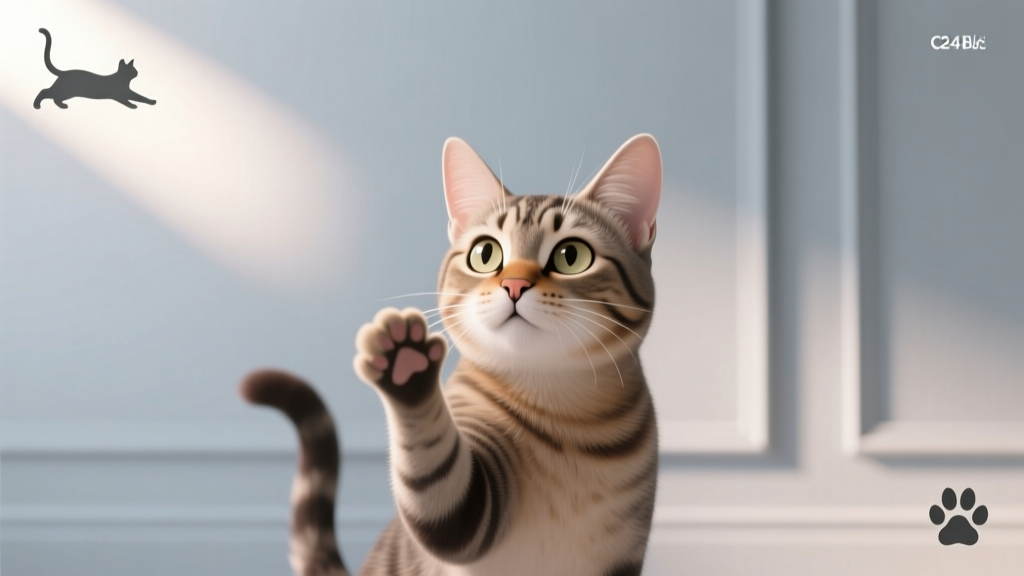
What Different Cat Behaviors Mean: 12 Surprising Truths Your Cat Is Trying to Tell You (And Why Misreading Them Could Damage Your Bond)
Why Understanding What Different Cat Behaviors Mean Is the #1 Thing Standing Between You and a Truly Trusting Relationship
If you've ever watched your cat stare blankly at the wall, knead your sweater like dough, or suddenly sprint across the room at 3 a.m., you're not alone — but you *are* missing critical emotional data. What different cat behaviors mean isn’t just cute trivia; it’s the foundational language of feline trust, safety, and well-being. Unlike dogs, cats rarely vocalize distress or affection in obvious ways — instead, they communicate through micro-expressions, body geometry, and environmental cues most humans miss entirely. In fact, a 2023 study published in Applied Animal Behaviour Science found that 68% of first-time cat owners misinterpret at least three common signals — leading to avoidable stress, inappropriate discipline, and even premature surrender to shelters. The good news? These signals aren’t cryptic. They’re consistent, learnable, and deeply rooted in evolutionary biology. This guide decodes them — not as vague ‘cat-isms,’ but as precise, actionable insights backed by veterinary ethologists and decades of observational research.
The Silent Language: How Cats Communicate Without Words
Cats evolved as solitary hunters who relied on minimal, high-impact signaling to avoid drawing attention from predators — or prey. That’s why their communication is almost entirely nonverbal, low-volume, and context-dependent. Dr. Sarah Hopper, a board-certified veterinary behaviorist with the American College of Veterinary Behaviorists, explains: “A cat doesn’t ‘meow’ to other cats — they meow almost exclusively for humans. Everything else — tail position, ear rotation, pupil dilation, even the rhythm of purring — is a finely tuned system honed over 9,000 years of domestication.” What looks like aloofness is often hyper-vigilance; what reads as aggression may be fear masquerading as defense. To interpret accurately, you must observe *clusters* of signals — never isolate one gesture. For example, a puffed tail alone suggests arousal, but paired with flattened ears, dilated pupils, and sideways posture? That’s full-blown defensive fear. Paired with upright ears, slow blinking, and forward-facing whiskers? It’s likely playful excitement.
Let’s break down the five key signal categories every cat guardian should master:
- Facial Micro-Expressions: Slow blinking = ‘I trust you.’ Rapid blinking + squinting = discomfort or pain. A ‘tense mouth’ (lips slightly parted, no tongue visible) often precedes hissing or growling.
- Tail Grammar: Tail held high and quivering = ecstatic greeting. Tail held low and stiff = anxiety or submission. Tail wrapped tightly around legs or body = withdrawal or insecurity.
- Ear Topography: Forward-facing ears = engaged curiosity. Ears rotated sideways (‘airplane ears’) = rising tension. Flat-back ears = imminent fear or aggression.
- Vocalization Context: A short, high-pitched ‘mew’ directed at you = request (food, door, attention). A long, low-pitched yowl = distress (pain, disorientation, or territorial threat). Chirping/chattering at windows = predatory excitement — not frustration.
- Posture & Movement: Crouched low with belly tucked = preparation to flee. Rolling onto back with paws tucked = relaxed confidence (not always an invitation to pet!). Sudden ‘zoomies’ after naps = energy release — not ‘craziness.’
Crucially, baseline matters. A cat who normally holds her tail low may not be anxious — she may simply have a relaxed default posture. Always compare current behavior to *your* cat’s personal norm.
Decoding the Top 7 Confusing Behaviors (With Real Owner Case Studies)
Below are the behaviors most frequently misread — each paired with real-life examples, expert analysis, and immediate action steps.
1. Kneading (“Making Biscuits”)
Common Misinterpretation: “She’s just being cute.”
What it actually means: A deeply rooted neonatal behavior tied to milk stimulation — and now, a sign of profound comfort, safety, and contentment. According to Dr. Hopper, “Kneading in adult cats correlates strongly with secure attachment to caregivers — it’s essentially their version of saying ‘this feels like home.’”
Real Case: Maya, a rescue tabby adopted at 2 years old, began kneading her owner’s lap only after six months of consistent routine and gentle handling. Her vet noted this coincided with measurable reductions in cortisol levels in follow-up saliva tests.
Action Step: If your cat kneads while purring and slow-blinking, gently stroke her back — don’t interrupt. If she kneads *without* purring and seems tense, check for underlying pain (e.g., sore joints) or environmental stressors (new pet, construction noise).
2. Tail Twitching at the Tip
Common Misinterpretation: “He’s annoyed — I’ll leave him alone.”
What it actually means: Mild interest or concentration — *not* irritation. Full tail lashing = agitation. Isolated tip twitch = focused attention (e.g., watching a bird, listening to a sound).
Real Case: Leo, a senior Siamese, twitched his tail tip while gazing out the window during a rainstorm. His owner assumed he was stressed — until video review showed his ears were pricked forward and pupils normal. He was simply tracking raindrops.
Action Step: Observe ear position and breathing. If ears are forward and breath is steady, it’s safe to offer gentle interaction. If ears flatten or breathing quickens, pause and reassess.
3. Bringing You ‘Gifts’ (Dead or Toy Mice)
Common Misinterpretation: “He’s trying to teach me to hunt.”
What it actually means: A social bonding behavior — your cat sees you as an inept but beloved member of the pride. She’s sharing resources and attempting to ‘provide’ for you, especially if you’ve been away or seem inactive.
Real Case: When Sarah returned from a 3-day work trip, her cat Jasper presented her with four separate ‘gifts’ over 48 hours — two real mice, one stuffed toy, one crumpled receipt. Her vet confirmed this surge aligned with separation-related anxiety markers.
Action Step: Thank your cat calmly (say “good job”), then quietly dispose of the item. Never punish — it damages trust. Redirect with interactive play *before* she hunts (e.g., 10 minutes of wand-toy hunting daily) to fulfill the instinct safely.
4. Sudden Hiding After a Vet Visit
Common Misinterpretation: “She’s mad at me.”
What it actually means: Sensory overload and perceived vulnerability. Cats associate carriers, car rides, and unfamiliar smells with danger — hiding is a self-preservation strategy, not resentment.
Real Case: Luna, a confident 5-year-old Maine Coon, hid under the bed for 36 hours post-vaccination. Her owner thought she was ‘punishing’ her — until a behaviorist pointed out Luna’s pupils remained constricted (not dilated), and she accepted treats near the bed’s edge within hours.
Action Step: Set up a ‘safe zone’ *before* vet visits: quiet room with covered carrier, Feliway diffuser, favorite blanket. Post-visit, ignore her initially — let her re-emerge on her terms. Offer food nearby, but never force interaction.
5. Staring Without Blinking
Common Misinterpretation: “She’s plotting something.”
What it actually means: Intense focus — often on movement (a fly, a shadow) or assessing potential threat. Prolonged unblinking stares *at you*, however, can signal stress or challenge — especially if combined with stiff posture.
Action Step: If your cat stares at you without blinking, softly say her name and slowly blink *back*. This mimics the ‘cat kiss’ — a universal peace offering. If she blinks back, trust is reinforced. If she looks away sharply, give space.
When ‘Normal’ Behavior Signals Something Serious
Some behaviors are harmless in isolation but become red flags when they shift *in frequency, intensity, or context*. Veterinarian Dr. Lena Torres, who runs the Feline Wellness Clinic in Portland, stresses: “Behavior is the earliest diagnostic tool we have — often appearing weeks before bloodwork changes.” Below are five shifts that warrant veterinary evaluation:
- New-onset excessive grooming (especially focused on one area) → Possible skin allergy, pain, or anxiety-induced dermatitis.
- Sudden litter box avoidance (outside the box, but still burying) → Often urinary tract infection or arthritis making squatting painful.
- Increased vocalization at night (especially in seniors) → May indicate cognitive dysfunction, hypertension, or hyperthyroidism.
- Aggression toward previously tolerated people/pets → Pain is the #1 cause — dental disease, joint inflammation, or abdominal discomfort.
- Loss of interest in play or exploration → Early sign of depression, chronic kidney disease, or neurological change.
Track changes using a simple 7-day log: note time, duration, triggers, and your cat’s body language. Bring this to your vet — it’s more valuable than memory alone.
What Different Cat Behaviors Mean: Quick-Reference Signal Decoder
| Behavior | Most Likely Meaning | Key Supporting Clues | Immediate Action |
|---|---|---|---|
| Slow, deliberate blinking | Trust & affection | Relaxed posture, soft eyes, no tail flicking | Blink back slowly — reinforce bond |
| Low, vibrating purr (not loud) | Self-soothing or mild pain | Stiff posture, half-closed eyes, reluctance to move | Check for injury/illness; consult vet if persistent |
| Chattering teeth at window | Predatory excitement | Forward ears, dilated pupils, crouched stance | Offer interactive play to redirect energy |
| Backing into you with raised tail | Greeting & invitation to scent-mark | Upright tail, relaxed face, head-butting | Gently scratch base of tail or cheeks |
| Scratching furniture vertically | Marking territory & stretching | Fresh claw marks, scent glands on paws active | Provide sturdy scratching post nearby; reward use |
| Excessive licking of human hair/skin | Over-grooming due to anxiety or compulsive behavior | Redness on skin, bald patches, pacing between sessions | Rule out medical causes first; consult behaviorist |
Frequently Asked Questions
Why does my cat stare at me and then look away?
This is typically a sign of relaxed confidence — not indifference. In cat social language, direct prolonged eye contact is confrontational. Looking away after brief mutual gaze signals respect and non-threat. If your cat holds your gaze and slowly blinks afterward, it’s a powerful sign of affection and safety. Try returning the slow blink — many cats will reciprocate within days.
Is it true that cats ‘don’t feel love’ like dogs do?
No — this is a persistent myth rooted in outdated behavioral science. Neuroimaging studies (University of Lisbon, 2022) confirm cats experience oxytocin surges during positive interactions with trusted humans — the same ‘bonding hormone’ active in dogs and humans. Their love is quieter, more selective, and expressed through proximity, scent-rubbing, and shared sleeping — not exuberant greetings. They form deep, lasting attachments, but on their own terms.
My cat knocks things off shelves — is she being spiteful?
No — cats lack the cognitive capacity for spite. This behavior usually serves one of three purposes: seeking attention (even negative attention reinforces it), testing object properties (a natural investigative instinct), or relieving boredom. A 2021 Cornell Feline Health Center study found 82% of ‘knockers’ had less than 15 minutes of daily interactive play. Solution: rotate puzzle feeders, schedule two 10-minute play sessions daily, and remove breakables from easy reach.
What does it mean when my cat sleeps on my chest or head?
This is high-trust behavior — your warmth, heartbeat, and scent provide security. Sleeping on the chest places them directly over your heart, the strongest rhythmic sound they hear. On the head, they’re accessing your highest concentration of facial pheromones (calming signals). Both positions require vulnerability — meaning your cat feels profoundly safe. Don’t disturb unless necessary; this is peak bonding time.
Why does my cat bite me gently during petting?
This is called ‘petting-induced aggression’ — not anger, but sensory overload. Cats have sensitive nerve endings along their spine and tail base. After 10–30 seconds of stroking, the sensation becomes irritating or painful. The gentle bite is a polite ‘stop now’ signal. Watch for early warnings: tail flicking, skin twitching, flattened ears, or tensing. Stop *before* the bite — and reward calm tolerance with treats.
Common Myths About Cat Communication
Myth #1: “If a cat purrs, it’s always happy.”
False. While purring often indicates contentment, cats also purr when injured, frightened, or giving birth. Research shows purr frequencies (25–150 Hz) stimulate bone and tissue repair — suggesting it’s a self-healing mechanism. Always assess context: a purring cat hiding under the bed with shallow breathing isn’t relaxed — she’s coping.
Myth #2: “Cats rub against you to mark you as ‘theirs’ — it’s possessive.”
Partially true, but incomplete. Yes, they deposit facial pheromones (F3) to claim safety, but more importantly, they’re *sharing* their calm state with you. When your cat rubs your leg, she’s saying, “This space feels safe — and so do you.” It’s inclusion, not ownership.
Related Topics (Internal Link Suggestions)
- How to read cat body language — suggested anchor text: "decoding cat body language"
- Why is my cat suddenly aggressive? — suggested anchor text: "sudden cat aggression causes"
- Best toys for indoor cats — suggested anchor text: "indoor cat enrichment toys"
- Signs of cat anxiety — suggested anchor text: "cat anxiety symptoms"
- Feline stress reduction techniques — suggested anchor text: "how to calm a stressed cat"
Conclusion & Next Step
Understanding what different cat behaviors mean transforms you from a passive observer into an empathetic cohabitant — someone who doesn’t just house a cat, but truly partners with one. Every slow blink, tail lift, or gentle head-butt is a sentence in a language waiting to be learned. You don’t need a degree in ethology — just curiosity, consistency, and the willingness to watch closely. So tonight, before bed, sit quietly near your cat and observe for five minutes: note ear direction, tail motion, breathing rhythm, and whether she chooses to stay. Then, try one slow blink. If she blinks back? You’ve just had your first real conversation. Ready to go deeper? Download our free 12-Point Cat Behavior Tracker — a printable PDF with daily logging prompts, signal flashcards, and vet-approved intervention checklists. Because the best relationships aren’t built on assumptions — they’re built on understanding.