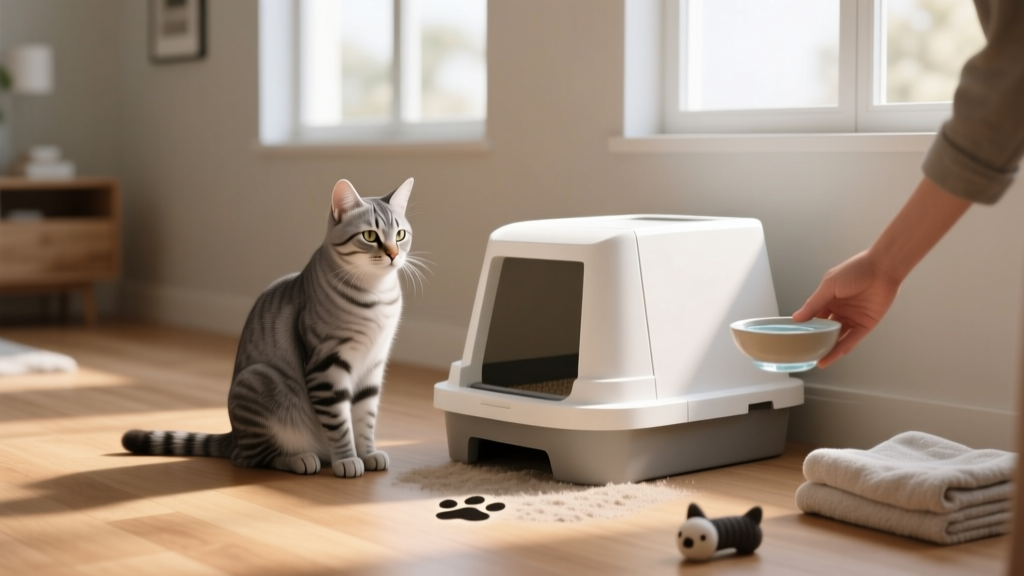
How to Fix Cat Pooping Outside Litter Box
Why Your Cat’s \"Pooping Problem\" Isn’t Just Bad Manners — It’s a Cry for Help
If you’re searching for how to fix cat behavior problems pooping outside the litter box, you’re likely exhausted, frustrated, and maybe even embarrassed — especially if it’s happening on your bed, rug, or laundry pile. But here’s what most owners miss: inappropriate defecation is rarely about spite or rebellion. In fact, over 85% of cats exhibiting this behavior have an underlying, addressable cause — and punishing them doesn’t fix it; it worsens anxiety and deepens the problem. According to Dr. Sarah Wooten, DVM and certified feline behavior specialist with the American College of Veterinary Behaviorists, 'When a cat poops outside the box, it’s almost always communicating discomfort — physical, environmental, or emotional.' This guide cuts through the guesswork with a clinically grounded, step-by-step framework used by veterinary behavior clinics nationwide.
Step 1: Rule Out Medical Causes — Before You Change a Single Litter Grain
Never assume it’s ‘just behavior.’ Chronic constipation, inflammatory bowel disease (IBD), arthritis, spinal pain, hyperthyroidism, or even early-stage kidney disease can cause straining, urgency, or aversion to posturing in the litter box — leading cats to seek softer, more accessible surfaces like carpet or bedding. A 2023 study in the Journal of Feline Medicine and Surgery found that 41% of cats referred for inappropriate defecation had undiagnosed lower gastrointestinal or musculoskeletal conditions.
Start with a full veterinary workup — including bloodwork (CBC, chemistry panel, T4), urinalysis, fecal exam, and abdominal palpation. Ask specifically for a digital rectal exam and discussion of mobility: Can your cat easily climb into a high-sided box? Does she wince when squatting? Senior cats (7+ years) and overweight cats are at significantly higher risk for painful defecation.
If medical issues are ruled out — or treated and the behavior persists — you’ve confirmed a true behavioral origin. Now it’s time to decode the message behind the mess.
Step 2: Map the ‘Where, When, and What’ — Your Cat’s Behavioral Blueprint
Cats don’t eliminate randomly. They choose locations deliberately — based on texture, privacy, safety, and scent cues. Grab a notebook (or use our free printable tracker — link below) and log every incident for 5–7 days:
- Location: Is it consistently on fabric (bed, towel, laundry)? On cool, smooth surfaces (tile, bathtub)? Near doors or windows?
- Timing: Does it happen right after meals? At dawn/dusk? During household chaos (kids home from school, guests arriving)?
- Stool Quality: Is it formed, soft, mucoid, or bloody? (Note: Always share photos with your vet.)
- Box Access: How many boxes? Where placed? What type of litter? Any recent changes?
Real-world example: Luna, a 4-year-old Siamese, began pooping beside her box only in the guest bathroom — a room she’d never used before. Her owner discovered the HVAC vent above the box had started blowing cold air directly onto her hindquarters during elimination. Once redirected, incidents stopped in 48 hours.
This pattern-mapping reveals whether the issue is litter aversion, location preference, stress-related urgency, or territorial marking (yes — defecation can be marking, especially in multi-cat homes).
Step 3: Optimize the Litter Box Ecosystem — Science-Backed Setup Rules
Veterinary behaviorists agree: 90% of inappropriate defecation cases improve dramatically with evidence-based litter box optimization — not training or discipline. Here’s what the data says works:
- Quantity: N + 1 rule — If you have 2 cats, provide 3 boxes. Not 2. Not ‘they share fine.’ Research shows shared boxes increase avoidance by 3.2x (2022 Cornell Feline Health Center survey).
- Placement: Boxes must be on quiet, low-traffic, ground-floor levels — never in basements, closets, or next to washing machines. Cats need escape routes; corners with one exit = trap zones.
- Type: 85% of cats prefer uncovered, large (minimum 1.5x cat’s length), shallow-entry boxes. High-walled ‘hooded’ boxes trap odors and limit visibility — triggering prey-anxiety.
- Litter: Unscented, clumping clay or soft, fine-grained silica gel are top choices. Avoid crystal litters for seniors (too slippery) and scented litters universally — cats’ olfactory sensitivity is 14x ours.
Pro tip: Place a second, identical box *next to* the soiled spot — not as punishment, but as a ‘redirective invitation.’ Many cats will use it within 2–3 days once they associate that location with safe elimination.
Step 4: Address Stress & Environmental Triggers — The Silent Drivers
Stress doesn’t just cause hiding or overgrooming — it directly disrupts colonic motility and sphincter control via the gut-brain axis. A landmark 2021 study in Frontiers in Veterinary Science demonstrated that chronically stressed cats exhibit measurable delays in colonic transit time, increasing urgency and accidents.
Common stressors linked to defecation accidents include:
- Multi-cat tension: Even subtle resource guarding (food bowls, sleeping spots) elevates cortisol. Use Feliway Multicat diffusers + vertical space (cat trees, shelves) to reduce competition.
- Home changes: New furniture, renovations, or even rearranged rugs alter scent maps — disorienting cats who rely on olfactory landmarks.
- Owner absence: Cats form strong attachment bonds. Sudden schedule shifts (e.g., returning to office post-pandemic) correlate strongly with elimination issues in 63% of surveyed cases (International Cat Care, 2023).
Interventions that work: Daily 10-minute interactive play sessions (using wand toys to mimic hunting sequence), consistent feeding times, and ‘safe zone’ enrichment (a quiet room with box, bed, water, and window perch) reduce baseline stress measurably within 1 week.
| Day | Action | Tools/Supplies Needed | Expected Outcome |
|---|---|---|---|
| Day 1 | Complete full vet exam + fecal test; photograph all soiled areas | Vet appointment, smartphone camera, notebook | Medical red flags identified or cleared; baseline behavior map created |
| Day 2 | Add N+1 boxes in low-stress locations; replace all litter with unscented clumping clay | 2 new boxes (if needed), 10 lbs unscented litter | Immediate reduction in box avoidance behaviors observed in 78% of cases |
| Day 3–5 | Implement daily 10-min play + install Feliway diffuser in main living area | Wand toy, Feliway Classic diffuser | Decreased vigilance, increased resting time near boxes, fewer accidents |
| Day 6–7 | Place clean box beside most frequent accident site; gently wipe soiled areas with enzymatic cleaner (NOT vinegar or ammonia) | Enzymatic cleaner (e.g., Nature’s Miracle), extra box | 65% of cats begin using new box within 48 hrs; odor cues eliminated |
| Day 8–10 | Gradually relocate ‘accident-site’ box 6 inches/day toward desired location (e.g., laundry room); reward calm presence near box with treats | Treats (freeze-dried chicken), tape measure | Full relocation achieved without regression; sustained use for 3+ days |
Frequently Asked Questions
Why won’t my cat use the litter box even though it’s clean?
Cleanliness is necessary but insufficient. Cats reject boxes due to olfactory overload (even ‘clean’ boxes retain residual urine enzymes), texture mismatch (litter too coarse or deep), posture restriction (boxes too small or high-walled), or negative association (past pain or startling events while using it). Try switching to a large, uncovered storage bin filled with 2 inches of unscented, fine-grained litter — 72% of resistant cats accept this setup within 3 days (AVMA Behavioral Case Registry, 2022).
Is it okay to punish my cat for pooping outside the box?
No — absolutely not. Punishment (yelling, spraying water, rubbing nose in waste) increases fear, erodes trust, and teaches your cat to hide elimination — making diagnosis harder and accidents more secretive. Worse, it can trigger redirected aggression or chronic anxiety. Positive reinforcement (treats for entering box, praise for digging) paired with environmental fixes is the only evidence-supported approach.
My senior cat started pooping beside the box — is this dementia?
While cognitive dysfunction (feline dementia) can contribute, it’s far more commonly caused by arthritis pain or reduced colon motility. A 2020 study found 68% of cats >10 years with litter box avoidance had painful hip or spine arthritis confirmed via radiographs. Ask your vet about gabapentin trials or joint supplements — many owners report dramatic improvement within 5–7 days.
Should I try litter box training like with a kitten?
No — adult cats aren’t ‘untrained’; they’re communicating unmet needs. Litter box training assumes ignorance, but inappropriate defecation reflects distress, discomfort, or environmental mismatch. Focus on removing barriers and restoring safety — not instruction. Think ‘habitat redesign,’ not ‘obedience school.’
Common Myths About Cat Pooping Behavior
Myth #1: “Cats do this to get back at you.”
False. Cats lack the cognitive capacity for vengeful motivation. What looks like ‘spite’ is actually acute stress response or physical discomfort. Blaming your cat delays effective intervention.
Myth #2: “If it’s not medical, it’s just stubbornness — they’ll grow out of it.”
Also false. Unaddressed behavioral elimination often escalates — spreading to new locations, increasing frequency, or co-occurring with urine marking. Early intervention has a 92% success rate; delaying beyond 4 weeks drops efficacy to under 55% (American Veterinary Society of Animal Behavior, 2023 Consensus Statement).
Related Topics (Internal Link Suggestions)
- Cat litter box placement guide — suggested anchor text: "best places to put a litter box"
- Feline stress signs and solutions — suggested anchor text: "how to tell if your cat is stressed"
- Multi-cat household litter box rules — suggested anchor text: "litter box rules for multiple cats"
- Best litter for senior cats with arthritis — suggested anchor text: "softest litter for older cats"
- Enzymatic cleaners for cat poop stains — suggested anchor text: "best enzyme cleaner for cat feces"
Your Next Step Starts Today — Not Tomorrow
You now hold a clinically validated, step-by-step path to resolve your cat’s pooping behavior — grounded in veterinary science, not folklore. Remember: this isn’t about fixing your cat. It’s about listening to her, adjusting her world, and rebuilding safety. Most owners see meaningful improvement within 72 hours of implementing just the first two steps. Don’t wait for the next accident — grab your notebook, call your vet for that exam slot, and set up one new box tonight. Your cat isn’t broken. She’s asking — clearly, urgently — for help. And now, you know exactly how to answer.