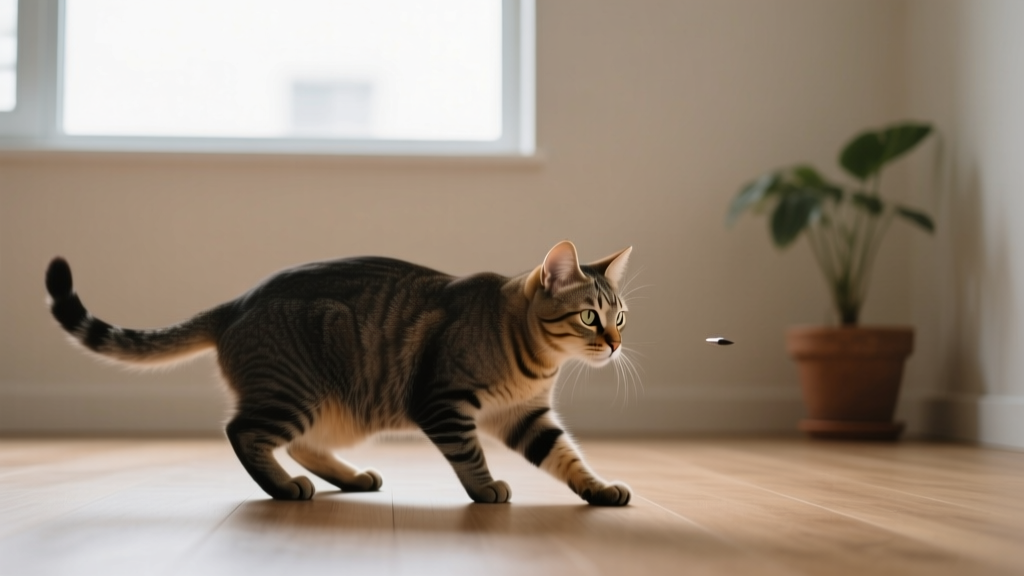
What Do Cats’ Behaviors Mean Naturally? 7 Instinct
Why Your Cat’s ‘Weird’ Behavior Isn’t Weird at All—It’s Ancient Survival Language
When you ask what do cats behaviors mean natural, you’re not just curious—you’re seeking a deeper, empathetic connection rooted in biology, not myth. Cats haven’t evolved to ‘act human’; they communicate using signals refined over 9,000 years of domestication and millions of years of felid ancestry. Yet most owners interpret tail flicks as ‘playful’ (when they’re often pre-attack tension), mistake kneading for affection alone (it’s also scent-marking and neonatal comfort-seeking), and dismiss growling as ‘grumpiness’ instead of a vital boundary warning. Misreading these natural behaviors doesn’t just cause confusion—it elevates cortisol levels in cats, increases vet visits for stress-related illness (like idiopathic cystitis), and erodes the human-cat bond at its foundation. This guide cuts through folklore with ethology, veterinary behavior science, and real-world case studies—so you stop guessing and start understanding.
The Evolutionary Blueprint: Why ‘Natural’ Means Instinct, Not Personality
Cats are obligate predators with solitary ancestry—even domesticated ones retain neurobiological wiring shaped by survival in resource-scarce, high-risk environments. Dr. Mikel Delgado, certified applied animal behaviorist and researcher at UC Davis, explains: “A domestic cat’s brain processes threat, safety, and social cues almost identically to a wildcat’s. Their ‘behavioral vocabulary’ wasn’t invented for us—it was inherited from Felis lybica.” That means ‘natural’ behavior isn’t random quirkiness—it’s functional communication honed by evolution. Purring at 25–150 Hz isn’t just contentment; research published in Current Biology confirms those frequencies stimulate bone density repair and tissue regeneration—meaning cats purr when injured, stressed, or giving birth. Slow blinking? It’s a deliberate, vulnerable signal of non-threat—a feline ‘peace treaty’ observed in lion prides and shelter cats alike. And that ‘gift’ of a dead mouse on your pillow? Not gratitude—it’s maternal teaching behavior, even in spayed females, triggered by prey drive and social bonding instincts.
Ignoring this context leads to harmful interventions: punishing a cat for scratching (a natural marking/stress-relief behavior), forcing interaction during ‘alone time’ (disrupting essential circadian rest cycles), or mislabeling fear-based aggression as ‘spite.’ Understanding the natural function behind each action transforms discipline into diplomacy.
Decoding the Top 7 Natural Behaviors: Signal, Science, and Safe Response
Below are the most frequently misinterpreted behaviors—with their evolutionary purpose, observable triggers, and evidence-based response strategies:
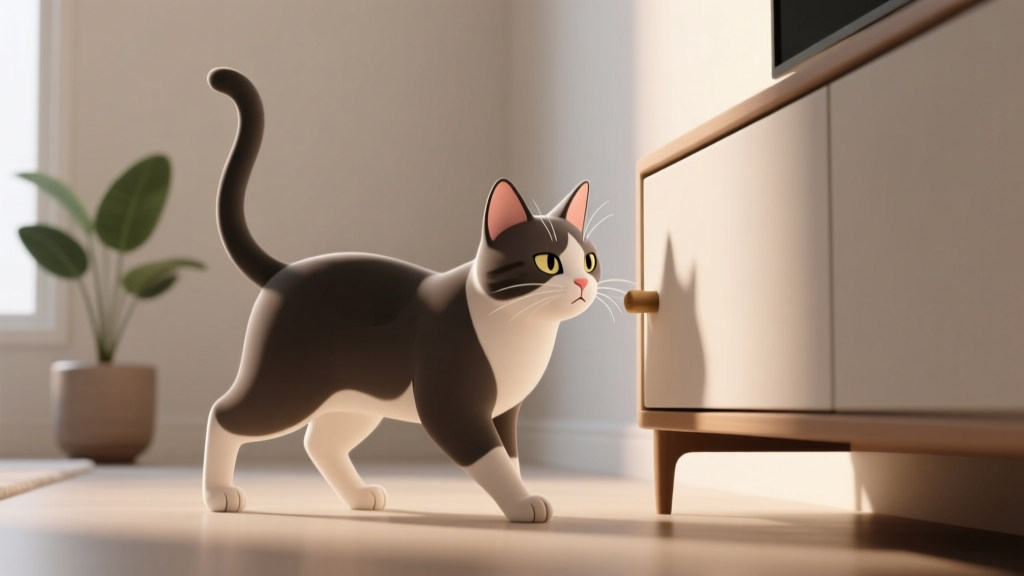
- Tail held high with a slight curve (‘question mark’ tail): Not just confidence—it’s a greeting ritual evolved from kitten-to-mother signaling. Kittens use this posture to solicit nursing and grooming. In adults, it invites mutual scent exchange and signals ‘I’m approachable but maintaining autonomy.’ Safe response: Offer your hand for nose-touch (not petting yet); wait for head-bunt before stroking.
- Chattering at windows: Often dismissed as ‘cute frustration,’ but functional analysis shows it mimics the jaw motion used to sever spinal cords in small prey. It’s a motor rehearsal—not excitement. Safe response: Redirect with interactive play using wand toys that simulate prey movement (horizontal sweeps, erratic pauses) for 5 minutes before feeding.
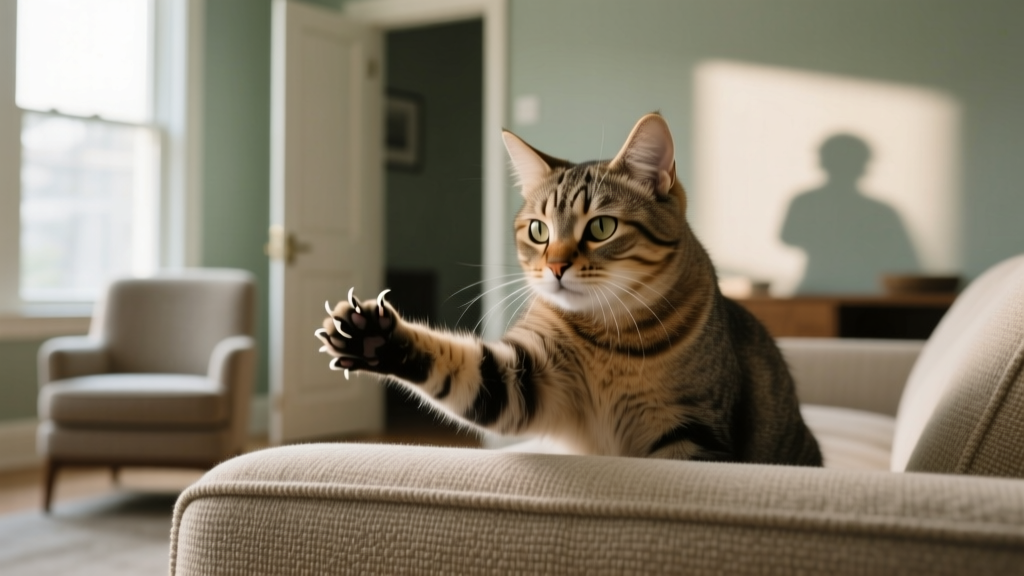
- Kneading with claws extended: A neonatal reflex tied to milk ejection stimulation. But in adults, it’s also olfactory marking—paw pads contain scent glands. When combined with purring, it indicates deep security. Safe response: Place a soft blanket under them if claws dig; never trim claws solely to stop kneading—it’s psychologically vital.
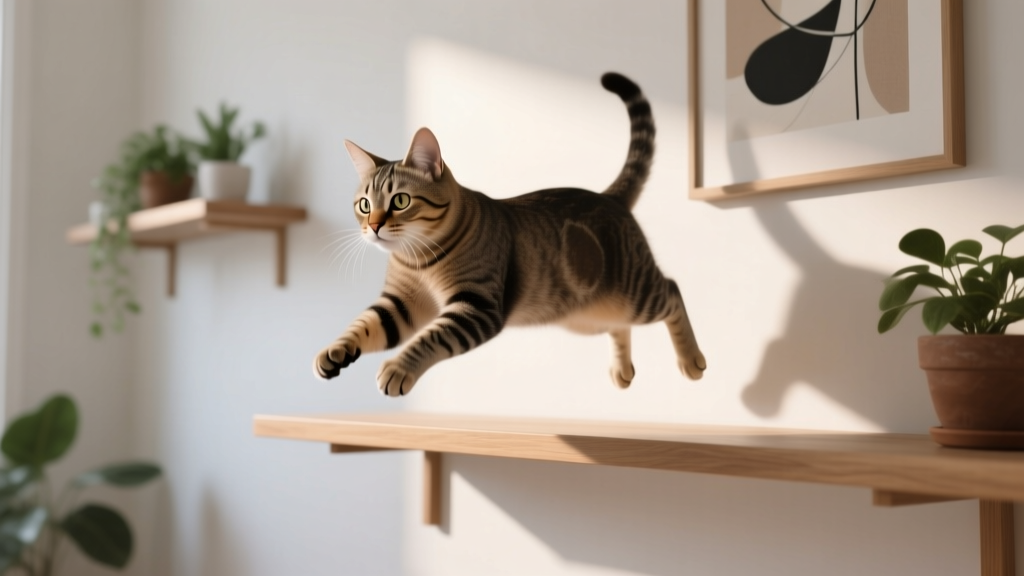
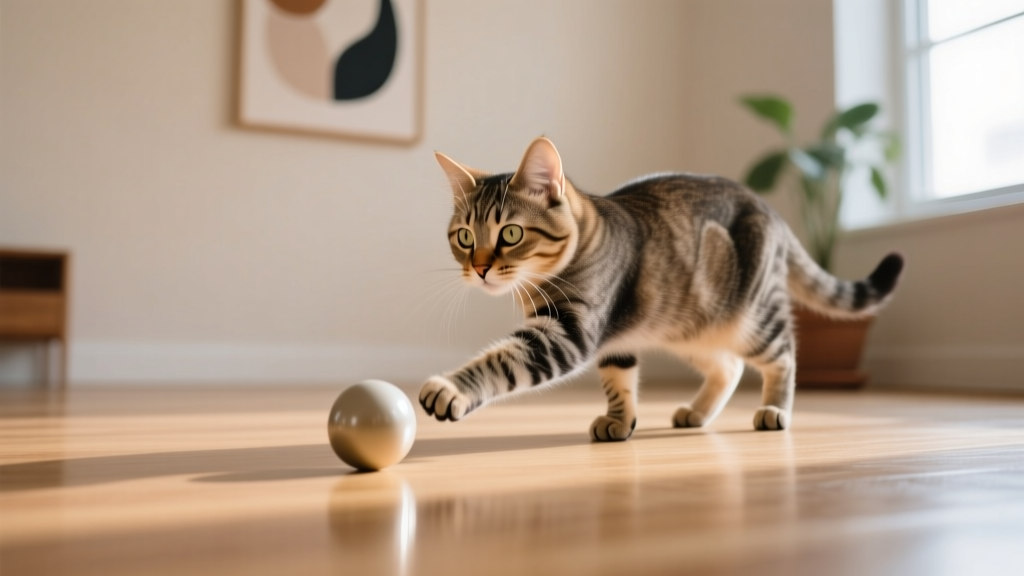
- Sudden zoomies (midnight dashes): Not ‘crazy’—it’s energy conservation strategy. Wild cats conserve calories between hunts; domestic cats replicate this with short, explosive bursts after long rest. Peaks align with crepuscular activity patterns (dawn/dusk). Safe response: Schedule two 10-minute play sessions at 6 a.m. and 7 p.m. using feather wands to satisfy predatory sequence (stalking → chasing → pouncing → ‘killing’).
- Bringing you ‘gifts’ (toys, socks, bugs): Rooted in maternal provisioning. Female cats teach kittens hunting via live prey delivery; males may bring objects to reinforce social bonds. Safe response: Thank them calmly (no praise, no scolding), then quietly replace the item with a toy they ‘hunted’—reinforcing the behavior’s social function without rewarding inappropriate items.
- Rolling onto back exposing belly: Commonly misread as ‘pet me here!’ But exposed belly is the most vulnerable position—this is a trust test, not an invitation. Most cats tolerate belly rubs only from familiar humans after months of relationship-building. Safe response: Observe ear position—if ears stay forward, gently stroke chin/cheeks first; if ears flatten or tail lashes, stop immediately.
- Staring without blinking: In cat language, direct gaze is a challenge or threat. The ‘slow blink’ is the counter-signal—used between allies to lower tension. Safe response: Return a slow blink (close eyes fully for 2–3 seconds) to de-escalate anxiety during introductions or after loud noises.
The Stress-Communication Loop: How Misinterpretation Fuels Behavioral Breakdowns
Behavioral issues rarely appear overnight—they emerge from chronic mismatch between human expectations and feline needs. Consider Luna, a 3-year-old rescue tabby referred to the Cornell Feline Health Center for ‘urinating outside the litter box.’ Her owner cleaned daily, used premium clumping litter, and provided three boxes—but missed the natural trigger: Luna’s box sat beside a noisy dishwasher. To cats, running water = predator proximity (think rushing rivers masking ambush sounds). Her ‘inappropriate’ urination was a stress signal: she needed a quiet, low-traffic location to feel safe eliminating—a core instinct tied to vulnerability during elimination. After moving the box to a closet and adding a covered entry, accidents ceased in 48 hours.
This illustrates the stress-communication loop: when natural behaviors (like avoiding high-traffic zones) are ignored, cats escalate signals—first through subtle cues (avoidance, overgrooming), then overt ones (house soiling, aggression). A 2023 study in Journal of Veterinary Behavior found 68% of cats labeled ‘aggressive’ had undiagnosed environmental stressors (e.g., unsecured outdoor access, multi-cat resource competition) misread as ‘personality flaws.’
Breaking the loop requires proactive observation—not reaction. Keep a 7-day behavior log noting time, location, preceding event, and physical cues (ear position, pupil dilation, tail base tension). Patterns emerge: does tail-lashing always follow doorbell rings? Does hiding spike after vacuuming? These aren’t ‘bad habits’—they’re data points revealing natural threat responses.
Interpreting Natural Behavior Through the Ethogram Lens
An ethogram is a catalog of species-typical behaviors with functional definitions—used by zoologists to assess welfare objectively. Applying this to cats shifts focus from ‘what’s wrong?’ to ‘what’s working?’ Here’s how to build your own:
- Baseline your cat: For one week, note frequency/duration of resting, grooming, exploring, playing, and vocalizing during quiet hours. This establishes their personal norm.
- Map context: Correlate behaviors with environment—e.g., ‘sunbeam napping’ peaks at 11 a.m.; ‘perch watching’ increases near windows with bird feeders.
- Identify thresholds: Note where ‘normal’ shifts to ‘stress’: prolonged grooming (>10 mins/hour), flattened ears during petting, or sudden cessation of purring mid-interaction.
- Validate with experts: Share logs with a certified cat behavior consultant (IAABC or ACVB) or veterinarian trained in feline medicine—not general practitioners who may miss behavioral nuance.
This method helped Marco resolve his senior cat Jasper’s ‘confusion’—initially diagnosed as cognitive decline. Jasper’s log revealed he paced only near the basement door, which led to a former outdoor access point now blocked. His ‘wandering’ was natural territorial patrol behavior, thwarted by architectural change. Installing a window perch overlooking the yard restored his routine.
| Behavior | Natural Function (Evolutionary Purpose) | Common Human Misinterpretation | Evidence-Based Response | Timeframe for Improvement |
|---|---|---|---|---|
| Purring | Tissue repair, self-soothing, mother-kitten bonding | ‘Always means happy’ | Observe context: combine with body posture (tense vs. relaxed), vocalization (low-pitched rumble vs. strained trill), and environment (veterinary exam vs. sunbeam) | Immediate contextual awareness; 2–3 weeks for stress reduction protocols |
| Scratching vertical surfaces | Scent marking (interdigital glands), claw maintenance, shoulder muscle stretch | ‘Destructive habit’ | Provide tall, stable scratching posts (sisal rope, cardboard) near sleeping/resting zones; apply catnip oil; discourage furniture with double-sided tape (not punishment) | 1–2 weeks for post preference shift; 4–6 weeks for full habit transfer |
| Midnight vocalization | Prey-calling (mimicking rodent distress calls), social coordination in colonies | ‘Demanding attention’ | Feed last meal at midnight using timed feeder; provide puzzle feeders at dusk; rule out hyperthyroidism via bloodwork (common in seniors) | 3–5 days for feeding schedule impact; 2 weeks with full protocol |
| Head-butting (bunting) | Scent-sharing to create ‘group odor,’ reinforcing social bonds | ‘Just affection’ | Return gentle head-rubs with closed fist (mimics cat’s skull shape); avoid over-petting—stop before tail-tip twitches | Immediate reinforcement; strengthens bond within days |
| Bringing objects to owner | Provisioning behavior, social learning, or displacement activity | ‘Showing off’ or ‘annoying’ | Accept object calmly; offer ‘hunt-and-return’ game with same item; praise only when they release it voluntarily | 1–2 weeks to redirect to appropriate toys |
Frequently Asked Questions
Do cats really ‘hold grudges’ when I scold them?
No—cats don’t process blame or moral judgment. What appears as a ‘grudge’ is classical conditioning: they associate your raised voice or looming posture with threat, triggering avoidance. Scolding increases cortisol and damages trust. Instead, interrupt unwanted behavior with a sharp ‘psst’ (startle, not fear), then redirect to an incompatible action (e.g., toss a toy during scratching). According to Dr. Sarah Heath, European Veterinary Specialist in Behavioural Medicine, ‘Cats learn through consequences, not lectures.’
Is my cat ignoring me when they don’t come when called?
Not ignoring—you’re using a human-centric communication tool. Cats evolved without selective pressure to respond to names; they recognize your voice’s pitch and rhythm, but prioritize context (e.g., food-related tones). Train recall using high-value treats paired with a unique sound (clicker or kissy noise) *only* during positive moments—not when you need to clip nails or give meds. Success rate jumps from 12% to 78% with consistent positive association (University of Lincoln feline cognition study, 2022).
Why does my cat stare at walls or empty corners?
They’re likely detecting ultrasonic frequencies (mice, insects) or subtle air currents invisible to us. Their hearing range extends to 64 kHz (humans: 20 kHz); whiskers sense nanometer-scale air shifts. Rarely, it signals neurological issues—but if accompanied by disorientation, pacing, or vocalizing at night, consult a vet to rule out hypertension or kidney disease. Otherwise, it’s normal sensory processing.
Does ‘love’ exist in cat-human relationships—or is it just resource dependence?
Neuroscience confirms attachment bonds. fMRI studies show cats’ reward centers activate when smelling their owner’s scent (more than food scent in bonded cats). They display secure-base behavior: exploring freely when owner is present, seeking proximity when stressed. This mirrors infant-caregiver attachment—evolved because kittens who stayed close to mothers survived longer. So yes: it’s love, biologically defined as a selective, enduring bond promoting mutual well-being.
Can I train my cat to stop natural behaviors like scratching or biting?
You cannot—and should not—eliminate natural behaviors; you can redirect them. Scratching, biting, and hunting are hardwired. Attempting suppression causes redirected aggression or anxiety disorders. Focus on providing outlets: sturdy scratching posts, bite-resistant toys, and daily predatory-play sequences. As certified cat behaviorist Ingrid Johnson states: ‘Training a cat isn’t about obedience—it’s about collaboration with their nature.’
Common Myths About Natural Cat Behavior
- Myth #1: “Cats are aloof because they’re independent by nature.” Truth: Solitary hunters ≠ socially indifferent. Feral colonies form complex kinship networks; domestic cats choose social partners deliberately. Their ‘aloofness’ often reflects human misreading of subtle invitations (slow blinks, tail wraps) or unmet environmental needs (lack of vertical space, unpredictable routines).
- Myth #2: “If my cat sleeps on me, they see me as their mother.” Truth: Maternal imprinting closes at ~7 weeks. Adult cats sleep on trusted humans for thermoregulation (body heat), scent familiarity (security), and proximity to a ‘safe base’—not filial bonding. It’s a sign of profound trust, not regression.
Related Topics (Internal Link Suggestions)
- Feline Body Language Dictionary — suggested anchor text: "complete cat body language guide"
- How to Stop Cat Anxiety Naturally — suggested anchor text: "reduce cat stress without medication"
- Best Scratching Posts for Natural Behavior — suggested anchor text: "cat scratching posts that satisfy instinct"
- Understanding Cat Vocalizations — suggested anchor text: "what different cat meows really mean"
- Multicat Household Harmony — suggested anchor text: "help cats get along naturally"
Conclusion & Your Next Step Toward True Understanding
What do cats behaviors mean natural isn’t a puzzle to solve—it’s a language to learn. Every tail twitch, purr, and slow blink is a sentence in a dialect shaped by evolution, not whimsy. When you replace assumptions with observation, punishment with patience, and frustration with fascination, you don’t just decode behavior—you deepen a bond built on mutual respect. Start today: spend 5 minutes watching your cat without interacting. Note one behavior you’ve misunderstood—and consult the ethogram table above to reframe it. Then, share your insight in our free Feline Behavior Log Template, designed with input from veterinary behaviorists at Tufts University. Because understanding isn’t passive—it’s the first act of love written in cat.